Prickly pear seed oil Opuntia: linoleic, tocotrienols, ORAC and mature dehydrated skin routine
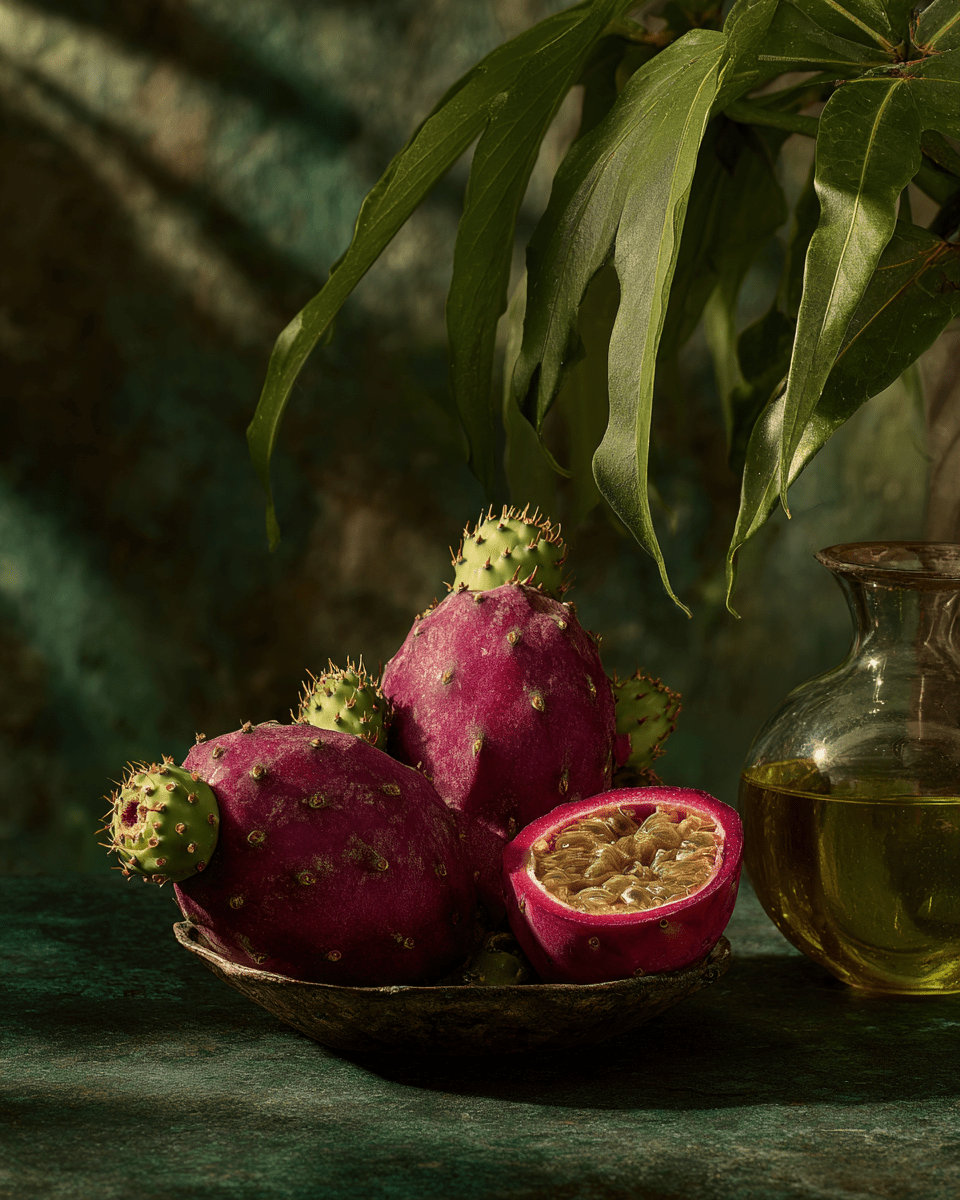
Prickly pear oil is one of the most precious active ingredients that Mediterranean nature has offered to natural cosmetics. Cold-pressed from the tiny seeds of the Opuntia ficus-indica cactus, it concentrates an exceptional density in just a few milliliters: dominant linoleic acid, rare plant sterols, and tocotrienols. For mature, dehydrated, or fine-lined skin, it represents an unparalleled skincare treatment. This article explores its complete INCI profile, its compositional characteristics, and the ideal routine to get the most out of it.
Complete INCI profile: what makes this oil unique
The fatty acid composition of prickly pear oil (Opuntia Ficus-Indica Seed Oil) is its primary uniqueness. Linoleic acid (omega-6) represents 62 to 70% of total fatty acids—a proportion few vegetable oils achieve. For comparison, rosehip oil ranges from 35 to 45%, and argan oil around 36%. Oleic acid (omega-9) completes the profile at 16%, providing a complementary nourishing dimension. Palmitic acid (11%) and stearic acid (3%) contribute to the formulation's stability and the comfort of the skin barrier.
Beyond fatty acids, the unsaponifiable fraction concentrates the rarest components. β-sitosterol, a plant phytosterol, has a structural affinity with skin lipids: it contributes to the comfort of the hydrolipidic film and the sensation of skin soothing. γ-tocopherol provides an antioxidant dimension appreciated by aging skin. Tocotrienols—a rare form of vitamin E absent from most oils—complete this naturally rich antioxidant profile.
It is the synergy between these molecules that explains the exceptional antioxidant richness of this oil. This density of antioxidant components places prickly pear oil at the top of cosmetic vegetable oils.
Cold press vs. supercritical CO2: which quality to choose?
The extraction method directly determines the richness of the final product. Mechanical cold pressing, a traditional method inherited from North African Berber practices, preserves fatty acids and a large part of tocopherols. It remains economically accessible but has limitations: the friction heat generated can partially alter the most fragile tocotrienols, and the yield remains low (approximately 1 ton of figs for 1 liter of oil).
Supercritical CO2 extraction operates without solvents, at low temperature (between 31 and 40 °C) and high pressure. It preserves the entire composition profile: tocotrienols, phytosterols, carotenoids. Comparative analyses generally show higher γ-tocopherol and β-sitosterol content in CO2 extracts. It is the reference method for premium cosmetic formulations. It is recognizable by its intense golden yellow color and characteristic slightly vegetal odor.
For mature and dehydrated skin for which this oil is particularly valued, CO2 extraction guarantees maximum active density. This is therefore the quality to prioritize, especially in Nopal Life pure prickly pear oil formulations.
Characteristics for mature and dehydrated skin
Mature skin has three interdependent needs: a depleted lipid film, a visible loss of density, and a complexion that appears dull over time. Prickly pear oil addresses these three areas through its composition.
Barrier comfort thanks to linoleic acid. Linoleic acid is an essential component of vegetable oils intended for skin care. Rich in this fatty acid, prickly pear oil helps preserve hydration and limit the sensation of tightness: the skin regains suppleness and a softened appearance over weeks of regular application.
Preserved appearance thanks to tocotrienols. Tocotrienols provide a naturally rich antioxidant dimension, appreciated by skin exposed to external aggressions. This antioxidant richness supports a smoother skin appearance and helps preserve the supple and comfortable appearance of areas marked by superficial fine lines.
Firm appearance thanks to β-sitosterol. β-sitosterol, a phytosterol naturally present in the oil, helps preserve the firm and plump appearance of the skin. It contributes to the comfort and visible density sensation of the skin film.
Routine for mature, dehydrated, fine-lined, firm skin: optimal protocol
For skin types with mature, dehydrated skin or showing fine lines and visible lack of firmness, the following routine optimizes the comfort provided by the oil.
Morning — protective layer: After gentle cleansing and application of a hydrating serum (hyaluronic acid, niacinamide), apply 3 to 4 drops of pure prickly pear oil to targeted areas (eye contour, cheekbones, nasolabial folds). Warm the drops between your palms for 10 seconds before application. The oil forms a light protective layer that is not greasy thanks to its dominant linoleic acid content. Finish with an SPF 30 minimum sunscreen.
Evening — intensive treatment layer: This is the key moment. On slightly damp skin after makeup removal, apply 5 to 6 drops with upward effleurage massage for 2 minutes. Damp skin promotes better distribution of unsaturated fatty acids. Alternately 2 evenings a week, a thicker layer of 8 to 10 drops can be applied as a night mask, covered with a light nourishing cream for an occlusive effect.
Priority areas: eye contour (with delicate tapping), upper lips, forehead, décolleté. For skin seeking a visible radiance and firmness effect, combine the oil with synergistic active ingredients: retinol (evening, under the oil), copper peptides (morning, under the oil).
To precisely identify your skin type and the routine adapted to your skin profile, use Nopal Life Skin Intelligence™, our personalized diagnostic tool.
Mistakes to avoid with prickly pear oil
Mistake 1 — Applying to dry skin without prior hydration. The oil helps seal in moisture; it does not provide it. On perfectly dry skin without prior serum or tonic mist, the moisturizing effect is limited. Always apply to a slightly hydrated base.
Mistake 2 — Confusing it with other cactus oils. Opuntia ficus-indica is different from generic cactus seed oil or low-quality nopal oil. Check the INCI to ensure the exact mention is Opuntia Ficus-Indica Seed Oil and not a generic name that may hide a diluted or reconstituted oil.
Mistake 3 — Overdosing on combination to oily skin. The comedogenic index of linoleic acid is low (0-1), which makes prickly pear oil generally well-tolerated. However, excessive application on skin with visible pores can saturate the hydrolipidic film. Limit to 2-3 drops on affected areas.
Mistake 4 — Storing in light and heat. The richness in tocotrienols and linoleic acid makes this oil more sensitive to oxidation than saturated oils. Store away from light, in a dark bottle, between 15 and 20 °C. A "rancid" smell indicates degradation of unsaturated fatty acids: do not use.
Mistake 5 — Expecting results in 48 hours. The comfort provided by linoleic acid sets in over a minimum of 3 to 4 weeks of regular twice-daily use before suppleness and a softened appearance are noticeable. The prickly pear oil routine is a long-term treatment, not a quick fix.
Mistake 6 — Neglecting to associate with an SPF in the morning. Applying an oil rich in unsaturated fatty acids in the morning without sun protection exposes these lipids to UV rays. The antioxidant benefit of the oil will then be diminished by surface oxidation.
Where to find this oil and how to integrate it into a skincare collection
Prickly pear oil naturally integrates into a collection oriented towards noble lipid active ingredients. It can be used pure as a concentrated treatment, but also as a base for homemade formulations (massage oil, multi-layer lipid serum). For very dehydrated skin, combining it with a complementary vegetable oil from the noble oils range (rosehip, borage, evening primrose) allows for a wider spectrum of essential fatty acids.
Prickly pear is also at the heart of the Nopal Life approach: each formulation in the range integrates Opuntia ficus-indica in its different fractions (seed oil, pulp extract, prickly pear floral water). Discover the entire range in the vegetable oils and noble lipids collection.
Why choose Nopal Life for visible radiance and firmness
Visible skin radiance and firmness are supported daily by carefully selected active ingredients. Nopal Life prickly pear oil, rich in essential omega-6 and omega-9 fatty acids, vitamin E, and plant sterols, brings suppleness and comfort to the skin's film. It helps preserve a firm and plump appearance, reduces the look of dehydration fine lines, and strengthens the epidermal barrier for a visibly smoother appearance from the first few weeks.
Combine it with our radiance and firmness night cream and our comfort serum for a complete synergy, day and night. Your skin regains a firm appearance, radiance, and lasting comfort. Discover the Nopal Life formulation designed for your skin profile thanks to our free Skin Intelligence diagnosis.
Frequently asked questions about prickly pear oil
Q: Is prickly pear oil suitable for sensitive, reactive skin?
A: Yes. The fatty acid profile, particularly the dominant linoleic acid and β-sitosterol, makes it one of the most well-tolerated and visibly soothing treatments for reactive skin. Start with 2 drops in the evening for one week to test tolerance before increasing the quantity.
Q: Can prickly pear oil be used around the eyes?
A: Yes, with caution. Apply with light tapping on the orbital contour, without getting too close to the ciliary margin. Its lightness and low comedogenic index make it a popular natural eye contour treatment to reduce the appearance of dehydration fine lines.
Q: What is the difference between prickly pear oil and argan oil?
A: Argan oil is dominated by oleic acid (about 45%) and linoleic acid (about 36%). Prickly pear oil reverses these proportions with 62 to 70% linoleic acid, making it a prized treatment for skin barrier comfort. Additionally, its tocotrienol content is absent in argan. The higher price of prickly pear is explained by its 5 to 10 times lower extraction yield.
Q: How long does it take to see results on the appearance of fine lines?
A: The first visible improvements in texture and suppleness are noticeable within 2 to 3 weeks. The effect on the appearance of fine lines and visible firmness takes 6 to 8 weeks of regular twice-daily use.
Q: Is prickly pear oil compatible with retinol?
A: Very good synergy. Retinol supports natural skin renewal; prickly pear oil provides comfort and visible soothing to the barrier stressed by retinol. Apply retinol first to dry skin, wait 10 minutes, then apply the oil over it as a sealing and comforting layer.
Q: How much should be used per application?
A: 3 to 5 drops for the entire face in the morning, 5 to 7 drops in the evening. For an intensive night mask, 8 to 10 drops on the face and décolleté. Beyond that, the excess remains on the surface.
Q: Is prickly pear oil organic certified?
A: Certification depends on the origin and producer. Nopal Life prickly pear oil is produced from untreated cacti, through extensive farming without chemical inputs, in accordance with traditional practices in its regions of origin (Maghreb, Mexico). Check for COSMOS or Ecocert certifications on the bottle.
Ready to adopt Nopal Life's star active ingredient?
Discover our pure CO2-extracted prickly pear oil or identify your personalized routine with our skin diagnostic tool.
Discover pure oil → Nopal Life Skin Intelligence™ →To go further: prickly pear oil is appreciated in natural cosmetics for its richness in linoleic acid, tocotrienols, and β-sitosterol, components recognized for skin comfort and appearance.
This content is informative and educational; it is not a substitute for medical advice, diagnosis, or dermatological consultation. In case of doubt or persistent skin problems, consult a qualified health professional.
Read more
Information provided for cosmetic and educational purposes; it does not constitute medical advice.


Go further than this article
Get our skincare guides by email — and start with your free skin diagnostic: 2 minutes, advice tailored to your skin. We ship to the US, UK, Canada, Australia and 27 European countries; somewhere else? Sign up and you will be the first to know when we deliver to your country.
By signing up, you agree to our privacy policy. Unsubscribe in one click.