Hyaluronic acid: natural or synthetic origin?
Hyaluronic acid is currently one of the most widely used active ingredients in anti-ageing cosmetics. Appreciated for its moisturising and plumping properties, it is often recommended to improve the appearance of wrinkles, smooth the skin, and maintain its radiance. But behind this essential ingredient, a question frequently arises: is there a difference between natural and synthetic hyaluronic acid?
Between common misconceptions and scientific realities, it is not always easy to understand the origin of this active ingredient, its manufacturing method, and its impact on the skin. However, these elements are essential for making informed choices, especially in a natural and organic cosmetics approach.
In this article, we take stock of the different forms of hyaluronic acid, their specificities, and their relevance in anti-ageing care, to better understand how this active ingredient can effectively support mature skin.
What is hyaluronic acid?
Hyaluronic acid is a molecule naturally present in the human body, particularly in the skin.
An active ingredient naturally present in the skin
It plays an essential role in:
- skin hydration
- maintaining its suppleness
- preserving its elasticity.
Its đặc điểm? It can retain up to 1000 times its weight in water, making it a key active ingredient in combating dehydration and the appearance of wrinkles.
Why does it decrease with age?
Over time, the natural production of hyaluronic acid decreases, leading to:
- a loss of hydration
- skin sagging
- a more visible appearance of fine lines.
Hence the importance of integrating it into a skincare routine adapted for mature skin.
|
|
 |

Natural vs. Synthetic Hyaluronic Acid: What's the difference?
The distinction between natural and synthetic hyaluronic acid can be confusing.
Hyaluronic acid of natural origin
Historically, hyaluronic acid could be extracted from animal sources.
Today, in modern cosmetics, it is generally obtained through biotechnology, from the fermentation of natural raw materials (such as wheat or corn).
👉 We then refer to hyaluronic acid of natural origin, as it is derived from a process inspired by living organisms.
Synthetic hyaluronic acid
In common parlance, "synthetic" hyaluronic acid primarily refers to a laboratory-produced version.
However, it is important to note that:
- the vast majority of hyaluronic acids used today are derived from biotechnologies
- they are designed to be identical to those naturally present in the skin.
👉 The real difference, therefore, lies not so much in the molecule itself, but in its production method and its perception.
Why is this distinction important?
A matter of "natural vs. synthetic" perception
In the world of natural cosmetics, consumers look for ingredients that are:
- of natural origin
- skin-friendly
- compatible with an organic approach.
Biotechnological fermentation meets these expectations while guaranteeing:
- purity
- safety
- stability.
Compatibility with sensitive skin
Hyaluronic acid, whether produced by biotechnology or synthesized, is generally well-tolerated by the skin.
It presents:
- a low risk of irritation
- good affinity with the skin.
|
|
|
The different forms of hyaluronic acid in cosmetics
Beyond its origin, the effectiveness of hyaluronic acid also depends on its molecular weight.
High molecular weight hyaluronic acid
- acts on the surface
- forms a protective film
- immediately improves hydration.
Low molecular weight hyaluronic acid
- penetrates deeper
- helps to plump the skin
- acts on fine lines.
👉 The most effective treatments often combine several molecular weights for a comprehensive action.
How to incorporate hyaluronic acid into an anti-ageing routine?
Step 1: Apply to slightly damp skin
Hyaluronic acid traps water, so it is more effective when applied to slightly damp skin.
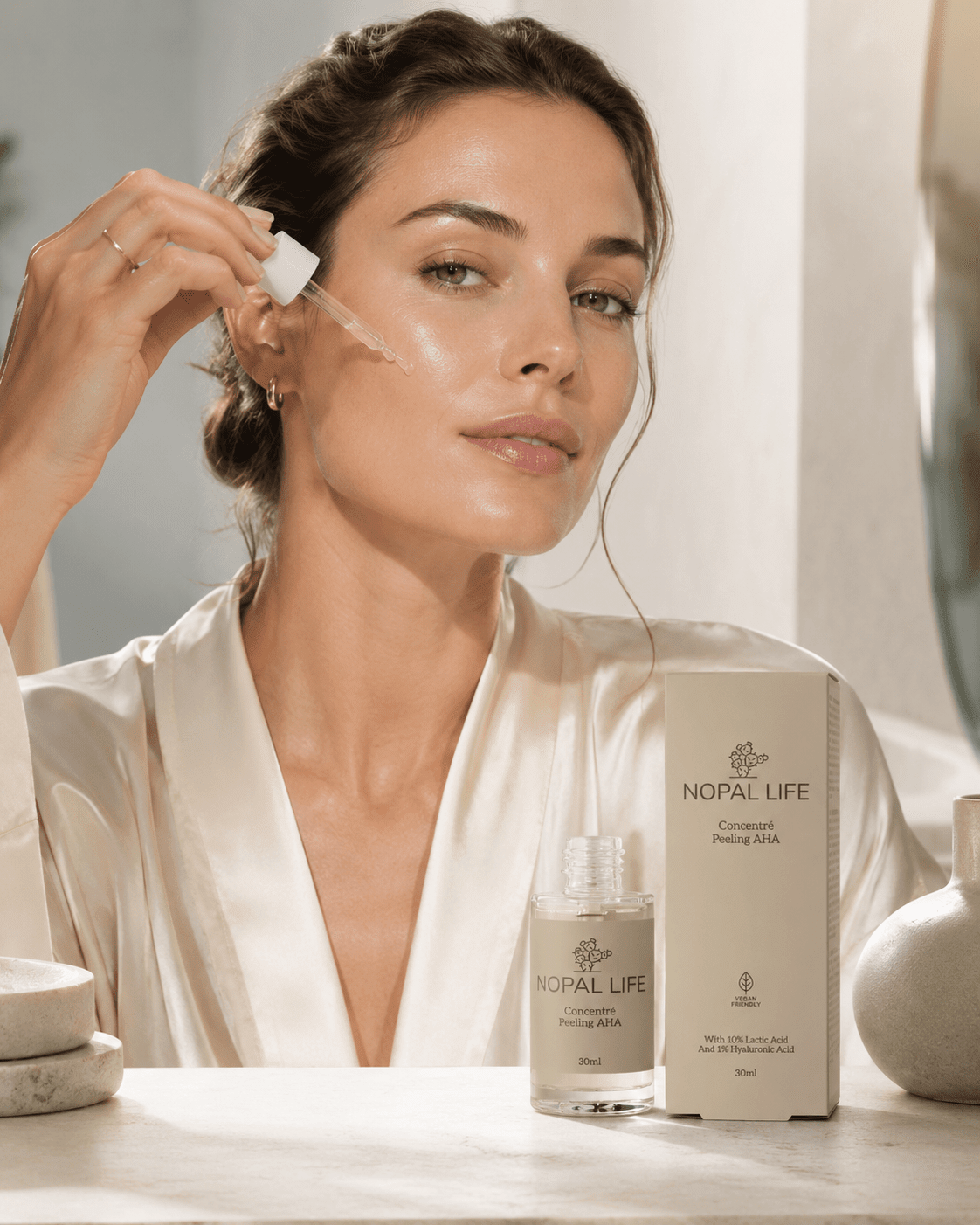
Step 2: Use a concentrated serum
Serums deliver a targeted dose of the active ingredient.
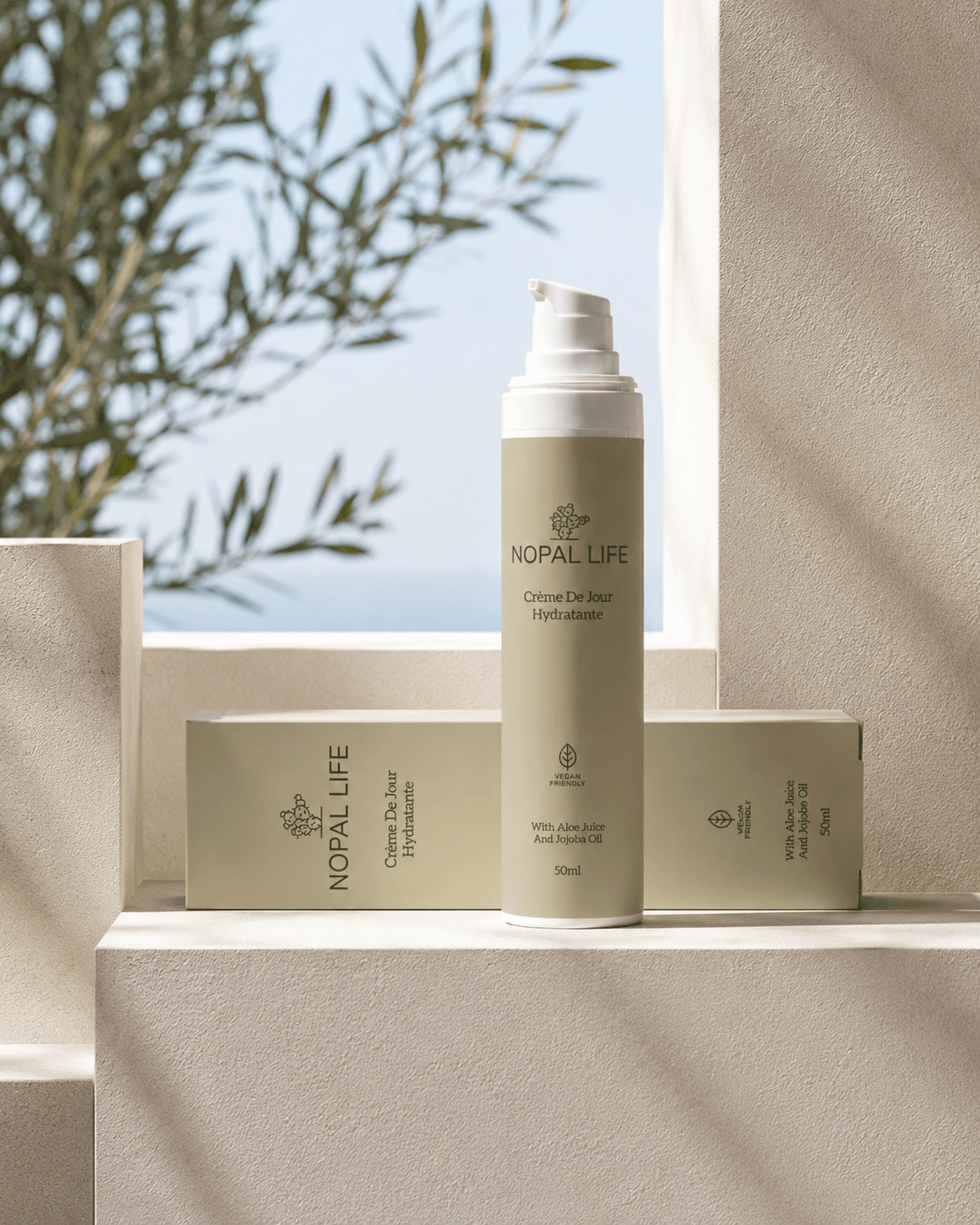
Step 3: Seal in hydration with a cream or oil
It is essential to follow up with:
- a cream
- or a vegetable oil
to prevent water evaporation.
Common mistakes with hyaluronic acid
Thinking it hydrates on its own
Without cream or oil, hydration may be insufficient.
Using it on dry skin
This limits its effectiveness.
Expecting immediate effects on deep wrinkles
Hyaluronic acid primarily acts on:
- hydration
- dehydration fine lines.
Expert tips to optimize its effectiveness
To maximise the benefits of hyaluronic acid:
- combine it with complementary active ingredients such as Ceramides
- supplement with vegetable oils to nourish the skin
- include antioxidants like Vitamin C.
This holistic approach helps support:
- hydration
- protection
- skin vitality.
FAQ – Natural vs. Synthetic Hyaluronic Acid
Is natural hyaluronic acid more effective?
Not necessarily. Effectiveness primarily depends on the formulation and molecular weight.
Is synthetic hyaluronic acid bad for the skin?
No, it is designed to be identical to what is naturally present in the skin.
Can hyaluronic acid be used every day?
Yes, it is suitable for daily use.
Is it compatible with organic cosmetics?
Yes, if it is obtained by fermentation and complies with organic standards.
Is it suitable for mature skin?
Yes, it is particularly well-suited for improving hydration and the appearance of fine lines.
Conclusion
The distinction between natural and synthetic hyaluronic acid primarily lies in its manufacturing method rather than its structure or effectiveness. Today, the majority of formulas use biotechnologically derived hyaluronic acid, which is both effective, safe, and compatible with a natural cosmetics approach.
For mature skin, the key remains to prioritize well-formulated treatments that combine different types of hyaluronic acid and complementary active ingredients. This approach helps support the skin over time, maintaining its hydration, suppleness, and radiance in a lasting way.


Go further than this article
Get our skincare guides by email — and start with your free skin diagnostic: 2 minutes, advice tailored to your skin. We ship to the US, UK, Canada, Australia and 27 European countries; somewhere else? Sign up and you will be the first to know when we deliver to your country.
By signing up, you agree to our privacy policy. Unsubscribe in one click.