White kaolin clay: the gentle mask for sensitive skin
Choosing the right active ingredients is already taking care of your skin. White kaolin clay is one of the gentlest mineral powders in natural cosmetics: here is the complete guide to this ingredient — composition, cosmetic properties, preparation of a homemade mask, face and hair uses, frequency and application techniques — to integrate it appropriately into your ritual.
What is white kaolin clay?
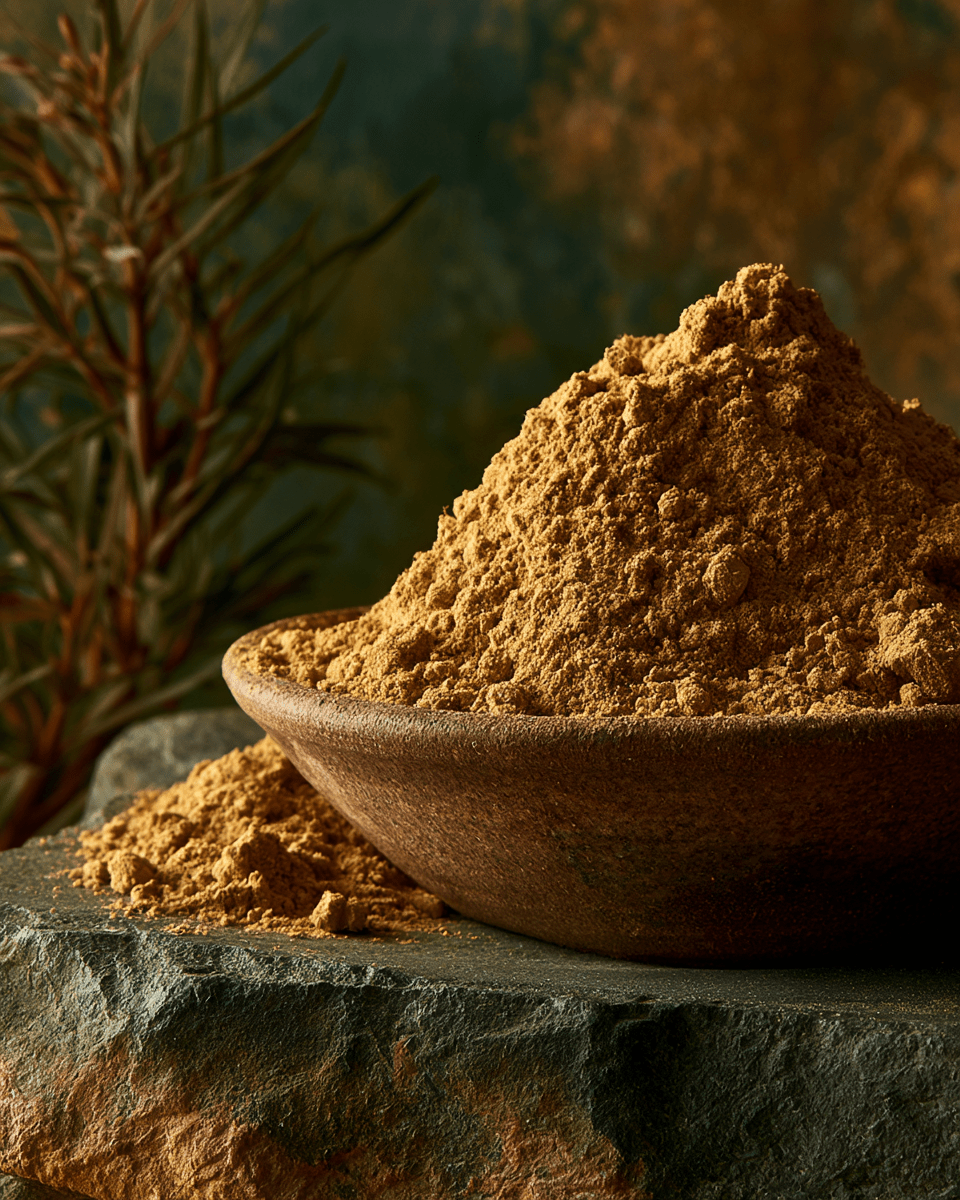
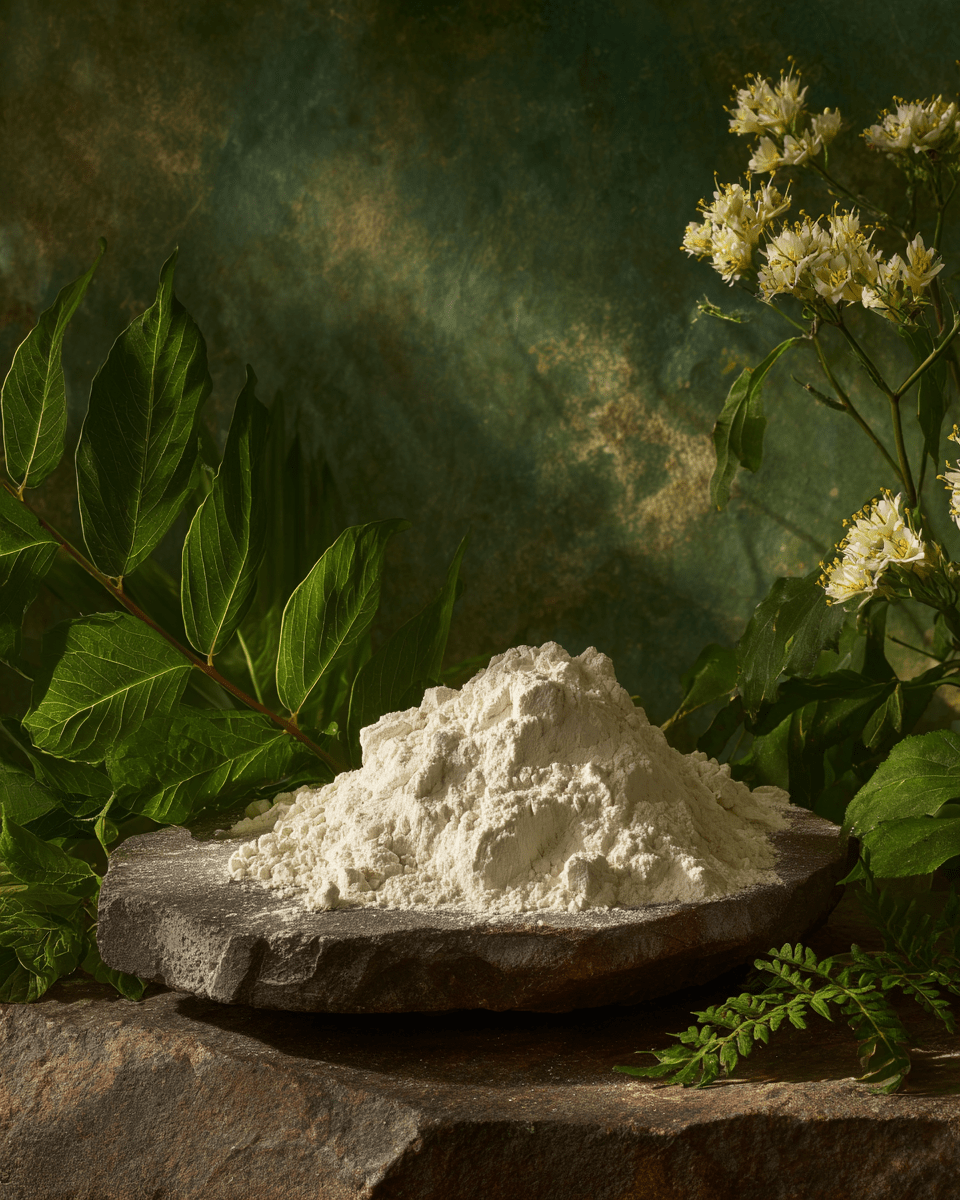
White kaolin clay, also known as kaolinite, is a very fine mineral powder, resulting from the alteration of rocks rich in aluminum silicate. Its lamellar structure gives it a large exchange surface and a real adsorption power: upon contact with the skin, this clay captures excess surface sebum and impurities without stripping the hydrolipidic film that protects the epidermis.
Two characteristics distinguish kaolin from other clays. First, its color, white to ivory, indicating a low iron oxide content. Second, its gentleness: its pH close to neutral and its very fine granulometry (particles smaller than two microns) make it the clay best tolerated by sensitive, reactive, and combination skin. This delicacy is precisely what earns kaolin its prime spot in gentle cleansing products, where more powerful clays would be too harsh.
Kaolin, green clay or rhassoul: which clay for which skin?
Not all clays have the same strength or purpose. The following table compares the most common options to help you choose the one that suits your skin type — knowing that the color of a clay indicates its mineral richness and, indirectly, its intensity.
| Clay | Color | Absorption strength | Suitable skin types |
|---|---|---|---|
| White (kaolin) | White to ivory | Gentle, low to moderate | Sensitive, combination, dry |
| Pink | Pink (white + red) | Gentle to moderate | Normal to sensitive |
| Rhassoul (ghassoul) | Brown-ochre | Moderate, cleansing | All types, scalp |
| Green (illite) | Green | Strong | Oily, robust |
| Bentonite | Gray-cream | Very strong | Very oily, occasional use |
The reading is simple: the more powerful a clay is, the less gentle it is. For sensitive, reactive, or combination skin, kaolin remains the safest option. Green clay, which is very absorbent, is reserved for robust oily skin; rhassoul, which is more cleansing, is popular for both face and scalp; pink clay, a mixture of white and red, offers a good compromise appreciated by normal to sensitive skin seeking radiance.
The cosmetic benefits of white clay
The benefits of kaolin are primarily due to its adsorption action. On the skin's surface, this clay binds excess sebum, pollution residues, and impurities that dull the complexion. The visible result is clearer skin, refined texture, and a mattified appearance — without the tight feeling that harsh cleansers sometimes leave.
Upon rinsing, the clay's micro-particles provide a very gentle mechanical exfoliation that helps remove dead surface cells, for a brighter complexion. Because it only captures excess sebum without stripping essential lipids, kaolin is particularly suitable for combination skin: it helps to mattify the T-zone (forehead, nose, chin) while preserving the comfort of finer areas such as the cheekbones and eye contour. These properties make white clay a discreet but loyal ally for delicate skin routines.
How to prepare a homemade kaolin mask
Preparing a white clay mask at home requires only two elements: powder and a liquid. In a glass or ceramic bowl — never metal, which can alter the clay — pour one to two tablespoons of kaolin powder.
Add the liquid gradually, mixing with a wooden or silicone spatula, until you get a smooth, creamy clay paste, neither too liquid nor too thick. Then, each person can choose the formula adapted to their skin, from these recipes and variations:
- Sensitive skin: kaolin powder + chamomile or cornflower floral water, for a very gentle preparation.
- Combination skin: kaolin + one teaspoon of witch hazel hydrosol, for a clear result on the T-zone.
- Dry skin: kaolin + rose water and a few drops of prickly pear oil, to nourish during application.
- Radiance boost: kaolin + floral water and a hint of rose powder, to revive the complexion.
These homemade preparations are made on the spot and used immediately: without preservatives, they do not keep from one use to the next. Therefore, only the amount needed for a single application is prepared.
Frequency and application: the right technique
The ideal frequency depends on skin type. The table below summarizes the usage guidelines; these are starting points to be adjusted according to your skin's reaction.
| Skin type | Frequency | Application time |
|---|---|---|
| Combination | Once a week | 10 minutes |
| Oily in T-zone | Max. twice a week | 10 to 12 minutes |
| Sensitive | Once a week | 8 to 10 minutes |
| Dry to normal | Once every 2 weeks | 8 minutes |
Technique matters as much as frequency. Apply a thick and even layer (2 to 3 mm) on clean, slightly dampened skin, avoiding the eye and lip contours. During application, keep the mask pliable by spraying a little floral water or thermal water every five minutes: a mask kept slightly damp continues to capture surface impurities, while a mask that dries to the point of cracking will draw water from the epidermis and can leave a feeling of discomfort.
Then rinse thoroughly with lukewarm water, using gentle circular motions, and finish with a splash of cool water to firm up the complexion. Immediately after rinsing, the skin is more receptive: this is the time to apply a serum (vitamin C, niacinamide) then a nourishing treatment, without leaving the skin bare for more than two minutes.
Kaolin for face, hair, and body
While face masks are its most common use, white clay is also found in other cosmetic treatments. For the face, it is used in gentle purifying masks and powdered cleansers activated with a little water.
For hair, kaolin powder is used in dry shampoos and treatments for oily scalps: it absorbs excess sebum at the roots and restores lightness to hair that gets oily quickly. On dry lengths and ends, however, it should be avoided to prevent further dryness. Finally, for the body, kaolin is incorporated into mattifying powders and gentle cleansing treatments for reactive skin.
What kaolin is not: traditional non-cosmetic uses
Clay is sometimes encountered in contexts far removed from skin care. Historically, different clays have been used as poultices, added to bath water, or even diluted in a glass of water — this is "drinking clay." Some traditions attribute to them the ability to relieve various discomforts: digestive problems like diarrhea, application to small wounds, inflammations, or itching.
These uses fall under health and wellness, not cosmetics. They are not part of the scope of this article, and Nopal Life does not claim them: our understanding of kaolin is limited to the appearance, cleanliness, and comfort of the skin. For any internal use, or if discomfort persists, the advice of a health professional is essential.
Mistakes to avoid with white clay
Leaving the mask to dry completely: A clay mask that cracks begins to draw water from the epidermis rather than just surface impurities. The rule is to keep it pliable throughout the application, by spraying a little floral water as soon as it feels tight.
Choosing green clay instead of kaolin for sensitive skin: Green clay is much more absorbent, but this power comes at the cost of tolerance. For sensitive skin or skin seeking gentle purification, kaolin is the appropriate choice; green clay is reserved for robust oily skin.
Not nourishing the skin after the mask: Even a gentle purification can leave the skin slightly in need. Systematically applying a moisturizing treatment, then a few drops of vegetable oil after rinsing, helps restore comfort.
Applying masks too frequently, thinking it purifies more: Three times a week or more, even with very gentle kaolin, will eventually dry out naturally less oily areas. It is better to follow the recommended frequency and let the skin regain its balance between applications.
Pores and results: what to really expect
A common expectation is the "visible shrinking of pores." Let's be honest about this: pores do not physically change size after a mask. Their diameter is partly determined by genetics and evolves with age. What kaolin actually does is empty the contents of the pores (oxidized sebum, impurities, product residues) and temporarily tighten their appearance with a slight astringent effect. The visual result is therefore real — less noticeable pores, smoother skin — but temporary, and it is maintained by the regularity of the routine.
To prolong this clear appearance, you can combine the weekly mask with gentle exfoliation and appropriate daily cleansing. The idea is never to purify "harder," but more regularly and more gently.
Choosing and buying your kaolin powder
Not all kaolin powders are created equal. For cosmetic use, a few tips help make the right choice among the options on the market. First, check the quality: a powder intended for skin care must clearly state "Kaolin" in its INCI list, without superfluous additives. Fine granularity and a very white color are good signs; these are often the powders chosen by formulators for sensitive skin.
Regarding budget, the price of cosmetic kaolin powder remains moderate and varies mainly according to the product's purity, origin, and packaging; for a low price, a powder deserves its origin to be verified. Before buying, take the time to read reviews and consult the product data sheet: these details often distinguish a cosmetic-grade clay from a more generic powder.
Integrating the kaolin mask into the Nopal Life routine
In the Nopal Life approach, the kaolin mask plays the role of a weekly "reset" treatment, in between daily actions. Friday or Saturday evening is ideal: the weekend allows time to observe the skin's reaction. The sequence we recommend for a session: double cleansing (balm then gentle foam), application of the kaolin mask for about ten minutes while maintaining moisture, rinsing with lukewarm then cool water, vitamin C or niacinamide serum, night cream, and finally two to three drops of Nopal Life prickly pear oil to seal and nourish.
Prickly pear oil is particularly valuable after a purifying treatment: rich in essential fatty acids, tocopherols, and phytosterols, it helps to compensate for lipid intake and preserve the comfort of the skin barrier. This kaolin mask + prickly pear oil duo perfectly illustrates the brand's philosophy: taking care of the skin's appearance while respecting what protects it.
Start my free diagnosis — two minutes to identify your skin type and find out if a kaolin treatment has a place in your routine.
Frequently asked questions about white kaolin clay
Q: What is the difference between white kaolin clay and green clay?
A: Kaolin is gentler and less absorbent, suitable for sensitive and combination skin. Green clay is much more powerful, reserved for robust oily skin. For sensitive skin, kaolin is always the appropriate choice.
Q: How long should a kaolin mask be left on the skin?
A: Between 8 and 12 minutes depending on skin type, without ever letting it dry completely. Spray a little floral water during application if the mask starts to feel tight.
Q: Does the kaolin mask really tighten pores?
A: It mainly reduces their appearance by emptying their contents and temporarily tightening their look. Pore size does not physically change, but the visual effect is real and maintained by a regular routine.
Q: How to prepare a homemade kaolin mask?
A: Mix one to two tablespoons of kaolin powder with floral water (rose, chamomile) or witch hazel hydrosol, in a glass bowl, until a creamy paste is obtained. Use immediately: without preservatives, the preparation does not keep.
Q: Can kaolin be used on blemish-prone skin?
A: Yes, with caution. It helps purify the skin's appearance and absorb excess surface sebum. In the presence of active inflammation, it is best to avoid the affected area and seek advice from a healthcare professional.
Q: Is kaolin also used on hair?
A: Yes. In powder form, it is used in dry shampoos and treatments for oily scalps, where it absorbs excess sebum at the roots. However, it should be avoided on dry lengths and ends.
Q: Can prickly pear oil be used after a kaolin mask?
A: Yes, it is even recommended. After a purifying treatment, the skin appreciates a lipid boost to regain its comfort. Prickly pear oil, fine and non-greasy, is ideal for this step.
RECOMMENDED CARE
Pure Prickly Pear Seed Oil
Natural formula · Origin Algeria
DISCOVER THIS TREATMENT →PERSONALIZED ROUTINE
Nopal Life Skin Intelligence™
Free diagnostic · 2 minutes
DISCOVER MY ROUTINE → White clay Kaolin - NOPAL LIFE" style="width:88px;height:88px;object-fit:cover;border-radius:8px;flex-shrink:0;" loading="lazy">
Ingredient Reference
Kaolin white clay
Ultra-gentle cleansing, impurity absorption — ideal for sensitive skin.
Discover the sheet →Read more
Information provided for cosmetic and educational purposes; it does not constitute medical advice.


Go further than this article
Get our skincare guides by email — and start with your free skin diagnostic: 2 minutes, advice tailored to your skin. We ship to the US, UK, Canada, Australia and 27 European countries; somewhere else? Sign up and you will be the first to know when we deliver to your country.
By signing up, you agree to our privacy policy. Unsubscribe in one click.