DIY Rice Flour Face Mask Recipe
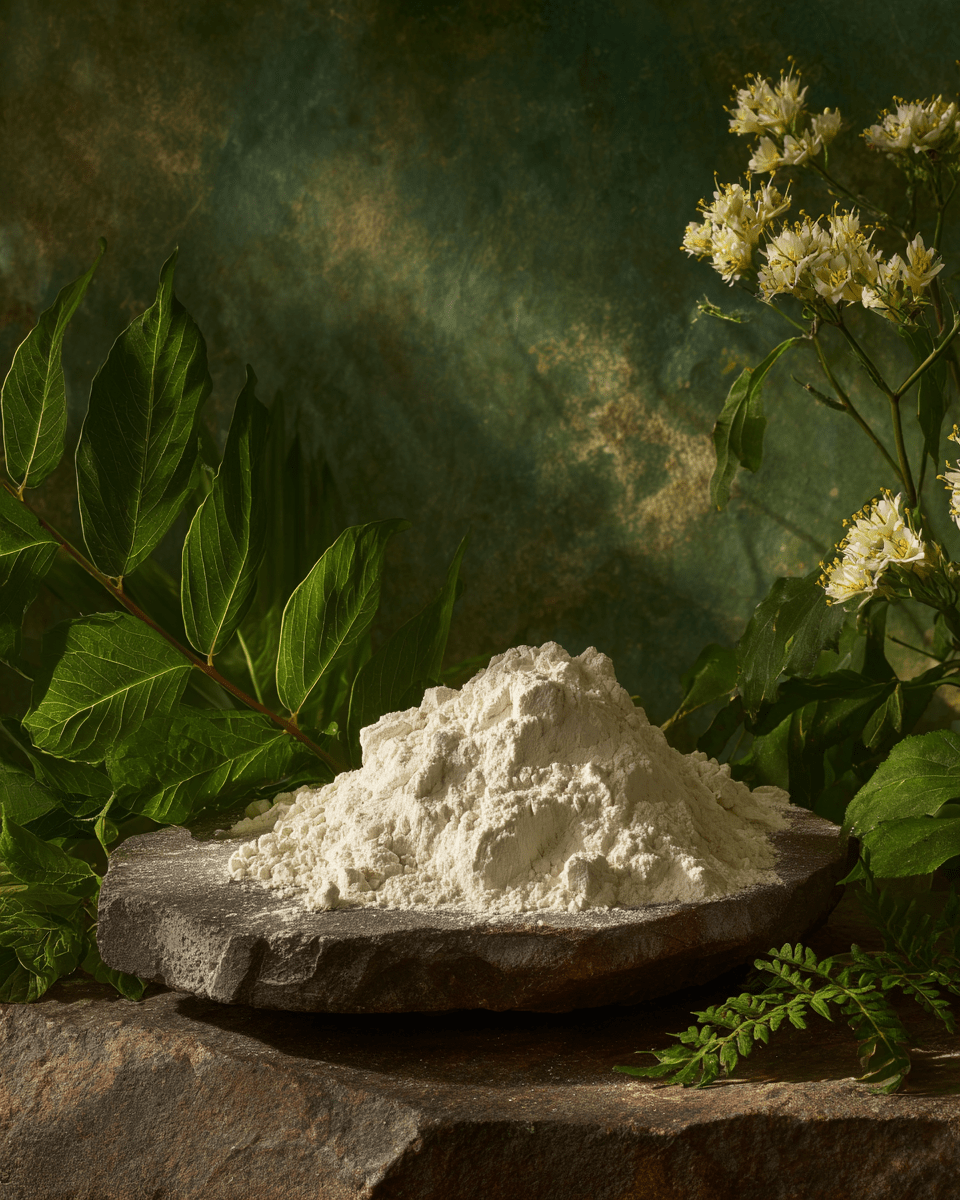
The face mask with rice flour is one of the gentlest homemade beauty treatments there is. Inherited from Asian beauty rituals – Japanese J-beauty, Korean K-beauty – and Moroccan traditions, it can be prepared in a flash with everyday natural ingredients: finely ground rice and a little floral water. When properly proportioned, it leaves the complexion clear, the skin soft, and the texture more even, without harsh products or compromising comfort. At Nopal Life, we like to follow it up with prickly pear seed oil (Opuntia ficus-indica) for a lasting glow after rinsing.
This guide provides you with the exact recipe, the patch test you should never skip, variations according to your skin type, and common mistakes that spoil the result. A clarification from the outset: this mask works on the appearance of the skin – mattifying, softening, brightening the complexion – and has no medical purpose.
What is a rice flour mask used for?
Cosmetic rice (Oryza sativa) is simply very finely ground grain. Its starch microparticles act on the skin's surface in several complementary ways.
- They absorb shine: starch captures excess oil and leaves a clean matte finish without drying out the skin. These mattifying properties have made rice famous in beauty.
- They refine skin texture: when rinsed off, the very gentle mechanical exfoliating action smoothes the skin and revives the complexion's radiance.
- They provide comfort: the grain's amino acids (methionine, lysine, proline), its tocopherols, and the gamma-oryzanol from the bran—a plant antioxidant—support skin's suppleness.
This explains why rice is used in so many traditional masks: few ingredients, a lot of gentleness.
With age, the complexion loses some of its radiance and the skin texture appears less even; gentle exfoliation, once or twice a week, helps maintain a fresher look and brighter skin. The mattifying effect, meanwhile, is immediate. In Asian beauty rituals, rice is also used on hair; here, we focus on the face.
The Nopal Life homemade recipe, step by step
Here is the basic preparation for a single mask; measurements are expressed in tablespoons (tbsp) and teaspoons (tsp). Work with a clean bowl and cosmetic-grade rice with a particle size smaller than 10 microns.
Base: 2 tbsp rice flour + 3 tbsp lukewarm floral water (or, failing that, spring water or plant-based milk).
- Pour the rice into the bowl.
- Add the floral water gradually and mix until a smooth paste, neither too thick nor too fluid—the consistency of yogurt.
- Apply a thin layer to clean, dry skin, away from the eyes and lips.
- Leave on for 10 minutes; the mask should remain flexible, never cracking.
- Rinse with lukewarm water, massaging in small circles: this is where the micro-exfoliation happens.
- Pat dry, then seal with your usual skincare products or 3 to 4 drops of prickly pear seed oil.
Nourishing tip: For a richer version, replace the floral water with milk (plant-based or animal) and 1 tsp of honey—a creamy texture that dry-feeling skin appreciates in winter.
Frequency: 1 to 2 times a week, no more. Starch is still an exfoliant, however gentle it may be.
The 24-hour patch test: a step never to be skipped
Even gentle, this recipe warrants a preliminary test, especially if you react to rice or grasses.
- Prepare a small amount of paste (a little ground grain and floral water).
- Apply it to the bend of your elbow or behind your ear, then leave it on for 24 hours.
- Check for any redness, tingling, or itching before applying to your face.
In case of a reaction, rinse with clear water and abandon the recipe. This common-sense precaution applies to any homemade mask.
Which variation for your skin type?
We always start with the same base—2 tbsp of ground grain + a liquid—and adjust it. The additional quantities are per application.
| Skin Type | What you add to the base | Application time | Frequency |
|---|---|---|---|
| Combination to oily | 1 tsp white clay (kaolin), floral water on cotton pad | 10 min | Twice/week |
| Sensitive / reactive | Base alone, rose or cornflower water, appreciated for its soothing properties | 5 min | Once/week |
| Dull / tired | 3 to 4 drops of prickly pear seed oil | 8 to 10 min | 1 to 2 times/week |
| Dehydrated | 1 tsp honey + a little plant-based milk | 8 min | Once/week |
| Normal to combination | 1 tsp aloe vera gel | 10 min | Once/week |
Unsure about your skin type, or have skin with multiple needs? Nopal Life's Skin Intelligence diagnosis will guide you in two minutes. Start my free diagnosis.
Rice flour, rice powder, rice starch: do not confuse
The three words circulate, but do not mean the same thing — and the nuance matters for your mask.
- Rice flour (INCI Oryza sativa powder): whole grain ground. The reference here: it retains its amino acids and plant active ingredients.
- Cosmetic rice powder: the same material, sieved more finely; perfect as a mattifying veil or as a mask.
- Rice starch (Oryza sativa starch): isolated starch, more absorbent but poorer in amino acids – a temporary solution, not ideal.
Mistakes to avoid with a homemade mask
Like all DIY treatments, this one requires a few simple precautions to remain a pleasure without unpleasant surprises.
Exceeding twice a week
More frequent use of an exfoliating mask can, in the long run, weaken the skin barrier and cause persistent redness. Two applications per week are sufficient; listen to your skin's signals.
Allowing the mask to dry completely
A paste that cracks pulls on the skin and becomes uncomfortable. Remove it while the mixture is still pliable, before it begins to dry.
Using food-grade rice
Cooking rice is not designed for the face: the particle size is often too coarse, and there are no cosmetic microbiological controls. Choose a cosmetic-grade, traceable grain.
Forgetting sun protection
After a treatment that brightens the complexion, sun protection is essential in the morning: it preserves the visible benefits and helps manage the appearance of existing spots.
Rice and prickly pear: the Nopal Life synergy
Our formulation philosophy can be summarized in one sentence: an active ingredient works better when supported. Ground rice acts on the surface – it mattifies, refines skin texture, and evens out the complexion's appearance. Prickly pear seed oil, on the other hand, provides comfort: cold-pressed from the seeds, it is one of the most concentrated oils in linoleic acid (omega-6) in cosmetics, at around 60% of its composition, offering the lipid barrier nourishment that grain alone cannot provide. Applied immediately after rinsing, on still slightly damp skin, it seals in the mask's softness. You'll find this logic in Nopal Life facial care products.
TO EXTEND THE MASK
Pure prickly pear seed oil
Cold-pressed · Origin Algeria
DISCOVER THIS TREATMENT →Frequently Asked Questions about Rice Flour Mask
Can you really make it yourself?
Yes, and it's very simple: 2 tbsp of ground rice, 3 tbsp of floral water, leave on for 10 minutes, rinse with lukewarm water. The only requirements are cosmetic-grade grain and a patch test the first time.
Rice flour or rice powder: is it the same?
Almost. The first is ground grain; the second is the more finely sieved version. Both are suitable for masks as long as they are cosmetic grade. However, avoid starch alone, which is less beneficial.
How often should it be applied?
1 to 2 times a week maximum. Since it exfoliates a little, daily use would weaken the skin. For daily mattifying, prefer a mattifying finishing veil rather than a mask.
Is it suitable for dark and sensitive skin?
Yes. For dark skin, apply a thin layer and rinse well to avoid any white residue. For sensitive skin, stick to the base alone with a soothing floral water, 5 minutes of application, once a week.
When do you see results?
Mattedness and softness are immediate, right after the first rinse. For a brighter complexion and more even skin texture, allow 3 to 6 weeks of regular use. These are visible appearance results, obtained without aggressive products—the promise of a beautiful, natural beauty routine.
Read more
Information provided for cosmetic and educational purposes; it does not constitute medical advice.


Go further than this article
Get our skincare guides by email — and start with your free skin diagnostic: 2 minutes, advice tailored to your skin. We ship to the US, UK, Canada, Australia and 27 European countries; somewhere else? Sign up and you will be the first to know when we deliver to your country.
By signing up, you agree to our privacy policy. Unsubscribe in one click.