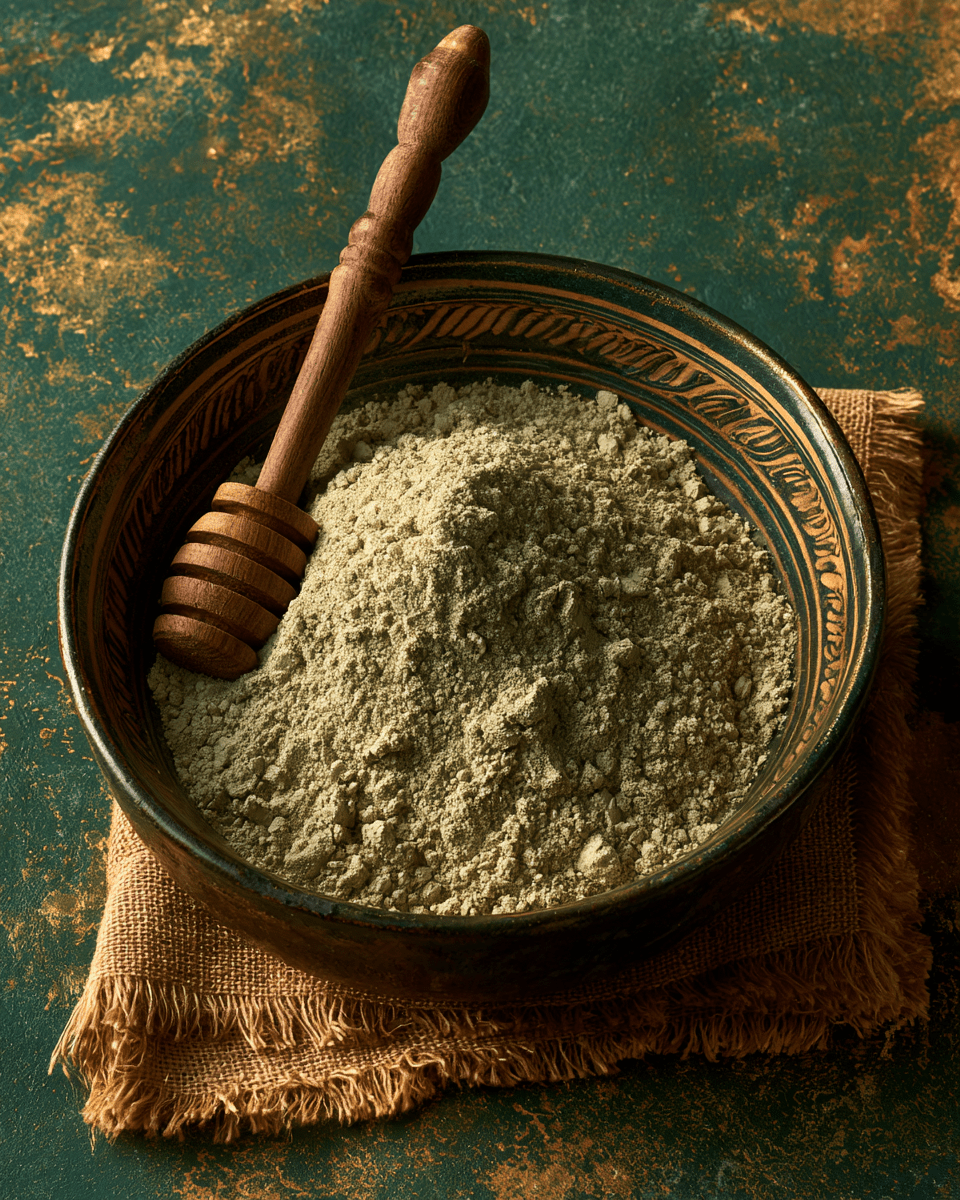
Rhassoul: Natural Skincare Benefits and Routine P1
Choosing the right active ingredients is already taking care of your skin. Rhassoul: here's the complete guide to this ingredient — cosmetic properties, application tips, synergies — to incorporate it properly into your ritual.
Rhassoul: volcanic origin and unique mineral composition
Rhassoul, or ghassoul, is a smectite clay extracted from the depths of the Moroccan Middle Atlas, in the Moulouya region. Its formation dates back millions of years, the result of the alteration of volcanic rocks under the action of hydrothermal fluids. This geological genesis gives it a unique lamellar crystalline structure, different from all other cosmetic clays. Its mineral composition is remarkable: silica (55-65%), magnesium (25-30%), calcium, potassium, sodium, iron, and aluminum in balanced proportions. This richness in mineral ions, particularly magnesium, is associated with its appreciated absorbent and purifying qualities, which distinguish it from many more common clays like white kaolin. Rhassoul also has a naturally alkaline pH (around 8-9), slightly higher than that of the skin (5.5), a characteristic that makes it a gentle treatment for the comfort of the hydrolipidic film, without the stripping effect of classic soaps. Used for centuries in hammams in Morocco and North Africa, it benefits from a heritage of use that largely precedes its modern documentation.
Purifying and absorbing properties: understanding clay
The purifying effect of rhassoul is often described through two complementary characteristics. On the one hand, its lamellar structure is associated with an affinity for impurities and certain particles present on the skin's surface. On the other hand, its clay texture allows it to capture surface fats (excess sebum, cosmetic residues, pollution particles) upon contact with its layers. This double characteristic makes it an appreciated purifying treatment, which cleanses the skin without giving the sensation of stripping the natural surface film. Rhassoul is traditionally known for its ability to absorb excess fats, while remaining gentle on the skin's comfort. Its swelling capacity upon contact with water (it absorbs up to 4 times its volume) also allows it to form a creamy mask that adheres evenly to the skin's relief, maximizing contact and therefore the comfort of purifying application.
Minerals and their contribution to sensitive skin
Beyond its purifying function, rhassoul provides the skin with a series of minerals that contribute to its feeling of balance. Magnesium, the dominant mineral, is one of the minerals naturally found in the skin. Silicon, in the form of silica, is traditionally associated with the skin's supple and toned appearance. Calcium is also among the minerals present in this clay. Rhassoul also contains minerals such as zinc and manganese. For sensitive skin, the relative gentleness of rhassoul compared to mechanical or chemical exfoliants makes it an ideal ally for gentle purification, respecting skin comfort.
Mistakes to avoid with rhassoul
The first mistake is to apply rhassoul to dry skin or to let it dry completely on the face. When the clay hardens, it can create a slight tugging sensation on the skin, which is uncomfortable and potentially irritating for sensitive skin. The mask should remain slightly damp and be rinsed off as soon as it begins to "pull." The second mistake is using rhassoul too frequently: one to two applications per week are sufficient for most skin types. Daily use can over-cleanse the skin and impair the feeling of surface comfort. The third mistake is inadequate hydration after application: rhassoul absorbs impurities but also some surface moisture. It is imperative to apply a moisturizing and nourishing product immediately after rinsing, while the skin is still slightly damp. The fourth mistake is neglecting preparation: rhassoul should be mixed with lukewarm water (ideally floral water — rose water, orange blossom water) until a homogeneous and creamy paste is obtained, without lumps, for an even application. Finally, never mix rhassoul in a metal container: ions can react with the metal and alter the properties of the clay.
Integrating rhassoul into a P1 routine for sensitive skin
In a P1 routine (sensitive skin), rhassoul is ideally integrated as a weekly purifying treatment, never as a daily cleanser. The optimal protocol begins with gentle oil cleansing to dissolve cosmetic residues and surface sebum. Next, prepare the rhassoul paste by mixing 1 to 2 teaspoons of powder with lukewarm floral water. Apply an even layer to damp face, avoiding the eye and lip contours. Leave on for 10 to 15 minutes, making sure to spray water if the mask starts to dry. Rinse with lukewarm water using light circular motions — taking advantage of the clay's slightly exfoliating texture during rinsing for gentle micro-exfoliation. Applying a niacinamide serum after a rhassoul mask is a recommended step, on clean skin free of impurities, to enhance radiance and comfort.
Rhassoul in the Nopal Life universe: purification and natural balance
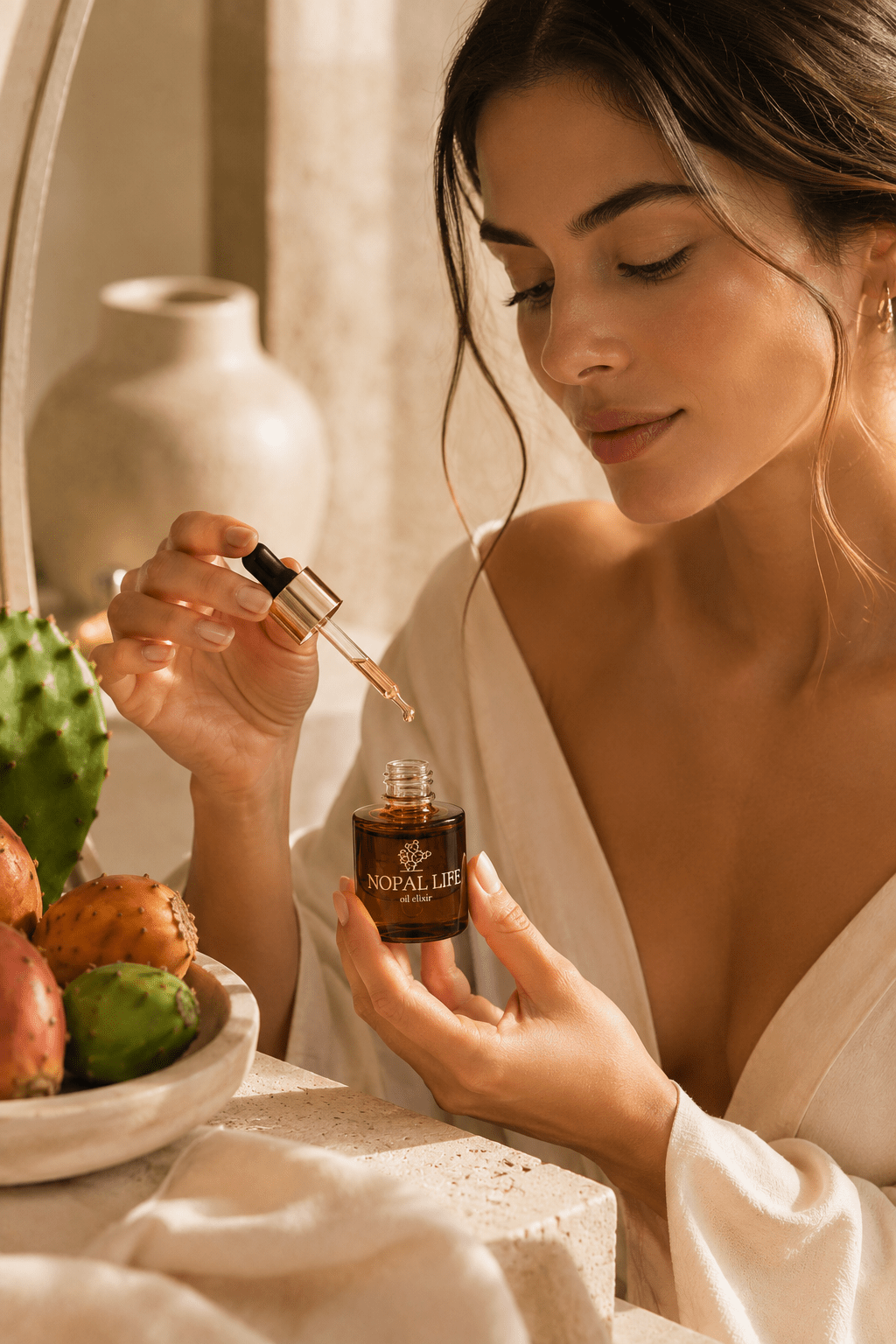
Nopal Life integrates rhassoul into its vision of beauty rooted in Moroccan natural heritage. Like prickly pear seed oil, rhassoul is a treasure of the North African terroir, used for generations with empirical wisdom that contemporary uses only extend. In Nopal Life formulations, rhassoul is selected for its purity, traceable origin, and above-average magnesium content. It synergizes perfectly with prickly pear seed oil: the clay purifies and prepares the skin to receive active ingredients, while the oil nourishes, helps maintain the comfort of the surface barrier, and provides the essential fatty acids that dehydrated skin needs. This combination — gentle purification in the evening as a weekly ritual, daily nourishment with prickly pear seed oil — forms the foundation of a P1 routine that respects sensitivity and is deeply pleasant in the long term.
Frequently Asked Questions
Q: Is rhassoul suitable for dry skin or only oily skin?
A: Contrary to popular belief, rhassoul is suitable for all skin types, including dry and sensitive skin. Its ability to purify without giving the sensation of stripping the hydrolipidic film distinguishes it from more aggressive clays. For dry skin, dilute the paste more and reduce the application time to 8-10 minutes.
Q: Can rhassoul be used as a shampoo?
A: Yes, this is one of its traditional uses. Dissolved in hot water, it forms a natural emulsion that cleanses the scalp and hair without drying them out. Ideal for sensitive hair and scalps reactive to classic shampoos laden with sulfates.
Q: How do I know if rhassoul is of good quality?
A: Good quality rhassoul is recognized by its uniform grayish-brown color (without marked white or black areas), its slight earthy smell (without chemical perfume), its fine texture without lumps, and its rapid swelling upon contact with water. A certificate of Moroccan origin and a mineral analysis guarantee authenticity.
Q: Can rhassoul be suitable for reactive skin?
A: In principle, yes, because its pH and gentleness differentiate it from more alkaline clays. A patch test on a limited area (wrist) is recommended before facial use, and in case of fragile skin, consult a health professional.
Q: What water should be used to prepare the rhassoul mask?
A: Floral water is ideal — rose water for sensitive/dry skin, lavender water for combination skin. Failing that, lukewarm mineral water works well. Avoid very hard tap water, which can neutralize some of the clay's properties and leave mineral deposits.
Q: How long does rhassoul powder keep?
A: Dry rhassoul powder keeps almost indefinitely if stored away from moisture in an airtight container. Once mixed into a paste, it should be used immediately — never store a prepared mixture, which can become contaminated with bacteria.
Q: Can rhassoul replace makeup remover?
A: Partially. Rhassoul absorbs impurities and excess sebum, but does not effectively dissolve water-resistant makeup (waterproof mascara, long-lasting foundation). For complete makeup removal, start with a cleansing oil and then use rhassoul as a second cleanse.
RECOMMENDED TREATMENT
Pure Prickly Pear Seed Oil
Natural formula - Origin Algeria
DISCOVER THIS TREATMENTRead more
Information provided for cosmetic and educational purposes; it does not constitute medical advice.
Our anti-aging treatments