Plant-derived squalane: the lightweight moisturizer
Plant-derived Squalane: The Lightweight Moisturizer Inspired by Natural Sebum
Plant-derived squalane is a legendary ingredient in premium cosmetics and a true everyday beauty ally. Contrary to what its name suggests, it has not been sourced from shark liver since the 1990s: today, it is extracted from sustainable sources such as olive oil, wheat germ, rice bran, and amaranth oil. Its secret? An ultra-light texture that absorbs quickly without leaving a greasy residue, while mimicking the skin's natural sebum.
What is plant-derived squalane?
Squalane is a moisturizing ingredient derived from the transformation of squalene, a component present in the skin's natural sebum. With age, the amount of squalene on the skin's surface gradually decreases, which can accentuate feelings of dryness and a certain loss of hydration over the years. By synthesizing it in a laboratory or extracting it from plant sources, a stabilized and purified molecule is obtained, offering the same emollient properties without impurities. Its "ane" version (squalane) is more stable than its original form (squalene), ensuring a long shelf life and excellent tolerance.
Squalane or squalene: what's the difference?
The two are often confused. Squalene (with an "e") is the molecule naturally present in the skin's surface film, but it oxidizes quickly on contact with air. Squalane (with an "a") is its hydrogenated, and thus stabilized, version: softer, more stable, and ideal for cosmetics. This is the form found in skincare products, guaranteeing a consistent texture and a good product shelf life.
Why skin loves it
Squalane possesses several key properties. First, it provides immediate and comfortable hydration: its light texture absorbs quickly on the surface and helps strengthen the lipid film. Second, it helps preserve hydration by limiting water evaporation, which reduces the feeling of hydration loss throughout the day. Finally, its antioxidant effect helps the skin defend itself against the visible effects of UV rays and external aggressors, resulting in supple and radiant skin.
In addition, squalane offers a comforting benefit: it is non-comedogenic and leaves no shiny finish. This "clear skin" effect is beneficial for oily or acne-prone skin, as the ingredient moisturizes without clogging pores. It smooths the appearance of the skin, softens its feel, and gives the complexion a more even look, without feeling heavy.
Who is it for? Which formula?
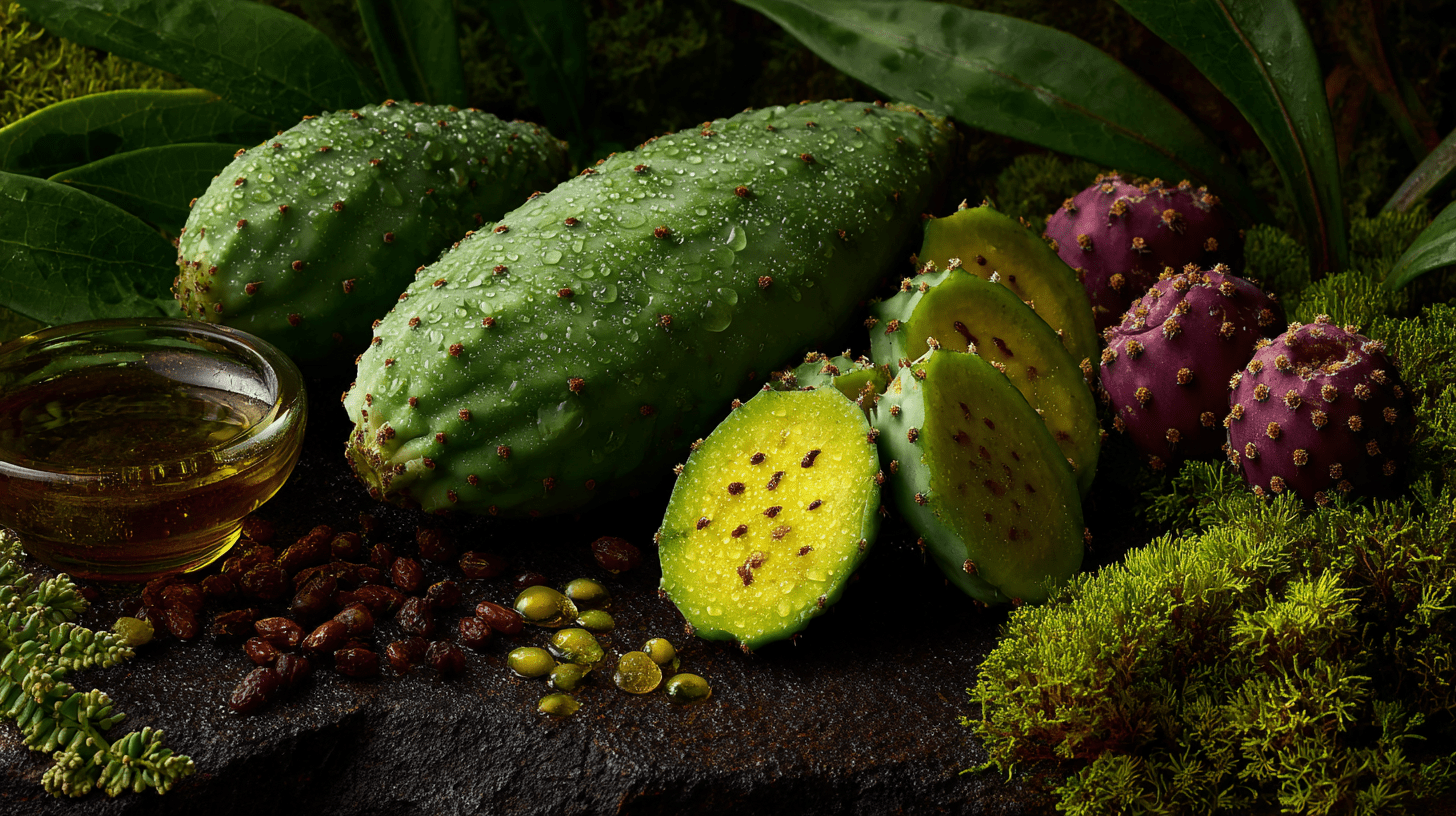
Squalane is suitable for all skin types, even oily or sensitive. Its non-greasy residue makes it ideal as a serum or oil booster, to be applied to slightly damp skin to maximize absorption. It pairs perfectly with other active ingredients: vitamins, peptides, niacinamide, or even polyglutamic acid, a humectant that retains water on the surface and complements the emollient effect of squalane well. Our Prickly Pear Seed Oil works on this principle, enriched with the antioxidant action of polyphenols.
- Dry skin: As a final step, to seal in hydration and compensate for moisture loss, while providing comfort.
- Oily or combination skin: In a thin layer, as its light texture does not leave a greasy appearance and remains suitable for acne-prone skin.
- Sensitive skin: Very well tolerated, fragrance-free, it is suitable for reactive skin.
- Mature skin: As a complement to a cream, to help preserve the skin's supple appearance despite age and limit the apparent loss of firmness.
How to incorporate it into a routine
Squalane is one of the easiest ingredients to pair. Here's a typical use:
- Morning: After hydrating serum, before cream and sunscreen.
- Evening: As the last step, alone or to "lock in" previous treatments.
- As a booster: A few drops mixed with day cream for extra comfort in winter.
One to three drops are enough for the face. Warm them between your palms, then gently press onto the skin rather than rubbing.
Choosing the right one
Quality makes all the difference. On the label (INCI list), look for "Squalane" or "Squalane (Vegetable)". Prioritize transparent plant-based sources (olive, sugarcane, amaranth) and be wary of unusually low prices, which may hide a lower-quality blend. Good squalane is colorless, odorless, and fluid.
Plant-derived squalane and sustainability
The shift from animal to plant-based sources is one of the great ethical advances in modern cosmetics. Today, squalane can be derived from olives, fermented sugarcane, amaranth, or rice and wheat bran. These plant-based channels avoid any pressure on marine wildlife and offer much better traceability. For a responsible choice, opt for clearly indicated plant-derived squalane, ideally from valorized agricultural co-products, which limits raw material waste.
Squalane vs. other moisturizers
How does squalane compare to common moisturizers? Here are some benchmarks:
- Squalane vs. classic vegetable oils: Squalane is lighter, more stable over time, and absorbs faster, without a greasy finish.
- Squalane vs. glycerin: Glycerin attracts water (humectant), while squalane helps retain it on the surface (emollient). They are complementary.
- Squalane vs. polyglutamic acid: Polyglutamic acid captures water like a magnet, while squalane seals in that hydration. Combining them helps limit moisture loss.
- Squalane vs. rich butters: Butters intensely nourish but can feel heavy; squalane provides comfort without a heavy sensation.
It is precisely this lightness that explains its success with combination and oily skin types, often put off by classic oils.
FAQ
Does squalane make skin greasy?
No. Unlike classic oils, squalane absorbs quickly and does not leave an occlusive film. It is even suitable for oily and acne-prone skin, by mimicking their natural sebum, which remains an important skin defense.
Can it be used every day?
Yes, absolutely. Squalane is very well tolerated and does not create dependency. It can be used morning and evening, alone or as a complement to a cream.
What is the best time to apply it?
Ideally on damp skin to lock in moisture. For daytime care, apply it before your cream or under an SPF. For nighttime care, it can be the last step.
How do I know if it's real plant-derived squalane?
Read the INCI list: look for "Squalane" or "Squalane (Vegetable)". Avoid products that do not specify the source, especially those with low prices.
Squalane and hyaluronic acid: can they be combined?
Yes, and it's even a very complementary duo: hyaluronic acid attracts water, while squalane helps retain it on the surface. Apply hyaluronic acid to damp skin, then squalane on top. The same principle applies to polyglutamic acid.
Is squalane suitable for aging skin?
Yes. As the amount of squalene decreases with age, adding squalane helps compensate for this loss and preserve the skin's supple appearance.
Does it really make a difference?
Yes. After 2 to 3 weeks, you will notice softer, more radiant, and better hydrated skin, even with initially dry or sensitive skin. It's an investment in your skin barrier.
In summary
Plant-derived squalane is much more than a trend: it is a beauty ingredient that respects the natural functioning of the skin by helping to strengthen its protective film. Lightweight, stable, well-tolerated, and ethical, it combines properties appreciated at all ages and integrates into all routines, from the simplest to the most complete. Discover how your skin's appearance gains in comfort when you hydrate it regularly.
Skin Intelligence diagnostic to identify your exact needs and choose the right active ingredients.
Read also: Natural cosmetic ingredients: the guide to active ingredients
Sources: Benefits of Squalane - Bien-être au naturel, Plant-derived Squalane - Paula's Choice, Olive Oil Squalane - Nuhanciam. Informational article, without medical scope.
Information provided for cosmetic and educational purposes; it does not constitute medical advice.
Our anti-aging treatments