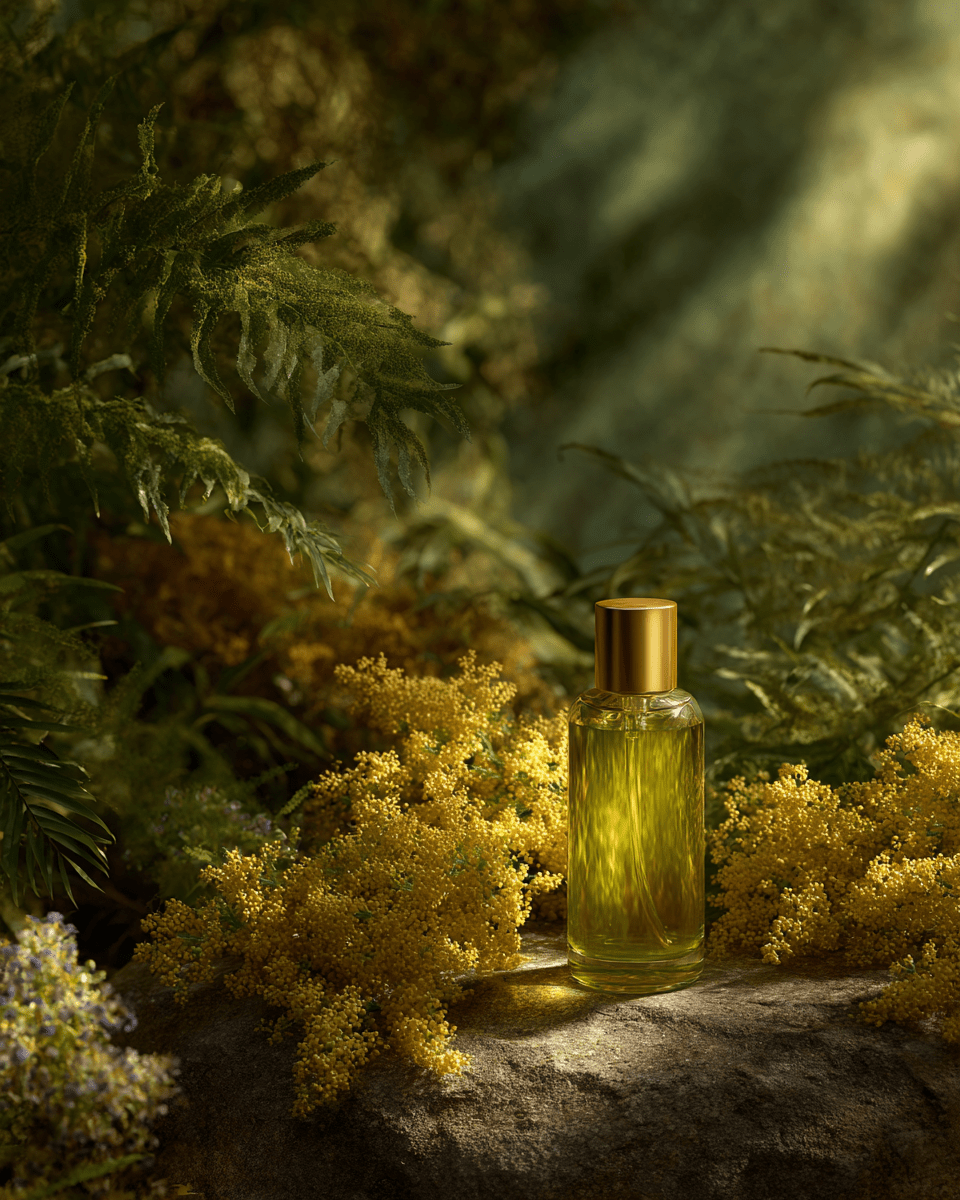
Facial oil for dehydrated skin
A well-understood ingredient is a well-used ingredient. Through Loss of radiance, dehydrated sensitive skin, discover its appreciated qualities for the skin, its uses and its associations — with the guiding principle NOPAL LIFE: demanding nature.
Why your skin loses its radiance: the physics of light explained
Skin radiance is not a vague concept reserved for beauty magazines: it is a precise, observable optical phenomenon that obeys the laws of light reflection. When a light ray strikes the skin's surface, two behaviors coexist. On one hand, specular reflection: light bounces off at a defined angle, identical to the angle of incidence, producing that famous pearly "glow" associated with healthy, hydrated skin. On the other hand, diffuse reflection: light is scattered in all directions randomly, giving a matte, dull, shallow appearance.
The key that distinguishes these two regimes is the roughness factor Ra (average arithmetic roughness), a concept now applied to observing the skin's surface condition. On young, well-hydrated skin, Ra is low — the surface is microscopically smooth, and reflection remains primarily specular. As Ra increases, the surface appears irregular: each micro-relief deflects a fragment of light in a different direction, the skin diffuses more and "absorbs" light instead of reflecting it. The visible result: a relief-less complexion, a tired appearance that even foundation struggles to conceal.
For dehydrated and sensitive skin, this Ra factor often appears higher. Understanding why is the first step to helping restore visible radiance.
Non-exfoliated corneocytes: the true saboteurs of radiance
The stratum corneum is composed of corneocytes, cells arranged in layers on the surface. When skin is comfortable and appears well-hydrated, the natural skin renewal process occurs in an orderly and imperceptible manner. But when the skin barrier appears weakened or the skin appears dehydrated, this surface renewal can be less regular.
Natural surface renewal is promoted by a good level of hydration. When skin visibly lacks water, corneocytes can appear to accumulate on the surface in irregular clusters — reliefs with random contours. These irregularities increase the Ra factor and transform the skin surface into a chaotic diffuser, resulting in a duller appearance.
This is not just an aesthetic issue: an irregular surface and a lack of comfort can also be accompanied by a feeling of discomfort and increased reactivity in sensitive skin.
Dehydration and refractive index: the invisible mechanism
Here is an aspect rarely mentioned in mainstream literature, yet interesting to understand in light biophysics: the level of hydration influences how light propagates through the stratum corneum. The refractive index (n) of a medium determines how light passes through it. In properly hydrated skin, the water present contributes to relatively homogeneous optical behavior through the different layers of the surface.
When skin visibly lacks water, optical discontinuities can appear between corneocytes (n ≈ 1.55 for dry keratin) and water-depleted spaces (n diverging from that of water, ≈ 1.33). These heterogeneities multiply the interfaces where light scatters within the stratum corneum itself, contributing to a dull appearance even before light reaches the surface. The final optical result: the skin appears dull, both on the surface and in its general appearance.
Supporting the hydration of the superficial layers of the skin is therefore not a cosmetic luxury — it is a necessary condition for the optical coherence of the surface and the return of visible radiance.
Prickly pear oil: protocol for optimal reflectance
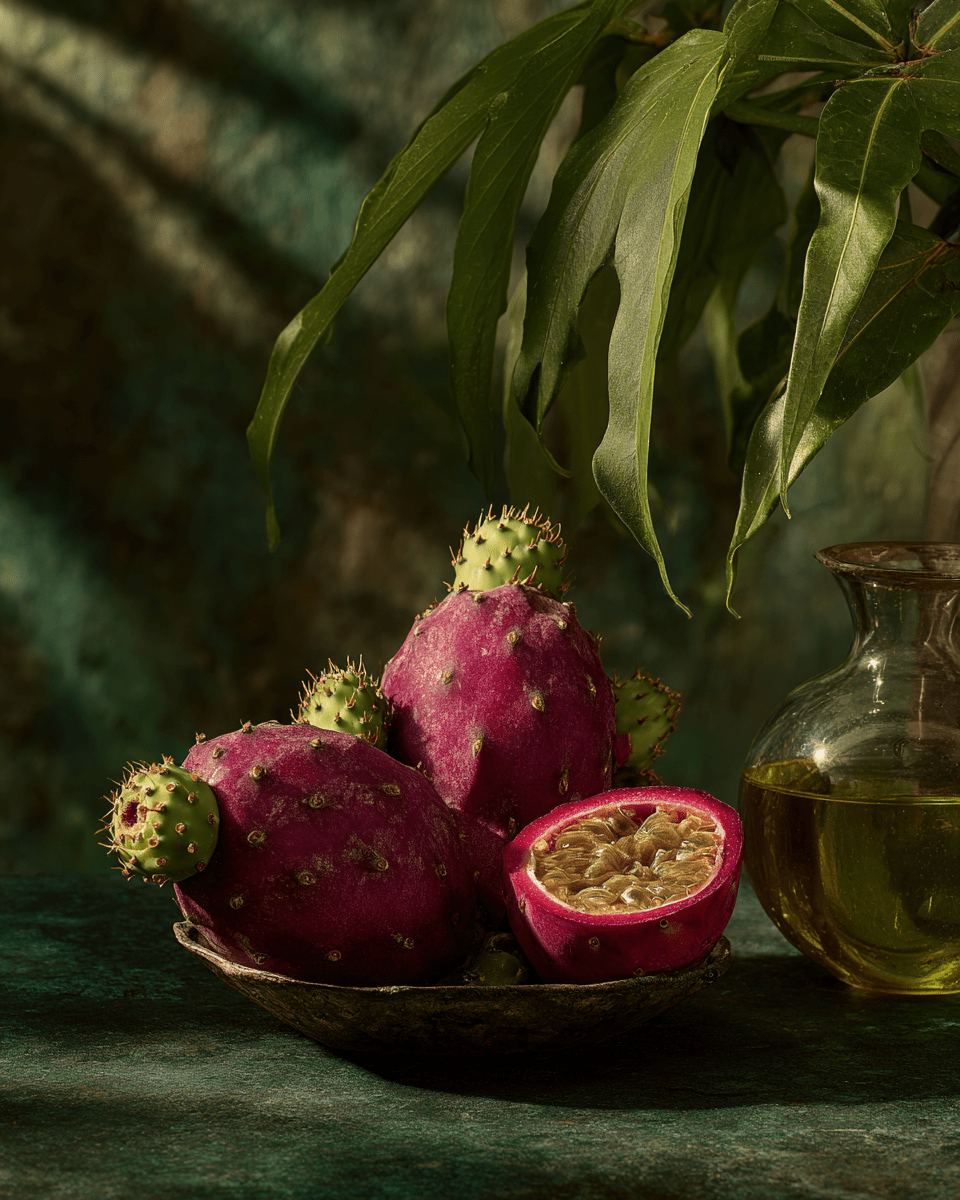
Pure prickly pear oil holds a unique position among vegetable oils in helping to restore radiance to dehydrated, sensitive skin. Its composition acts on several visual parameters simultaneously.
Essential fatty acids (72-78% linoleic): Linoleic acid (C18:2, omega-6) is one of the naturally present components in the surface lipid film. Linoleic-rich oils are appreciated for helping to preserve skin comfort and suppleness. By supporting the surface lipid film, prickly pear oil helps to soothe the appearance of tight skin and to restore the optical homogeneity described in the previous chapter.
Vitamin E (tocopherols, up to 850 mg/kg): The vitamin E content in prickly pear oil is among the highest in the plant kingdom. Vitamin E is an appreciated antioxidant ingredient that helps to preserve the freshness of the oil and skin comfort against daily external aggressions (sun, pollution). It contributes to maintaining a supple and comfortable skin appearance.
Phytosterols (β-sitosterol, stigmasterol): These compounds are valued for their soothing effect on the appearance of sensitive skin and for helping to preserve surface comfort. Skin with a regular and comfortable surface maintains a low Ra — and thus an optimal-looking specular reflection.
Practical protocol: In the evening, after gentle cleansing, apply 3-4 drops of pure prickly pear oil to slightly damp skin. Patting rather than massaging promotes a very gentle application on weakened skin. In the morning, application to cleansed skin creates a protective lipid film that helps maintain comfort throughout the day and enhances radiance under natural light.
Mistakes to avoid to prevent worsening loss of radiance
Most conventional beauty routines work against the radiance of dehydrated, sensitive skin. Here are the most common mistakes, and their impact on appearance:
1. Aggressive mechanical exfoliation: Using granular scrubs on dehydrated and already weakened skin is equivalent to abusing a surface whose Ra is already chaotically high. Far from smoothing the surface, this can create additional micro-irritations, accentuate redness, and amplify the sensation of discomfort. If exfoliation is necessary, exclusively prefer gentle enzymatic exfoliants (bromelain, papain) used a maximum of once a week.
2. SLS/SLES detergents: Sodium lauryl sulfate and its derivatives can severely strip the surface during cleansing. Each use can alter the surface lipid film — precisely the comfort that prickly pear oil seeks to maintain. An oil cleanser or micellar water without strong anionic surfactants is preferable.
3. Denatured alcohols and synthetic fragrances: Denatured alcohol (SD alcohol, alcohol denat.) present in many "lightweight" skincare products can dry out the surface. In the short term, it produces a false "tightened pores" effect through temporary retraction — in the medium term, it can accentuate discomfort and the feeling of tightness in sensitive skin.
4. Hydrating without occlusion: Applying an aqueous serum (hyaluronic acid, glycerin) without a sealing lipid phase can accentuate evaporation — the applied water evaporates, drawing with it some of the surface water. Prickly pear oil applied as a second step precisely creates this partial occlusive layer that helps retain comfort.
5. Neglecting sun protection on dull skin: UV rays are one of the main factors in the appearance of premature skin aging. On already weakened skin, unprotected sun exposure can amplify discomfort and visible loss of radiance. A mineral SPF 30-50 (ZnO, TiO₂) is non-negotiable, even in winter or on cloudy days.
Building a complete routine to durably restore radiance
Helping dehydrated and sensitive skin regain its radiance is a process measured in cell cycles (28 days), not in days. An effective routine integrates three levels of action:
Level 1 — Barrier comfort (evening): Gentle SLS-free cleanser → alcohol-free toner → 3-4 drops of pure prickly pear oil on damp skin → rich balm or cream as a final layer. This nightly protocol takes advantage of the skin's resting phase during the night.
Level 2 — Daytime protection: Gentle cleanser → 2-3 drops of pure prickly pear oil → mineral SPF 30-50. The lightness of the oil allows application under sunscreen without residue effect.
Level 3 — Weekly boosts: Gentle clay mask (kaolin) free of dyes and fragrances to refine the surface appearance a maximum of once a week, followed immediately by a generous application of prickly pear oil to compensate for the drying effect of the clay.
For a personalized assessment of your skin type and recommendations tailored to your exact profile, our Skin Intelligence diagnosis integrates 8 skin dimensions and generates a tailor-made protocol.
All Nopal Life skincare products designed to help preserve the youthful appearance of the skin are formulated in coherence with these biophysical principles — without compromising the tolerance of sensitive skin.
FAQ — Loss of radiance, corneocytes and prickly pear oil
Q: Is loss of radiance irreversible with age?
A: No. While some loss of radiance is linked to the natural slowing of skin renewal (which goes from 28 days to 40-60 days after age 50), the component linked to dehydration and surface comfort can visibly improve at any age. A routine that supports hydration and surface comfort, with the right fatty acids, helps to restore significant visible radiance in 4 to 8 weeks.
Q: Is prickly pear oil suitable for combination or oily skin that has lost its radiance?
A: Yes. The high linoleic acid content of prickly pear oil (72-78%) makes it a choice oil for blemish-prone or combination skin. Oily skin is often richer in oleic acid: an appreciated supply of linoleic acid for a light texture helps to preserve comfort without weighing down the skin and without leaving a greasy film.
Q: How long does it take to see an effect on radiance?
A: A first immediate "glow" effect is noticeable from the first applications (the oil creates a lipid film that smooths the surface appearance). The return of lasting comfort and a regular surface appearance can be appreciated over a complete cell cycle, i.e., a minimum of 4 weeks of daily use.
Q: Can prickly pear oil be layered with other active ingredients (vitamin C, retinol)?
A: With fat-soluble vitamin C (ascorbyl tetraisopalmitate): yes, can be mixed. With water-soluble vitamin C (L-ascorbic acid): apply vitamin C first to cleansed skin, leave for a few minutes, then the oil to seal. With retinol: applying the oil before retinol (buffering) helps to improve comfort and tolerance, particularly on dehydrated sensitive skin.
Q: Does prickly pear oil have a natural SPF?
A: No. Despite its richness in tocopherols and phenolic compounds appreciated for their antioxidant qualities, prickly pear oil does not have a measurable sun protection factor (SPF). It is in no way a substitute for dedicated sun protection.
Q: What is the difference between "dehydrated skin" and "dry skin" in this context?
A: Dry skin (xerosis) is a constitutional skin type — it lacks lipids and comfort. Dehydrated skin is an acquired, temporary condition, linked to a visible lack of water on the surface — it can affect all skin types, including oily skin. In both cases, prickly pear oil is relevant, but the needs differ slightly: on dry skin, it provides lipid comfort; on dehydrated skin, it helps retain water and preserve surface comfort.
Q: Is pure prickly pear suitable for sensitive, reactive skin prone to redness?
A: Yes, it is even one of its preferred uses. Phytosterols (β-sitosterol in particular) are appreciated for their soothing effect on the appearance of sensitive skin prone to redness.
Q: How should prickly pear oil be stored to preserve its optical and biochemical properties?
A: Away from direct light and heat (ideally between 8°C and 20°C). Its richness in polyunsaturated fatty acids makes it sensitive to oxidation. A tinted glass bottle, tightly closed after use, with use within 6 months of opening, preserves all its qualities. If the oil takes on a rancid odor or a darker hue, it has oxidized and should no longer be used on the face.
Why choose Nopal Life for deep and lasting hydration
Skin hydration is not limited to applying water to the skin: it relies on film-forming active ingredients that help retain water on the skin's surface. Nopal Life formulates each treatment around appreciated humectants (hyaluronic acid, aloe vera, prebiotics) combined with prickly pear oil, an exceptional natural emollient that helps seal in moisture and maintain the surface lipid film.
Result: plumped, supple and comfortable looking skin for more than 24 hours. Each formulation is dermatologically tested and adapted to your skin type. Take your free diagnosis to identify the ideal hydration routine for you.
Read more
- Prickly pear oil Opuntia ficus-indica: γ-tocopherol, linoleic, betalains, and mature dehydrated skin
Information provided for cosmetic and educational purposes; it does not constitute medical advice.


Go further than this article
Get our skincare guides by email — and start with your free skin diagnostic: 2 minutes, advice tailored to your skin. We ship to the US, UK, Canada, Australia and 27 European countries; somewhere else? Sign up and you will be the first to know when we deliver to your country.
By signing up, you agree to our privacy policy. Unsubscribe in one click.