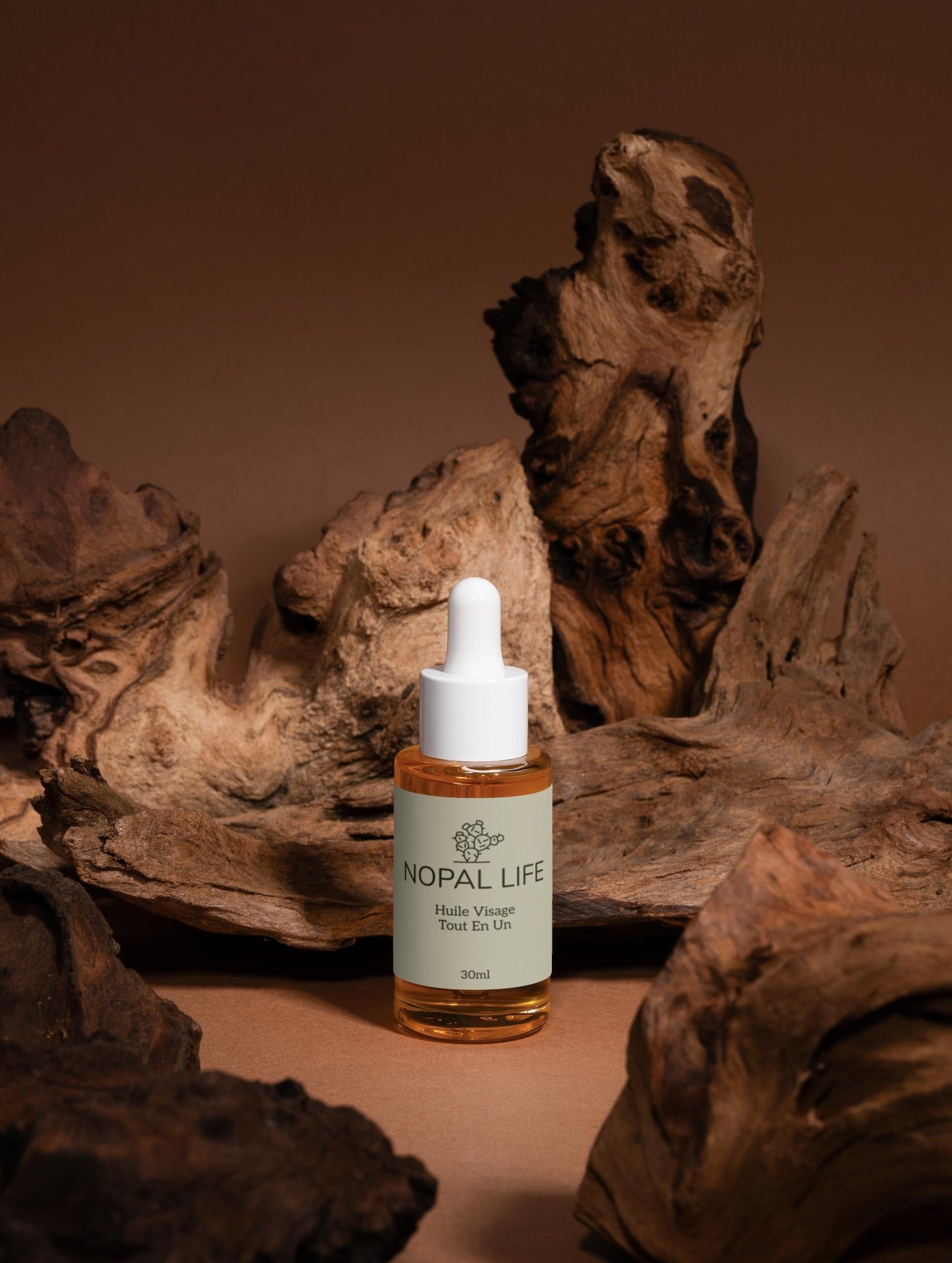
Vitamin E face cream: role and choice
A vitamin E face cream primarily uses tocopherol or its derivatives to protect the oil phase of the formula and support the surface antioxidant defense. Vitamin E is fat-soluble: it integrates with oils and membranes rather than water. Its effectiveness depends on the INCI form, concentration, skin type, and the overall formula.
Tocopherol and tocopheryl acetate: understanding the INCI form
Tocopherol is the free form of vitamin E. Tocopheryl acetate is an esterified form that is more stable in products. The two do not behave in exactly the same way in the skin.
A formula may also contain a mixture of tocopherols. The position in the INCI only gives an approximate indication. The vitamin E page details the main forms.
How vitamin E combats free radicals
Free radicals are reactive species produced primarily by UV and pollution. Vitamin E can interrupt certain oxidation reactions in lipids. It acts in a network with vitamin C and other antioxidants.
This activity does not mean that a cream blocks sun rays. The stability of the formula and its packaging are very important. An often-opened jar exposes the product more to air.
Dry, mature, or combination skin: choosing the base
Dry skin appreciates a cream with squalane, ceramides, and oils rich in fatty acids. Mature skin may also look for peptides, glycerin, or niacinamide. Combination skin prefers a light emulsion that does not leave a heavy film.
Oily skin can tolerate vitamin E in a well-formulated gel-cream. Skin type guides the texture, not the presence of vitamin alone. The skin type test helps avoid choices based solely on age.
Hydration and barrier: what the cream's base does
Hydration primarily comes from humectants like glycerin or hyaluronic acid. Emollients soften the surface. Occlusive agents reduce water loss.
Vitamin E complements this architecture due to its lipophilic nature. A vitamin E face cream can therefore be rich or light depending on its emulsion. The mention of vitamin does not replace the analysis of the first ingredients.
Established benefits, and in what capacity
Vitamin E is one of the oldest antioxidants in cosmetics, and its effects are better understood than those of most trendy active ingredients.
Its primary role is structural: it is a lipid, naturally present in sebum and in the intercellular cement. By applying it, you strengthen the skin barrier — not figuratively, but by supplementing a lipid fraction that the skin already contains. This is what distinguishes it from a purely defensive antioxidant.
It is soothing on reactive skin, and its tolerance is excellent: reactions are rare, making it one of the few active ingredients that can be used daily on weakened skin.
Finally, it acts on skin aging through a specific pathway: it neutralizes free radicals produced by sun exposure and pollution before they damage membrane lipids and collagen. This is a preventive action, not corrective — it limits future damage, it does not repair existing damage.
A point that few pages mention: vitamin E and vitamin C regenerate each other. Once it has neutralized a free radical, vitamin E is itself oxidized; vitamin C restores it. This is why formulas that combine the two are more effective than each one alone, and this synergy is well documented.
What it doesn't do: it doesn't brighten the complexion, doesn't fill wrinkles, and is not a treatment. A vitamin E-rich cream is a daily foundational care, not a corrector.
Morning and evening application order
First apply water-based serums, then the cream. Use a pea-sized amount on the face and a second small amount on the neck. In the morning, always finish with a sunscreen.
In the evening, the cream can seal in a hydrating serum. Just wait long enough to avoid pilling. The skincare order guide details the sequence.
Eye contour and sensitive areas
The eye contour is thinner and more mobile. Use an amount similar to half a grain of rice per eye. Pat on the orbital bone without approaching the lash line.
A highly fragranced or rich formula can migrate and cause discomfort. Vitamin E is not essential for this area. Tolerance and texture take precedence over the anti-aging promise.
Vitamin E and sun: complement, never substitute
Antioxidant activity can complement a sun-exposed routine. It does not provide a measured SPF rating. Only a tested sun product protects to an advertised level.
Apply approximately two fingers of SPF 50+ for face and neck. Reapply during prolonged exposure. A vitamin E face cream without a filter therefore does not replace sun protection.
What a vitamin E face cream does not guarantee
A vitamin E face cream does not make wrinkles disappear and does not neutralize all environmental damage. Controlled studies do not allow a universal dosage to be set for each cosmetic objective. A high concentration is not necessarily more useful.
Some skin reacts to a rich formula or other ingredients. Introduce the product gradually if your skin is sensitive. Evaluate comfort, radiance, and suppleness over several weeks.
- Look for tocopherol or tocopheryl acetate in the INCI.
- Choose the texture according to your skin type.
- Apply a pea-sized amount after water-based serums.
- Use a separate SPF every morning.
- Store the product sealed, away from heat.
| Guide | Recommended choice | Watch point |
|---|---|---|
| Dry skin | Rich cream with ceramides | Avoid fragrances if sensitive |
| Combination skin | Light emulsion | Use less on the T-zone |
| Mature skin | Antioxidants + humectants | Consistency over several weeks |
| Eye contour | Less mobile texture | Very small amount |
Tocopherol or tocopheryl acetate
The esterified form is more stable but needs to be converted by the skin; free tocopherol acts directly and tolerates air less well. The choice is indicated on the INCI, and a vitamin E face oil in an oil phase offers this molecule the environment where it performs best.
Our anti-aging treatments