SPF 50 face cream: how to choose, dose, and apply
An SPF 50 day cream is primarily a photoprotective product that can be comfortably worn every morning. Its benefit doesn't come from the isolated number 50, but from the combination of high protection against UVB, a clearly indicated UVA coverage, and a sufficient amount applied to the skin. An excellent product on paper becomes mediocre if applied too thinly.
The neck often receives less product than the face even though it remains exposed. Extend the protection down to the décolleté if clothing allows. A wide-brimmed hat effectively complements this area without adding cosmetic layers.
A pleasant formula in winter can become too rich in summer. It makes sense to have two seasonal textures if it allows for the same applied quantity. The desired protection remains the same; only the galenic formulation changes.
The PAO (period after opening) and storage also matter. A tube left in a very hot car or opened for a long time can lose texture quality and become difficult to spread evenly. Keep it at a moderate temperature and close it after each use.
What SPF 50 really means
SPF primarily measures protection against UVB under standardized conditions. An SPF 50 allows significantly less UVB to pass through than unprotected skin, but it does not mean a total block. The practical difference between SPF 30 and SPF 50 becomes particularly important when applying a correct amount and reapplying during prolonged exposure.
For the face, protection must also be broad-spectrum to cover UVA, which is involved in visible aging and pigmentation. Look for the UVA mention in a circle, "broad-spectrum," or an equivalent indication depending on the market. The daily choice should therefore be based on a set of criteria, not just the large number printed on the package.
The amount applied changes everything
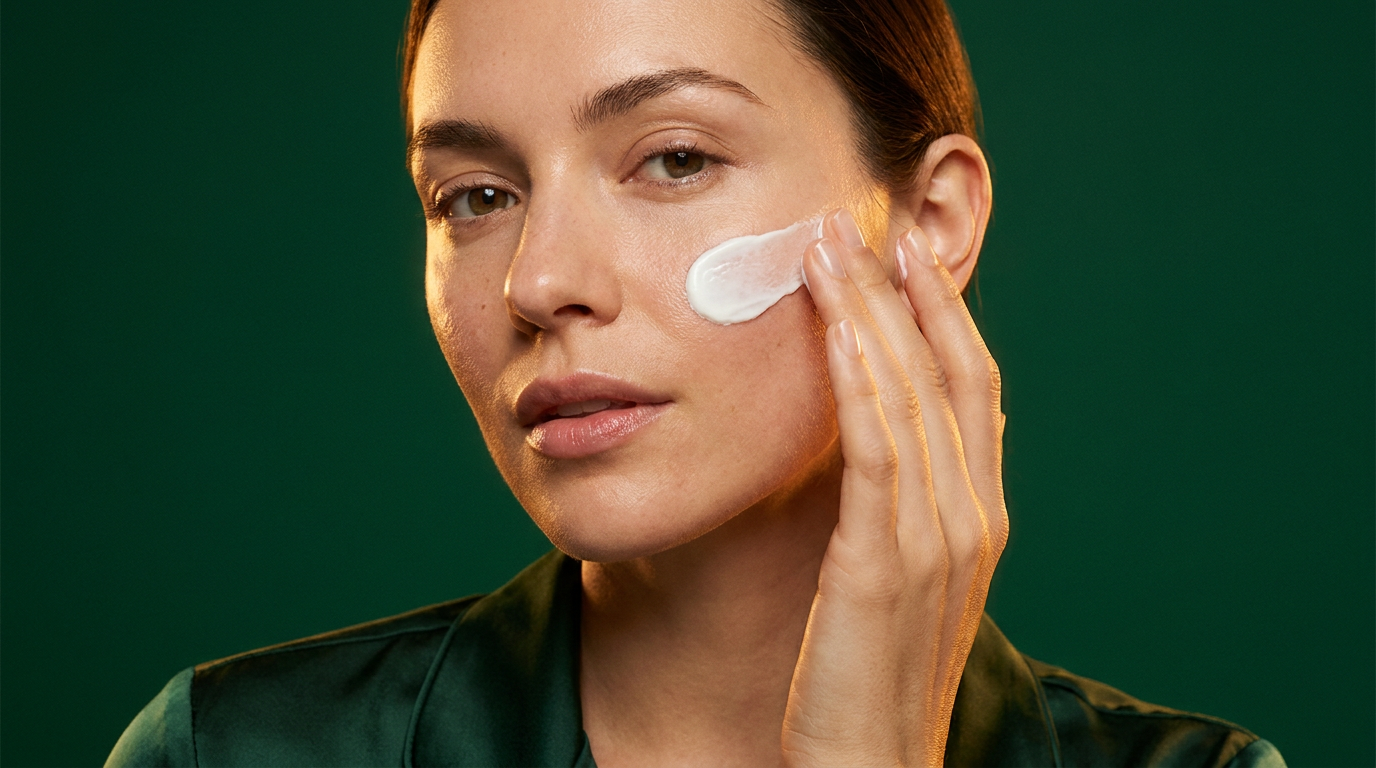
Laboratory tests use approximately 2 mg of product per cm² of skin. In real life, many people apply significantly less, which reduces the protection achieved. For the face and neck, two finger-lengths is a practical guide for many cream or fluid textures.
Distribute the product on the forehead, cheeks, nose, chin, and neck before spreading it. Applying it in small dabs avoids concentrating all the product in the center of the face. The ears, hairline, and jawline are often forgotten.
- Apply before sun exposure
- Cover face, neck, and ears
- Use a generous amount
- Allow the film to form before makeup
- Reapply if exposure is prolonged
Moisturizer with SPF or separate sunscreen
A moisturizing formula containing SPF can be perfectly suitable if applied in sufficient quantity. The problem arises when the cream is dosed like a classic skincare product, with a small dab for the entire face. This amount may be insufficient to achieve the advertised protection.
If the texture becomes too rich when applying the correct dose, it is better to choose a more fluid sunscreen and keep the moisturizer separate. On the other hand, dry skin might appreciate a cream formula that performs both functions. Daily compliance matters more than the marketing category.
Organic, mineral filters and texture
Organic filters absorb UV energy and then dissipate it, while mineral filters like zinc oxide and titanium dioxide primarily work by absorbing and scattering part of the radiation. Both families can provide excellent protection when well formulated.
Mineral filters can leave a white cast on some skin tones, while organic filters can sting the eyes of some individuals. A tinted formula with iron oxides can also be interesting for people concerned about visible spots, as visible light plays a role in certain hyperpigmentations.
Under makeup: allow the film to set
After application, wait a few minutes before applying foundation so that the protective film stabilizes. Then, pat the makeup rather than rubbing vigorously, as repeated gestures can displace the sunscreen layer. A product that consistently pills with your routine will be difficult to use in the correct amount.
In the morning, simplifying layers often helps: light serum, cream if necessary, sunscreen, then makeup. If the sunscreen formula is already moisturizing, the cream can be omitted for normal or combination skin. The goal is to maintain a uniform layer.
When to reapply
Outdoors, after sweating, swimming, or towel-drying, reapplication becomes essential. Water-resistant protection does not mean it remains intact all day. For a day mostly spent indoors away from windows, the strategy can be simpler.
The classic recommendation is to reapply approximately every two hours during continuous exposure. In practice, the context matters: lunch on a terrace, a prolonged walk, the beach, or sports require more vigilance than a day at the office. The best protection is one that matches the actual level of exposure.
UVA, UVB and blue light: what the SPF doesn't tell you
The number 50 refers to UVB, responsible for sunburn. It does not directly provide information about UVA, which penetrates deeper and contributes to skin aging and the appearance of spots. It is the "broad-spectrum" mention, or the circled UVA logo on European products, that indicates balanced coverage between the two.
Choosing a very high SPF without checking this point means protecting against only one risk. Very high protection against UVB combined with low UVA coverage allows precisely what marks the skin in the long term to pass through.
Visible light, including the blue light fraction, is the subject of more recent research. It appears to play a role in pigmentation, especially on darker skin tones. Classic filters allow it to pass through; tinted formulas containing iron oxides provide a more effective physical barrier on this specific point.
Sensitive and reactive skin: which type of filter
Mineral filters, zinc oxide and titanium dioxide, remain on the surface and rarely trigger a reaction. They can sometimes leave a white cast, which recent formulations have significantly reduced.
Organic filters offer finer textures, making them easier to wear every day. Some are more often implicated in intolerances, without it being possible to predict what will suit a given skin.
For reactive skin, two simple guidelines: a low-fragrance formula, and testing on a small area for several days before applying to the entire face.
What an SPF 50 cream doesn't do
High sun protection does not allow for indefinite exposure and does not block one hundred percent of rays. It does not replace shade, clothing, or sunglasses when the sun is intense. Nor does it make an existing spot disappear.
Its role is preventive: to limit the amount of radiation reaching the skin when applied correctly. Regular use helps maintain an even complexion and reduce the visible impact of sun exposure. Quantity and regularity remain the most important parameters.
The SPF worn is better than the SPF displayed
An SPF 50 reserved for beach days provides less year-round protection than an SPF 30 applied every morning without a second thought. The criterion therefore becomes the finish and tolerance: a tinted sunscreen is worn under makeup, a condition for it to be applied daily.


Go further than this article
Get our skincare guides by email — and start with your free skin diagnostic: 2 minutes, advice tailored to your skin. We ship to the US, UK, Canada, Australia and 27 European countries; somewhere else? Sign up and you will be the first to know when we deliver to your country.
By signing up, you agree to our privacy policy. Unsubscribe in one click.