White Clay: Benefits, Exact Dose, and DIY Mask
Key takeaways
- Kaolin (INCI Kaolin, CAS 1332-58-7) has a surface area of 10 to 30 m²/g, compared to 600 to 800 m²/g for green clay: this measurable difference explains its gentleness on dry skin.
- Standard facial dose: 1 level teaspoon of powder (≈ 4 g) for 1.5 teaspoons of floral water, leave on for 5 to 8 minutes, never until completely dry, twice a week at most.
- For hair and scalp: fluid paste, 3 teaspoons, 10 minutes, once a week, lengths protected with a vegetable oil.
- Our 21-day, day-by-day protocol allows you to check in three weeks if this clay really has a place in your routine.
Kaolin, the gentlest clay
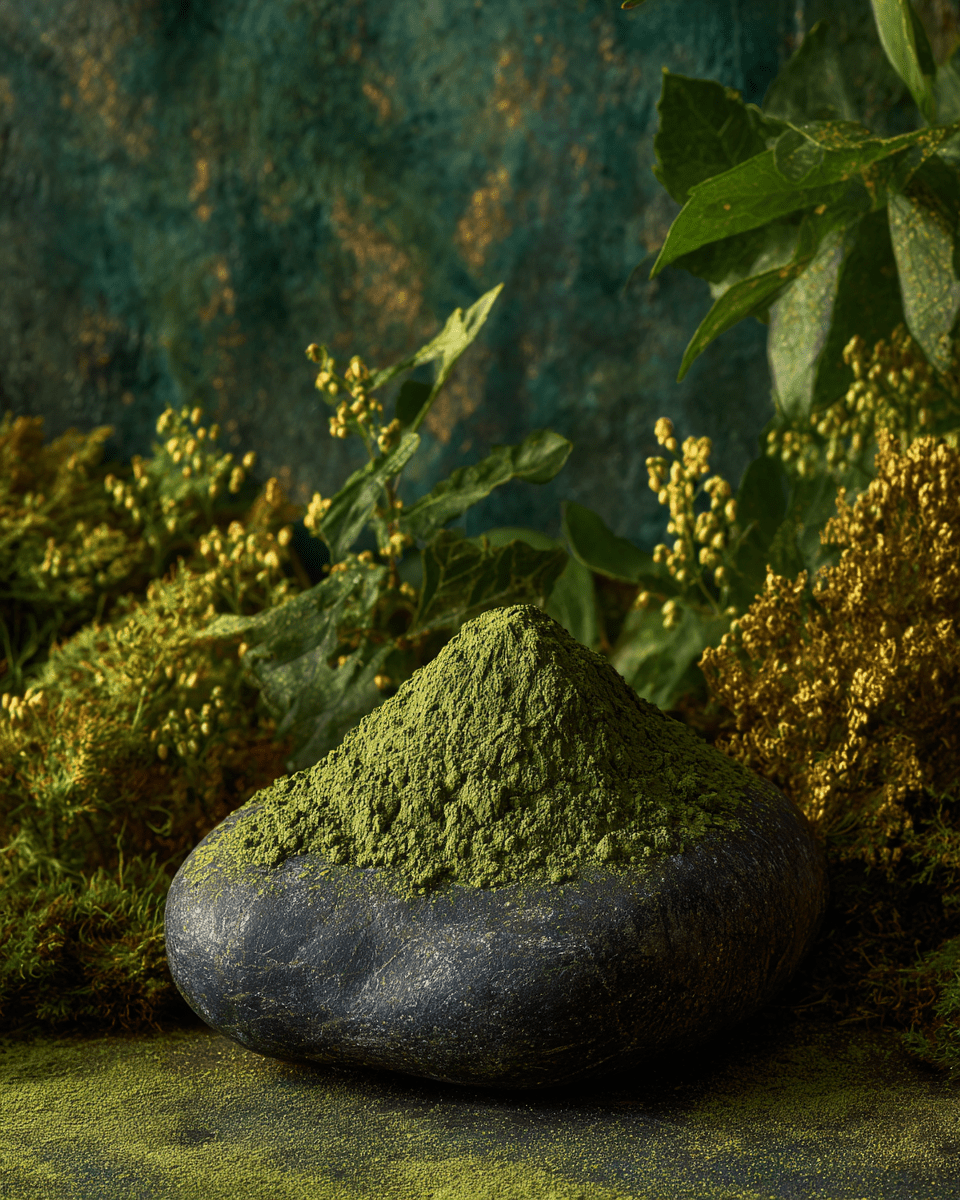
Extracted from silica and aluminum-rich deposits, white clay owes its name to Gaoling, a Chinese hill that supplied the mineral for imperial porcelain. Its ultra-fine texture and ivory color distinguish it from more mineralized clays: it purifies without being aggressive and helps preserve the comfort of the hydrolipidic film.
The reason lies in its structure. Kaolinite is a "1:1" phyllosilicate whose firmly bound layers do not swell on contact with water. The smectites in green clay, on the other hand, separate and exchange ions massively. The difference is quantifiable: cation exchange capacity of 3 to 15 meq/100 g for kaolinite versus 80 to 150 for montmorillonite, developed surface area of 10-30 m²/g versus 600-800 (Carretero & Pozo, Applied Clay Science, 2009). For the same application time, this powder therefore extracts much less water and oil from the skin.
Which clay to choose: the decision table
| Clay | CEC (meq/100 g) | Surface | Powder / liquid | Application time | Profiles |
|---|---|---|---|---|---|
| White (kaolin) | 3 – 15 | 10 – 30 m²/g | 1 / 1.5 tsp | 5 – 8 min | Dry, sensitive, mature |
| Pink | 5 – 20 | 15 – 40 m²/g | 1 / 1.5 tsp | 5 – 8 min | Reactive, dull complexions |
| Rhassoul | 40 – 80 | 100 – 250 m²/g | 1 / 2 tsp | 8 – 10 min | Normal, hair |
| Green | 80 – 150 | 600 – 800 m²/g | 1 / 2 tsp | 8 – 10 min | Combination to oily |
Mineralogical orders of magnitude; they vary depending on the deposit and purification.
Benefits of white clay for the skin
Measured absorption. Its microporous lamellar structure traps fine particles, excess sebum, and residues on the surface, without stripping. It doesn't empty pores: it takes what's on the surface. On a shiny T-zone, this is enough to reduce shine for several hours; on dry skin, it removes the pollution film without affecting lipids.
Even skin texture. By removing superficial dead cells, it makes light reflection more uniform. Light adheres better, the complexion appears fresher and more even, without acids or abrasive exfoliation.
Preserved comfort. Reputed to be non-comedogenic, fragrance-free, and preservative-free by nature, it remains on the surface. This inertness explains why a pure kaolin powder is one of the simplest ingredients to combine with an already busy routine: nothing to penetrate, nothing to layer. This is also why it is found in loose powders, where it absorbs sweat throughout the day without a caked-on effect.
White clay, hair and scalp
For a scalp that quickly becomes oily, it can temporarily replace shampoo: it cleanses by adsorption, without surfactants. For medium-length hair, use 3 teaspoons of powder diluted in warm water or a hydrosol to a yogurt-like consistency paste, applied section by section, for 10 minutes, then rinse thoroughly. Once a week at most.
Dry hair doesn't tolerate clay well on the lengths, as it can weigh them down. The best method: a vegetable oil bath — prickly pear, jojoba or coconut — applied 20 minutes before, with clay reserved for the scalp. Lightened roots, nourished ends. For a quick fix, half a teaspoon of brushed powder at the roots acts as a single-ingredient dry shampoo.
Homemade mask: the exact method
- Pour 1 level teaspoon of powder (≈ 4 g) into a glass or ceramic bowl.
- Add 1.5 teaspoons of floral water — rose for mature skin, cornflower for sensitive skin — all at once, without stirring.
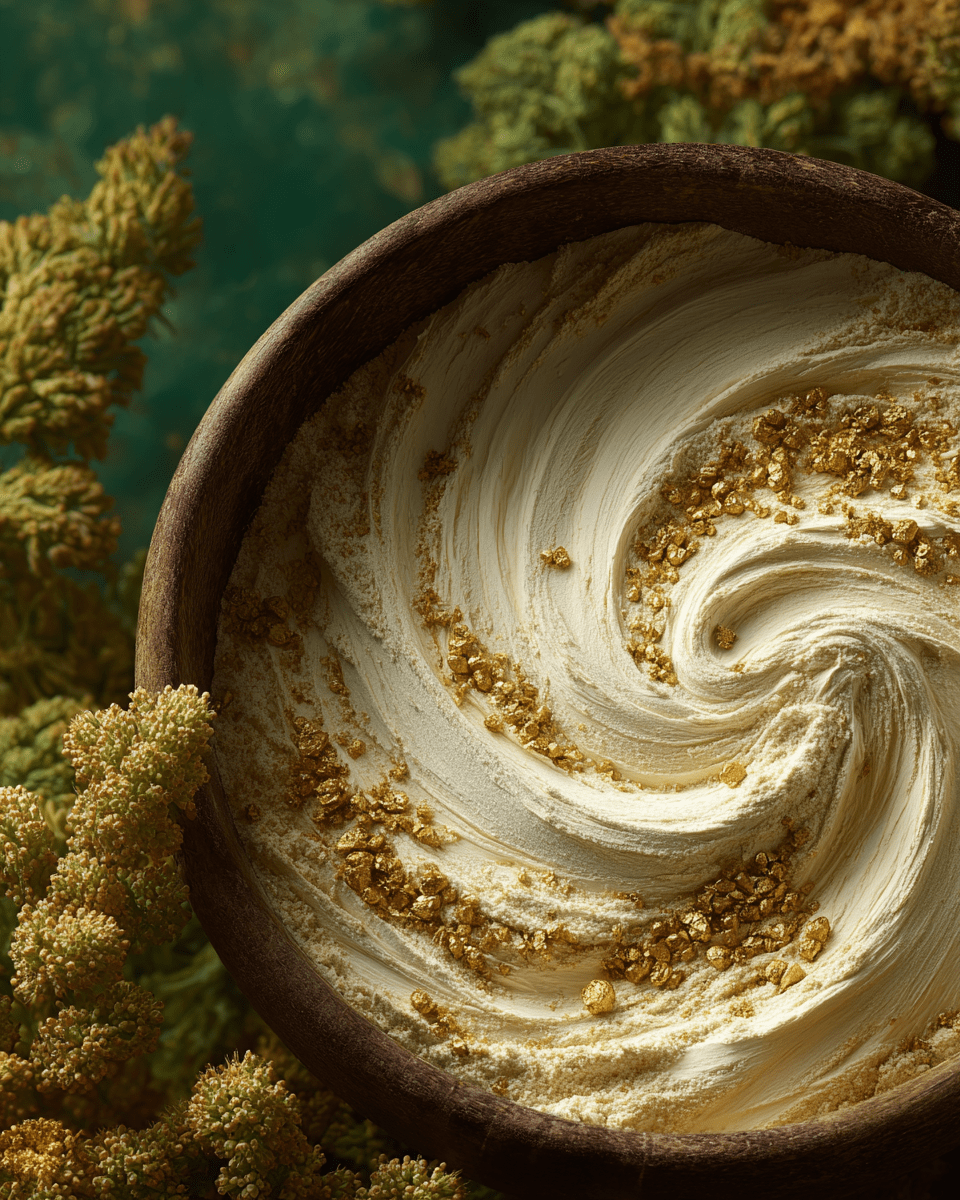
- Let soak for 2 minutes, then mix until it has a dessert cream texture.
- For dry skin: incorporate 3 to 5 drops of vegetable oil. The paste remains flexible and dries much less quickly.
- Apply with a brush in a thick layer on slightly damp skin, avoiding the eye and lip contours.
- Leave on for 5 to 8 minutes, spraying with floral water as soon as the surface mattifies. Never let it crack.
- Rinse with lukewarm water without rubbing, finish with a fresh mist.
- Hydrate within two minutes: serum, then oil or moisturizing treatment.
Variant for dry or mature skin: add 1 teaspoon of liquid honey, which retains water and slows drying. Radiance variant: orange blossom hydrosol and a hint of plain yogurt, leave on for 8 minutes.
Essential oils: optional and never innocuous. At most one drop for a facial preparation, previously diluted in the recipe's vegetable oil, to be avoided by pregnant women, children, and on reactive skin. Citrus fruits are photosensitizing. Without them, the mask remains perfectly satisfactory.
Finally, a false friend to know: pierre d'argile, or white stone, is a household cleaning product, not a face care product. For skin, buy a ventilated or superfine powder labeled "cosmetic grade."
Our 21-day protocol
| Day | Evening routine | Dose and duration | Benchmark |
|---|---|---|---|
| D1 | Elbow crease test | 1 pea-sized amount, 10 min | No redness after 24h |
| D3 | First face mask | 1 tsp, 5 min | Comfort after rinsing |
| D4-D6 | Rest, oil only | 3 drops | Comfort returned within 24h |
| D7 | Mask + daily photo | 1 tsp, 6 min | Comparison #1 |
| D10 | Face + scalp | 1 and 3 tsp | Clean roots in the morning |
| D14 | Mask + photo | 1 tsp, 8 min | Comparison #2: skin texture |
| D17 | Honey-enriched version | 1 tsp, 8 min | Perceived difference |
| D21 | Review, final photo | — | 2×/week, 1×/week or stop |
Reading the results: if your complexion is more even and you experience no tightness, keep two masks a week. If comfort takes more than 24 hours to return, reduce to once a week and switch to the enriched version. If tightness persists, this clay is not the right tool for your skin this season—which is a useful conclusion.
Gentle version or enriched version? The Nopal Life Skin Intelligence™ diagnostic will guide you in 11 questions.
Five common mistakes
- Letting the mask dry. A cracked layer draws water from the superficial layers: the opposite of the desired effect. Rinse as soon as the surface mattifies.
- Doing it every day. Twice a week for the face, once for the scalp. The rest of the time, a gentle cleanser is sufficient.
- Not moisturizing afterward. Serum or a few drops of oil within two minutes of rinsing.
- Buying without reading the INCI. Kaolin must be among the first five ingredients, with no denatured alcohol or synthetic fragrance at the top of the formula.
- Preparing in advance. A clay paste mixed with water contains no preservatives: use the exact dose, prepare, then discard. Dry powder, however, can be kept for years in a sealed jar.
Two more precautions: do not inhale the powder when pouring it, and never apply to broken skin. For external use only.
Effective pairings
Kaolin naturally finds its place in the second step of double cleansing, after a cleansing balm, or as a mask twice a week. It prepares a clean surface for the treatments that follow.
With vitamin C, surface purification and radiance boost complement each other: the 2% Vitamin C Radiance & Spot Serum, which combines stabilized vitamin C, niacinamide, and prickly pear extracts, is applied right after rinsing. With hyaluronic acid, the skin appears clear and plump. With niacinamide, the appearance of pores refines and skin texture evens out over time.
Finally, with prickly pear oil, the combination is perfect: where the mineral removes, the oil restores. Three drops pressed onto still-damp skin after the mask, or four drops directly into the paste for very dry skin. Rich in linoleic acid, vitamin E, and phytosterols, it helps maintain skin comfort without heaviness.
Frequently asked questions
Is it suitable for very dry skin?
Yes, it is the only clay unreservedly recommended in this case. Its limited absorbing power (CEC of 3 to 15 meq/100 g) helps preserve the comfort of the hydrolipidic film, provided it is left on for only 5 minutes and immediately hydrated afterward.
What is the difference from green clay?
Green clay, richer in iron and magnesium, has an exchange capacity of 80 to 150 meq/100 g and a surface area of 600 to 800 m²/g. Much more absorbent and astringent, it is aimed at combination to oily skin.
How much and how often?
One level teaspoon, or about 4 g, for 1.5 teaspoons of liquid, twice a week for the face. For medium-length hair, 3 teaspoons, once a week.
Can it be used during pregnancy?
This inert mineral remains on the surface, for external use only. As a precaution, avoid essential oils and seek advice from a qualified healthcare professional before introducing any new product.
Does it help with dull complexion or spots?
It revives a dull complexion by smoothing the surface, which improves light reflection. To help reduce the visible appearance of spots, combine it with brightening active ingredients: vitamin C, niacinamide, or licorice extract.
How to recognize good quality powder?
"Cosmetic grade" mention, INCI name Kaolin, ventilated or superfine texture, homogeneous ivory shade, no odor. Pottery or garden clays do not meet any cosmetic purity requirements.
Want to know if this treatment is right for your skin?
Start my free diagnosis and receive the routine corresponding to your profile.
Conclusion
Three figures summarize the essentials: one teaspoon, five to eight minutes, twice a week. At this rate, this powder leaves skin clear, with an even texture and a brighter complexion, without ever feeling tight. For hair, it lightens the roots provided the lengths are nourished. The rest is about a well-constructed routine rather than a miracle ingredient.
Sources
- Carretero M.I., Pozo M., "Clay and non-clay minerals in the pharmaceutical and cosmetic industries", Applied Clay Science, 2009-2010: cation exchange capacity and specific surface area of kaolinites and smectites.
- CosIng database of the European Commission: Kaolin, CAS no. 1332-58-7, functions as absorbent, mild abrasive, opacifying agent.
This content is informative and educational; it does not replace medical advice, diagnosis, or dermatological consultation. In case of doubt or persistent skin problems, consult a qualified healthcare professional.
RECOMMENDED CARE
2% Vitamin C Serum Brightening & Spot Correction
To be applied right after the mask
DISCOVER THIS CARE PRODUCT →


Go further than this article
Get our skincare guides by email — and start with your free skin diagnostic: 2 minutes, advice tailored to your skin. We ship to the US, UK, Canada, Australia and 27 European countries; somewhere else? Sign up and you will be the first to know when we deliver to your country.
By signing up, you agree to our privacy policy. Unsubscribe in one click.