Green Clay: dosage, application, and 12-minute facial protocol
Key Takeaways
— The most common variety owes its color to the iron present in its mineral lattice, never to added dye.
— The grind determines the use: finest for above the shoulders, coarsest reserved for body wraps and baths.
— Our dilution chart provides, for each skin type, the exact dosage, liquid volume, desired consistency, application time, and weekly frequency.
— The complete routine takes exactly 12 minutes: 3 for oil cleansing, 1 for preparation, a maximum of 6 for application and setting on dry or mature skin, 1 for rinsing, and then 60 seconds for moisturizing care.
— A non-negotiable rule: never let the preparation dry completely.
A Sedimentary Rock Transformed into a Beauty Ritual
Green clay is one of those raw materials that we think we know because it's everywhere: in pharmacies, organic stores, homemade recipes, and hammam rituals. However, there's a significant difference in use between ultra-fine powdered green clay for delicate areas and a coarse grind sold in kilogram bags for body wraps — and this is precisely where most disappointments arise. Yet, clay is not a complicated material: it is one of the oldest raw materials in cosmetic care, and its reputation comes from a visible effect on the skin's appearance from the very first application.
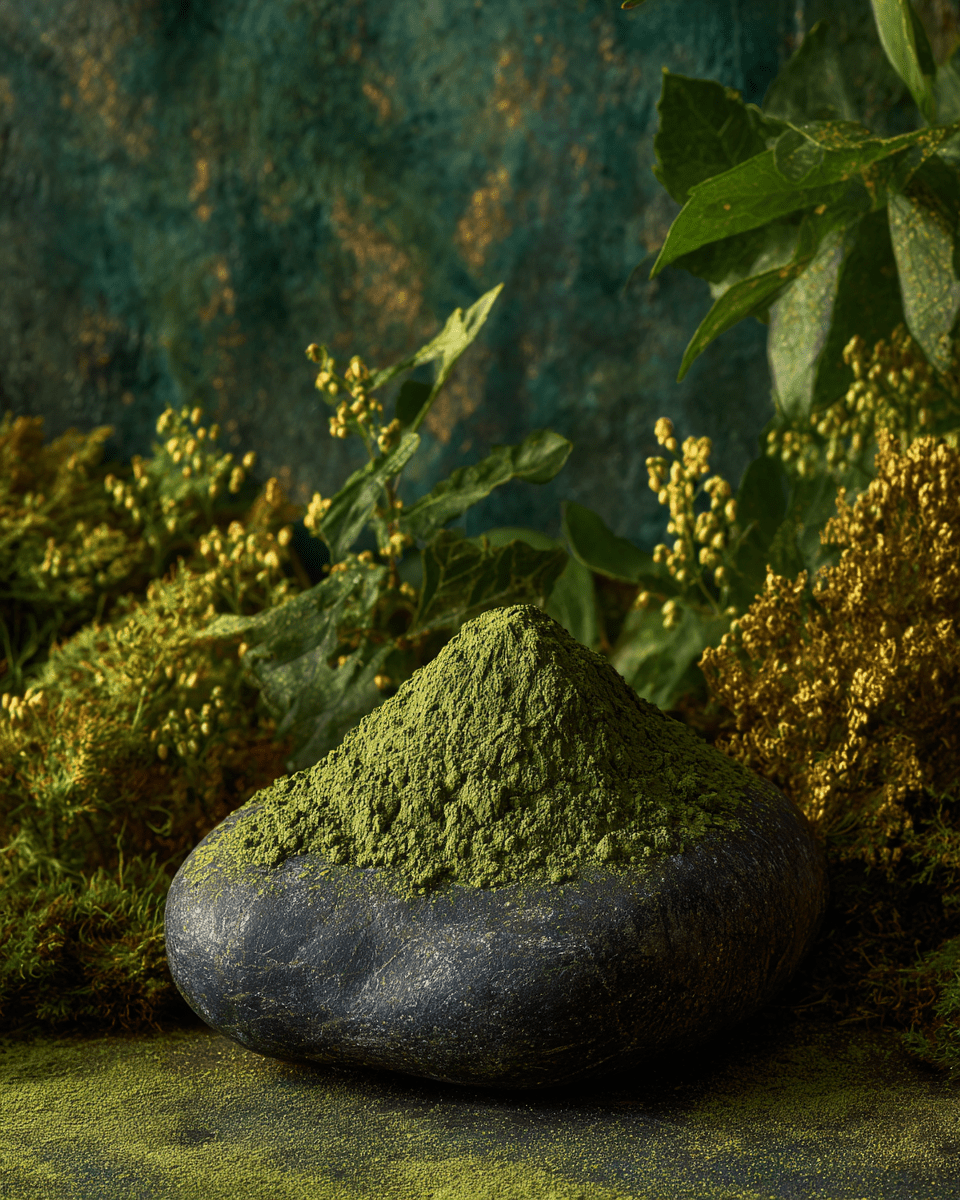
What is commonly referred to as green clay most often refers to the illite variety, a phyllosilicate formed from the slow decomposition of silicate rocks over millions of years. Extracted from quarries, dried, and then ground, it arrives in our bathrooms as a dry, fine, almost silky material. Its INCI name, the one you read on the label of a finished product, is usually Illite — sometimes accompanied by other clay minerals depending on the deposit.
Contrary to a persistent misconception, this material is not reserved for blemish-prone skin. Used judiciously, with an adapted protocol and especially as part of a double cleanse, it becomes a valuable ally for dry and mature skin, provided a few simple rules are followed, which we will detail step by step. It naturally fits into a routine focused on luminosity and even skin tone, without ever disturbing the skin barrier. Well-dosed, clay is suitable for almost all skin types; poorly dosed, it suits none.
Why this color? The question of iron oxide
The color of a clay is not a marketing argument; it's a geological signature. The green hue comes from iron lodged in the crystal lattice in a reduced form, associated with accessory minerals like celadonite or chlorite. When this same iron is present at a higher oxidation state — as ferric oxide — the rock turns red. A deposit poorer in iron and richer in kaolinite yields a white hue; a mixture of the two, a pink hue.
Practical consequence: the shade roughly informs you about the mineral load, and thus the more or less adsorptive nature of the material. A dark shade generally indicates more iron and magnesium than a pale shade. But color alone says nothing about the fineness of grinding or the purity of the batch — two criteria far more crucial in use. With the same hue, two clays can behave very differently on the skin.
What the mineral composition says
The layered structure of this rock gives it a remarkable capacity for adsorption — not absorption. The distinction is technical but illuminating: impurities, excess sebum, pollution residues, and dead cells attach to the surface of the particles, which carry them away when rinsed. Nothing is drawn from the depth of the dermis: clay does not penetrate below the stratum corneum. All the action takes place on the skin's surface, and that's perfectly fine — it's even what makes the action safe at this level of intervention.
| Mineral | Indicative Proportion | What it provides to the surface |
|---|---|---|
| Silica (SiO₂) | approx. 45 to 55% depending on the deposit | Particle framework; very gentle mechanical smoothing of visible texture |
| Aluminum | second constituent of the layer | Contributes to the layered structure, and thus to adsorptive power |
| Iron | a few percent | Responsible for the hue; marker of the deposit type |
| Magnesium | traces to a few percent | Structuring mineral, valued in appearance-remineralizing formulas |
| Calcium | traces | Contributes to the overall mineral load of the mixture |
| Potassium | traces | Signature of this variety, which contains more than kaolinite |
These values are approximate: two quarries a hundred kilometers apart do not yield exactly the same material. Buying in bulk without origin or analysis remains a gamble, whereas a sachet sold with its geographical origin and particle size allows for building a reproducible routine. This is also why two sachets sold at the same price do not yield the same mask.
For dry and mature skin, the mineral input remains highly relevant: these skin types often present a dull complexion linked to the accumulation of superficial cells. Combining this step with a Vitamin C serum combines the clarity of minerals with the firm, plump appearance and antioxidant comfort associated with Vitamin C.
Green, White, or Pink: Each with its Own Intensity
Choosing your clay means choosing its intensity. The table below compares the most common colors based on concrete criteria rather than promises.
| Color | Dominant Mineral | Intensity of Action | Recommended Application Time | Skin Profile |
|---|---|---|---|---|
| Classic Green | Ferric phyllosilicate, rich in potassium | High, the most adsorptive of all | 5 to 10 min depending on skin type | Combination to oily; dry and mature in highly diluted version |
| Green (montmorillonite) | Smectite | High, swells more on contact with liquid | 5 to 8 min | Oily skin, chest and back wraps |
| White (kaolin) | Kaolinite | Gentle | 8 to 10 min without risk of tightness | Sensitive, very dry, beginners |
| Red clay | Earth rich in ferric oxide | Medium | 5 to 8 min | Normal to dry, seeking a revitalized complexion |
| Pink | Mixture of kaolin + ferric earth | Very gentle | 8 to 10 min | Reactive, first-time users |
The interpretation is simple: the further down the table you go, the gentler the material. If you've never used a mineral treatment, start with kaolin for one or two weeks before moving on to a more potent version. If your T-zone gets shiny by the end of the day, green clay is the right choice directly, and there's no need for an intermediate step. In any case, the same clay is not dosed the same way depending on the area being treated.
Superfine or Ventilated: The Grind Determines the Use
This is the point almost no one checks before buying, yet it explains half of all bad experiences. The same clay, from the same deposit, behaves very differently depending on how it has been dried and ground. Spreading a coarse grind on facial skin guarantees a grainy texture, difficult rinsing, and an unnecessary rubbing sensation.
| Grind | Grain Size (approximate) | Appropriate Use | To Avoid |
|---|---|---|---|
| Green clay superfine | a few tens of µm, imperceptible to the touch | Face mask, neck, décolleté; smooth and homogeneous texture | Nothing: this is the benchmark for the most delicate area |
| Ventilated | fine, slightly sandier | Large areas: back, legs, scalp | Eye contour, very reactive skin |
| Crushed green clay | fragments of 1 to 5 mm | Thick poultices, bath, slow preparation | Any application above the shoulders |
| Ready-to-use (tube) | already hydrated, in tube or jar | Emergency, travel, time-saving | Blind use: the formula contains preservatives |
Remember the short rule: finest above the shoulders, coarsest below. Fragmented clay has its legitimacy — it rehydrates slowly, holds well in a thick layer, and is often cheaper per kilo — but this clay requires at least two hours of soaking before it becomes workable, which reserves it for pre-planned applications.
From Quarry to Sachet: Understanding the Process
Two seemingly identical clay sachets can have followed very different industrial paths. Knowing the steps of the process allows you to decipher a label in ten seconds and avoid the disappointments of blind buying.
| Step | What it involves | What it changes for you |
|---|---|---|
| 1. Extraction | Quarrying, in layers | Geographical origin determines iron content and final hue |
| 2. Drying | Sun-drying on concrete areas, or in industrial ovens | Sun-drying, being slower, is traditionally preferred to preserve surface properties |
| 3. Grinding | Crushing then micronization | Determines fineness and therefore the application: delicate areas or body wrap |
| 4. Sieving | Separation by size on sieves | A stated granulometry on the packaging is a good sign of quality |
| 5. Packaging | Kraft bag, jar, or tube for pre-hydrated formulas | Dry format can be stored for years; wet format requires preservatives |
A simple guide when purchasing: a label that specifies the mineralogical variety, grind, quarry of origin, and drying method is better than a generic promise. Conversely, an isolated mention without further details leaves you in the dark. Well-characterized clay rarely costs more: it is simply better documented.
The dilution guide: the chart to keep in your bathroom
The vast majority of failures come from improvised dosing. Too thick, the preparation dries in three minutes and tightens; too liquid, it runs down the neck. Here is our reference guide, based on a superfine green clay and a liquid at room temperature. Measurements are given in level teaspoons, for a medium consistency paste.
| Profile | Dry Dosage | Liquid | Target Consistency | Application Time | Frequency |
|---|---|---|---|---|---|
| Dry or Mature | 1 tsp (≈ 4 g) | 10 ml hydrolat | Fluid yogurt, coats spatula without sticking | 5 to 6 min | 1 to 2 × / week |
| Normal | 1.5 tsp (≈ 6 g) | 12 ml hydrolat or filtered liquid | Classic yogurt | 6 to 8 min | 1 to 2 × / week |
| Combination | 2 tsp (≈ 8 g) | 14 ml filtered liquid | Thick cream, stays on spatula | 8 to 10 min on T-zone | 2 × / week |
| Oily | 2 tsp (≈ 8 g) | 12 ml filtered liquid | Thick, opaque cream | 10 min maximum | 2 to 3 × / week |
Two useful clarifications. First, the ratio to remember for dry skin is close to 1 dry volume to 2.5 liquid volumes; for oily areas, it goes down to about 1 to 1.5. Second, let the mixture rest for sixty seconds before spreading: the material finishes hydrating, the paste gains suppleness, and application becomes significantly more comfortable. A well-rested paste spreads in half the movements.
As for the liquid, very hard tap water is the worst possible choice. In order of preference: hydrolat (rose, orange blossom, cornflower), filtered liquid, or low-mineral mineral water. Hydrolat also provides a pleasant scent — which is not insignificant when you keep the preparation under your nose for five to ten minutes.
The 12-minute protocol: double cleansing and application, timed
Double cleansing involves two steps: a lipophilic phase (oil or balm) that dissolves makeup and fatty substances, followed by an aqueous phase that removes hydrophilic residues and refines skin texture. Clay is ideally used in this second step, as a short mask. Here is the timed sequence, calibrated for dry or mature skin.
T0 → T3 · Oil cleansing (3 min). Apply a few drops of rich vegetable oil — prickly pear seed oil is ideal — on dry skin and dry hands. Massage for two minutes in circular motions, emulsify with a little lukewarm liquid, rinse. This step preserves the hydrolipidic film while removing stubborn makeup.
T3 → T4 · Preparation (1 min). In a glass or ceramic bowl, pour the dry dosage, add the liquid according to the table above, then mix with a wooden spoon. Let it rest for a few seconds.
T4 → T10 · Application then rest (6 min). Spread a regular layer of 1 to 2 mm in about thirty seconds, carefully avoiding the eye and lip contour — a layer too thin dries almost instantly, which is the classic false economy. Then relax, ideally in a non-overheated room. If the surface starts to matte or crack before the end, spray a little hydrolat to re-moisten it. The texture must remain supple from start to finish: this is the only condition for the clay to remain comfortable on the skin.
T10 → T11 · Rinsing (1 min). Lukewarm, never hot, with bare hands or a soft damp cloth. Do not rub: first soften, then remove.
T11 → T12 · The 60 seconds that matter. On still slightly damp skin, immediately apply serum, then a nourishing cream. This last step is not optional: it is what transforms a harsh gesture into a comfortable treatment.
For the final step, the Nopal Life Radiance Vitamin C Serum is particularly suitable: it provides vitamin C to help unify the appearance of the complexion while supporting skin comfort after rinsing. If you're unsure about the exact order of your bottles, the Nopal Life Skin Intelligence™ diagnostic analyzes eleven parameters and reconstructs the sequence adapted to your profile.
Combination to oily skin: treat by zones, not all over the face
Applying the same thickness everywhere is a methodological error. Combination skin by definition exhibits two behaviors on the same area: a T-zone that gets shiny by the end of the day, and cheeks that are often normal, sometimes dry. Treating them uniformly means unnecessarily drying out the cheeks.
The solution is a multi-zone mask that only takes thirty seconds longer:
— Forehead, nose, chin: thick dosage according to the "combination" line of the grid, leave on for 8 to 10 min. This is where the purifying action makes the most sense, on the areas where shine is most visible.
— Cheeks and surrounding areas: diluted version as for dry skin, leave on for 5 min, rinsing this area first if necessary.
— Eye and lip contour: nothing, ever. The skin here is thinner and has no need for an absorbent action.
For combination-oily profiles, you can increase to three weekly applications without difficulty, provided you consistently follow with a moisturizer. A commonly misunderstood point: skin that produces a lot of sebum needs as much water as any other. Eliminating hydration under the pretext of shine remains the best way to achieve skin that is both uncomfortable and greasy.
Expected benefits and honest limitations
The advertised benefits vary enormously from one source to another. Here, objective by objective, is what clay actually does for the skin and what it will not do — the distinction is better than a long list of promises.
| Objective | What is observed | Observed duration | What not to expect |
|---|---|---|---|
| T-zone shine | Visibly lighter appearance immediately after rinsing | 1 to 2 days | A lasting change in sebum production |
| Pore appearance | Visually less prominent pores, more regular texture | 2 to 3 days | A reduction in their actual size, largely genetic |
| Complexion radiance | Smoother surface, better light reflection | 2 to 3 days | Whitening or a change in skin tone |
| Minor temporary imperfections | Purified appearance of congested areas | variable | A treatment role: consult a professional if it persists |
| Established spots/pigmentation | Indirect effect, via surface renewal | none in the short term | Disappearance: combine unifying actives over time |
This table explains why reviews oscillate between absolute enthusiasm and frank disappointment. Those who expect a weekly maintenance ritual are rarely disappointed; those who hope for a treatment always are. One last reference: this ritual does not replace a daily cleanser, a moisturizer, or sun protection. Clay complements a routine, it does not replace it.
The duo with prickly pear seed oil
The Nopal Life face routine is built around prickly pear seed oil as the central active ingredient — rich in linoleic acid, vitamin E, and plant sterols, cold-pressed from the fig tree's seeds. Clay integrates into this as a weekly reset gesture, preparing the ground for daily care.
The logic of the duo can be summarized in one sentence: clay removes, oil restores. One removes what clogs the surface, the other immediately replenishes lipids. Used alone, each shows its limitations — the first eventually tightens, the second is not enough to regularize skin texture. Used in the correct order, they complement rather than compete.
Two ways to combine them, depending on the time available:
1. In sequence (recommended). Oil cleansing → mineral mask → rinsing → serum → two to three drops of prickly pear seed oil warmed between the palms and pressed onto the face. This is the standard protocol, matching the timer above.
2. Enriched version (very dry skin). Add 3 to 4 drops of fatty substance directly into the bowl when mixing. The texture becomes creamier, dries significantly slower, and rinsing leaves a supple feel. It sticks more to the sides: plan for 2 ml of extra liquid.
What about argan oil? It also works, with a slightly drier feel and a more pronounced scent. The choice between prickly pear and argan is primarily a matter of sensory preference; what matters is never leaving the skin bare after rinsing.
A word on what is not a good idea: incorporating an acidic active ingredient or a serum into the same bowl. The material absorbs, that is its nature; part of the ingredient will be washed away during rinsing. Each product in its turn, on clean skin.
Beyond the face: hair and body care
Hair mask
Its use on hair is often overlooked, yet it is one of the oldest uses around the Mediterranean basin. For an oily scalp, a hair mask applied to the roots helps to alleviate the heavy feeling and extend the time between shampoos.
Preparation: 3 tablespoons of finely ground clay for 100 to 120 ml of lukewarm liquid, until a flowing cream consistency is achieved. Apply part by part to damp scalp, massage with fingertips, leave on for 10 min under a warm towel, then rinse very thoroughly. Rinsing is the critical step: if not properly removed, the material leaves lengths rough and powdery. Allow twice as much time as for a regular shampoo.
For dry, curly, or colored hair, limit application to the roots and do not repeat more than once every two to three weeks. Lengths, on the other hand, much prefer an oil bath.
Body care
For body care, finely ground or fragmented clay regains its advantage: cheaper, it can be worked in large quantities and tolerates thick layers. A 5 mm poultice on the back, left for 10 to 15 min then rinsed in the shower, leaves a clean sensation and a smoothed touch. Same rules as elsewhere: no complete drying, immediate rehydration with a lotion or balm.
The mineral bath—two to three handfuls of fragments diluted in a large volume of warm water—is a pleasant traditional practice, but keep in mind that it quickly clogs pipes. Filter it, or reserve this gesture for a foot bath rather than the bathtub. Poultices on the legs, for a fresh feeling at the end of the day, follow the same logic: thick layer, 15 min, abundant rinsing.
The seven mistakes that ruin everything
Clay is a demanding raw material. Here are the most common mistakes, ranked by severity, and particularly detrimental for dry and mature skin types.
1. Letting it dry completely. This is the number one mistake, by far. Once completely dry, the layer continues to absorb—including water present on the epidermis surface, which accentuates the feeling of dehydration. This can lead to tightness, temporary redness, sometimes fine dry flakes on the surface. Golden rule: rinse as soon as the surface starts to dull, always before any tightness.
2. A mixture that is too concentrated. A thick paste dries quickly, makes rinsing difficult, and increases its desiccating power. For dry skin, aim for the consistency of fluid yogurt, never that of putty.
3. Skipping post-rinse hydration. The sixty seconds that follow are crucial: the skin is temporarily more receptive, but also more exposed to discomfort. Immediate hydrating serum is non-negotiable.
4. Using a metal utensil. Clay is ionically active and can react upon contact with metals. A glass or ceramic bowl, wooden or plastic spoon: that's all you need.
5. Diluting with tap water. Limescale alters the behavior of the mixture and its apparent pH. Always use hydrolat or filtered liquid.
6. Applying to damaged or reactive skin. Even when highly diluted, this use is not recommended in the presence of a wound, recent sunburn, or significant discomfort. In case of persistent skin problems, seek the advice of a healthcare professional before incorporating this step into your routine.
7. Chaining intensive treatments on the same day. Mineral mask in the morning, exfoliation in the afternoon, exfoliating acid in the evening: the skin can't keep up. One strong treatment per day, two at most per week, and the results are much better than stacking protocols. Mechanical exfoliation, in particular, is redundant: space them at least forty-eight hours apart.
| Mistake | The warning sign | Immediate correction |
|---|---|---|
| Complete drying | The surface cracks, smiling becomes difficult | Spray with a hydrosol, then rinse immediately |
| Too thick mixture | The spatula stands upright in the bowl | Add 2 ml of liquid and stir for thirty seconds |
| Forgotten hydration | Feeling of tightness within ten minutes afterwards | Serum then cream within 60 seconds of rinsing |
| Metal utensil | Mixture color changes, texture stiffens | Glass bowl, wooden or plastic spatula |
| Too hard water | Lumps, mixture difficult to smooth | Switch to hydrosol or a filtered carafe |
| Irritated area | Tingling upon application | Rinse immediately, postpone the session, seek professional advice if it persists |
| Cumulative intensive treatments | Diffuse redness the next day | Only one strong treatment per day, minimum 48 hours apart |
Reading the label and storing your sachet
The four important mentions
A good sachet is recognized by four pieces of information: the exact mineralogical variety, the grind, the geographical origin of the deposit, and the drying method. Sun-dried clay is traditionally preferred over industrial high-temperature drying, which can alter certain surface properties. If the packaging only shows a generic mention, you are buying blind.
Also check the list of ingredients in INCI format: for a pure powder, it will consist of one or two words. For an already hydrated formula, the mineral should be among the first ingredients, otherwise you are mainly paying for liquid and a gelling agent. The properties advertised on the front have no particular regulatory value: the back of the package is what matters.
Storage
When dry, the powder keeps for a very long time away from humidity, in an airtight container, far from shower steam. If it agglomerates into small blocks, it has absorbed water: still usable for the lower body, less pleasant above the shoulders. However, an already wet mixture should not be kept for more than 24 to 48 hours in the refrigerator, in a non-metallic container, and it loses its suppleness over time. The simplest way is to prepare the exact dose each time: it takes only a minute.
What user feedback says
The reviews you read online are almost always based on the protocol followed, never on the brand. Three constants emerge among satisfied users: they dilute more than indicated on the packaging, they rinse sooner than expected, and they moisturize within a minute. Three constants also emerge among disappointed users: too thick a layer, complete drying, absence of subsequent care. The process is simple, but it doesn't forgive improvisation. A successful mask is judged the next morning, not when you leave the bathroom.
The weekly schedule, in practice
Here's how this mineral beauty ritual is organized over seven days, without overloading the skin or your schedule. Two columns, two profiles: identify yours and stick to it for three weeks before adjusting.
| Time | Dry or Mature Skin | Combination to Oily Skin |
|---|---|---|
| Monday to Friday, evening | Double oil cleansing + gentle gel, Vitamin C serum, nourishing prickly pear cream | Double oil cleansing + gentle gel, serum, light fluid |
| Wednesday evening | — | Application to the T-zone, 8 to 10 min |
| Saturday or Sunday | Full 12 min protocol, 5 to 6 min application | Full face mask excluding eye contour, 10 min |
| Every 2 to 3 weeks | Application to roots, ventilated grind, 10 min | Application to roots, ventilated grind, 10 min |
| Once a month | Back or leg wrap, 15 min | Back or leg wrap, 15 min |
Consistency trumps intensity. One perfectly executed weekly application is infinitely better than three rushed and poorly rinsed sessions. And if a week goes by without anything, nothing serious happens: this ritual is a bonus, not a pillar.
In summary
A natural and truly purifying mineral substance, clay remains an ally for combination to oily skin: it helps reduce shine and de-clog the appearance of surface pores, without ever penetrating below the stratum corneum. Well diluted and applied for a short time, it also finds its place on dry and mature epidermises, where it refines texture and revives skin radiance. Four reflexes make all the difference between a disappointing session and a ritual that you keep for years: choosing the grind according to the area, respecting the dilution ratio, rinsing before complete drying, and hydrating within the minute that follows.
Frequently Asked Questions
Is clay truly suitable for dry skin?
Yes, provided you dilute generously (1 tsp for 10 ml of hydrosol), limit application to 5 or 6 min without ever letting it dry, and immediately apply a hydrating serum followed by a cream. Under these conditions, the process remains purifying in spirit without leaving a feeling of discomfort.
What is the difference with white kaolin?
Kaolin is gentler and less absorbent: it is suitable for very sensitive or very dry skin, with an application of 8 to 10 min without risk of tightness. The other is richer in minerals and more effective at removing impurities, but requires a shorter application time. For dry and mature skin, kaolin can be used during the week and the other as a weekly treatment.
Which grind should I choose?
It all depends on the fineness of the grinding. The superfine, impalpable, is intended for the face. The ventilated, slightly sandier, is suitable for the bust, legs, and scalp. The crushed, in fragments of 1 to 5 mm, is reserved for wraps and baths: it requires at least two hours of soaking and should never be applied above the shoulders.
How many times a week after fifty?
A maximum of one to two times. Beyond that, the risk of a feeling of dehydration and discomfort of the skin barrier significantly increases. Combination to oily skin types can go up to three weekly applications, targeting the T-zone.
Can it be combined with vitamin C?
Yes, but never simultaneously or in the same bowl. The mineral treatment is rinsed off; the serum is then applied to clean, still slightly damp skin. This sequence is the correct one: the first step refines the texture and removes dead surface cells, which enhances the unifying active ingredients applied afterwards.
Why shouldn't it be allowed to dry?
Because the layer continues to absorb as long as it is in place, including the water present on the surface. A completely dry texture causes temporary tightness and redness, especially on dry skin. If it starts to crack before the planned time, spray a little hydrosol to re-moisten it.
Does it help against dark spots?
Indirectly. It supports natural surface renewal and refines the skin's texture, which can reduce the visibility of superficial marks. To help even out skin tone, combine it with brightening active ingredients like vitamin C or niacinamide. The Nopal Life Vitamin C Serum is formulated for this purpose.
Can it be used daily?
No, especially on dry or mature skin. Daily application weakens the skin barrier, maintains a feeling of dehydration, and can cause reactive discomfort. The optimal frequency is 1 to 2 times a week, 3 at most on oily areas.
Should I moisturize right after?
Absolutely, and immediately. As soon as rinsing is complete, a hydrating serum is essential to help maintain the skin's hydration level. Waiting several minutes accentuates discomfort and negates part of the benefit.
Is it effective on enlarged pores?
The process helps rid the pores of surface impurities that make them appear larger, which visibly improves their appearance. However, their size is largely determined by genetics: you minimize their appearance, you don't permanently close them.
Can it be mixed with a fatty substance?
Yes, and it is even recommended for very dry skin: 3 to 4 drops of prickly pear oil make the texture creamier and significantly slow down drying. Mix thoroughly and add 2 ml more liquid, as the preparation tends to stick to the sides.
How to store leftover preparation?
In the refrigerator, in a glass or plastic container—never metal—and for a maximum of 48 hours. The simplest way is to measure the exact dose for each use: this takes one minute and avoids any waste.
Is the ready-to-use tube as good as the sachet?
The tube is convenient for travel and saves time, but it necessarily contains preservatives and often a lot of water. For regular home use, the dry format is cheaper and gives complete control over dilution.
Sources — Carretero M. I., "Clay minerals and their beneficial effects upon human health: a review", Applied Clay Science, 2002. · Carretero M. I. & Pozo M., "Clay and non-clay minerals in the pharmaceutical and cosmetic industries, Part II: active ingredients", Applied Clay Science, 2010. · European Commission, CosIng database (INCI nomenclature) and Regulation (EC) No 1223/2009 on cosmetics.
Want to go further?
Discover the Nopal Life Vitamin C Serum, the ideal ally right after rinsing, for a bright and even-toned complexion.
This content is informative and educational; it does not replace medical advice, diagnosis, or dermatological consultation. In case of doubt or persistent skin problems, consult a qualified healthcare professional.
RECOMMENDED TREATMENT
Radiance Vitamin C Serum
Apply within one minute after rinsing
DISCOVER THIS TREATMENT →PERSONALIZED ROUTINE
Nopal Life Skin Intelligence™
Free diagnosis · 2 minutes
START MY FREE DIAGNOSIS →


Go further than this article
Get our skincare guides by email — and start with your free skin diagnostic: 2 minutes, advice tailored to your skin. We ship to the US, UK, Canada, Australia and 27 European countries; somewhere else? Sign up and you will be the first to know when we deliver to your country.
By signing up, you agree to our privacy policy. Unsubscribe in one click.