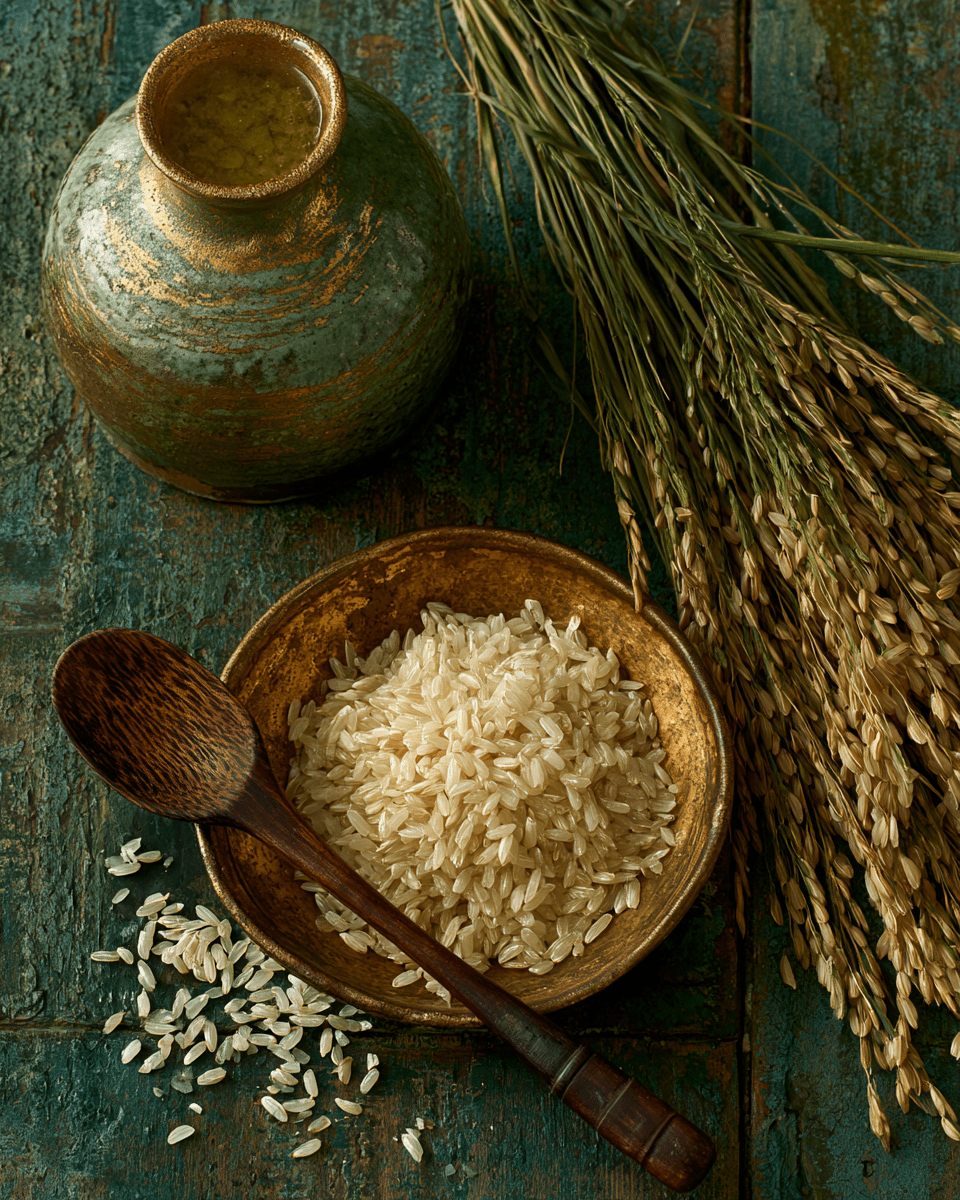
Homemade face mask: the rice flour recipe
Rice Powder in Cosmetics: Composition and Properties
Rice powder is obtained by fine milling of rice grains (Oryza sativa), with a particle size varying between 5 and 20 microns depending on the formulation. This exceptional fineness gives it remarkable optical properties: the particles diffuse light uniformly, visually reducing the appearance of enlarged pores and textural irregularities. Rice powder is rich in starch (up to 75%), proteins (8%), phytic acid, and oryzanol, a plant-based compound specific to rice. Phytic acid is traditionally valued in formulations that aim to help unify skin tone and reduce the visible appearance of dark spots. Oryzanol, on the other hand, is known for its antioxidant qualities appreciated in cosmetics. This makes rice powder a choice ingredient for formulations that seek to preserve skin radiance against daily environmental aggressors. Its silky texture and lack of fragrance also make it a well-tolerated active ingredient for sensitive and reactive skin, for which formulas rich in silicones or talc often cause discomfort.
It is finely ground rice starch, whose spherical grains absorb sebum without scratching. This form explains its use in mattifying powders for centuries.
As a face mask, it can be mixed with water, aloe vera gel, or a hydrosol. Leave it on, then rinse with lukewarm water: caring for oily skin often involves simple steps like this one.
Mattifying Effect: How it Works
One of rice powder's most recognized assets is its ability to absorb excess sebum without drying out the skin. Unlike clays, which can disrupt the hydrolipidic film with excessive use, rice powder acts like a gentle sponge: it captures excess sebum on the skin's surface while leaving the epidermis feeling comfortable. Its porous structure allows it to absorb several times its weight in lipids. In loose or pressed powder formulations, this mattifying effect is immediate and lasts for several hours. In serums and creams, micronized rice powder is incorporated for a soft mattifying effect without a film sensation. This dual role—mattifying on the surface and comfortable—is particularly valuable for combination to oily skin that suffers from excess shine in the T-zone (forehead, nose, chin) while having dry areas on the cheeks. Normal skin also benefits from this balance, especially in summer or when exposed to heat. For mature skin, the mattifying effect is more subtle but helps refine the appearance of skin texture, blur the visible appearance of pores, and give the impression of smoother, more even skin.
Its diffusing power optically softens irregularities: the skin texture appears more regular without having changed. This is a surface effect, immediate and reversible upon rinsing.
In mask recipes, it is often combined with aloe vera gel for hydration or green clay to enhance absorption. Leave on for ten minutes, then rinse with lukewarm water: beyond that, the preparation dries and tightens.
Radiance Properties: Luminosity and Unified Skin Tone Appearance
Beyond its mattifying action, rice powder is valued for its radiance properties. The phytic acid it contains is traditionally used in skincare that aims to help reduce the visible appearance of dark spots and unify skin tone. Regular use over 4 to 8 weeks can thus contribute to a more even-looking complexion, in addition to an SPF in case of sun exposure. Oryzanol contributes to this radiance effect with its appreciated antioxidant qualities in cosmetics, which help preserve the skin's radiant appearance daily. By formulating rice powder with niacinamide or vitamin C, brands seek to amplify this radiance effect and support a luminous complexion. The immediate optical effect of the powder—light diffusion by reflection of light on fine particles—is instantaneous: it creates a visual blur that reduces the appearance of imperfections and gives the complexion a natural luminosity. This dual effect (instant + progressive on appearance) explains the success of this active ingredient in BB cream, primers, and mineral foundation formulations.
Its diffusing power optically softens irregularities: the skin texture appears more regular without having changed. This is a surface effect, immediate and reversible upon rinsing.
In mask recipes, it is often combined with aloe vera gel for hydration or green clay to enhance absorption. Leave on for ten minutes, then rinse with lukewarm water: beyond that, the preparation dries and tightens.
Mistakes to Avoid with Rice Powder
Despite its gentle profile, rice powder can be misused and lose its benefits, or even become counterproductive. The first mistake is overdosing in DIY formulations: using a rice powder that is too coarse (particle size greater than 30 microns) creates a visible and unattractive powdery effect. Always ensure using a micronized cosmetic powder and not food-grade powder, as the latter is too coarse for optimal skin use. The second mistake is application on dry skin without prior hydration: rice powder absorbs excess lipids, but if sebum is insufficient (dry skin), it can accentuate the feeling of tightness. In this case, it should be combined with a film-forming or moisturizing active ingredient. The third mistake is to confuse formulations: pure rice powder does not replace a chemical or mineral SPF. Some brands make misleading sun protection claims. Oryzanol is valued for its antioxidant qualities but does not block UVA/UVB like an approved sunscreen filter would. Always supplement with at least SPF 30 during the day. Finally, avoid mixing rice powder with strong acids (AHA/BHA) in homemade formulations: starch can degrade and lose its absorbent properties.
The first is to let it dry completely: the mask then pulls on the skin during rinsing. Ten minutes maximum, and rinse with lukewarm water before the surface cracks.
The second is to use it daily. These face masks can eventually dry out the skin, and compensating skin produces more sebum than before.
Integrating Rice Powder into Your Routine: Textures and Frequencies
Rice powder comes in many galenic forms adapted to each step of a routine. In micellar water or cleansing milk, it provides softness and optical blurring post-cleansing. As a weekly mask (once a week), mixed with honey or a vegetable oil, it helps refine the appearance of skin texture and provides a softening effect on the surface. In daily cream or serum, micronized powder mattifies without thickening the skin's film. As a loose finishing powder (morning only), it sets foundation, controls shine, and diffuses light for a healthy glow. Combining rice powder with a soothing and hydrating active ingredient like niacinamide allows for combining the surface mattifying effect with a feeling of lasting comfort and hydration—a synergy particularly appreciated by combination skin prone to dehydration, which shines on the surface but lacks comfort throughout the day. The optimal frequency of use is daily for cream/serum formulas, and twice weekly for masks.
The proportion is easy to remember: as much rice powder as liquid, whether it's water, a hydrosol, or aloe vera gel. The resulting paste should coat the skin without dripping down the cheeks. Leave on for ten minutes, then rinse with lukewarm water, rolling the preparation under damp fingers rather than rubbing.
Once a week is enough. These face masks are prepared for each use: powder-based mask recipes do not keep once moistened, and green clay added for mattifying does not change this rule.
Nopal Life Formula and Rice Powder
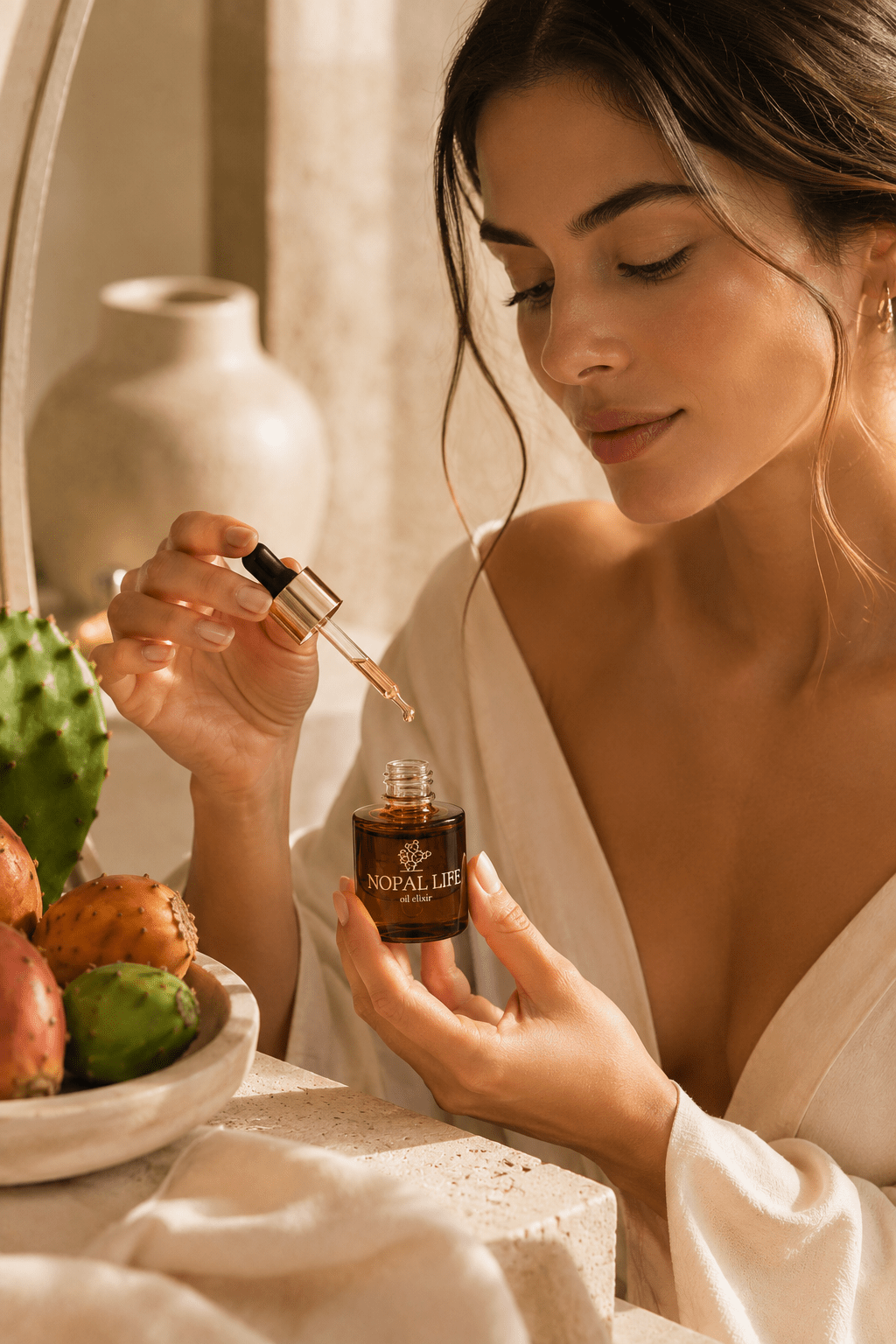
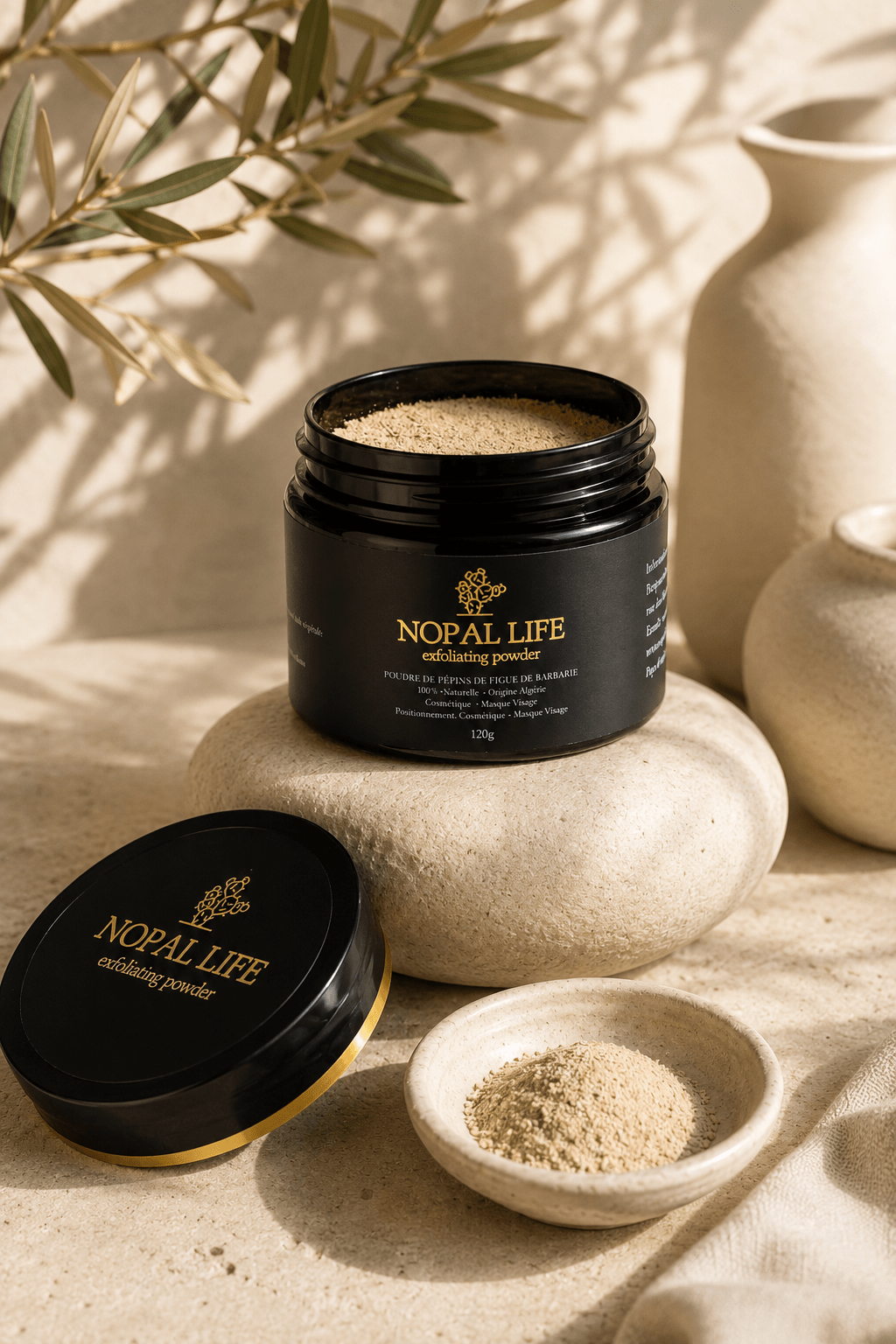
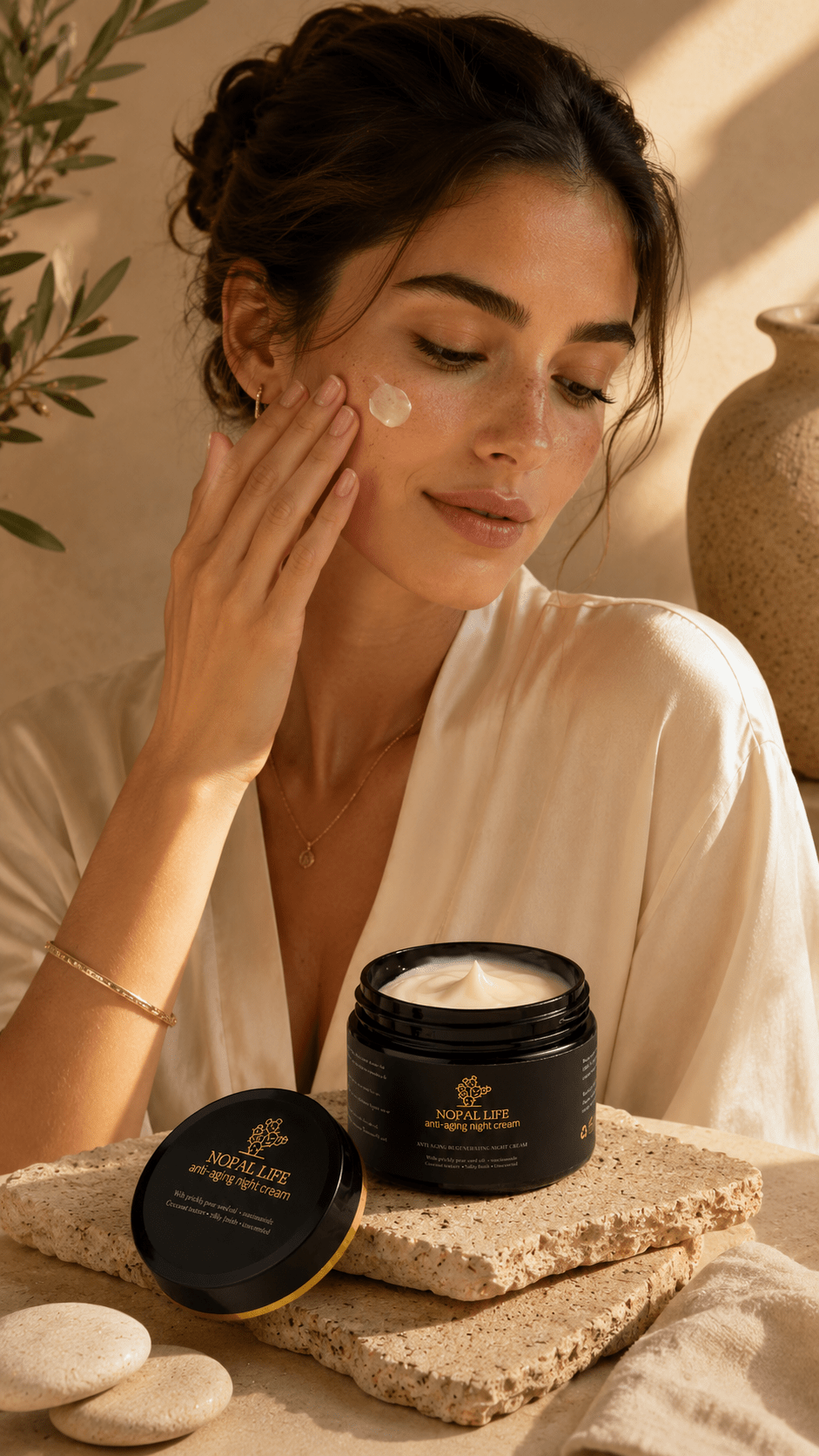
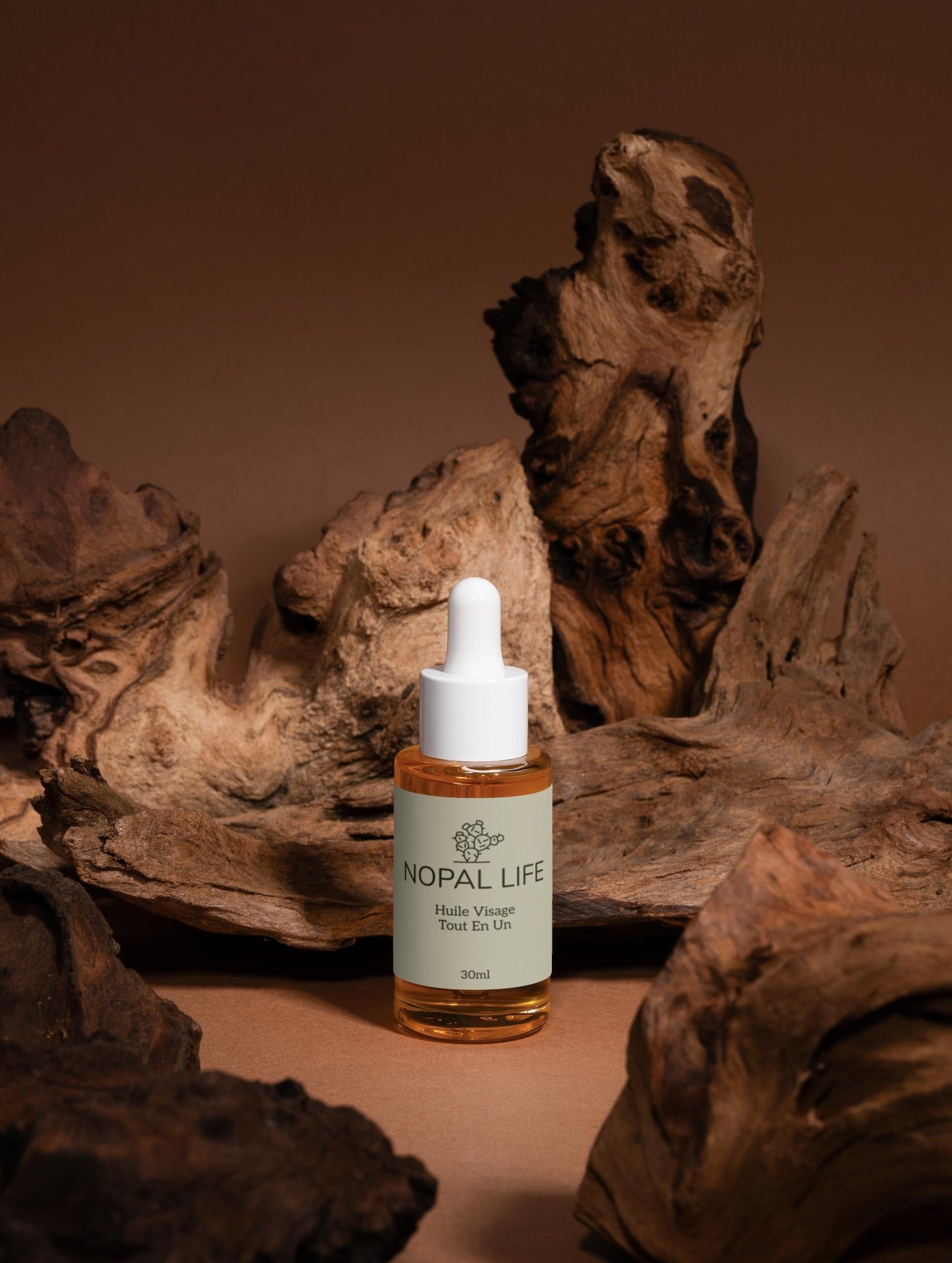
At Nopal Life, the skincare approach is based on the synergy between natural active ingredients of Algerian origin and carefully selected ingredients. Pure prickly pear seed oil, extremely rich in essential fatty acids (linoleic acid 60-70%) and vitamin E, forms the nourishing foundation of each routine. In combination with radiance-boosting active ingredients like rice powder or niacinamide, it helps preserve skin radiance without weighing down the skin. For combination skin with shine, applying a small amount of prickly pear seed oil in the evening, followed by a light cream with rice powder in the morning, offers a remarkable feeling of balance and comfort. For dull skin seeking uniformity, a weekly mask made with rice powder and prickly pear seed oil (2 spoons of powder + 5 drops of oil + rose water) provides a pleasant and natural radiance ritual. Our Skin Intelligence diagnosis precisely identifies skin type and recommends the most suitable combination of active ingredients, including rice powder in routines that will truly benefit from it.
Frequently Asked Questions
Q: Is rice powder suitable for sensitive skin?
A: Yes, rice powder is one of the best-tolerated active ingredients. It is fragrance-free, free of harsh preservatives, and its gentle texture respects skin comfort. It is even appreciated for reactive skin as an alternative to talc.
Q: Can pure rice powder be applied to the face?
A: Food-grade powder is not recommended (too coarse a particle size). Use a micronized cosmetic powder, alone or mixed with a vegetable oil for a homemade mask.
Q: How long before seeing results on radiance?
A: The optical effect is immediate. The effect on the visible appearance of dark spots is gradual: allow 4 to 8 weeks of regular use.
Q: Can rice powder replace a sun filter?
A: No. Oryzanol is valued for its antioxidant qualities but does not filter UVA/UVB. A minimum SPF 30 is still essential during the day, in addition to rice powder.
Q: Does rice powder dry out the skin?
A: On well-hydrated skin, no. On dry or dehydrated skin, it can accentuate the lack of comfort. Always apply a moisturizer before formulations containing rice powder.
Q: What is the difference between rice powder and rice starch?
A: Rice powder comes from the whole grain (bran + starch), richer in active ingredients. Starch is almost pure starch. In cosmetics, whole rice powder is preferred for its antioxidant properties and its radiance contribution.
Q: Can rice powder and hyaluronic acid be combined?
A: Yes, it's an interesting synergy: hyaluronic acid provides a feeling of hydration while rice powder mattifies the surface. Ideal for dehydrated combination skin.
This content is informative and educational; it does not replace medical advice, diagnosis, or dermatological consultation. In case of doubt or persistent skin problems, consult a qualified healthcare professional.
To learn more about this specific point, see our guide Homemade Moisturizing Face Mask.
To learn more about this specific point, see our guide Homemade Face Mask for Pimples.
To learn more about this specific point, see our guide Homemade Rejuvenating Face Mask for Mature Skin.
Our anti-aging treatments