Dull, dehydrated, mature skin: adapting your routine to the seasons to preserve firmness and prevent aging
Dehydrated and Mature Skin: Understanding Why Seasons Change Everything
Mature skin does not behave the same way in January as it does in June. Behind this reality lies a well-known phenomenon: Transepidermal Water Loss (TEWL), which fluctuates with climatic conditions and, in winter, accentuates all the visible signs of dehydrated, dull, and lacking-in-tone skin. If you feel tightness in the morning, a dull complexion that neither foundation nor current hydration truly corrects, or dehydration lines that seem to suddenly deepen with the cold, you are not dealing with a permanent skin dryness problem — but with a seasonal imbalance that requires a precise strategy.
This guide was designed to give you the keys to a seasonal routine adapted to dull, dehydrated mature skin: how to protect the appearance of the skin barrier against the cold, how to navigate the spring-summer transition while preserving the skin's firm appearance, and how to integrate cosmetic active ingredients throughout the year without discomfort. Prickly pear seed oil, a cornerstone of the Nopal Life range, plays a central role here, which we will detail.
Winter and TEWL: Why Cold Worsens Skin Dehydration
External cold, dry heat from indoor heating, and wind form a demanding triad for the skin barrier. In winter, TEWL tends to increase significantly compared to summer values. In practical terms, this means your skin passively loses much more water — regardless of your daily fluid intake.
For mature skin, this phenomenon is amplified by two structural factors:
- The decrease in ceramides with age, which reduces corneocyte cohesion and makes the barrier naturally more porous.
- The natural decline in hyaluronic acid, which reduces water retention capacity in the superficial layers.
Result: dehydrated mature skin in winter presents a triple visible sign — dull complexion due to lack of radiance (dead cells accumulate as natural renewal slows down with the cold), reduced apparent tone (water loss weakens the appearance of volume), and dehydration lines that superimpose on underlying wrinkles. This is not fate — it is physiology, and an adapted routine can address it point by point.
Winter Protective Layer Strategies for Mature Skin
The winter logic is based on a simple principle: retain water where it escapes. The routine must be reorganized around three distinct steps, applied in the correct order.
1. The humectant as the first layer — Low and high molecular weight hyaluronic acid, low concentration urea, or glycerin will first attract water to the stratum corneum. This step is useless without the next two: without a sealant, the humectant can paradoxically accelerate surface evaporation when the air is very dry.
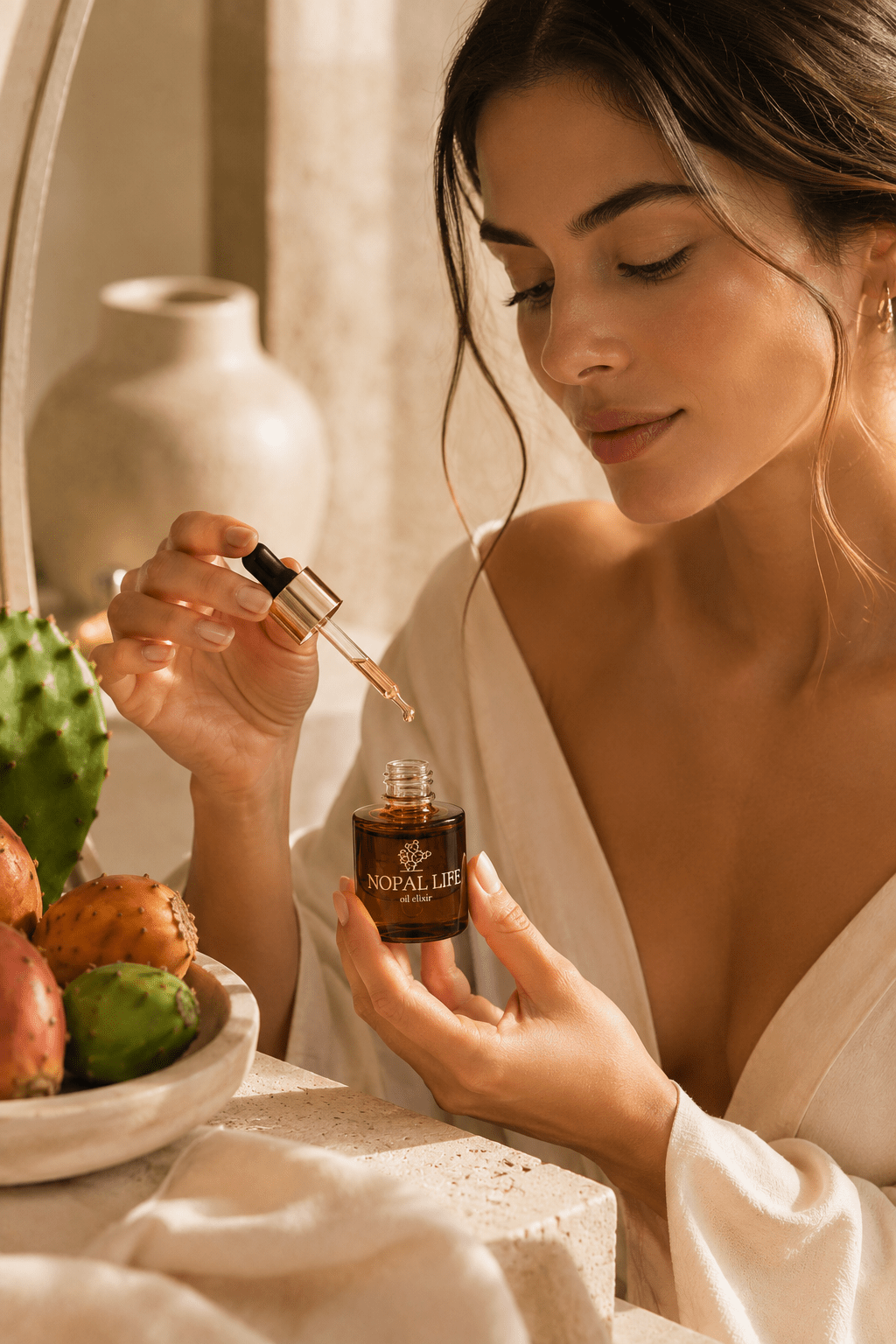
2. The emollient to support the appearance of the barrier — This is where prickly pear seed oil (Opuntia ficus-indica seed oil) comes in. Its remarkable composition of linoleic acid (up to 62%), tocopherols, and plant sterols gives it a triple cosmetic action: providing lipids that help comfort the skin, an antioxidant effect that helps protect against external aggressions, and supporting a firm and supple appearance. One to two drops mixed with your evening care before the occlusive form a highly biocompatible emollient layer, without a greasy sensation.
3. The occlusive to seal the whole — Shea butter, vegetable squalane, or cocoa butter form a surface lipid film that mechanically slows down TEWL. In winter, a light cream is not enough for mature skin: a rich texture, applied to slightly damp skin, is needed to maximize the barrier effect.
The Nopal Life Fragrance-Free Soothing Moisturizer has been formulated to precisely meet this winter protocol: fragrance-free (which can impair barrier comfort), rich in emollient active ingredients, and compatible with mature skin sensitized by the cold.
Spring-Summer Transition: Preserving a Firm Appearance and Limiting Sun Effects
The transition to milder temperatures is often experienced as a relief for the skin — and it is, in part. Relative humidity rises, TEWL decreases, and the complexion spontaneously improves. But this transition hides two common pitfalls for mature skin:
First pitfall: lightening the routine too abruptly. Suddenly removing the winter occlusive without transition leaves the barrier temporarily weakened. The recommendation is to gradually lighten over 3 to 4 weeks, moving from a rich texture to a fluid texture, while maintaining the humectant step and prickly pear seed oil.
Second pitfall: underestimating summer oxidative stress. UV is the primary extrinsic factor in skin aging. UVA radiation, constant throughout the year but more intense in spring-summer, contributes to the degradation of the appearance of skin firmness and suppleness. To preserve the skin's appearance long-term, SPF must be integrated into the morning routine from March, without exception, and an antioxidant (stabilized vitamin C, vitamin E, cactus polyphenols) as a preliminary layer, which helps protect against external aggressions, reinforces this protective action.
The goal of the transition is to arrive at a "semi-light" routine: humectant + emollient (including prickly pear seed oil) + SPF in the morning, gentle cleansing + humectant + emollient + cosmetic active (low concentration retinol or bakuchiol) in the evening. This protocol helps preserve the firm appearance acquired in winter and prepares the skin to comfortably endure summer.
Mistakes to Avoid with Dehydrated Mature Skin Depending on the Seasons
Some well-intentioned habits actually accentuate dehydration and visible signs of aging. Here are the most common ones observed in mature skin:
Mistake #1: Using a foaming cleanser or gel rich in SLS in winter. Sulfated surfactants not only remove impurities but also the natural lipids of the barrier. In winter, opt for a cleansing oil or a make-up remover milk that doesn't require complete rinsing with cold water.
Mistake #2: Applying high-concentration exfoliating active ingredients (AHA, BHA) in the middle of winter without barrier reinforcement. Alpha-hydroxy acids certainly promote natural surface renewal — beneficial for radiance — but can also increase TEWL in the hours following application. Without a protective occlusive layer, this is counterproductive for dehydrated mature skin.
Mistake #3: Neglecting the neck and décolleté in the seasonal routine. These areas dehydrate faster, and their skin is thinner. Signs of sagging appearance are often more premature there than on the face itself.
Mistake #4: Completely changing the routine instead of adapting textures. Your mature skin has relatively stable needs for active ingredients — what changes between seasons is mainly the richness of textures and the intensity of protection. A complete product overhaul often generates a period of unnecessary discomfort and skin reaction.
Mistake #5: Forgetting internal hydration and antioxidant nutrition. The skin barrier is also strengthened from within. Omega-3s (fatty fish, flax seeds), polyphenols (green tea, berries), and sufficient hydration (minimum 1.5 L/day) are recognized cofactors for the quality of skin appearance in mature skin.
To go further on mature and dull skin profiles and find the routine exactly adapted to your type, the Nopal Life diagnosis guides you step by step.
Key Active Ingredients to Integrate Year-Round for Firmness and Radiance
Certain active ingredients deserve to be maintained regardless of the season, adapting only their concentration and application time:
Hyaluronic acid (multi-molecular weight) — Universal humectant, pleasant both in summer (lightness) and in winter (base of the barrier stack). Apply to damp skin to maximize absorption.
Prickly pear seed oil — Thanks to its richness in linoleic acid and vitamin E, it simultaneously supports the comfort of dehydrated skin, its firm appearance, and radiance. Its lightness makes it usable all year round, unlike heavier oils (avocado, castor). The Nopal Life range makes it the guiding thread of every formulation.
Niacinamide (vitamin B3) at 5% — Helps comfort the appearance of the barrier, unify the appearance of the complexion, and visibly smooth it. Compatible with almost all active ingredients, pleasant in winter and summer, it is particularly useful for mature skin with an irregular complexion.
Bakuchiol — A plant-based alternative to retinol, without discomfort or photosensitivity. It helps preserve a firm appearance and visibly smoothes underlying fine lines. Ideal for continuous year-round use on sensitized mature skin.
Mineral SPF (zinc oxide, titanium dioxide) — The most effective action to sustainably preserve the skin's appearance. To be integrated every morning 365 days a year, including behind a window, as UVA passes through glass.
To complement your protocol and explore the personalized routine adapted to your skin, discover the Soothing and Barrier Routine selection from the Nopal Life Skin Guide.
How to Build Your Seasonal Routine Step by Step
Here is a concrete, immediately applicable protocol that you can adapt according to your current season:
Morning — all seasons (with texture adaptation):
1. Gentle cleansing with lukewarm water (milk or cleansing oil) → 2. Alcohol-free tonic or thermal water → 3. Humectant serum (hyaluronic acid + niacinamide) → 4. Season-appropriate care (fluid texture spring-summer, rich texture autumn-winter) → 5. Mineral SPF 50 → 6. Optional: mineral tinted base.
Evening — all seasons:
1. Oil-based makeup remover + light second cleansing → 2. Gentle exfoliation (1 to 2 times/week depending on season, with barrier reinforcement the next day) → 3. Active serum (bakuchiol, vitamin C, peptides depending on objective) → 4. 2 drops of prickly pear seed oil on slightly damp skin → 5. Rich cream (winter) or light fluid (summer).
The Nopal Life Fragrance-Free Soothing Moisturizer integrates into step 5 in the evening and can replace day cream in summer. Its fragrance-free and alcohol-free formulation makes it the central choice for a comfortable seasonal routine, even for the most reactive skin.
Not sure where your skin stands tonight? The Nopal Life Skin Intelligence diagnostic analyzes your skin profile in minutes and recommends the routine exactly adapted to your seasonal needs.
FAQ — Dehydrated Mature Skin and Seasonal Routine
What is the difference between dry skin and dehydrated mature skin?
Dry skin is a permanent skin type, linked to insufficient sebum production (lipids). Dehydration is a transient condition, linked to a lack of water in the superficial layers — it can affect all skin types, including combination skin. In mature skin, both phenomena often coexist: sebaceous production decreases with age AND TEWL increases. An adapted routine can address both: lipid supply (prickly pear seed oil, occlusives) and water supply (humectants, aqueous serum).
Is prickly pear seed oil suitable for oily mature skin?
Yes. Prickly pear seed oil is one of the few vegetable oils with a low comedogenic index (score 0-1) thanks to its richness in linoleic acid. Unlike oils with a dominant oleic acid (argan, olive) that can clog pores, it helps mattify the appearance while providing lipids that comfort the skin. It is suitable for mature skin with a tendency to be combination or oily, in a reasonable amount (1 to 2 drops in the evening).
How do I know if my winter routine is sufficient for my mature skin?
Three signals indicate that your winter barrier is insufficient: tightness present 30 minutes after morning cleansing, dehydration lines visible in natural light in the middle of the day (when foundation "creases" slightly), and a feeling of skin "drinking everything" regardless of the amount of care applied. If you check two of these three criteria, it's time to intensify the occlusive step and add prickly pear seed oil as an intermediate layer.
Is bakuchiol really comparable to retinol for a firm appearance?
Cosmetic research suggests that 0.5% bakuchiol applied twice daily supports the appearance of the skin comparably to 0.5% retinol on the appearance of fine lines and improvement of firm appearance, with significantly less discomfort (redness, flaking, photosensitivity). For dehydrated mature skin that cannot tolerate retinol — especially in winter — bakuchiol is a serious alternative, not a second-rate substitute.
Do I need to completely change my routine when the seasons change?
No — and it is even discouraged for mature skin. The key is to adapt textures and concentrations, not fundamental active ingredients. Keep your humectants, prickly pear seed oil, and cosmetic active ingredients all year round. What changes: in winter, we intensify with a rich occlusive and reduce exfoliation; in spring-summer, we lighten to fluid textures and strengthen antioxidants + SPF. Completely changing product lines every season exposes the skin to unnecessary periods of discomfort.
From what age is skin considered "mature"?
Mature skin is generally referred to from 40-45 years old, when skin density and tone evolve and the first signs of sagging appearance appear. But skin prone to dryness or highly exposed to the sun can show these characteristics from 35 years old. The criterion is not civil age but the appearance of the barrier and the visible quality of the skin.
How can I optimize the absorption of prickly pear seed oil in my routine?
To maximize the penetration of prickly pear seed oil, apply it to slightly damp skin (30 seconds after your aqueous serum has absorbed), by patting and not rubbing. Heat promotes lipid absorption: warm the 2 drops between your palms before application. Do not mix it directly into your cream (it dilutes and loses effectiveness) — apply it as a distinct layer, then seal with the treatment cream.
What is the link between a dull complexion and seasonal dehydration?
A dull complexion is one of the direct consequences of seasonal skin dehydration. When the stratum corneum lacks water, corneocytes (dead surface cells) flatten irregularly instead of desquamating normally, creating a surface that poorly reflects light. Result: the complexion appears matte, grayish, without radiance. Rehydrating the barrier combined with gentle exfoliation (once/week) helps revive this radiance — often in a few days.
Conclusion
Adapting your routine to the seasons helps preserve the appearance of mature, dull, and dehydrated skin. Rich treatments in winter, light textures in summer: adjustment helps maintain a firm and radiant appearance all year round. Listening to your skin is the best guide. A well-thought-out seasonal routine maintains comfort and luminosity in all circumstances.
Why choose Nopal Life to support the appearance of mature skin
Preserving the youthful appearance of skin involves active ingredients with genuine cosmetic benefits. Nopal Life prickly pear oil, rich in essential omega-6 and omega-9 fatty acids, vitamin E, and plant sterols, acts on the suppleness and comfort of the skin's film. It helps maintain a firm and plump appearance, reduces the appearance of dehydration fine lines, and strengthens the epidermal barrier for a visible smoothing effect from the first few weeks.
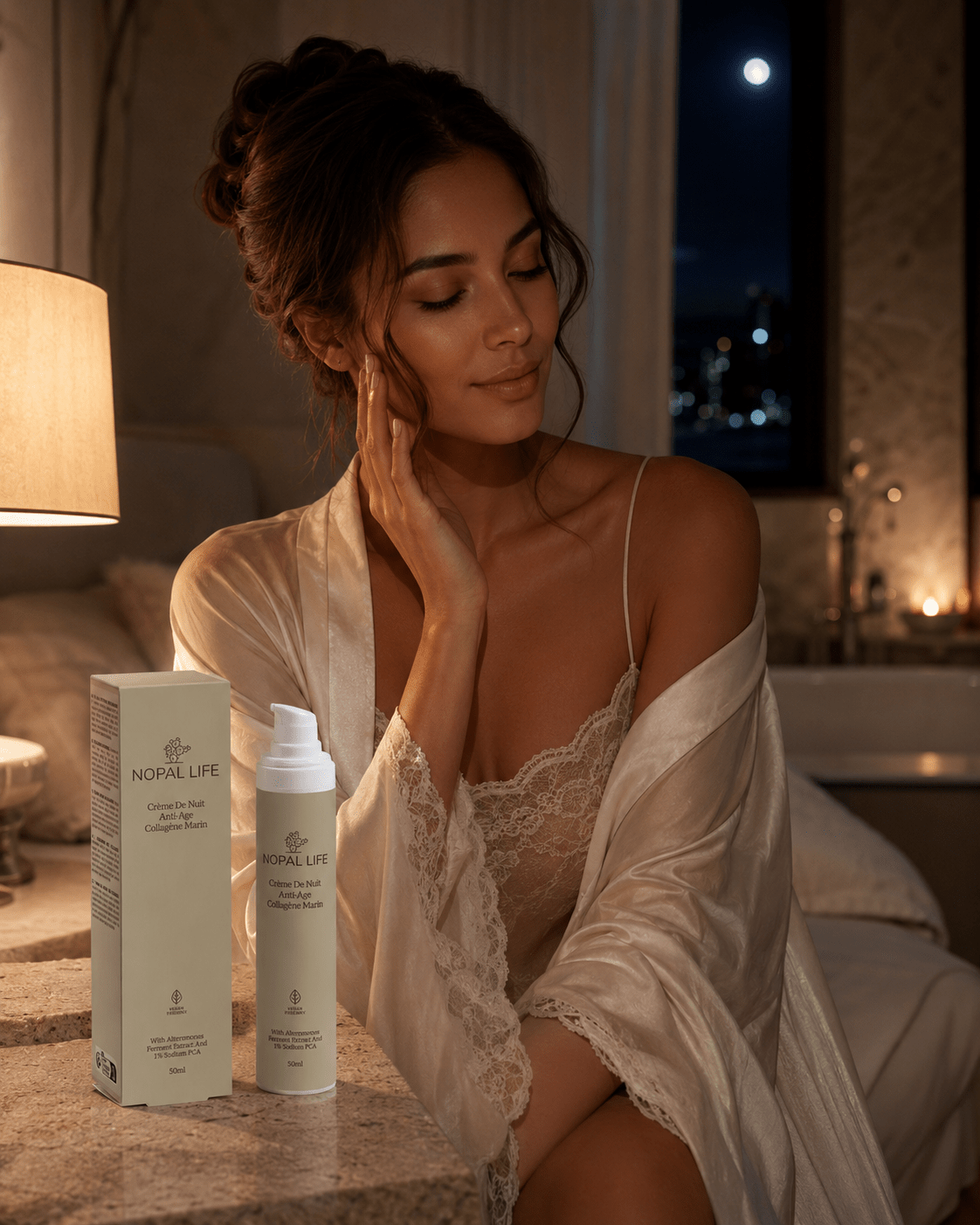
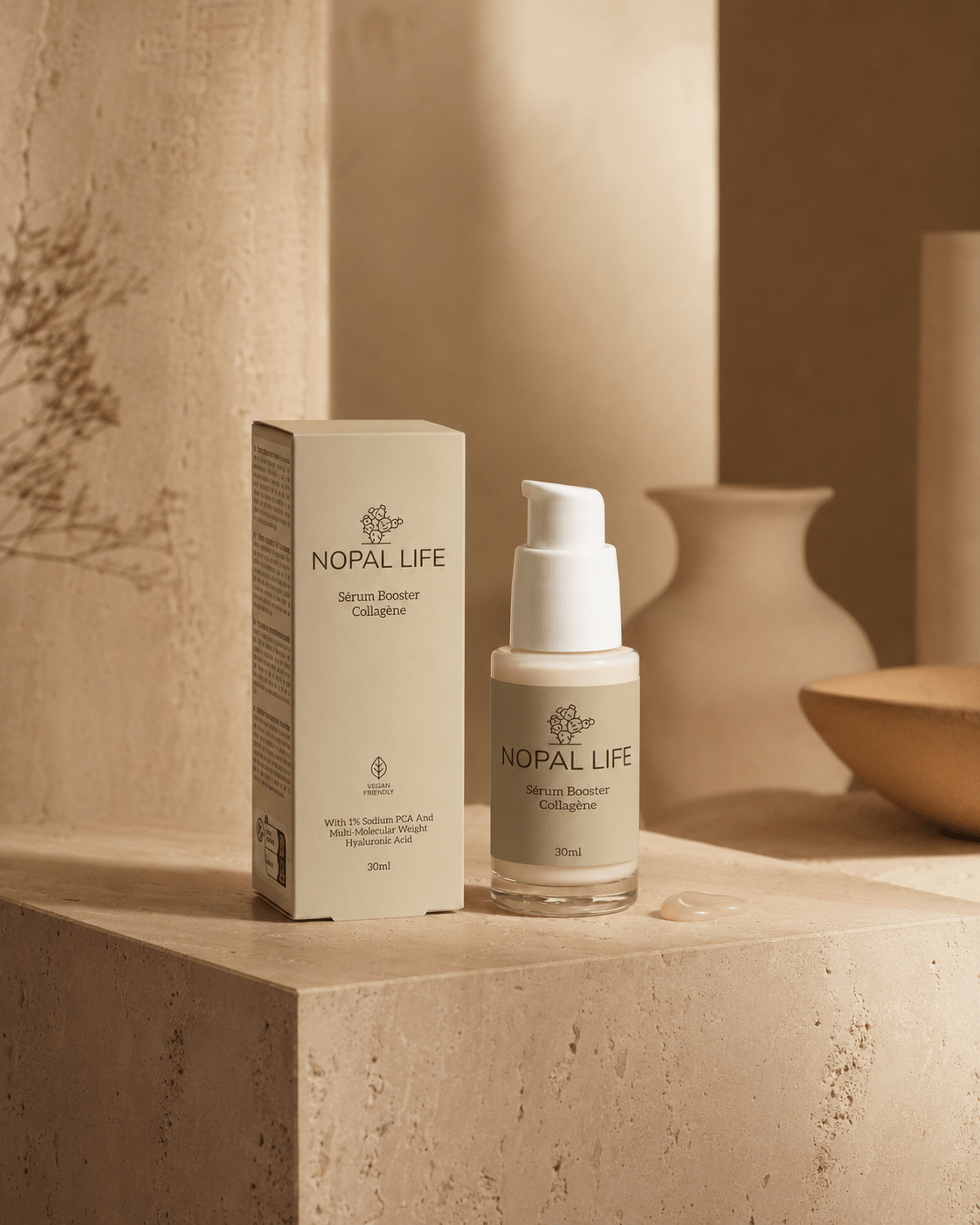
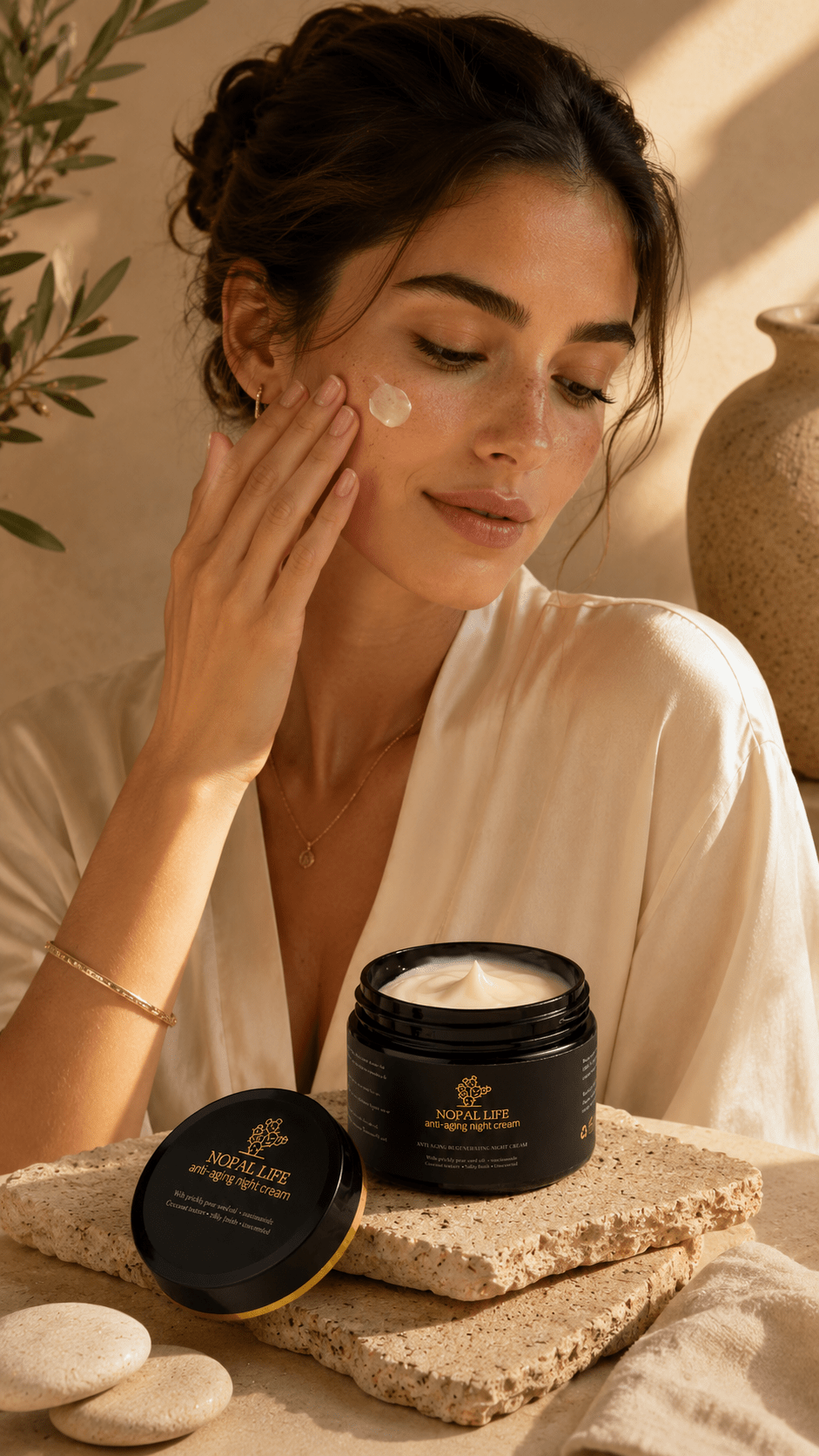
Combine it with our night cream and our radiance serum for a complete day and night synergy. Your skin regains lasting comfort, radiance, and suppleness. Discover the Nopal Life formulation designed for your skin profile with our free Skin Intelligence diagnostic.
RECOMMENDED TREATMENT
Soothing & barrier routine
Natural formula · Origin Algeria
DISCOVER THIS TREATMENT →PERSONALIZED ROUTINE
Nopal Life Skin Intelligence™
Free diagnostic · 2 minutes
DISCOVER MY ROUTINE →This information is provided for educational purposes and does not replace the advice of a healthcare professional.
Information provided for cosmetic and educational purposes; it does not constitute medical advice.
Our anti-aging treatments