Silicone face mask: use, hygiene and limitations
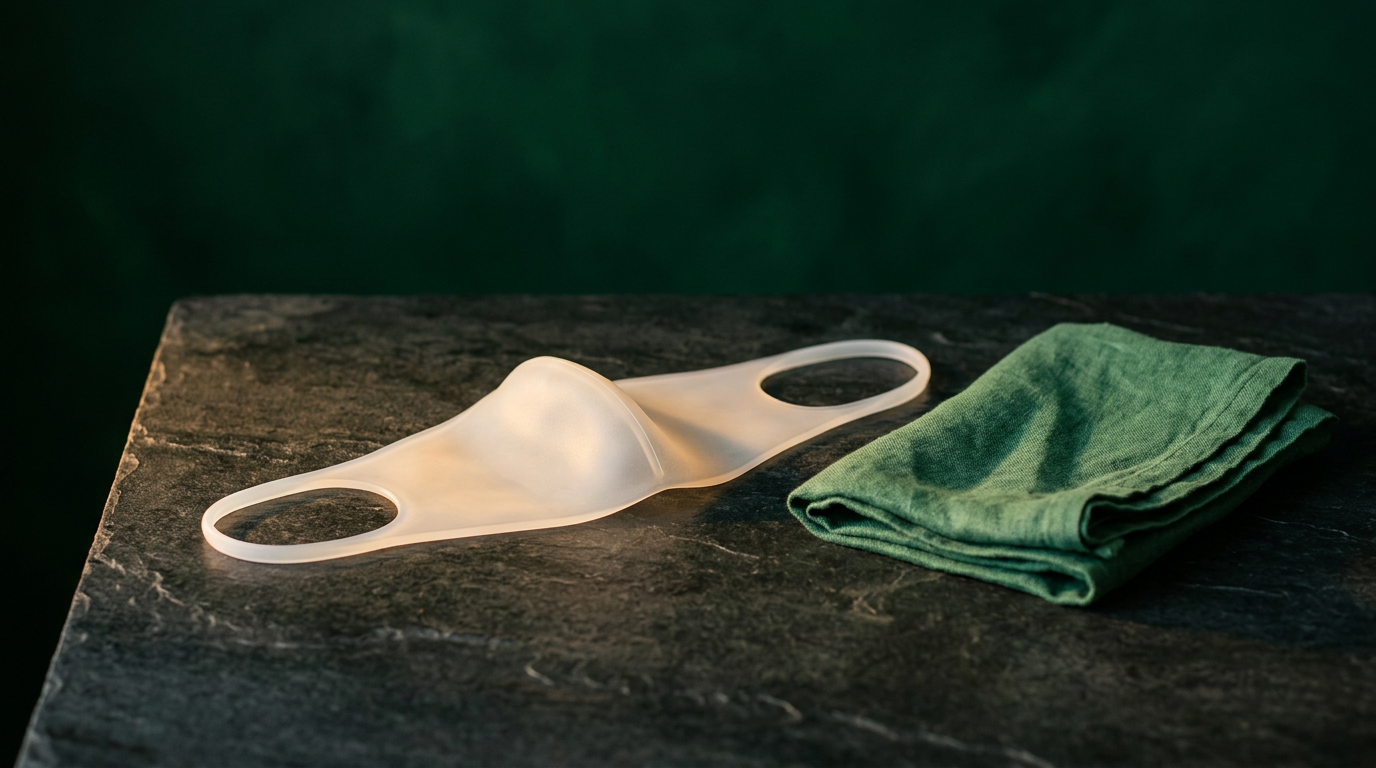
A reusable silicone face mask primarily serves to slow down the evaporation of a serum or sheet mask placed underneath. It does not provide any active ingredients on its own; its value comes from the gentle occlusion, holding the product on the face, and its reusability. The effectiveness of the practice therefore depends as much on the cleaning of the accessory as on the care applied underneath.
What the silicone accessory actually does
Flexible silicone forms a semi-permeable layer that limits water loss for a few minutes. Placed over an aqueous serum or a soaked sheet, it keeps the surface moist longer and prevents the sheet from peeling around the nose or chin. The effect is mechanical: it prolongs the contact of the skincare product, without changing the product's composition.
This occlusion can be useful with a formula rich in glycerin, panthenol, or hyaluronic acid. It is less relevant for an acid exfoliant, a retinoid, or a heavily fragranced formula, as occlusion can increase the sensation of warmth. The right approach is to reserve this accessory for simple, well-tolerated moisturizing treatments.
Reusable silicone or sheet mask: two different functions
A sheet mask contains the cosmetic liquid; the silicone accessory is only a support. You can use the silicone alone over a layer of serum, but it does not replace a moisturizing formula. Therefore, you must distinguish between the container and the content: one retains, the other provides humectants and emollients.
| Format | What it provides | Reasonable duration | Caution point |
| Pre-soaked sheet | Pre-dosed serum | 10 to 15 min | Do not let dry |
| Reusable silicone | Occlusion and hold | 10 to 20 min | Clean after use |
| Hydrogel | Water + polymers | 10 to 20 min | Product formula |
| Thick cream | Emollients and occlusives | As per instructions | Moderate quantity |
How to use it without overloading the skin
Cleanse your face, pat it dry, then apply two to four drops of serum or a thin layer of moisturizing mask. Place the accessory without pulling on the straps, then leave it on for ten to fifteen minutes for the first trial. Remove it immediately if uncomfortable warmth, tingling, or itching occurs.
After removal, gently massage any residue for twenty to thirty seconds. If your skin is dry, follow with a dab of cream to limit evaporation. There's no need to layer multiple products; a humectant and a cream are usually sufficient.
- Clean and dry face before application
- Two to four drops of serum under the mask
- Ten to fifteen minutes for first use
- Immediate removal in case of discomfort
- Follow with cream if skin feels tight
Cleaning between uses is essential
A damp accessory used multiple times on the face collects sebum, serum residues, and microorganisms from hands. Rinse it with lukewarm water after each use, wash it with a mild soap, then let it air dry completely. Store it only when dry, in a clean pouch.
Once a week, inspect the edges, straps, and areas that touch the nose. A persistent greasy film or an unusual odor indicates that more thorough cleaning is necessary. A cracked, sticky, or difficult-to-rinse accessory should be replaced.
How often to use it depending on skin type
Dry or dehydrated skin may benefit from a session once or twice a week with a humectant serum. Combination skin can limit application to the cheeks if the T-zone quickly becomes shiny. For oily, blemish-prone skin, occlusion is not prohibited, but it should be short and combined with a light, non-irritating formula.
Sensitive skin types should start with five to ten minutes. The goal is not to cause an intense feeling of warmth, but simply to keep the product moist. A longer session is not automatically more effective.
What to look for before buying
Choose a flexible silicone, without rigid edges and wide enough not to compress the eye contour. The nose and mouth openings should allow comfortable breathing without pulling on the skin. The straps behind the ears should remain stable without leaving lasting marks.
The material should remain inert in contact with the product for the duration of wear. A strong odor that persists after several washes or a surface that becomes sticky are bad practical signs. In this case, it is better to replace the accessory.
People who wear glasses or contact lenses may prefer a model with a wide eye opening. Constant pressure near the eyelids does not improve occlusion and simply makes the experience less comfortable. The hold should come from the straps, not from facial compression.
For a very fluid serum, first apply the product with your palms and then wait thirty seconds before putting on the accessory. This short wait limits dripping towards the neck. A thicker layer is not necessary and mostly complicates cleaning.
A reusable model is ecologically beneficial only if it is actually kept and washed for many uses. Frequently replacing a poorly maintained accessory negates part of this advantage. Practical durability is therefore a real purchasing criterion.
What this accessory does not do
A silicone face mask does not provide hydration, vitamins, or anti-aging active ingredients on its own. It merely modifies the environment of the skincare product placed underneath and temporarily reduces its evaporation. Without an appropriate formula, it therefore has almost no cosmetic effect of its own.
Nor does it replace a daily cream, sunscreen, or a consistent routine. Its purpose is specific: to improve the comfort of application and keep a product in place. Used properly and for a reasonable time, it is a practical accessory, not a miracle device.
Our anti-aging treatments