Hair oil bath: method and benefits
An oil bath is a pre-shampoo treatment that involves applying a vegetable oil to the lengths and scalp, leaving it on for at least 30 minutes, then shampooing. Practiced once a week at most, it nourishes the hair fiber, makes it more supple, and reveals its shine — provided you choose the right oil and rinse it thoroughly.
In the world of natural hair care, few gestures are as simple and as rewarding as an oil bath. Inherited from ancient beauty routines, it is now making a comeback, driven by the desire to care for one's hair with raw and respectful ingredients. At NOPAL LIFE, we like this idea of a slow, almost meditative ritual, where you restore to the hair fiber what daily life takes away from it. Here's everything you need to know to make yours a success.
What is a hair oil bath?
An oil bath consists of coating the hair with one or more vegetable oils before washing. This is referred to as a pre-shampoo treatment: the oil is applied to dry or slightly damp hair, then left on before being emulsified and rinsed off when shampooing.
Unlike an oil applied to clean hair as a finishing touch, an oil bath is intended as a deep treatment. It prepares the hair fiber, coats it, and limits the drying effect of shampoos. It is a deeply nourishing gesture, particularly appreciated by dry, dull, curly hair, or hair weakened by heat and coloring.
Benefits of an oil bath
Depending on the oil chosen and the nature of your hair, the benefits can be multiple:
- Nourishment and suppleness: the oil nourishes the hair fiber, restoring its softness and elasticity.
- Shine: by smoothing the cuticle scales, the oil reflects light better.
- Pre-wash protection: applied before shampooing, it limits the drying effect of surfactants.
- Scalp comfort: an oil massage can soothe tightness (on a dry scalp).
- Length control: reduced frizz, softened ends, easier detangling.
It is not a miracle cure or a medical treatment: an oil bath acts on the surface and for comfort, in a cosmetic logic of care and pleasure.
(Read: Prickly pear seed oil for hair)
Which oil to choose for your oil bath?
The choice of oil is crucial. Each vegetable oil has its own profile:
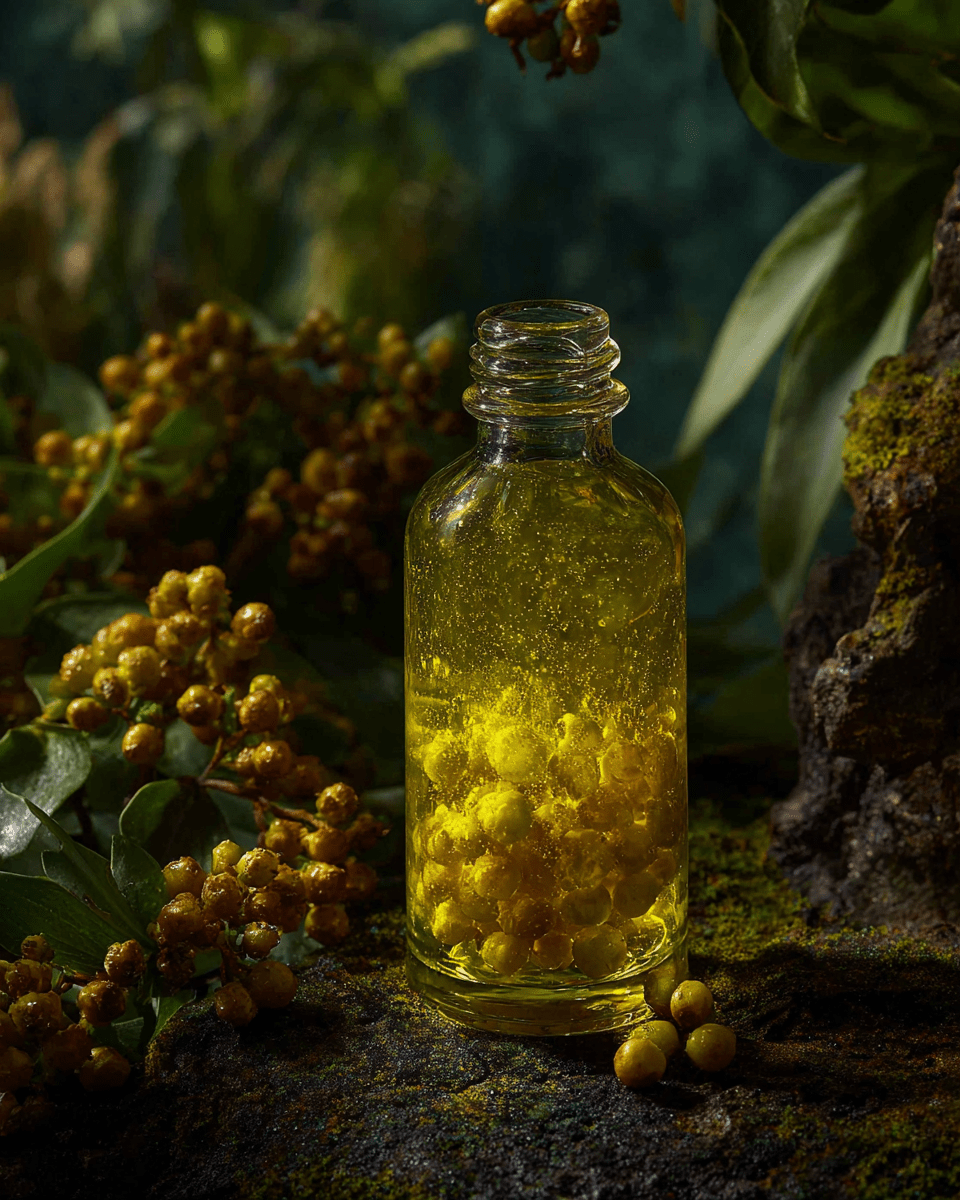
- Prickly pear seed oil: precious and light, rich in vitamin E, it provides nourishment and radiance without weighing down — ideal as a premium treatment for lengths and ends.
- Castor oil: thick and coating, prized for strengthening the hair fiber.
- Avocado oil: nourishing, appreciated by dry and thick hair.
- Black seed oil: often chosen for sensitive or dandruff-prone scalps.
For a nourishing and refined treatment, our pure prickly pear seed oil is perfect for an oil bath: its fine texture penetrates the hair fiber without overloading it.
Two oils behave differently on the hair fiber, and the choice depends on what you are looking for. Coconut oil is the only one shown to actually penetrate the hair cortex: its short, linear molecule passes through the cuticle. The others remain on the surface, which is not a flaw but a different function.
Jojoba oil holds the opposite and useful position: similar in composition to sebum, it smooths the scales without weighing them down. For fine hair, it is suitable where a denser oil would be too heavy. The fatty acids they both provide do not substitute for those in the hair fiber; they protect it from external aggressions.
Step-by-step method
1. Section your hair into several parts for even application.
2. Apply the oil to the lengths and ends, in reasonable quantity. You can gently massage the scalp if it is dry.
3. Leave on for at least 30 minutes. To intensify, wrap your hair in a warm towel or cap, or even leave it on overnight.
4. Rinse carefully: apply your shampoo directly to the oiled hair before wetting, to emulsify better, then rinse. A second light shampoo may be necessary.
Proper rinsing is the key to a successful oil bath: it prevents the "greasy hair" effect after drying.
How often and for whom?
An oil bath should ideally be done 2 to 4 times a month, not exceeding once a week. Too frequent, it risks weighing down the hair fiber and clogging the scalp. Dry, curly to coily, or weakened hair will benefit the most. Those with oily scalps should apply the oil mainly to the lengths, avoiding the roots.
If your scalp shows redness, persistent itching, or flaking, dermatological advice is recommended before adopting any new treatment. To better understand your skin and scalp, our Skin Intelligence diagnostic can guide you.
(Read: Natural hair care: the complete guide)
Hair types dictate the rhythm. Thick or curly hair can tolerate a weekly application; fine hair can be weighed down if done more than once every two weeks. For hair damaged by heat or coloring, frequency matters less than regularity: a short application every week is better than a long one once a month.
Performing a suitable hair oil bath primarily requires adjusting the quantity. The right dose is one that leaves the lengths supple without sticking them together; beyond that, you gain nothing and rinsing becomes tedious.
FAQ
Should the oil bath be done on dry or damp hair?
Both are possible. On dry hair, the oil penetrates more; on damp hair, it is primarily used to limit water absorption and the swelling effect.
How long should it be left on?
30 minutes are enough for a visible effect. A longer application, even overnight, intensifies nourishment but is not mandatory.
Does an oil bath make hair grow?
There is no evidence that oil makes hair "grow." However, by limiting breakage, it helps preserve length.
My hair is greasy after the oil bath, why?
This is almost always a rinsing issue. Emulsify the shampoo on still-oiled hair and don't hesitate to do a second shampoo.
Which oil for fine hair?
Choose a light oil like prickly pear seed oil, in small quantities and mainly on the ends.
In summary
An oil bath is a simple, ancestral, and deeply satisfying nourishing ritual. Well-chosen and well-rinsed, it restores suppleness, shine, and comfort to the hair fiber, once a week at most. It is one of the most natural ways to care for your hair daily.
For a premium treatment, discover our pure prickly pear seed oil, ideal for an oil bath as well as for finishing.
Sources: Mademoiselle Bio, Aroma-Zone, La Fourche. Informative article, not medical advice.
Information provided for cosmetic and educational purposes; it does not constitute medical advice.
Our anti-aging treatments
Go further than this article
Get our skincare guides by email — and start with your free skin diagnostic: 2 minutes, advice tailored to your skin. We ship to the US, UK, Canada, Australia and 27 European countries; somewhere else? Sign up and you will be the first to know when we deliver to your country.
By signing up, you agree to our privacy policy. Unsubscribe in one click.