Skin Hydration: A Complete Guide and 21-Day Protocol
Skin hydration is the ability of the stratum corneum – the outermost layer of the epidermis – to capture and retain water to remain supple and comfortable. Three complementary mechanisms are sufficient for this: attract, bind, seal. This comprehensive guide brings together key figures, three home tests, a table of hydrating active ingredients with their usual dosages, and a dated 21-day protocol.
Key takeaways from this guide
- It all happens in the stratum corneum: a few hundredths of a millimeter, and nothing deeper.
- Three structures retain hydration: the hydrolipidic film, natural moisturizing factors (NMF), and the lipid cement.
- Dehydrated skin lacks water (a temporary condition affecting all skin types); dry skin lacks lipids (a lasting characteristic).
- A hydration routine that works combines humectants + emollients + occlusives, applied to still-damp skin, in under 60 seconds.
- The 21-day protocol below provides a dated, day-by-day framework, without multiplying products.
Where the facial balance truly plays out
Skin hydration is concentrated in the stratum corneum, the thin film of cells and lipids that covers the epidermis. It measures only a few hundredths of a millimeter, yet it's where comfort, suppleness, makeup hold, and complexion radiance are decided. Below it, the living epidermis and dermis obey mechanisms that topical skincare cannot influence. So, when a brand talks about skin hydration, it refers to this surface – and that's already a lot, because it's what feels tight, peels, and makes foundation cling.
The body constantly loses water through evaporation: this is transepidermal water loss (TEWL), a natural and invisible phenomenon. As long as it remains controlled, balance is maintained. When it accelerates – cold, wind, heating in air with 25% humidity, harsh cleansers, 42°C showers – the stratum corneum dries out in minutes. Hydrating the skin therefore isn't about saturating it like a sponge, but helping it to capture and then retain what is available. A mist alone, with nothing over it, evaporates in a few tens of seconds: the useful action isn't "spraying," it's "spraying then sealing."
The three guardians of skin hydration
- The hydrolipidic film: A natural emulsion of water and lipids (sebum, sweat) that covers the skin, slows evaporation, and maintains an acidity around pH 4.7 to 5.5. An alkaline cleanser disrupts it for several hours.
- Natural Moisturizing Factors (NMF): Free amino acids, pyrrolidone carboxylic acid (PCA), urea, sugars, mineral salts. Hygroscopic, they bind water molecules – and are the first to be washed away by hot water, as they are soluble.
- The lipid cement: Between the corneocytes, a mortar of ceramides, cholesterol, and free lipids ensures the cohesion of the skin barrier. This is the slowest part to regenerate.
| Structure | What damages it | What helps it in cosmetics | Recovery time |
|---|---|---|---|
| Hydrolipidic film | Alkaline soap, above 38°C, systematic double cleansing | Soap-free cleanser at pH 5, fine vegetable oils | A few hours to 1 day |
| Natural factors (NMF) | Repeated washing, air below 30% humidity, too frequent exfoliation | Glycerin, sodium PCA, urea, sodium lactate | 2 to 7 days |
| Lipid cement | Solvents, abrasive scrubs, stacking exfoliants | Ceramides, cholesterol, omega-6-rich oils | 3 to 6 weeks |
This last column explains a common frustration: changing skincare on Monday and judging it on Friday. Comfort returns in 48 to 72 hours; the strength of the skin barrier, however, takes 3 to 6 weeks. The dated protocol proposed below covers the first 21 days: enough to see comfort improve and begin the second deadline.
Capture, bind, seal: the three actions of a good formula
An effective skincare product never does just one thing. Humectants attract water to the stratum corneum: vegetable glycerin, hyaluronic acid, sodium PCA, urea, aloe vera. Emollients smooth and soften by filling the micro-spaces between cells: vegetable oils and butters, squalane, ceramides. Occlusives form a film that slows evaporation and seals in what has been applied.
This layering explains why a well-constructed routine provides more comfort than an isolated product. A good moisturizer often combines all three families, making it sufficient for many skin types. A serum is only beneficial if it adds a concentration of moisturizing ingredients that the cream does not provide.
Usual dosages: reading an INCI list with an informed eye
| Ingredient | Family | Usual dosage | Feel | Best suited for |
|---|---|---|---|---|
| Vegetable glycerin | Humectant | 3 to 10% | Fluid, sticky above 8% | All, including combination oily skin |
| High molecular weight hyaluronic acid | Film-forming humectant | 0.1 to 0.5% | Supple gel, light tightening effect | Dehydrated skin, normal skin |
| Low molecular weight hyaluronic acid | Humectant | 0.1 to 1% | Very fluid | Combination oily skin |
| Sodium PCA | Humectant (NMF) | 0.5 to 2% | Dry, non-sticky | Combination skin, normal skin |
| Cosmetic urea | Softening humectant | 2 to 5% face, 5 to 10% body | Smoothing | Dry skin, elbows, heels |
| Aloe vera juice | Soothing humectant | 5 to 20% of the aqueous phase | Watery, fresh | Reactive skin |
| Vegetable Squalane | Light emollient | 2 to 15% | Dry, no oily film | All, ideal for combination skin |
| Prickly pear oil | Emollient (omega-6) | 1 to 5%, or pure in 2-3 drops | Fine, satin finish | Dry and mature skin |
| Shea butter | Emollient / occlusive | 2 to 10% on the face | Rich, film above 8% | Dry skin, body in winter |
| Ceramides | Structural lipids | 0.5 to 2% | Neutral | Compromised barrier, mature skin |
A humectant without an occlusive layer above it works only halfway; an occlusive without a humectant below it seals... emptiness. If you're unsure, the guide on the correct order of applying skincare carries more weight than choosing a brand.
Dehydration and dryness: two problems, two solutions
The most common confusion is between dehydration and lack of lipids. Dehydrated skin lacks water: a temporary condition that affects all skin types, including oily skin. Dry skin lacks lipids and sebum: it's a lasting, often constitutional characteristic. Both can coexist – and this is even the most common scenario in winter. The page dedicated to the difference between hydration and nourishment delves deeper into this point.
| Criterion | Dehydrated skin | Dry skin |
|---|---|---|
| What's missing | Water in the stratum corneum | Lipids and sebum |
| Nature | Temporary, reversible condition | Lasting characteristic |
| Visual sign | Fan-shaped fine lines, dull complexion, makeup creasing | Fine texture, matte and rough appearance, fine flakes |
| Sensation | Tightness that comes and goes throughout the day | Constant discomfort, from waking up |
| Cosmetic response | Light hydrating skincare, twice a day | Rich formula + 2 to 3 drops of vegetable oils in the evening |
| Perceived improvement | 48 to 72 hours | 3 to 4 weeks of regularity |
Three free home tests, in minutes
- The 3-hour test. Cleanse in the morning, apply nothing, observe three hours later in daylight. Shiny T-zone and tight cheeks: combination skin. Overall shine: oily skin. Tightness everywhere, matte appearance: dry skin. No shine or roughness but a grey complexion and accentuated fine lines: dehydration. This is the only test that differentiates skin types without equipment.
- The pinch test. Pinch your cheek for 3 seconds, then release. If fine lines appear in a fan pattern instead of a clean fold, the stratum corneum lacks hydration. On well-hydrated skin, the surface returns to place almost instantly.
- The 2-minute test. Apply your usual skincare to a clean cheek and time it. If the product seems absorbed and the area asks for more in less than 2 minutes, a humectant layer is missing underneath – not a richer formula.
Note your results: you will compare them three weeks later. Details of the signs are on the page recognizing dehydrated skin.
The facial hydration routine, step-by-step
- Gentle cleansing: 30 to 60 seconds, at about 35°C, without soap. A single pass in the evening is enough for most faces; in the morning, plain water often suffices. See cleansing your face without drying it out.
- Adding water: 2 to 3 sprays of mist, or a patted lotion, on still-damp skin. Blot instead of wiping.
- Capture and fix: 3 to 4 drops of a fluid based on hyaluronic acid or glycerin, within 60 seconds of cleansing.
- Seal with a suitable moisturizer, morning and evening: the equivalent of a small pea-sized amount for the face. Guides on which cream to choose according to your needs.
- Strengthen: 2 to 3 drops of vegetable oils as the last layer in the evening, 5 nights a week for dry skin, 2 nights for combination skin.
- Protect in the morning with sunscreen.
In the morning, protect the face and prepare the complexion; in the evening, a richer texture is appropriate. Once or twice a week, a comforting mask applied for 10 minutes provides extra suppleness — beyond 15 minutes, a mask that dries in the open air promotes evaporation. See the face mask application time and the detailed steps of a hydration routine.
How many products, really? Three: a gentle cleanser, a humectant, a moisturizing cream. The rest are complementary. If budget is a factor, keep the third: it's the one that seals.
The 21-day protocol for dehydrated skin
The framework we recommend when a face feels tight, makeup creases, and it appears dull without an identified reason. Deliberately austere at first: aggravating factors are removed before adding anything. Allow less than 2 minutes in the morning, 3 minutes in the evening.
Days 1 to 3 — simplify. Exfoliants, scrubs, and powerful active ingredients are suspended. A single wash in the evening, 30 seconds with lukewarm water; in the morning, rinse with clear water. Morning and evening: 3 drops of hydrating serum on damp skin, then cream within 60 seconds. Nothing else. Take a photo of the face on day 1, without makeup, in window light, noting the time.
Days 4 to 7 — establish layering. Add 2 sprays of mist before moisturizing care. The complete sequence takes less than 90 seconds. It's usually around day 5 or 6 that end-of-day tightness becomes less frequent.
Days 8 to 14 — add comfort. Two 10-minute masks on days 9 and 13. In the evening, 2 drops of vegetable oils over the cream on days 8, 11, and 14. For combination skin, only on the cheeks.
Days 15 to 21 — reintroduce. A single targeted active ingredient, two evenings (days 16 and 19), at the lowest frequency. Everything else remains the same. On day 21, retake the photo under the same conditions and repeat the three tests.
Self-assessment grid: score out of 15
Assign 0 (never), 1 (sometimes), 2 (often), or 3 (every day) to each item, on day 1 and then on day 21.
- Tightness within an hour of cleansing
- Gray or tired complexion at the end of the day
- Makeup that creases, smudges, or clings
- Fine lines visible in glancing light
- Need to reapply product during the day
Interpretation: 0 to 3, the balance is good. 4 to 8, regular humectant reinforcement is necessary. 9 to 15, the 21-day protocol is indicated. A difference of 4 points or more between day 1 and day 21 indicates that the chosen routine suits you: keep it.
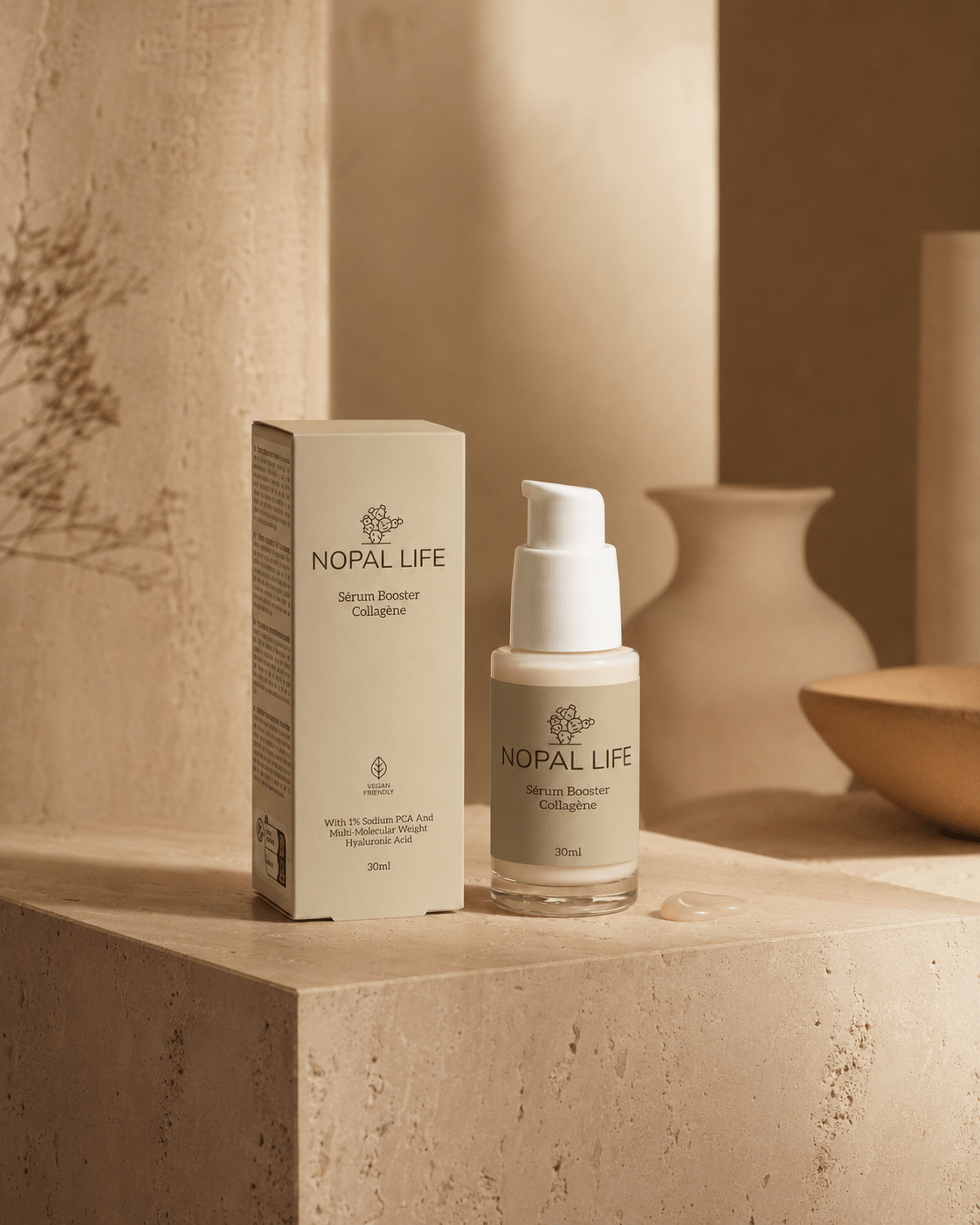
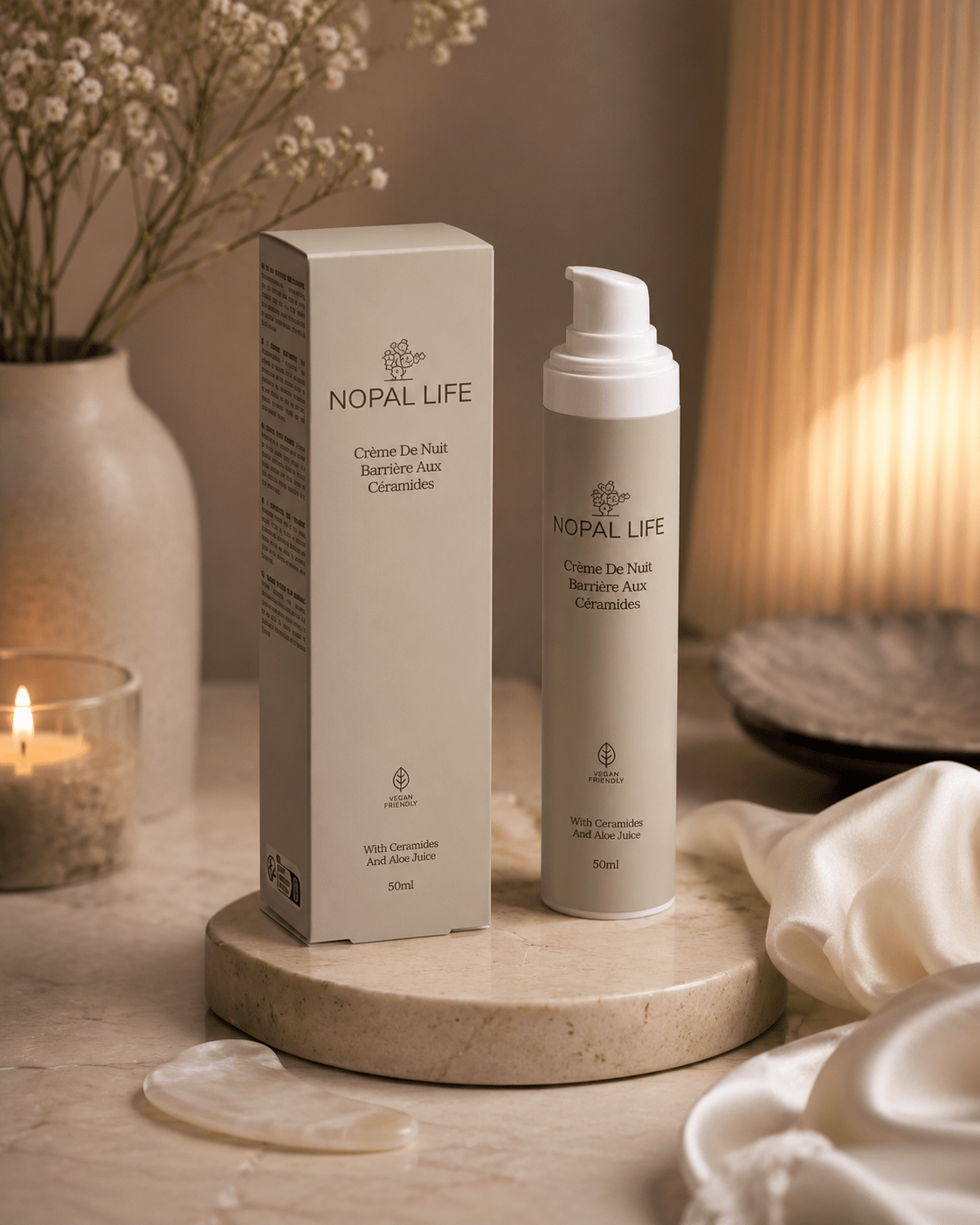
Instead of fumbling, NOPAL LIFE's Skin Intelligence diagnostic guides you towards the right actions and formulas, depending on whether your face lacks hydration, lipids — or both.
Adapting the hydration routine to your skin type
| Profile | Recommended texture | Serum (drops) | Vegetable oils | 10 min mask | Washes / day |
|---|---|---|---|---|---|
| Normal skin | Light emulsion | 3, morning | 1 evening / week | 1 / week | 1 (evening) |
| Dry skin | Rich cream, balm in the evening | 4, morning and evening | 3 drops, 5 evenings | 2 / week | 1 (evening) |
| Combination skin | Gel-cream T-zone, emulsion cheeks | 3, morning and evening | 2 drops, 2 evenings, cheeks | 1 / week | 1 to 2 |
| Oily skin | Gel-cream without heavy oils | 3, morning and evening | Optional | 1 / week | 2 |
| Sensitive skin | Short list, fragrance-free | 3, evening | 2 drops, 2 evenings | 1 / fortnight | 1 (evening) |
| Mature skin | Nourishing, balm in the evening | 4, morning and evening | 3 drops, 4 evenings | 2 / week | 1 (evening) |
Oily combination skin: A shiny area isn't necessarily well-hydrated. Sebum may be abundant, but the hydrolipidic film can be imbalanced — often due to repeated washing and drying products. The right solution lies in texture: gel-cream, light humectants, low molecular weight hyaluronic acid, sodium PCA, aloe vera. No thick butters or heavy oils on the T-zone. See hydrating oily skin, hydrating without a greasy effect and balancing T-zone and cheeks.
Normal skin: No need for a heavier routine, but a consistent one. Three products, twice a day, all year round, with adjustment between summer and winter. See preserving the balance of normal skin.
The body too
Nearly two square meters, fewer sebaceous glands on the legs, arms, and back of the hands, and hot water every day. Three benchmarks for the body: shower at 35-37 °C for a maximum of 5 minutes; lotion or balm within 3 minutes of stepping out, on still-damp skin; soap-free shower gel, lathered only where necessary. For rough areas — elbows, knees, heels — a urea formula dosed between 5 and 10% offers the best result-to-simplicity ratio. Details on hydrating dry body skin.
Three hydrating active ingredients that do most of the work
Hyaluronic acid. Its water retention capacity is exceptional — up to a thousand times its weight in water, according to studies published by Papakonstantinou, Roth and Karakiulakis in Dermato-Endocrinology in 2012. High molecular weights remain on the surface and form a flexible film; low molecular weights distribute themselves in the first layers. The point that few labels specify: applied to a perfectly dry cheek in a heated room, it captures water wherever it finds it. Applied to damp skin and then sealed, it delivers everything expected of it. See vegetable hyaluronic acid.
Vegetable glycerin. Less glamorous, often more effective, present in almost all good moisturizing creams. Between 3 and 10%, it attracts water and maintains it with remarkable regularity, even in low-humidity environments. Beyond 8%, it leaves a slightly sticky finish: its only real drawback. See vegetable glycerin.
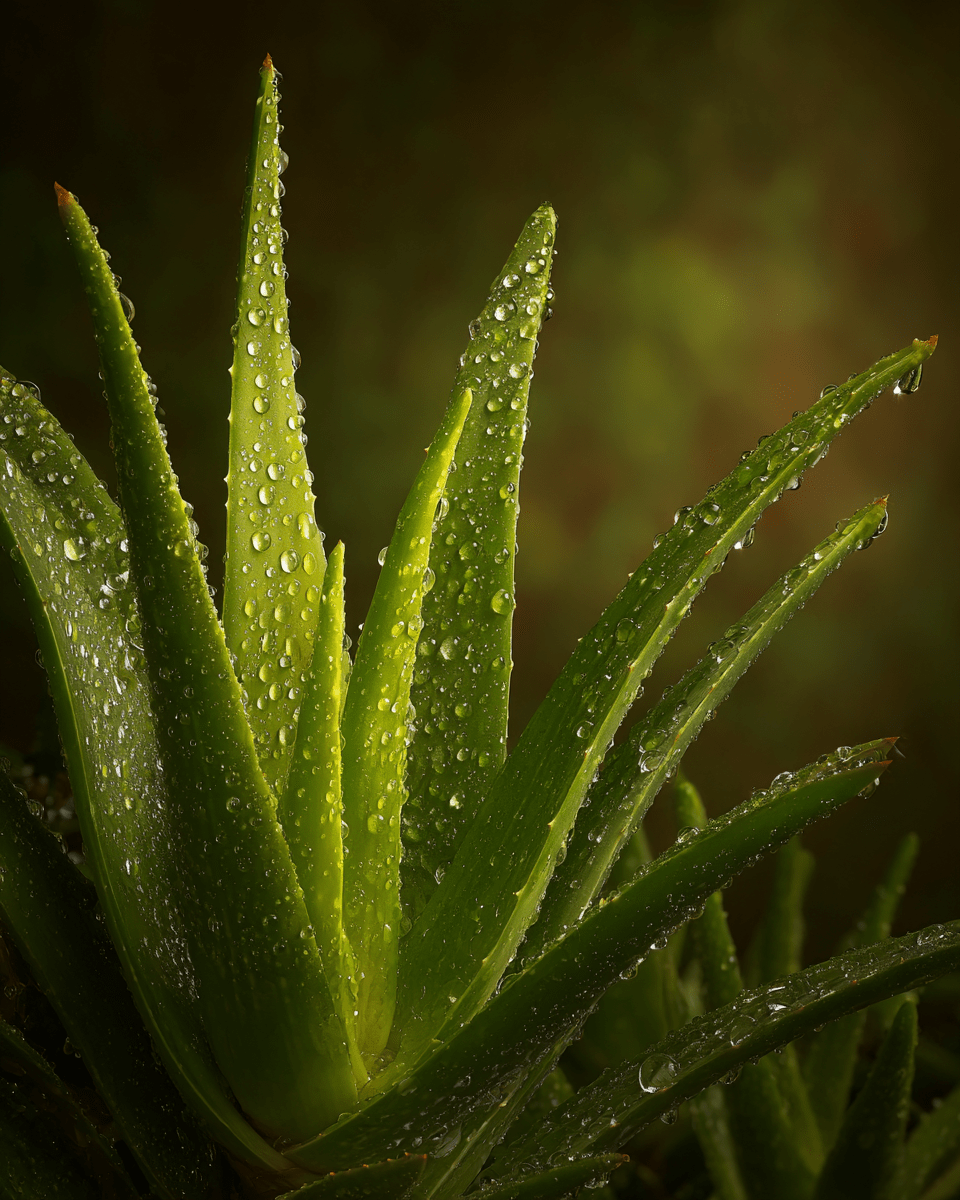
Aloe vera. It provides water, sugars, and compounds known for their soothing effect on reactive skin. Excellent first layer, but it seals nothing: used alone, it evaporates. Be wary of so-called "pure" gels that are heavily gelled, often much less concentrated in aloe vera than the promise suggests. Our analysis: aloe vera and hydration, myth or real effective active ingredient.
The NOPAL LIFE angle: prickly pear, rich in omega-6
Our entry point on these questions is cold-pressed prickly pear seed oil (Opuntia ficus-indica): its lipid fraction is dominated by linoleic acid, an omega-6 that accounts for approximately 60% of the fatty acid profile and is a component of the skin barrier; tocopherols are also present. Fine texture, rapid absorption, satin rather than greasy finish — hence its place as the last layer rather than a cream substitute.
The technique, quantified: 2 to 3 drops warmed between the palms, applied with gentle presses — never rubbing — on skin still damp with cream, in the evening, as the very last layer. Allow 20 to 30 seconds of presses. For combination skin, only on the cheeks and facial contours; for dry skin, an extra drop on areas that feel tight.
What usage feedback shows: it's regularity over three to four weeks that makes the difference in felt comfort, much more than quantity. An extra drop doesn't speed things up; an extra evening per week does. Hence specific evenings in the protocol rather than a vague "regularly." Full composition: prickly pear oil.
Adjusting your skincare with the seasons
- Winter — indoor air often below 30% humidity: richer formula in the evening, an extra occlusive layer, room between 18 and 19 °C.
- Spring — transition: lighten gradually, keep humectants, reintroduce active ingredients one week after lightening.
- Summer — heat and air conditioning: gel-cream, humectants, less occlusive, sunscreen reapplied every 2 hours during sun exposure.
- Autumn — heating resumes: more nourishing emulsion, return of vegetable oils in the evening, one comforting mask per week during the transition month.
The calendar doesn't dictate anything: the real signal is the day your usual creams stop holding up all day and you have to reapply at 4 PM. It's then time to step up your game.
Four mistakes that dry out the skin without us noticing
- Water that's too hot. Beyond 38 °C, some lipids are rinsed away.
- Systematic double cleansing. Useful after long-wear makeup, counterproductive on other days.
- Serum on a perfectly dry cheek. Humectants seek moisture wherever they find it: might as well provide them with some.
- Forgetting the neck and back of the hands. Few sebaceous glands, constant exposure, systematic neglect.
The environment matters as much as the products
A room heated to 22 °C in winter often falls below 30% relative humidity, a level where unsealed humectants lose much of their effectiveness. The comfortable range is between 40 and 60% relative humidity. Three almost free levers: lower the heating by one degree, ventilate for 10 minutes morning and evening, dry laundry in the living room in winter — a loaded clothes horse returns several liters of water to the air. A hygrometer for a few euros will tell you in a day whether the issue is your skincare or your apartment. Air conditioning has the exact same drying effect in summer, with the added bonus of direct airflow.
Acting "from within": what really matters
We often read that you need to hydrate your skin from within. In reality, the condition of the stratum corneum primarily depends on the care applied to the face and the quality of the skin barrier. Drinking regularly and consuming water-rich foods — cucumbers, watermelons, citrus fruits, zucchini — contributes to overall body balance and well-being, but does not replace a moisturizer; beyond sufficient intake, drinking more does not add anything visible. What matters more in terms of diet are essential lipids — omega-3 and omega-6 — that the body does not produce: first-pressed oils, small fatty fish, flax or chia seeds, nuts. The two approaches are complementary. See skin hydration from within.
Frequently Asked Questions
How long before seeing results?
Comfort often returns in 48 to 72 hours. Skin barrier strength requires 3 to 6 weeks. Hence a 21-day protocol with photos on day 1 and day 21.
Which moisturizer to choose?
Light texture and humectants for oily or combination skin, richer formula for dry skin. The ideal combines all three families. Check that glycerin is among the first six ingredients on the INCI list.
Is an additional serum really necessary?
Not systematically. A hydrating serum is only useful if it adds a concentration of hydrating ingredients that your cream does not provide. For a face that feels tight during the day, 3 drops before emulsion significantly change things.
Does oily skin need the same steps?
Shine is present, but hydration may be lacking. Prioritize gel-cream, low molecular weight hyaluronic acid, and sodium PCA, without heavy oils. Eliminating hydrating products to reduce shine has the opposite effect.
How many drops of serum?
3 to 4 for the entire face. Beyond that, the product remains on the surface, feels sticky, and ends up on the pillow. It's better to do two applications of 3 drops than one of 8.
Can vegetable oils be applied to dehydrated skin?
Yes, but never alone: fatty substances do not contain water; they seal in what is already there. The correct order: mist or lotion, humectant, emulsion, then 2 to 3 drops as the last layer.
In summary
Skin comfort relies on three mechanisms — attracting water, binding it, sealing it — supported by the hydrolipidic film, natural moisturizing factors, and the lipid cement. An effective hydration routine combines humectants, emollients, and occlusives, distinguishes dehydration (reversible in a few days) from lipid deficiency (several weeks), and adapts to skin type, season, and ambient humidity. Three well-chosen products, applied to damp skin in less than 60 seconds, twice a day, beat seven randomly applied products: 21 days to see, 6 weeks to establish.
To go further
- How to naturally hydrate your skin
- Hydration or nutrition: what's the difference?
- Hyaluronic acid: role and use
- Strengthen the skin barrier naturally
- Hydration routine: the steps in order
- Recognize dehydrated skin
- Easily identify your skin type
- Prickly pear seed oil
To find out exactly what your skin needs — water, lipids, or both — start with NOPAL LIFE's Skin Intelligence diagnostic: it transforms these principles into a personalized routine.
Sources: Papakonstantinou E., Roth M., Karakiulakis G., “Hyaluronic acid: a key molecule in skin aging”, Dermato-Endocrinology, 2012; Verdier-Sévrain S., Bonté F., “Skin hydration: a review on its molecular mechanisms”, Journal of Cosmetic Dermatology, 2007; Rawlings A.V., Harding C.R., “Moisturization and skin barrier function”, Dermatologic Therapy, 2004; Regulation (EC) No 1223/2009 on cosmetic products (INCI nomenclature).
Information provided for cosmetic and educational purposes; it does not constitute medical advice. In case of persistent discomfort, consult a healthcare professional.
Our anti-aging treatments