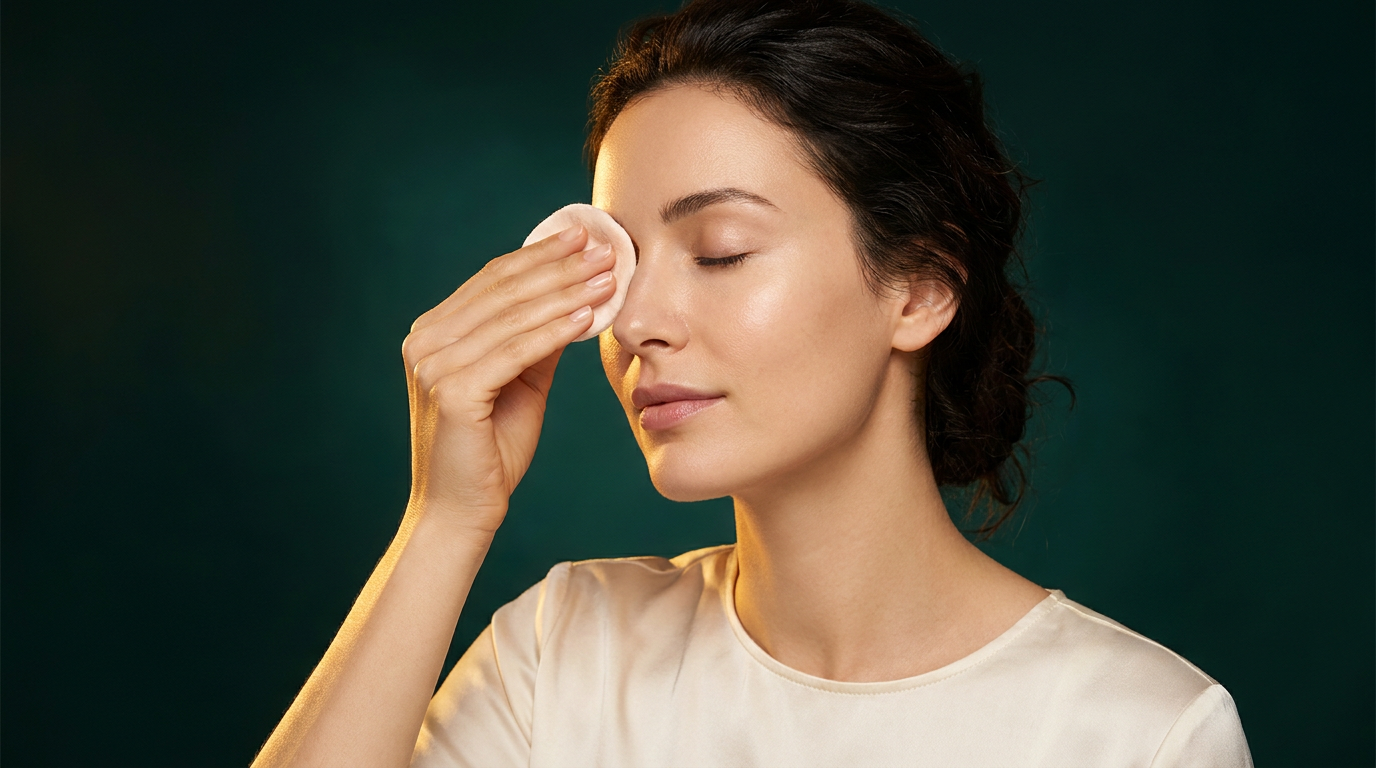
Anti-blemish face cream: understanding the mechanisms
A visible spot is not just a lack of brightening cream. Color depends on melanin, its distribution, pigment depth, and UV exposure. The most consistent strategy starts with protection and patience.
Choosing an anti-spot face cream is based on observable criteria, reproducible doses, and monitored tolerance over time.
Cosmetic treatments can improve apparent uniformity, but they don't all have the same mechanism. Some limit melanosome transfer, others promote regular desquamation, or reduce oxidation that dulls the complexion.
Identify the type of mark before choosing an active ingredient
A brown mark after a blemish does not evolve like a solar lentigo. Melasma, often symmetrical on the forehead, cheeks, or upper lip, requires medical follow-up: no cosmetic treatment resolves it, and irritating actions can accentuate it.
A recent, irregular modification that changes shape or color should be shown to a healthcare professional. Cosmetics are not for interpreting a lesion.
The brown spots page presents the main visual differences without making a diagnosis.
Melanin follows a precise biological chain
Melanocytes produce pigments in organelles called melanosomes. These are then transferred to keratinocytes. Tyrosinase is involved in several synthesis steps; this is why many active ingredients target this enzyme or the signals that activate it.
The perceived color also depends on the depth of the pigment and the light reflected by the surface. Dehydrated skin and irregular skin can appear duller, even if the amount of melanin has not changed.
This distinction avoids confusing immediate radiance with a progressive modification of a pigmented area.
Niacinamide, vitamin C, and licorice do not act the same way
Niacinamide is studied at around 4 to 5% in several formulas. It notably acts on melanosome transfer and supports the barrier. Vitamin C derivatives aim for oxidation and radiance, but their stability varies greatly depending on the form and packaging.
Glabridin from licorice is used in products for uniformity. Its effectiveness depends on the quality of the extract and its actual dose. Adding three active ingredients is only useful if the formula remains well tolerated.
The fact sheets on niacinamide, vitamin C, and licorice allow for comparison of these mechanisms.
Sun protection determines the result
UV rays stimulate pigmentation and maintain contrast. A broad-spectrum sunscreen must be applied in sufficient quantity and then reapplied depending on exposure, perspiration, and friction. Laboratory SPF is measured at 2 mg per cm², an amount often greater than actual use.
Visible light can also influence certain pigmentations, especially on high phototypes. Tinted formulas containing iron oxides then offer an additional benefit.
The sun protection module explains dose, reapplication, and limits of indices.
Exfoliate less, but with a clear method
Alpha-hydroxy acids accelerate superficial desquamation. Too high a frequency causes a burning sensation, irregular desquamation, and sometimes more pronounced contrast. The right rhythm is one that leaves the skin comfortable between uses.
Starting once a week, in the evening, allows for observation. Do not combine several exfoliants, a retinoid, and an abrasive brush on the same night. A single variable is enough to evaluate the benefit.
The guide on glycolic acid specifies the points of vigilance.
| Family | Cosmetic objective | Realistic timeframe |
| Niacinamide | Uniformity and barrier support | Several weeks |
| Stable Vitamin C | Radiance and antioxidant defense | Progressive |
| Licorice | Targeted visual attenuation | Regular use |
| Gentle AHAs | More even surface | Several skin cycles |
Photographic protocol over eight weeks
Visual memory is unreliable. Photograph the area once a week, without makeup, at the same time, with the same distance, and fixed exposure. Avoid the phone's beauty mode, which smooths out color differences.
- Week 0: reference photo and local test.
- Weeks 1 to 2: daily protection only if skin is reactive.
- Week 3: introduction of a single active ingredient.
- Weeks 4 to 8: maintain the same rhythm.
- Stop and professional advice if the mark changes rapidly.
Mistakes that perpetuate contrast
Pure lemon has a pH close to 2 and can sensitize the surface; it is not a homemade serum. Citrus essential oils can cause problems in case of exposure depending on their composition. Baking soda, which is very alkaline, disrupts the surface pH.
Scratching, sanding, or multiplying peels does not selectively remove pigment. These actions make the surface more vulnerable and complicate the reading of the result.
The anti-spot routine, on the contrary, favors a gentle and measurable progression.
Pigmentary active ingredients, concentrations, and monitoring schedule
An anti-spot face cream must name the targeted mechanism. Tyrosinase participates in melanin production in melanocytes; niacinamide acts more on the transfer of melanosomes to keratinocytes. Vitamin C acts as an antioxidant and can contribute to visual uniformity. Licorice provides glabridin, while azelaic acid falls within a usage framework to be clarified depending on the product. A single formula does not necessarily cover all these pathways, and multiplying five active ingredients increases the risk of discomfort.
For an anti-spot face cream, look for clear concentrations: niacinamide around 4 to 5%, stabilized vitamin C depending on the form, glycolic acid often between 5 and 10% in consumer products. Introduce only one new active ingredient two evenings a week. Apply a pea-sized amount to the entire face rather than a large amount only on the mark, unless specifically instructed by the manufacturer. Pigmentation also forms around the visible area; too punctual an application sometimes creates a difference in texture without improving homogeneity.
The anti-spot face cream remains secondary without daily sun protection. Apply SPF 50+ at a rate of approximately two finger-lengths for face and neck, then reapply every two hours during prolonged exposure, after sweating or wiping. UVA rays pass through clouds and some windows; visible light can also count for certain pigmentations. A tinted screen containing iron oxides may be relevant when the color easily intensifies, provided the tint allows the full dose to be used.
An anti-spot face cream is measured over eight to twelve weeks, not in three days. Photograph the same area once a week, at the same time, without makeup and with a fixed distance. Use a white sheet as a light reference. Note the appearance of new marks, the contrast, and tolerance. Melanocytes respond slowly, and epidermal renewal takes several weeks; changing formulas every ten days prevents any reliable reading.
Discard homemade recipes for anti-spot face cream using lemon juice, baking soda, or undiluted essential oils. Lemon has a pH close to 2 and can make exposure more problematic. Baking soda, very alkaline, disturbs the surface pH. On sensitive or mature skin, start by reinforcing comfort with glycerin, ceramides, and panthenol before adding an exfoliant. Any rapid, irregular, or persistent evolution of a mark should lead to seeking professional advice.
Distinguishing recent spots, lentigines, and diffuse pigmentation
A brown mark appearing after a blemish does not evolve like an old solar lentigo. Diffuse pigmentation can be accentuated by UV rays, heat, friction, or repeated irritation. Before choosing an active ingredient, observe the shape, color, date of appearance, and triggering factors. An irregular border, a rapid modification, or a clear difference between two sides warrants professional advice. The cosmetic role is to improve visual uniformity and limit factors that maintain contrast, not to make a diagnosis.
Build a minimal routine: gentle cleanser in the morning, serum with 4 or 5% niacinamide, light cream, then SPF 50+. In the evening, alternate a stabilized vitamin C or a licorice derivative with a gentle exfoliant once or twice a week. For dry skin, add ceramides and squalane. For oily skin, choose a non-occlusive fluid. Avoid rubbing marks with a brush or granular scrub, as repeated friction can accentuate their visibility.
To compare two formulas, note the exact form of vitamin C, the percentage of niacinamide, the presence of cosmetic tranexamic acid or licorice, and then the texture. A rich pot cream is better suited for dry cheeks; a fluid serum is easier to dose on combination skin. Do not simultaneously increase frequency and concentration. A single modification every two weeks allows for an improvement or discomfort to be linked to an identifiable cause.
Anti-contrast protocol over eight weeks. In the morning, apply three drops of 4 or 5% niacinamide serum, then a pea-sized amount of emulsion and half a teaspoon of SPF 50+ to the face and neck. In the evening, use a vitamin C derivative or licorice extract, then a simple cream. Photograph the area once a week in the same room.
Tyrosinase is involved in melanin synthesis within melanocytes. Niacinamide primarily acts on the transfer of melanosomes to keratinocytes. Vitamin C contributes to the antioxidant environment, and licorice glabridin is studied for the appearance of pigmentary irregularities. These mechanisms are complementary, not interchangeable.
For a recent mark after a blemish, avoid scratching and start with sun protection. For a well-defined lentigo, document its shape and evolution. For diffuse pigmentation or melasma, seek the advice of a healthcare professional: no cosmetic treatment alone resolves this type of situation.
| Active | Common dosage | Time | Cautionary point |
| Niacinamide | 4 to 5% | Morning or evening | Stinging at high doses |
| Cosmetic Azelaic Acid | 5 to 10% | Evening | Introduce gradually |
| Vitamin C | 8 to 15% depending on form | Morning | Stability and pH |
| Licorice | Depending on formula | Morning or evening | Check INCI |
Write down the sequence instead of improvising: cleanse for twenty seconds, dry, apply three drops, spread gently, wait one minute, add a pea-sized amount of cream. In the morning, finish with the measured amount of protection. Reapply every two hours during prolonged exposure.
A glycolic acid exfoliant can be used one evening a week at 5 or 7%, but not on the same evening as a retinoid. Sensitive skin may prefer low-concentration lactic acid. If redness persists, suspend active ingredients and return to a short routine.
Monitoring should focus on contrast, not on a promise of disappearance. Compare photographs at four and eight weeks. Also note the appearance of new marks, as insufficient protection can negate the visual benefit of a targeted active ingredient.
Mapping of areas. Use a mirror and draw a simple diagram of the forehead, cheeks, upper lip, and chin. Number the visible marks, measure their approximate width in millimeters, and photograph them from the same distance.
In the morning, apply protection in two thin layers: a quarter teaspoon, wait one minute, then the second quarter. This method facilitates a total dose close to the recommended amount without leaving too thick a film in one go.
In the evening, apply the targeted active ingredient only to dry skin. Skin that is still damp can increase the penetration and stinging of certain acids. Wait five minutes after washing if skin reacts easily.
Evaluation window. Allow at least eight to twelve weeks before judging a visual change. Epidermal renewal is measured in weeks, not in two nights. Daily photography adds noise; a standardized weekly shot is more useful.
Avoid homemade mixtures with lemon, baking soda, or vinegar. Lemon juice has a very acidic pH and variable composition. A cosmetic formula, on the other hand, indicates a concentration, pH, preservative system, and duration of use.
Note each product change in the tracking table. Without this record, an improvement or worsening may be attributed to the wrong active ingredient.
What a targeted formula cannot promise
It does not eliminate all pigmented areas and does not guarantee an even complexion in a few days. Results depend on the type of mark, its depth, phototype, exposure, and consistency.
It never replaces the examination of a new or evolving lesion. A cream addresses general appearance, not the identification of a medical problem.
Finally, prevention is as important as the active ingredient. Without consistent protection, pigment can reform faster than the surface evens out.


Go further than this article
Get our skincare guides by email — and start with your free skin diagnostic: 2 minutes, advice tailored to your skin. We ship to the US, UK, Canada, Australia and 27 European countries; somewhere else? Sign up and you will be the first to know when we deliver to your country.
By signing up, you agree to our privacy policy. Unsubscribe in one click.