Licorice glabridin: natural anti-tyrosinase, brightening and soothing for dull, mature skin
Licorice in cosmetics: a valued active ingredient for radiance
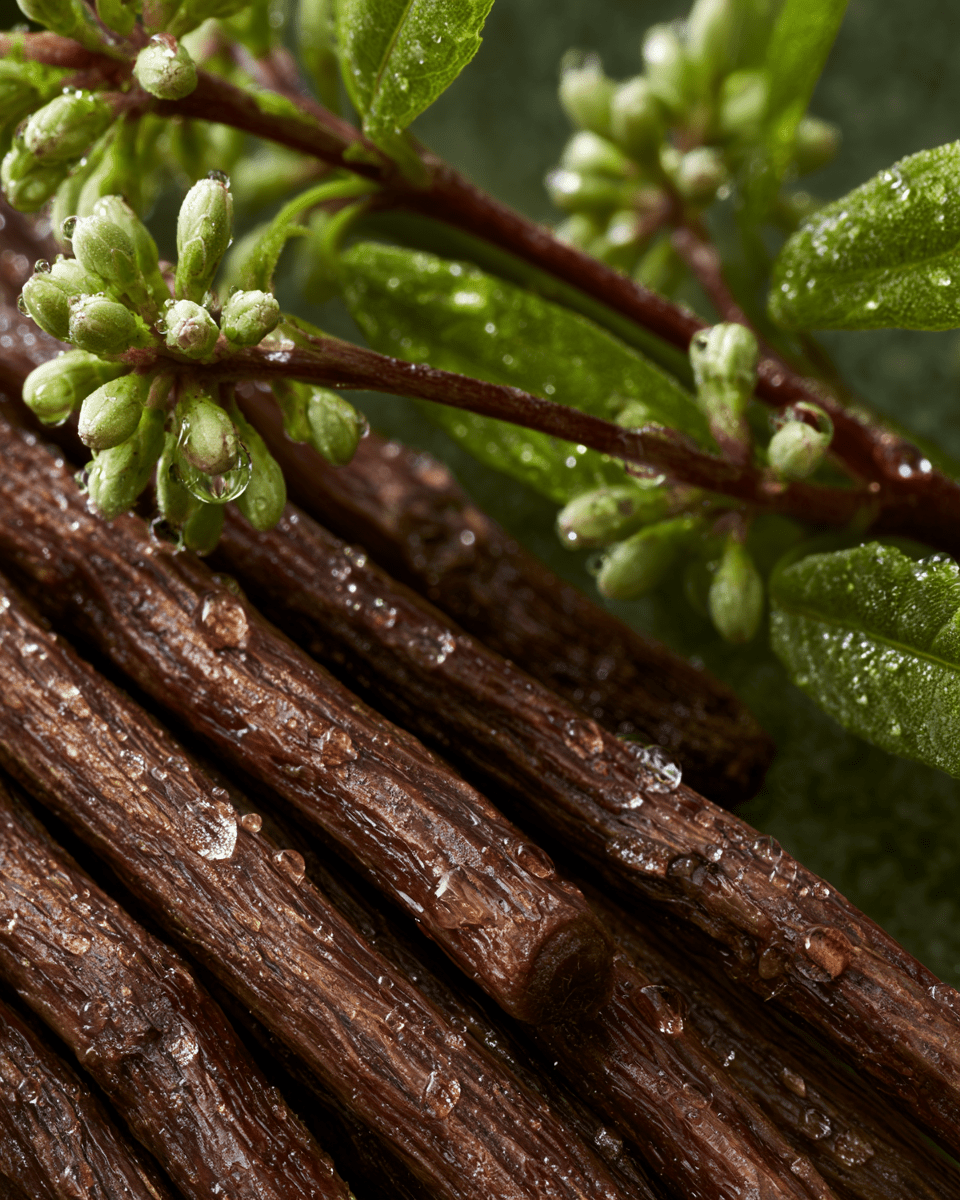
Licorice (Glycyrrhiza glabra) is much more than an ancient botanical plant. In modern cosmetology, it has become one of the most popular active ingredients to help even out skin tone and provide a sensation of soothing. Its bioactive compounds—glabridin, glycyrrhizic acid, liquiritigenin—are at the heart of many plant-based formulations. For mature, dull, or visibly spotted skin, it represents a gentle and appreciated alternative to often uncomfortable synthetic active ingredients.
This plant, cultivated since antiquity in the Mediterranean and Central Asia, has transcended centuries to land in the most demanding formulation laboratories. Understanding what it brings to the skin is to understand why it is now among the reference ingredients in skincare routines focused on visible skin tone uniformity and radiance.
Glabridin, liquiritigenin, glycyrrhizic acid: the three active pillars
The cosmetic interest of licorice rests on three families of molecules with complementary properties:
Glabridin is the star flavonoid of licorice extract. It is traditionally associated with a more unified and luminous complexion appearance. Known for its gentleness, glabridin is appreciated in formulas that aim to reduce the visible appearance of spots, with a remarkable tolerance profile.
Liquiritigenin, another isoflavone extracted from the root, is particularly valued for mature skin, where the skin tends to lose apparent density and where visible spots become more frequent. This molecule is valued in skincare products that seek to preserve the firm and plump appearance of the skin.
Glycyrrhizic acid and its derivative glycyrrhetinic acid are recognized for their soothing sensation. Licorice extract is traditionally appreciated for helping to soothe skin comfort, providing an immediate feeling of softness, without discomfort.
A natural radiance active: how licorice gently helps to unify skin tone
Dark spots and dull complexion can be accentuated by UV rays, daily stress, or external aggressions, giving the skin an uneven appearance. Glabridin is appreciated for helping to reduce the visible appearance of spots and to bring a sensation of radiance to the skin, all gently.
This approach differs from that of more aggressive active ingredients that can be uncomfortable for the skin. Licorice is appreciated for its great comfort while supporting the appearance of a more homogeneous complexion. This is what is associated in cosmetics with a "gentle radiance" action—a crucial nuance for sensitive and mature skin.
For mature and dull skin, this approach is ideal. Visible age-related and time-related spots can see their appearance diminish with regular and well-tolerated use. A visibly improved appearance is generally observed after 6 to 12 weeks of daily use.
For personalized care of your complexion, our Skin Intelligence skin diagnosis guides you to the active ingredients best suited to your skin profile.
Soothing properties: a natural sensation of comfort
Sensations of discomfort are at the heart of many skin problems: apparent redness, reactive sensitivity, uneven complexion. Licorice stands out here as a remarkably appreciated soothing active ingredient.
Glycyrrhetinic acid is recognized for helping to soothe sensations of discomfort and provide a feeling of softness, while respecting the comfort of the epidermis. Licorice is appreciated in formulas that aim to soothe the appearance of redness and provide a sense of well-being to the skin, in gentle skincare routines.
For mature skin with a tendency to dullness, this action is doubly beneficial: it provides a sensation of soothing and comfort, and it supports the appearance of a more homogeneous complexion. Soothed skin looks more uniform.
The combination of licorice + prickly pear seed oil is particularly interesting here: prickly pear seed oil provides vitamins E and K, linoleic acid, and betaine, which help to preserve the comfort of the skin barrier and support the soothing sensation, creating an antioxidant and soothing synergy with excellent tolerance.
Soothing hydrating routine for dull mature skin: incorporating licorice
Licorice naturally integrates into a routine focused on visible radiance and firmness for mature skin. Here's how to structure a complete routine:
Morning: Gentle cleansing with lukewarm water or a non-stripping cleansing milk. Application of a vitamin C serum (an antioxidant appreciated for radiance) followed by a moisturizer containing licorice extract. SPF 30 minimum sun protection—essential to support the brightening action of glabridin and preserve the visible uniformity of the complexion against UV rays.
Evening: Thorough makeup removal, enzymatic cleansing twice a week to refine the appearance of skin texture. Application of an active ingredient that supports natural skin renewal (low-dose retinol or bakuchiol for sensitive skin). Night: occlusive layer of rich treatment with licorice and vegetable oil to allow the active ingredients to act during rest.
Our Fragrance-Free Soothing Moisturizer incorporates this active ingredient in a formula specially developed for reactive and mature skin. Fragrance-free, dye-free, formulated for maximum tolerance even on the most sensitive skin.
Our entire Radiance & Uniformity range has been designed to support this progressive approach towards a brighter and more homogeneous complexion.
Mistakes to avoid with licorice in skincare
Despite its excellent tolerance profile, licorice in cosmetics is not without bad practices that can reduce its benefits or cause discomfort:
Neglecting sun protection. This is the number one mistake. Applying a brightening active without SPF is like trying to fill a leaky glass. UV rays accentuate the appearance of spots daily. Without protection, the brightening benefit is compromised day after day.
Expecting results in a few days. Glabridin supports the appearance of the complexion over time. Natural epidermal renewal takes 28 to 40 days in adults, longer in mature skin. The appearance of visible spots gradually fades over 2 to 3 months of regularity.
Combining with overly irritating active ingredients without caution. If you simultaneously introduce strong retinol, AHA/BHA, and licorice, the cumulative discomfort can paradoxically accentuate the appearance of spots—exactly what we want to avoid. Introduce active ingredients one by one, with a tolerance evaluation phase.
Choosing formulas with insufficient concentration. The benefit of glabridin is generally observed starting at 0.1% in the finished product. "Trace" formulas of licorice extract at the end of the INCI list will not have a noticeable effect. Check the position of the ingredient in the INCI list.
Stopping treatment at the first result. The appearance of spots is a tendency that easily returns in predisposed skin. An abrupt stop, especially without continued SPF, is often accompanied by a return of the pigmented appearance in the following weeks. Maintaining the active ingredient for maintenance is recommended.
Consult our resources dedicated to visible radiance and firmness care and complexion appearance to deepen your approach.
FAQ — Licorice and skincare: your most frequent questions
Is licorice suitable for all skin types?
Yes, licorice is suitable for all phototypes, but its benefits are most appreciated on mature, combination to dry, or visibly spotted skin. Highly pigmented skin (phototypes IV to VI) may require longer use times to observe a visibly improved appearance.
Can licorice be used during pregnancy?
Topical licorice extracts are generally considered suitable for skin application during pregnancy, unlike ingested licorice (not recommended). However, as a precaution, consult your dermatologist or gynecologist before introducing any new active ingredient during this period.
Does licorice really lighten or bleach the skin?
This is a fundamental distinction. Licorice does not bleach the skin: it helps to reduce the visible appearance of spots and supports the appearance of a more uniform complexion. The complexion gradually appears more homogeneous, without becoming artificially pale.
How do I know if my product contains enough licorice?
Check the INCI list: look for Glycyrrhiza Glabra Root Extract or Glycyrrhiza Uralensis Root Extract. The higher the ingredient is on the list, the higher its concentration. A position within the first 10 to 15 ingredients is a good indicator of a well-formulated product.
How long does it take to see results on the appearance of dark spots?
A visibly improved appearance is generally observed from 6 weeks of daily use, with a noticeably more homogeneous appearance at 12 weeks. Consistency is key—twice-daily application (morning and evening) optimizes the benefit.
Can licorice and vitamin C be combined?
Yes, this is even an appreciated combination. Vitamin C is a recognized antioxidant that helps revive radiance and unify the appearance of the complexion. The two active ingredients complement each other for both preventive and visible results.
Is licorice suitable for sensitive, reactive skin?
This is precisely one of its strengths. Unlike many brightening active ingredients, licorice is exceptionally well tolerated. It is often recommended as a first option for skin that does not tolerate conventional active ingredients well.
Can licorice also help with visible skin firmness?
Indirectly, yes. By providing a sensation of soothing and comfort, licorice helps to preserve the firm and plump appearance of the skin. Soothed skin shows a denser appearance and a more homogeneous texture in the long term. To go further on this topic, explore our advice on licorice in skincare.
Ready to incorporate licorice into your routine?
Conclusion
Glabridin, a key active ingredient in licorice, is known for helping to unify and illuminate the appearance of the complexion. Soothing, it helps to harmonize the appearance of dull mature skin without aggressing it. Its tolerance makes it valuable for sensitive skin. Integrated into a routine, licorice contributes to a more homogeneous and luminous complexion appearance.
Why choose Nopal Life for visible radiance and firmness
Skin radiance and visible firmness are achieved through appreciated active ingredients and excellent formulations. Nopal Life prickly pear seed oil, rich in essential omega-6 and omega-9 fatty acids, vitamin E, and plant sterols, helps preserve the suppleness and appearance of the skin's film. It helps maintain the firm and plump appearance of the skin, reduces the appearance of dehydration lines, and helps preserve the comfort of the epidermal barrier for a visible smoothing effect from the first few weeks.
Combine it with our radiance and firmness night cream and our radiance serum for a complete synergy, night and day. Your skin regains a firm appearance, radiance, and lasting comfort. Discover the Nopal Life formulation designed for your skin profile thanks to our free Skin Intelligence diagnosis.
This content is informative and educational; it does not replace medical advice, diagnosis, or dermatological consultation. In case of doubt or persistent skin problems, consult a qualified healthcare professional.


Go further than this article
Get our skincare guides by email — and start with your free skin diagnostic: 2 minutes, advice tailored to your skin. We ship to the US, UK, Canada, Australia and 27 European countries; somewhere else? Sign up and you will be the first to know when we deliver to your country.
By signing up, you agree to our privacy policy. Unsubscribe in one click.