Moisturizer for Dry Skin: Ingredients and Textures to Choose
Explain that a good cream for dry skin combines water, humectants, and lipids rather than just one star active ingredient.
Moisturizer for dry skin: three functions in one jar
Dry skin primarily lacks surface lipids, which allows water to evaporate more easily. A good cream therefore combines humectants, emollients, and more occlusive agents. Humectants attract water, emollients soften the spaces between corneal cells, and occlusives slow down evaporation. This combination is more important than the presence of a single active ingredient highlighted on the label.
A moisturizer for dry skin should leave the surface comfortable for several hours without a suffocating film. If your cheeks feel tight an hour after application, the formula is probably too light or applied in insufficient quantity. If your forehead remains oily upon waking, reduce the dose in that area. Localized adaptation often works better than a complete product change.
Glycerin and hyaluronic acid: attracting water
Glycerin is a classic humectant capable of capturing water and improving the flexibility of the stratum corneum. Hyaluronic acid also acts as a humectant, with properties that depend notably on its molecular weight. These ingredients do not replace lipids when the skin is very dry. They work better in an emulsion that also contains emollients and film-forming agents.
Apply the cream to a slightly damp surface after cleansing to take advantage of the water already present. A pea-sized amount for the face is a good starting point, to be increased on the cheeks if necessary. There's no need to constantly spray thermal water without covering it afterward: evaporation can leave the surface dry again. The cream's purpose is precisely to retain this moisture.
Indoor heating and air conditioning reduce ambient humidity, which can increase the feeling of dryness. A cream used in winter may therefore seem too rich in summer without the skin type having changed. Maintain the same logic of ingredients and primarily adapt the proportion of lipids. A thinner layer in the morning and a more generous one in the evening is often enough to get through seasonal variations.
Ceramides, squalane and shea butter for the lipid phase
Ceramides are among the lipids naturally present in the stratum corneum, alongside cholesterol and fatty acids. Formulations that combine several lipid families aim to support the organization of the barrier. Squalane provides a gliding and relatively light touch. Shea butter, which is richer, is more suitable for very dry areas or cold periods.
A moisturizer for dry skin can therefore be denser in the evening and lighter in the morning. This difference does not require two products: the same formula can be applied in a thin layer during the day and more generously at night. For very dry cheeks, a drop of squalane or vegetable oil can be added as a final step. Test a small amount first to avoid an overly heavy film.
The eye contour and sides of the nose are areas where the texture can behave differently. For the eye contour, a very small amount limits migration towards the eye. Around the nose, a balm can be useful occasionally if cold weather or tissues dry out the surface. This targeted application avoids weighing down the rest of the face.
Choosing texture based on dryness level
| Feeling | Texture | Key features |
| Slight tightness | Lotion-cream | Humectants + emollients |
| Dry skin | Cream | Ceramides + glycerin |
| Very dry | Balm | Lipids + occlusives |
| Localized area | Targeted balm | Apply only where necessary |
The texture should be chosen based on the comfort achieved several hours after application. A cream may be more useful than a balm if it is sufficient to limit tightness. Conversely, a very dry area may occasionally require a more occlusive layer.
The texture often indicates a product's behavior better than its commercial name. A gel can hydrate quickly but lack lipids in winter. A balm can be excellent on the cheeks and too rich on the nose. Adjust the dose per area and season rather than demanding a universal product year-round.
Cleansing: avoid undoing what the cream rebuilds
Very foamy cleansers, hot water, or repeated washing can accentuate lipid loss. In the morning, a simple rinse may suffice if the skin is comfortable. In the evening, use a gentle product for 20 to 30 seconds, then rinse with lukewarm water. Pat dry and apply cream within minutes.
Moisturizer for dry skin works best when it's part of this simple sequence. Adding several alcohol-based lotions or frequent exfoliation can negate some of the benefits of a rich formula. If you use a retinoid or AHA, space out applications at the beginning. The priority remains to maintain a supple surface, without persistent flaking.
Morning, evening and winter: adjusting the quantity
In the morning, a thin layer should allow sunscreen to spread correctly. In the evening, slightly increase the amount on areas exposed to cold or dry heating. In winter, a more occlusive balm can be reserved for nighttime. In summer, a lighter emulsion may suffice without losing its moisturizing function.
For a moisturizer for dry skin, observe the comfort four hours after application rather than just the first ten minutes. A texture that feels pleasant on application may evaporate too quickly; a richer formula, on the other hand, may remain comfortable until evening. This simple monitoring helps choose between lotion, cream, and balm without relying solely on packaging promises.
Very dry skin: when cosmetics reach their limit
Intense dryness with cracks, significant itching, or persistent patches warrants professional advice. Cosmetics can improve comfort and reduce water loss, but they don't determine the origin of a persistent problem. In such cases, avoid multiplying essential oils, scrubs, or fragrances, which complicate evaluation. Revert to a short, fragrance-free formula until appropriate advice is obtained.
A moisturizer for dry skin doesn't need to sting to be effective. A persistent burning sensation is a sign of poor tolerance, not a marker of efficacy. Rinse if necessary and stop using new active ingredients. Simplicity facilitates the return to a more comfortable barrier.
- Apply to slightly damp skin
- Insist on the cheeks if necessary
- Reduce aggressive cleansing
- Adjust richness according to the season
What a moisturizer cannot promise
A moisturizer for dry skin does not permanently change skin type. It reduces water loss and improves suppleness as long as it is used regularly. Its effect depends on climate, cleansing, and other products applied. Naturally dry skin will therefore often require continuous maintenance rather than a one-time "cure."
Nor does it replace sun protection or a specific active ingredient if the primary objective concerns spots or wrinkles. The cream mainly creates conditions of comfort and tolerance. This is already an essential role: less dry skin better accepts a simple and regular routine.
The lipid phase decides, for truly dry skin
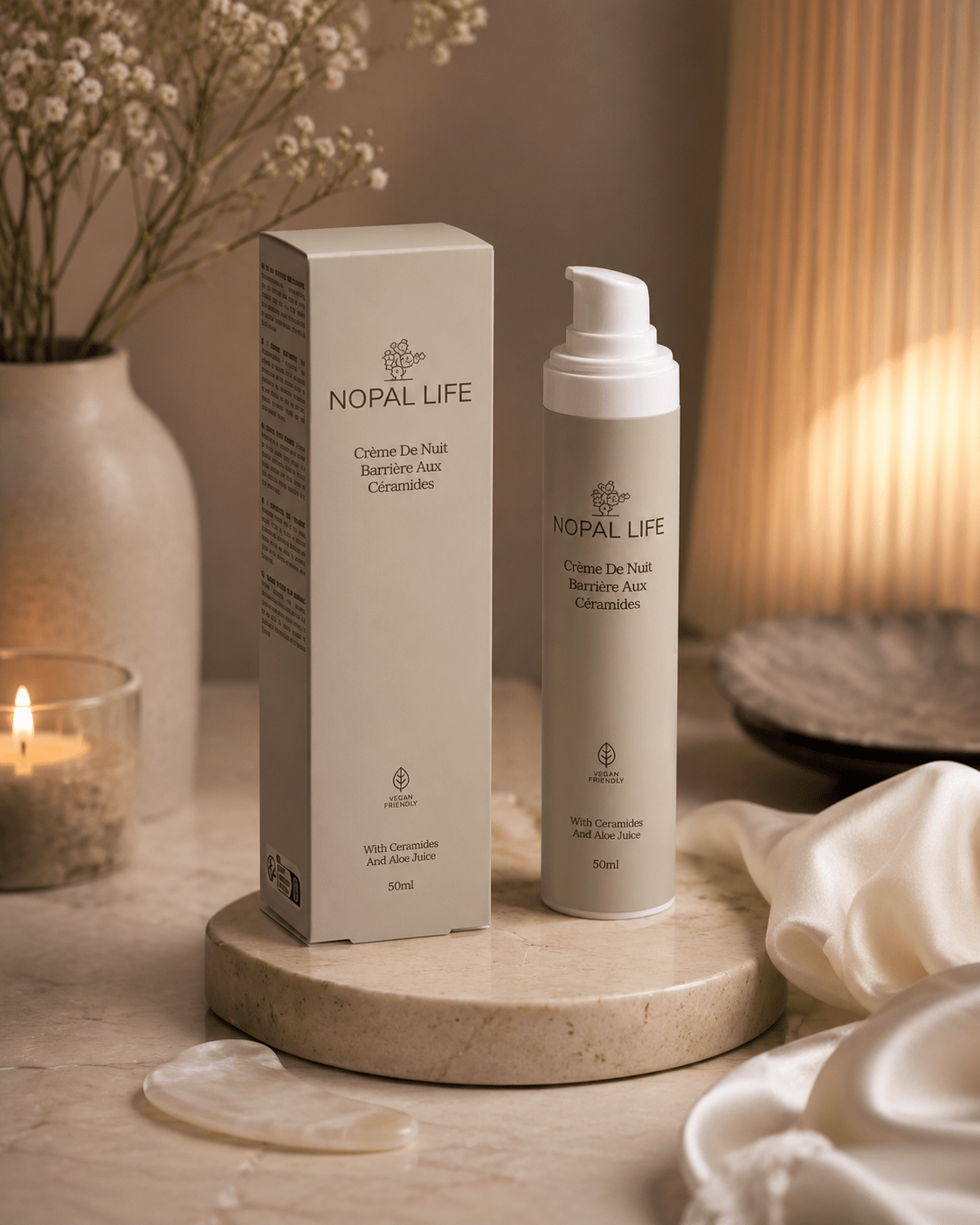
Humectants do half the job; without fats to retain it, the attracted water will evaporate during the day. The level of dryness determines the richness to choose, and a prickly pear regenerating night cream falls into the category of the most enveloping textures, for evening use.
Our anti-aging treatments