Rosehip oil storage: shelf life and signs of oxidation
Six to twelve months after opening, which isn't long. Rosehip oil is one of the most fragile vegetable oils: its richness in unsaturated fatty acids makes it both cosmetically interesting and highly vulnerable. Its actual lifespan depends on each stage of the bottle's life, and the first stage occurs even before purchase.
At Purchase: What Condemns a Bottle in Advance
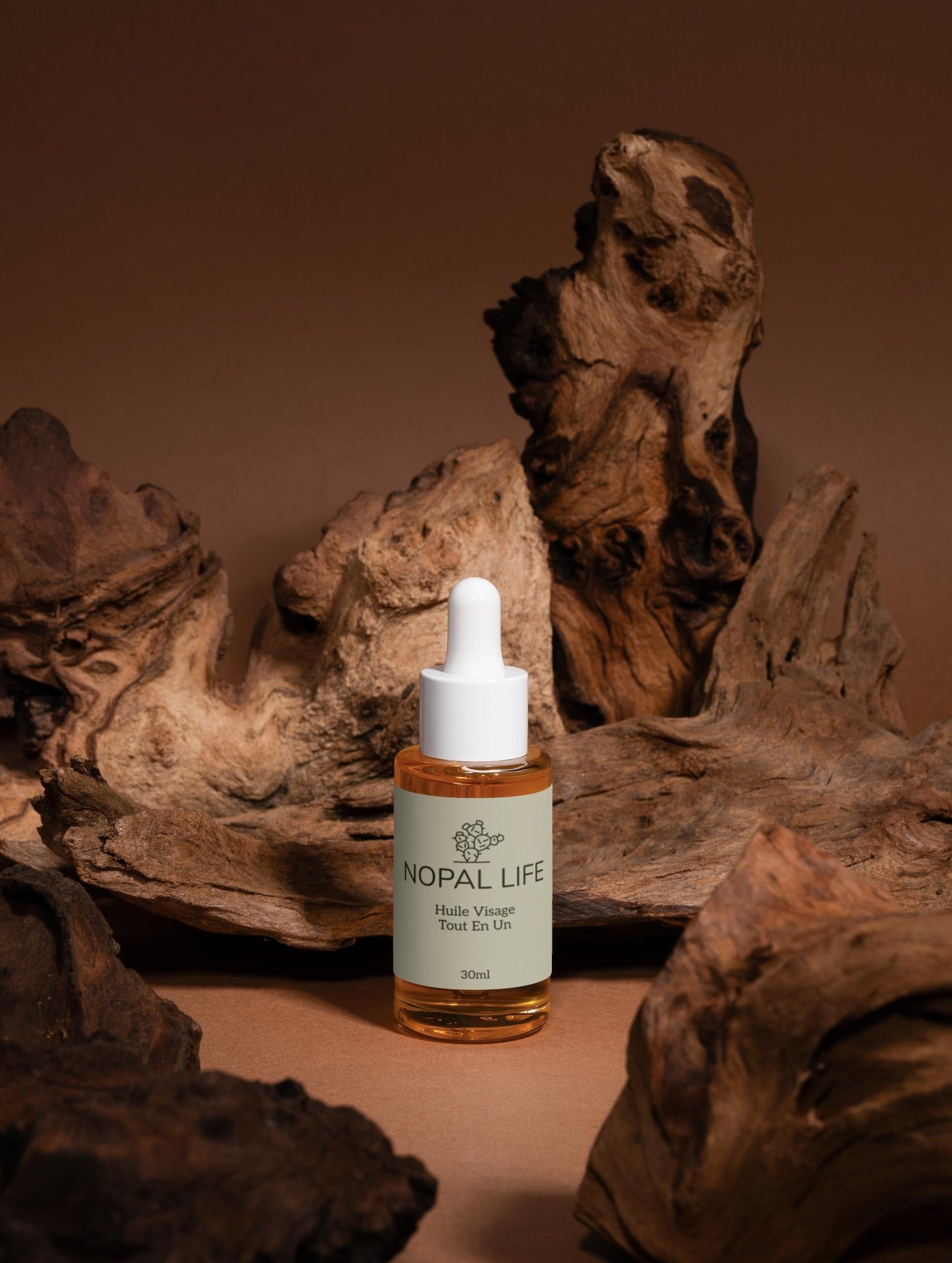
A rosehip oil sold in a transparent bottle has already begun to degrade on the shelf. Light is its primary enemy, and a clear container offers no protection from it.
Look for amber or blue glass, and a legible manufacturing or shelf-life date. A rosehip vegetable oil pressed two years ago will not give you what you expect, even if unopened.
The mention "first cold press" also matters. An oil obtained through heat or solvents loses some of its essential fatty acids and natural vitamin E, which is precisely what protects it.
Origin also provides information: Chile is the main producer, and cold-pressed Chilean rosehip vegetable oil is a reasonable benchmark.
Upon Opening: The Two Actions That Double Its Lifespan
Note the opening date on the bottle. This is the simplest action on this page, and without it, you have no way of knowing its current state.
Then store the oil somewhere other than the bathroom. Temperature variations and humidity accelerate oxidation there; a bedroom drawer is a much better place.
Some recommend the refrigerator. This is effective for rosehip oil, more so than for most oils, but it thickens in the cold and then spreads less easily on the skin. It's up to you to decide if the benefit is worth the inconvenience.
During Use: Limit Contact with Air
Each opening allows oxygen in. This is mechanical, and it explains why a half-empty bottle ages faster than a full one.
A dropper limits this contact better than a screw cap. A pump bottle is even better, but it is rare for this type of vegetable oil.
Never pour back into a larger container. And if you transfer it for travel, use a small bottle filled to the brim rather than a large one that's half-empty.
Close immediately after use. An oil left open while applying the rest of your routine loses more than you might think over several months.
Signs It Has Gone Bad
First, the smell, and this is the most reliable sign. Fresh rosehip oil has a discreet, slightly herbaceous vegetable scent; oxidized oil smells rancid, like an old nut.
Then the color. It should remain golden to orange, tending towards amber. A clear browning indicates oxidation.
Finally, the texture. An oil that becomes thick or sticky has polymerized — the same phenomenon that causes linseed oil to dry on a brush.
Oxidized vegetable oil not only loses its benefit but also becomes irritating to the skin's protective barrier. This is why it should be thrown away rather than used up.
Why This One Is More Fragile Than Others
Its composition fully explains it. Rosehip oil contains nearly 80% polyunsaturated fatty acids — linoleic acid and alpha-linolenic acid, both essential.
These double bonds are exactly what oxygen attacks. An oil rich in saturated fatty acids, like coconut oil, can be kept for years; an oil rich in polyunsaturated fatty acids is counted in months.
Its natural vitamin E protects it a little, but not enough. Some brands add it — listed as tocopherol at the end of the ingredient list — and this is a good thing, not a defect.
This fragility is the exact flip side of what makes rosehip vegetable oil interesting for skin care. You can't have one without the other.
This fragility has a direct impact on results. Oxidized rosehip oil loses its regenerating effect: for scars, stretch marks, or fine wrinkles, prolonged use of a spoiled bottle will yield no results.
This is a point rarely mentioned. Many disappointed reviews of this oil come from a product that was no longer good, not from the oil itself being ineffective.
Do not mix essential oil into the bottle to "preserve" it either. An essential oil does not preserve a vegetable oil, and adding it complicates skin application.
Its composition explains everything: a very high proportion of linoleic acid (omega-6) and alpha-linolenic acid (omega-3), and relatively little oleic acid. However, it is the most unsaturated fatty acids that oxidize first.
Oil extracted from Rosa rubiginosa seeds by cold pressing retains its benefits better than refined oil, but it remains more fragile than jojoba or argan oil. Quality is judged by smell as much as by the label.
How long, concretely
Unopened bottle, stored away from light: until the indicated date, often two years after production. Once opened, six months at room temperature, twelve in the refrigerator.
A thirty-milliliter bottle used daily will last two to three months. At this rate, the question of preservation doesn't even arise — it's the bottle forgotten for six months that poses a problem.
The best storage advice is therefore paradoxical: buy small and use regularly. A large bottle of rosehip oil is a false economy.
Adapt the size of the bottle to your usage. For facial use alone, a few drops in the evening, thirty milliliters will last three months. For use on stretch marks or large areas, the same bottle will be gone in six weeks.
In both cases, regular application protects the product better than any storage precaution. An oil that is used does not age.
The "How to Store Your Skincare" Series
Each ingredient degrades in its own way. These guides provide the actual shelf life and the signs that reveal degradation.
- Squalane Storage: Shelf Life and Signs of Oxidation
- Bakuchiol Storage: Shelf Life and Signs of Oxidation
- Rose Water Storage: Shelf Life and Signs of Alteration
- Shea Butter Storage: Shelf Life and Signs of Alteration
- Ceramide Storage: Shelf Life and Signs of Alteration
- Panthenol Storage: Shelf Life and Signs of Alteration
Our anti-aging treatments