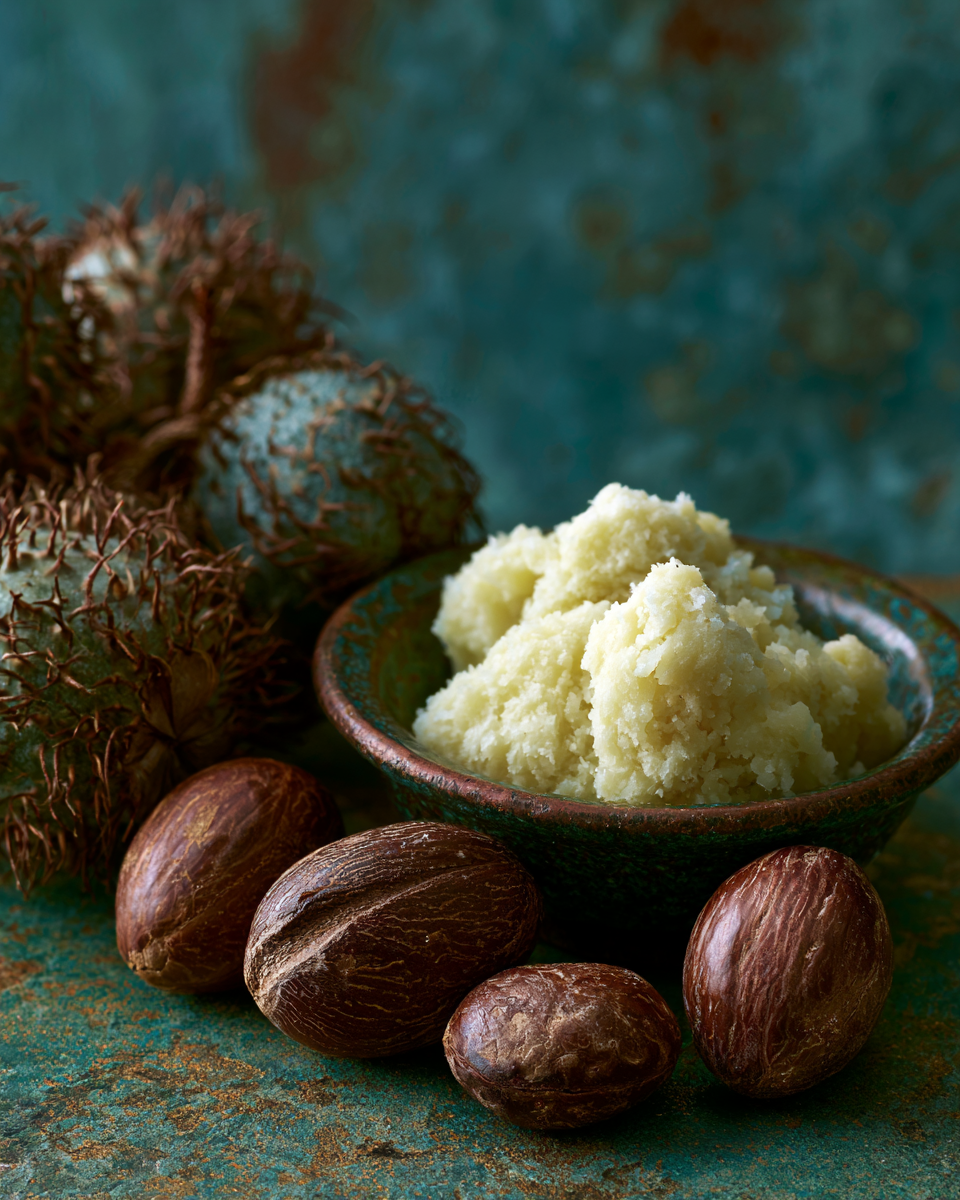
Shea Butter Storage: Shelf Life and Signs of Spoilage
How long does shea butter last? Two years for raw, up to three for refined. It is one of the most stable fats in cosmetics, and the form you bought determines the rest: shelf life, smell, texture, and especially what looks like a flaw but isn't.
Raw, unrefined shea butter
Ivory to yellow color, a rather pronounced smoky nut smell. This is the form richest in unsaponifiables, which are what give shea butter its cosmetic benefits.
It can be stored for about two years away from heat. Its fatty acids—especially stearic and oleic—are not very susceptible to oxidation, which explains this shelf life.
Its smell evolves over time without the product being altered. Two-year-old raw shea butter smells stronger than on the first day; this is not a sign of rancidity.
This is the preferred form for facial care and dry skin, despite this smell that some people find unpleasant.
The preservation of raw shea butter depends on two things: protection from light and a stable temperature. Under these conditions, count twenty-four months; after this period, it remains usable on the body but loses some of its benefits.
Raw shea butter retains the compounds—unsaponifiables, vitamins A and E—to which its soothing properties are attributed. This explains the place of this ingredient in very dry skin care, and its many uses, from face to heels.
Using shea butter correctly is enough to protect it: a well-sealed glass jar rather than plastic containers, a cool dark place, and clean, dry hands at every use. Moisture introduced into the jar is the primary factor of alteration.
Refined shea butter
White, odorless, smoother texture. Refining removes the smell, color, and some of the unsaponifiables.
It keeps a little better—up to three years—precisely because the most reactive compounds have been removed. This gain in shelf life comes at the cost of a loss of properties.
For use on the body or hair, this difference matters little. For facial care, raw remains preferable.
A perfectly white and odorless butter has therefore been refined, regardless of the label claim.
Grains: a false defect
This is the most frequent question. Shea butter that becomes grainy is not damaged: its different fatty acids have recrystallized separately, due to temperature variations.
The phenomenon is purely physical and has no consequence on the properties. The product remains perfectly usable.
To restore a smooth texture, melt the butter in a bain-marie at low temperature — repeated melting and solidifying is what causes the grains — then quickly cool it in the refrigerator. Recrystallization becomes homogeneous again.
To avoid the phenomenon: a stable temperature. It's simpler than correcting it.
True signs of alteration
A rancid smell — the surest sign your shea butter has gone bad — distinctly different from the natural smell of the raw butter. This is the only reliable sign, and you need to know the initial smell to spot it.
A change in color towards brown or gray. The natural yellow of the raw butter should not darken.
Mold spots, which appear if water has entered the jar—typically after use with wet fingers.
A texture that becomes sticky or oily on the surface. The butter is starting to degrade.
How to store it
Closed jar, away from heat and direct sunlight, at a stable room temperature: stored correctly, shea butter remains safe to use for its full two to three years. Shea butter does not need to be refrigerated, and cold makes it very hard to extract.
Avoid the bathroom, where it melts and hardens alternately. These cycles are what produce the grains.
Extract with a clean, dry spatula rather than with your fingers. This protects against the only real risk, contamination by water.
Shea butter mixed with a vegetable oil is stored according to the oil, not according to the shea butter. A mixture with rosehip lasts six months, not two years.
Shea-based preparations
A homemade balm containing shea butter and essential oils keeps for six to twelve months. Essential oils do not preserve the preparation, contrary to what is sometimes read.
An emulsified cream containing water changes category completely: without preservatives, it lasts no more than a few days in the refrigerator.
This is the general rule: as soon as there is water, preservation becomes a microbiological issue. Shea butter alone, no.
The "Properly store your skincare" series
Each ingredient degrades in its own way. These guides provide the real shelf life and the sign that reveals it.
- Ceramide Preservation: Shelf Life and Signs of Alteration
- Panthenol Preservation: Shelf Life and Signs of Alteration
- Retinol Preservation: Shelf Life and Signs of Oxidation
- Jojoba Oil Preservation: Shelf Life and Signs of Oxidation
- Salicylic Acid Preservation: Shelf Life and Signs of Oxidation
- AHA Preservation: Shelf Life and Signs of Oxidation
The Nopal Life signature treatment


Mature skin · Dry skin

Go further than this article
Get our skincare guides by email — and start with your free skin diagnostic: 2 minutes, advice tailored to your skin. We ship to the US, UK, Canada, Australia and 27 European countries; somewhere else? Sign up and you will be the first to know when we deliver to your country.
By signing up, you agree to our privacy policy. Unsubscribe in one click.