Anti-aging & firmness routine: radiance and comfort for dry and mature skin
Why Dry and Mature Skin Evolves Differently — and How to Address It
Dry and mature skin simultaneously presents two specific characteristics: a lipid deficiency that weakens the appearance of the skin barrier, and a gradual slowdown of natural renewal due to age. It's not merely a matter of insufficient hydration. From the age of 40, skin comfort decreases, the hydrolipidic film thins, and the skin progressively loses its apparent firmness according to dermatological observations. The result: fine dehydration lines appear, a dull complexion, a rougher texture, and a gradual loss of apparent firmness starting from tension areas—jawline, cheekbones, eyelids.
Faced with this situation, many people make the mistake of using multiple active products to "compensate" for lost time. This is precisely the opposite of what should be done. An effective anti-aging routine for dry and mature skin is based on three pillars: a targeted synergy between active ingredients, a gradual progression to respect skin tolerance, and a realistic duration of use—never less than 12 weeks to observe visible results on apparent firmness and radiance.
This guide will walk you step-by-step through building this routine, with a particular focus on the synergy between vitamin C and prickly pear seed oil—two complementary ingredients whose combination forms one of the most popular protocols for mature skin.
Vitamin C + Vegetable Oil Synergy: Why This Combination Is Crucial
Vitamin C—in its L-ascorbic acid form or as stable derivatives like ascorbyl glucoside—is one of the most well-documented anti-aging actives in cosmetics. It is valued as an antioxidant that helps protect against external aggressions, and it helps to even out the appearance of the complexion and revive radiance. Its cosmetic benefit is particularly appreciated when used topically and regularly.
But vitamin C alone, applied to dry skin, encounters a limitation: a seemingly weakened skin barrier is less receptive to the active ingredient and increases the risk of discomfort. This is where vegetable oil comes in. Prickly pear seed oil (Opuntia ficus-indica), exceptionally rich in unsaturated fatty acids (linoleic acid 60-65%) and natural vitamin E, acts as a carrier and potentiator. It helps restore the comfort of the lipid film, improves the supple appearance of the skin, and prepares the skin to receive water-soluble active ingredients like vitamin C. This synergy is fundamental: the oil prepares the ground, then the vitamin C serum acts.
In your daily routine, the order of application is therefore non-negotiable: vegetable oil on dry skin as a night treatment or as a treatment base, natural radiance vitamin C serum as a morning treatment on clean skin. This sequence optimizes absorption without disturbing the serum's active pH.
Gradual Progression: The Key to a Tolerated and Lasting Routine
One of the main reasons for failure in anti-aging routines is the simultaneous introduction of several concentrated active ingredients. Mature skin, whose natural renewal is slowed, is less receptive to repeated solicitations. A phased program allows the skin to gradually adapt and for each new ingredient to be monitored separately.
Phase 1 — Weeks 1 to 2: Laying the lipid foundations. Introduce only prickly pear seed oil, as a night treatment. The goal is to restore the comfort of the skin barrier first and foremost. The skin must feel comfortable, without tightness, before receiving an active ingredient like vitamin C.
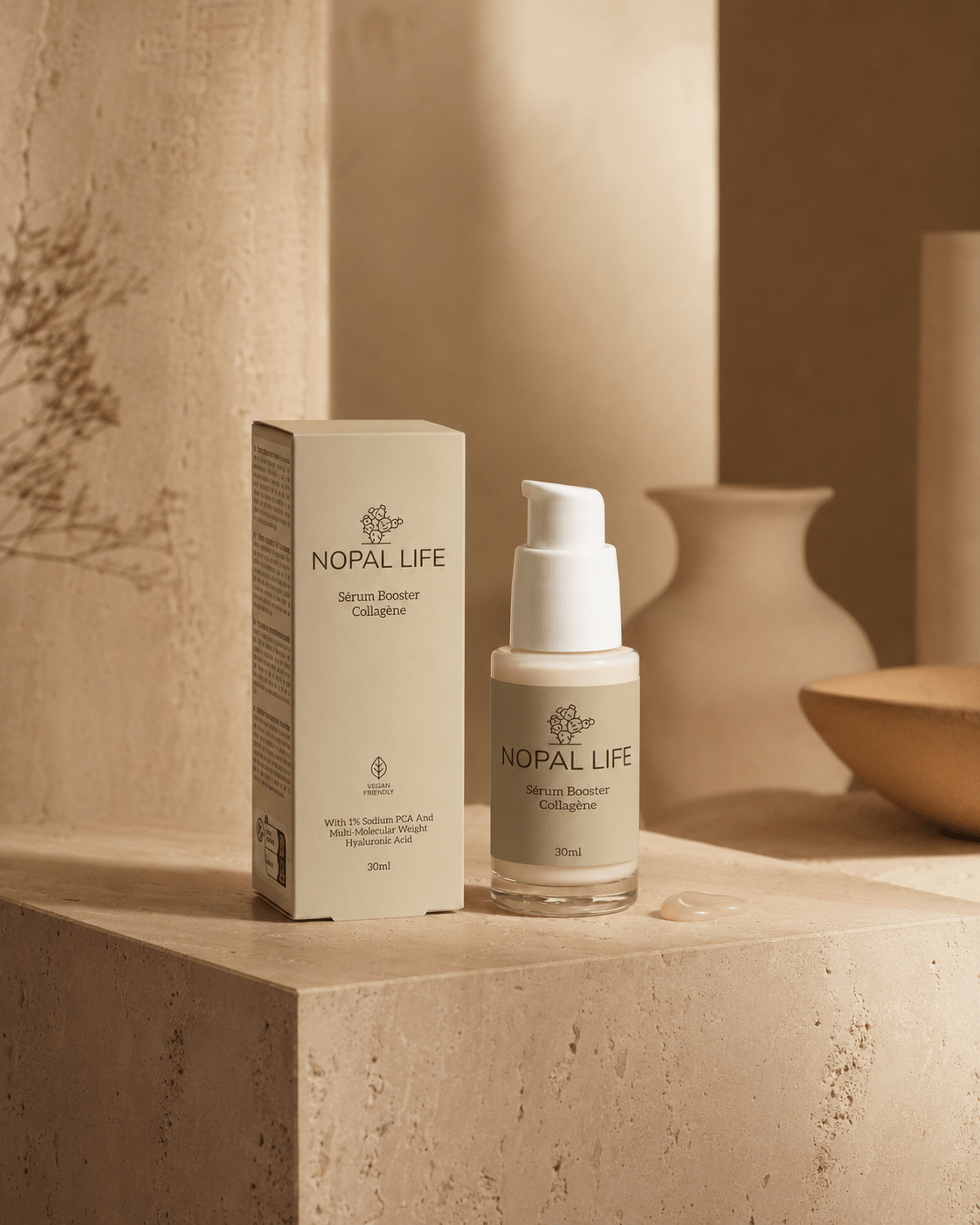
Phase 2 — Weeks 3 to 4: Introduce the vitamin C serum. As a morning treatment only, 2 to 3 times a week initially, then daily if no redness or tingling occurs. Nopal Life's natural radiance serum combines stabilized vitamin C and nopal extracts for a protocol specially adapted to sensitive and mature skin.
Phase 3 — Weeks 5 to 12: Consolidate and observe. Complete routine morning and night. It is from the 6th week that the first effects are noticeable: a more even complexion, refined skin texture. Apparent firmness and facial contours improve over cycles of 3 to 6 months, as cosmetic research suggests.
This progressive approach is not a waste of time — it is a long-term effectiveness strategy. Skin that is respected in its natural rhythm responds infinitely better to active ingredients than skin that is overstressed and uncomfortable.
Complete Morning and Evening Routine for Dry and Mature Skin: Step-by-Step Protocol
Here is the daily protocol structured around two fundamental steps—double cleansing in the evening, morning care optimized for radiance and protection.
MORNING:
- Gentle cleansing with clear water or a light cleansing milk (avoid drying foaming gels).
- Alcohol-free toner to balance pH (rose or cornflower floral water).
- Natural Radiance Vitamin C Serum — 3 to 4 drops, applied by patting on face and neck.
- Light moisturizing cream or gel-cream with a minimum SPF 30. Vitamin C supports sun protection but does not replace it.
EVENING:
- Double cleansing: first step with cleansing oil (or balm) to dissolve makeup and SPF, second step with gentle milk or gel to cleanse without stripping.
- Toner or soothing micellar water if skin has been exposed to pollution.
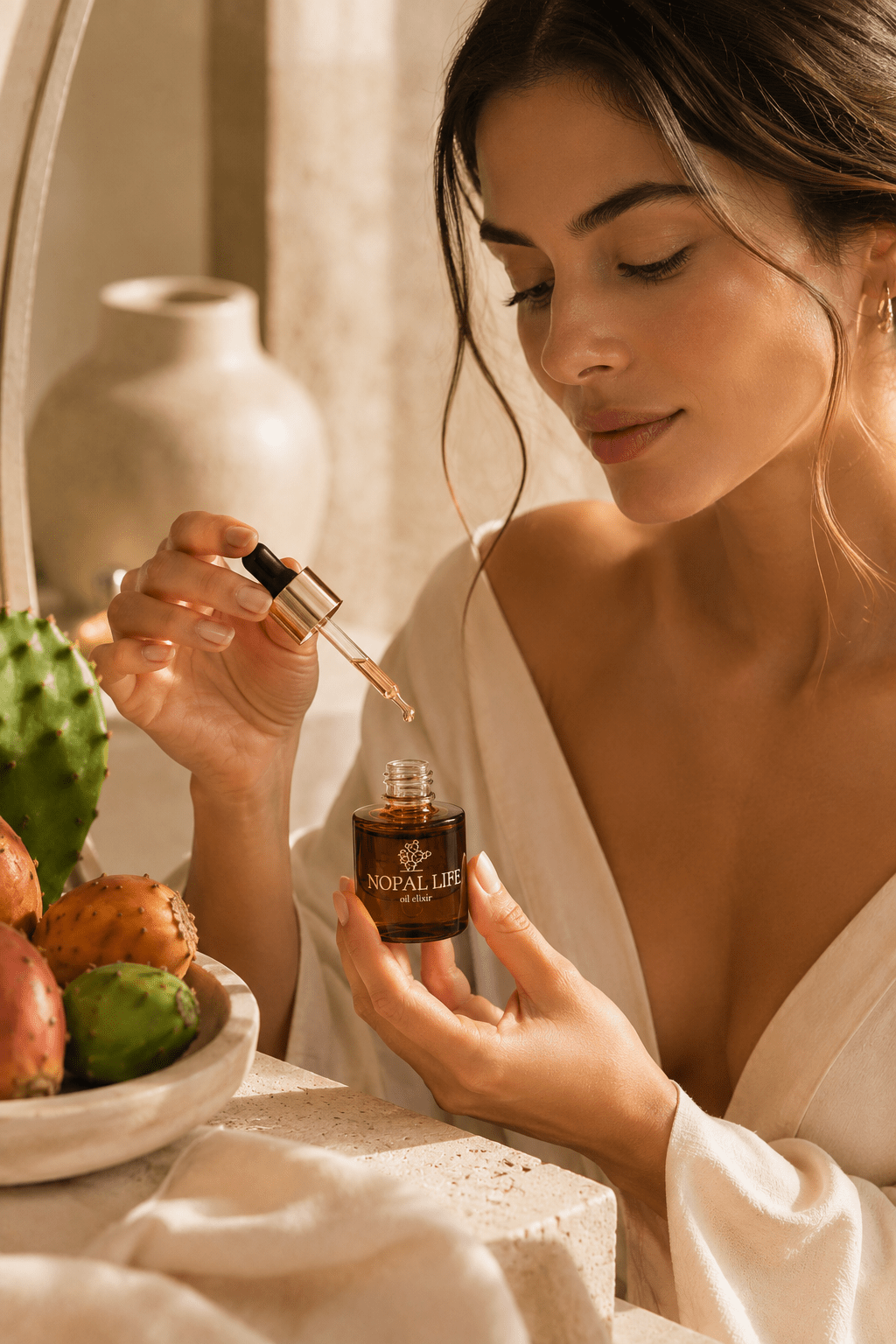
- Pure prickly pear seed oil — 3 to 5 drops, massaged in upward motions on face, neck, and décolleté.
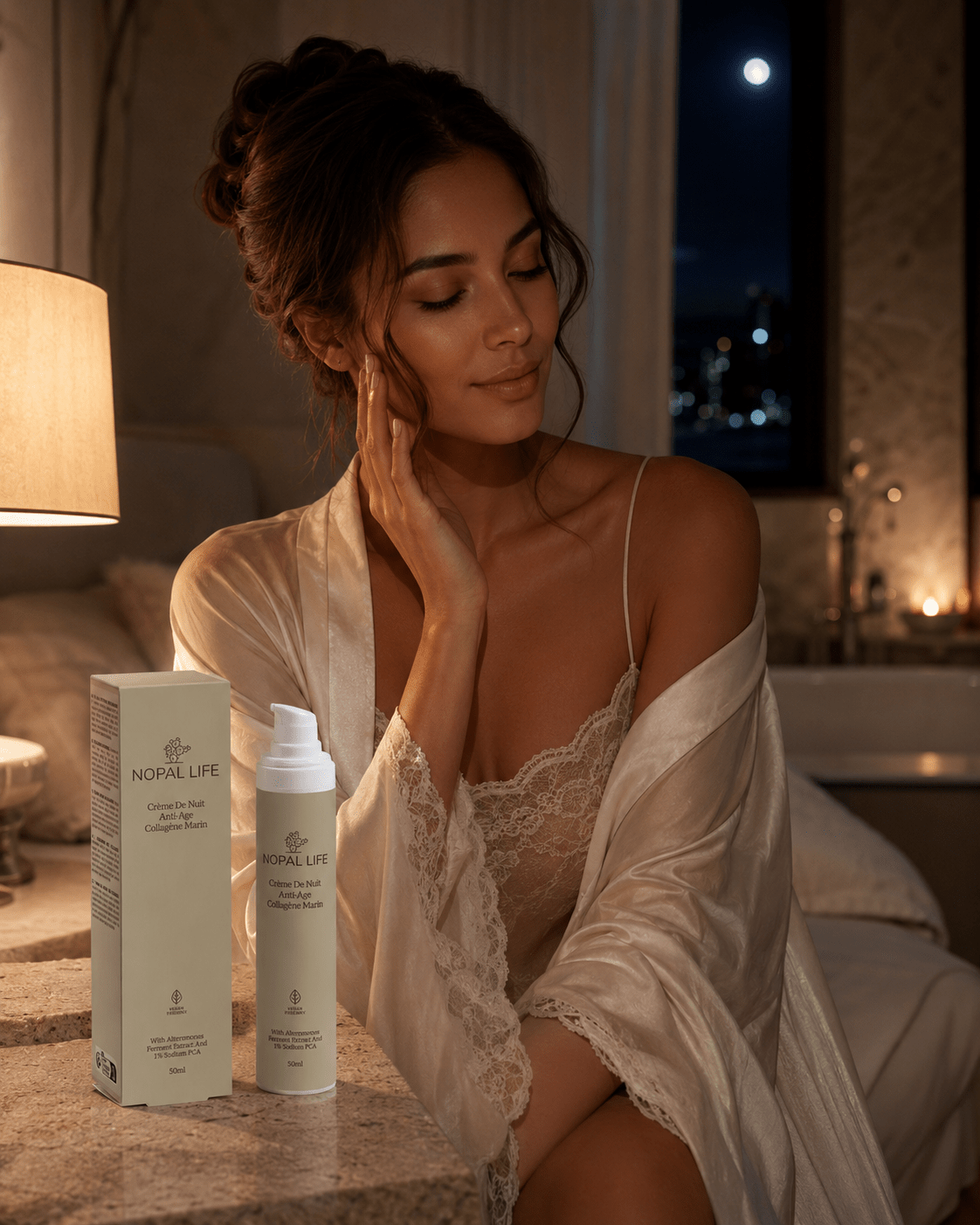
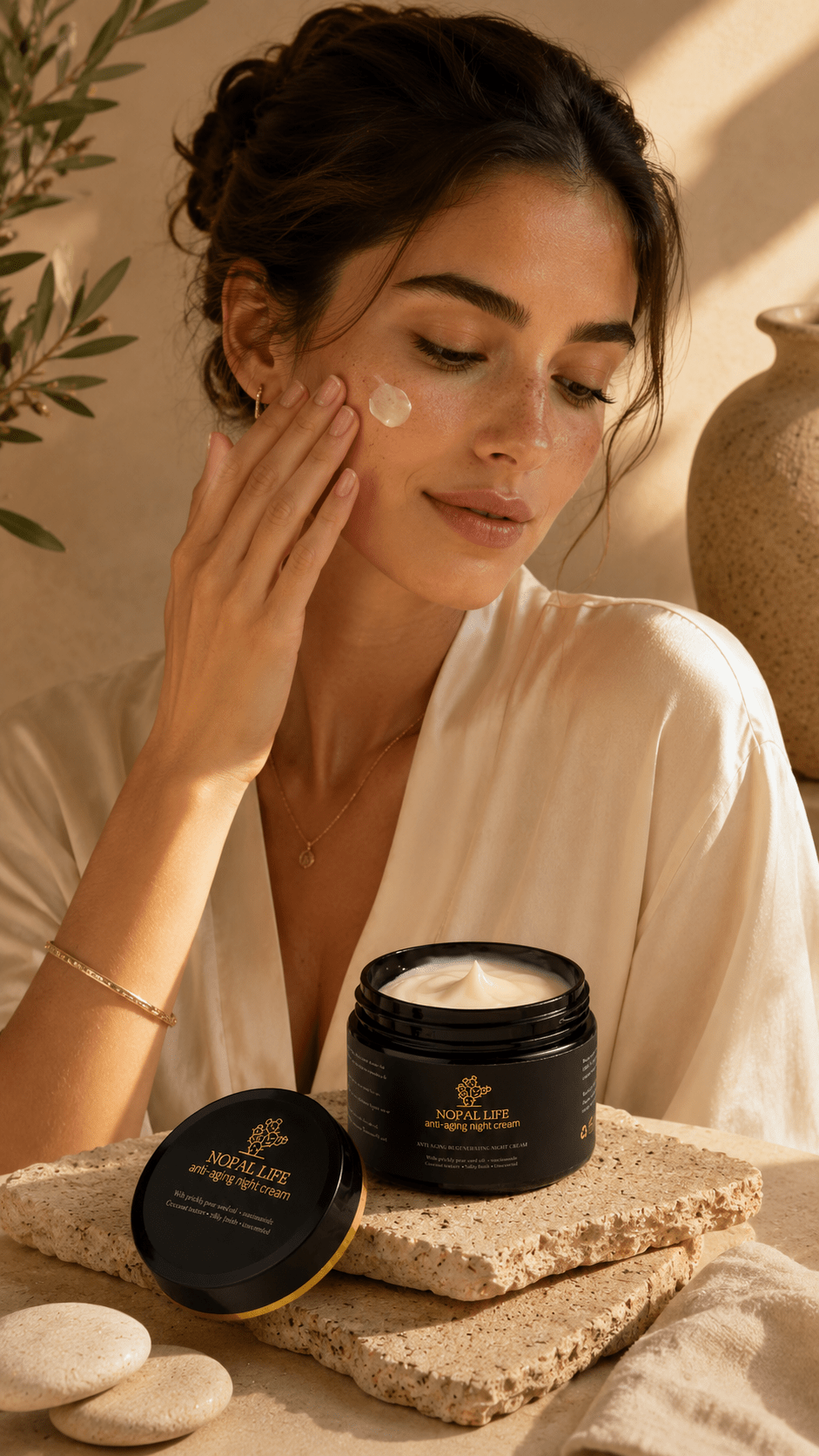
- Nourishing night cream or balm applied over top if dryness is intense.
For very dry skin, a vegetable oil mask 1 to 2 times a week (generous application left on for 20 minutes) helps restore the comfort of the lipid film. Discover all our facial treatments designed for demanding skin.
Mistakes to Absolutely Avoid with an Anti-Aging Routine for Dry Skin
These errors are the most frequent and the most costly in terms of results:
1. Using overly stripping cleansers. Foaming gels containing sulfates (SLS/SLES) alter the already deficient hydrolipidic film. Each aggressive cleansing resets the efforts of the routine. Always opt for sulfate-free formulas with a slightly acidic pH (4.5-5.5).
2. Applying vitamin C to unprepared skin. On a seemingly weakened skin barrier, vitamin C can cause tingling or redness, or even lasting discomfort. Prior lipid preparation (phase 1) is non-negotiable.
3. Skipping sun protection. Vitamin C provides antioxidant protection that helps protect against external aggressions, but it does not replace sun protection. Without SPF, UV-related damage accumulates. A minimum SPF 30 is mandatory during the day.
4. Changing routines before the end of phase 3. Mature skin takes 28 to 40 days to renew its epidermis (compared to 14 to 21 days for young skin). Evaluating a routine before 8 weeks is premature. If you stop at week 4 with no visible results, you have stopped just before the zone of effectiveness.
5. Overestimating the amount of vegetable oil. For the face, 3 to 5 drops of prickly pear seed oil are sufficient. Excess creates an occlusive film that suffocates the skin rather than nourishing it, and can lead to comedones in combination skin.
6. Ignoring the neck and décolleté. These areas have the same lipid deficiencies as the face but rarely receive the same care. They betray age more quickly than the face. Always extend the routine to the décolleté.
To go further in personalizing your routine according to your exact skin type, the Nopal Life Skin Intelligence™ diagnostic guides you to the protocol that precisely matches your needs.
Minimum Use Duration and Signs of Progress: How to Read Results
One of the most common frustrations in anti-aging care is impatience. Apparent firmness, visible density, and radiance are results that establish themselves durably and require time — not just on the surface. Here are the realistic timeframes:
Weeks 1-2: increased comfort, disappearance of tightness, skin softer to the touch. These are the benefits of restoring lipid comfort — quickly visible but do not prejudge lasting anti-aging effects.
Weeks 4-6: more even complexion, first reductions in the appearance of superficial micro-spots, increased radiance. Vitamin C begins to help even out the appearance of the complexion.
Weeks 8-12: improved texture, refined skin texture, visibly more toned contours. This is the minimum window to evaluate the real effectiveness of an anti-aging routine.
3 to 6 months: visible effects on apparent firmness, contouring, and the appearance of expression lines. This is the realistic horizon for visible results on the apparent firmness of the skin.
To not miss these signals, photograph your skin in natural light on day zero, then at 4, 8, and 12 weeks. Progress that is imperceptible daily becomes obvious when compared. Also consult our advice on specific dry skin care and the complete routines available in store.
FAQ — Anti-Aging & Firming Routine for Dry and Mature Skin
Can vitamin C be used daily on mature skin?
Yes, provided the active ingredient has been introduced gradually (phase 2) and the comfort of the skin barrier has been restored. Daily vitamin C is even appreciated for maintaining antioxidant effects and supporting a firm and plump appearance. If tingling persists beyond the 4th week, switch to a less irritating derivative formula (ascorbyl glucoside).
Can vitamin C serum and vegetable oil be mixed in the hand before application?
No. Vitamin C is water-soluble and oil is lipophilic — mixing them in the hand creates an unstable emulsion that reduces the effectiveness of both active ingredients. Apply them in separate layers in the correct order (serum first in the morning, oil first in the evening).
Is prickly pear seed oil suitable for very sensitive skin?
It is one of the best tolerated vegetable oils, with a fatty acid profile similar to human sebum. Its high linoleic acid content (60-65%) makes it an excellent choice for sensitive and dry skin. It is non-comedogenic (index 1/5) and very rarely allergenic.
Should a retinol be used in addition to vitamin C serum?
Retinol is highly valued for the appearance of wrinkles and apparent firmness, but its direct association with vitamin C can be irritating for dry and mature skin. If you wish to incorporate retinol, use it in the evening (replacing the oil at the beginning of the cycle) and vitamin C in the morning. Never start both at the same time.
Is Nopal Life natural radiance serum suitable for reactive skin?
Yes. The formulation of the natural radiance serum uses stabilized vitamin C combined with soothing nopal extracts, which improves tolerance. However, reactive skin must follow the introductory phase (2-3 times a week at the beginning of the protocol) before moving to daily use.
At what age is it appropriate to start an anti-aging routine?
Prevention is more effective than correction. An antioxidant routine (vitamin C + SPF) from age 30 helps preserve the skin's youthful appearance against visible signs of aging. For mature skin from age 45, the approach shifts to correction — with the goal of helping to preserve a firm and plump appearance and supporting the skin's dense look.
How many weeks before seeing an effect on dark spots?
The appearance of superficial spots often fades in 4 to 8 weeks with daily application of vitamin C combined with SPF. More pronounced and older spots require 3 to 6 months and can benefit from a combination with other radiance-boosting active ingredients (niacinamide, gentle AHAs) that help to even out the appearance of the complexion.
What is the difference between Nopal Life vitamin C serum and other serums on the market?
The natural radiance serum integrates complementary natural active ingredients (prickly pear extract, plant antioxidants) that potentiate the action of vitamin C while improving its stability. It is a formulation specifically designed for dry and mature skin, unlike standard vitamin C serums formulated for normal to oily skin.
Ready to take action?
Discover the Nopal Life Natural Radiance Serum — formulated for dry and mature skin, with stabilized vitamin C and prickly pear active ingredients.
Or let our AI analyze your skin: Nopal Life Skin Intelligence™ — free personalized diagnostic, results in 3 minutes.
Conclusion
A successful anti-aging routine relies on thorough cleansing, firming active ingredients, and generous hydration. For dry and mature skin, this sequence revives radiance and restores comfort. Consistency in care is paramount. A well-constructed routine sustainably maintains suppleness and luminosity.
Why choose Nopal Life to support the youthful appearance of the skin
Supporting the youthful appearance of the skin involves active ingredients appreciated in cosmetics. Nopal Life prickly pear seed oil, rich in essential omega-6 and omega-9 fatty acids, vitamin E, and plant sterols, contributes to the suppleness and dense appearance of the skin film. It helps preserve a firm and plump appearance, reduces the appearance of dehydration fine lines, and helps reinforce the appearance of the epidermal barrier for a visible smoothing effect from the first few weeks.
Pair it with our anti-aging night cream and our radiance serum for a complete synergy, night and day. Your skin regains apparent firmness, radiance, and lasting comfort. Discover the Nopal Life formulation designed for your skin profile with our free Skin Intelligence diagnostic.
PERSONALIZED ROUTINE
Nopal Life Skin Intelligence™
Free diagnostic · 2 minutes
DISCOVER MY ROUTINE →This information is provided for educational purposes and does not replace the advice of a health professional.
Information provided for cosmetic and educational purposes; it does not constitute medical advice.
Our anti-aging treatments