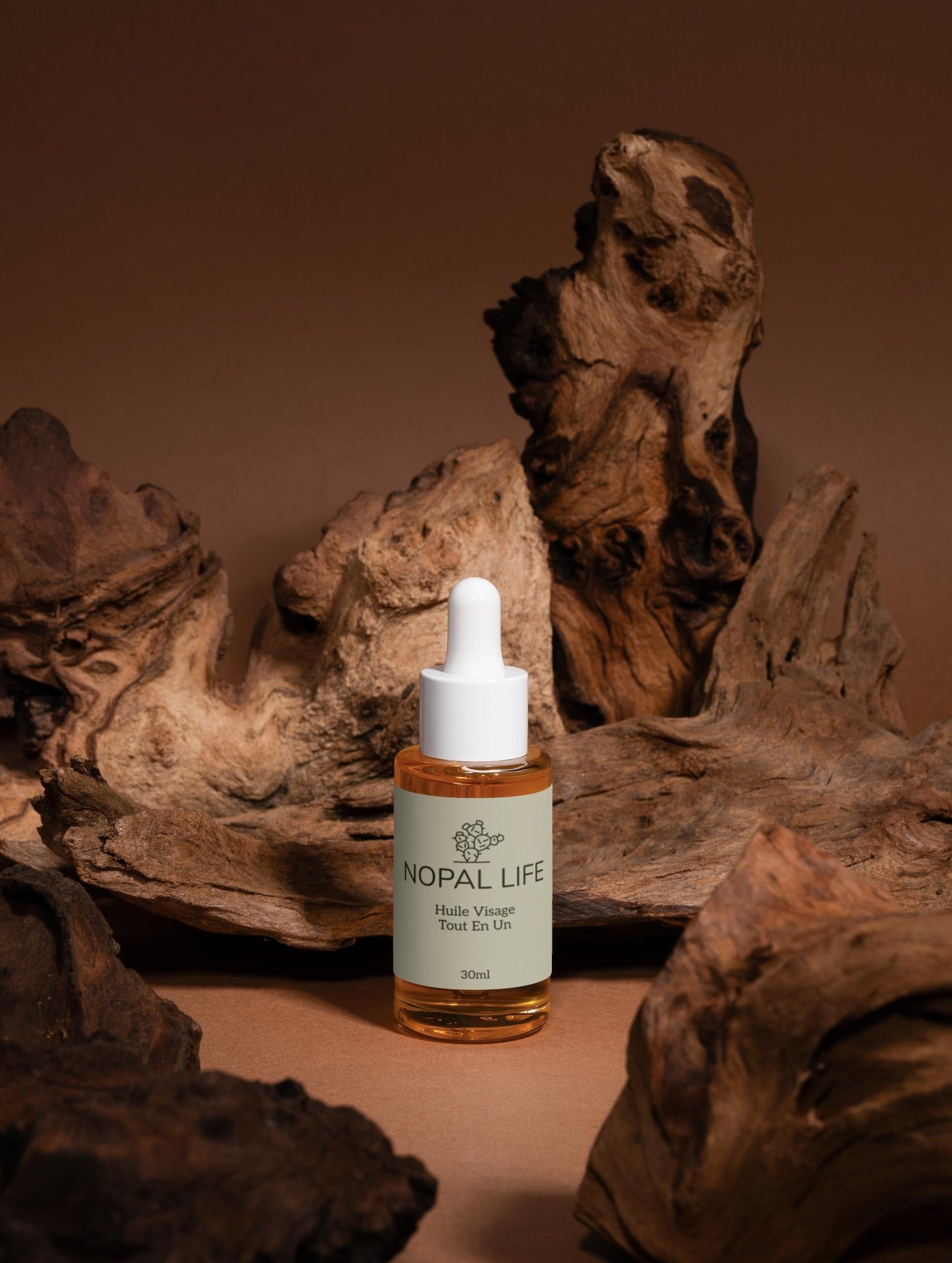
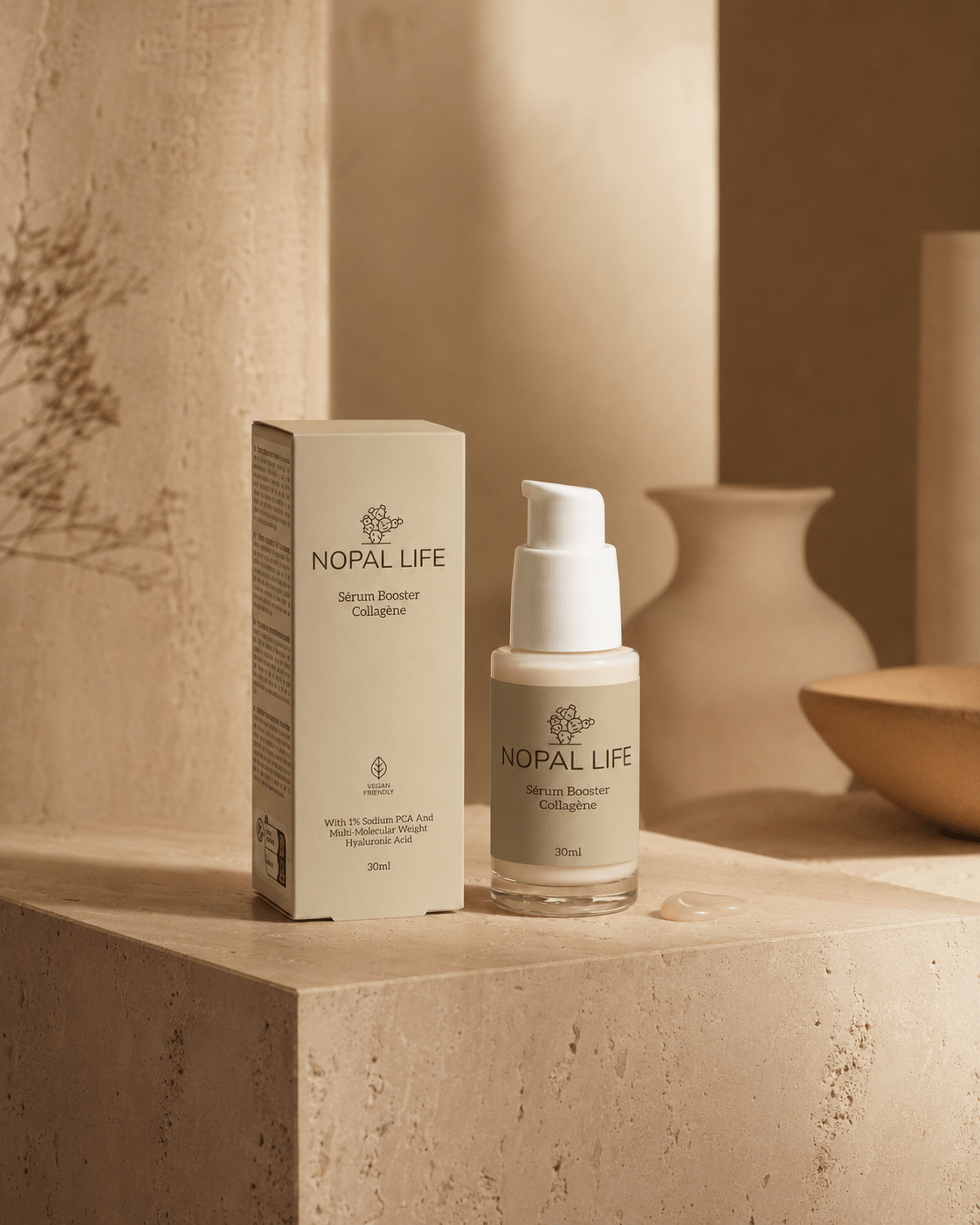
Rosehip oil or peptides: which one for your skin?
Rosehip oil nourishes and provides natural compounds; peptides target a precise mechanism. Two opposing approaches to the same goal, and two levels of evidence that are better to know.
Comparison
| Criterion | Rosehip Oil | Peptides |
|---|---|---|
| Nature | vegetable oil | amino acid chains |
| Composition | fatty acids, vitamin A | synthetic molecules |
| Action | nourishes, softens | cellular signal |
| Timeline | a few weeks | 2 to 3 months |
| Preservation | fragile | good |
| Cost | moderate | high |
What is Rosehip Oil
Rosehip oil is extracted from the seeds of a wild rose, Rosa moschata or Rosa rubiginosa, mainly cultivated in Chile. It is a dry vegetable oil that penetrates well and leaves no greasy film.
Its composition is rich in polyunsaturated fatty acids — linoleic acid and alpha-linolenic acid — with a fraction of carotenoids and natural vitamin A in the form of trans-retinol.
This rosehip oil is often chosen for marked skin: its use on marks left by old imperfections is well-established, even if the data remains modest.
Its fragility is its flaw. Rich in unsaturated fats, rosehip oil oxidizes quickly: use a dark bottle, store in a cool place, and for a maximum of six months after opening.
What are Peptides
Peptides are short chains of amino acids obtained through synthesis. Several families coexist, including signal peptides, which are supposed to interact with skin cells.
Research exists but remains inconsistent depending on the molecules, and the concentrations used in cosmetics are often modest. This is an area where commercial promises regularly exceed what the data establishes.
Their advantage lies in their excellent tolerance and stability, two points where rosehip oil struggles.
Which to choose
Dry skin, marks from old imperfections: rosehip oil.
Exclusively targeting firmness: a peptide serum.
Oily skin: peptides, as rosehip oil is still a fatty substance.
Simplicity and budget: rosehip oil, as a single versatile product.
Two different logics
Rosehip vegetable oil provides a set of compounds whose combined action is difficult to isolate. Peptides provide an identified, dosed molecule, targeting a precise mechanism.
Neither of these logics is inherently superior. One gives a versatile and modest product, the other a targeted and expensive active ingredient, whose results vary greatly from one family to another.
Using them together
It is possible and consistent. Peptide serum first, on clean skin, then rosehip oil as the final layer.
The order follows the textures: the most fluid always goes before the fatty substance. An oil applied first would form a film that the serum would have to penetrate.
Regarding trans-retinol in rosehip oil
Rosehip oil naturally contains a fraction of vitamin A. It is sometimes said to be a natural retinol: this comparison is excessive.
The amounts present are much lower than those of cosmetic retinol, and in a different form. Rosehip oil remains a good vegetable oil, not a retinoid substitute.
How to choose your oil
First cold press, dark bottle, small volume. Quality rosehip oil has an amber to orange color due to carotenoids.
The ingredient list should be a single line: Rosa moschata seed oil or Rosa rubiginosa seed oil. Check the opening date: this oil does not forgive being forgotten at the back of a cupboard.
How to choose a peptide serum
Look for the precise names of the peptides and their position in the list. The mention "with peptides" in large letters says nothing about the quantity.
The names are long and technical — palmitoyl tripeptide, acetyl hexapeptide. Their presence after preservatives indicates a quantity too low to be effective.
What neither does
Neither erases established wrinkles nor makes scars disappear. They improve the appearance of the skin, which is already valuable, but it's better to know this before buying.
Neither protects from the sun. Daily sun protection remains what acts most on signs of aging and marks.
Finally
These products are cosmetics and improve the appearance of the skin without treating any condition. A recent scar, a wound, or an evolving mark requires medical advice.
Our anti-aging treatments