Retinol or Rosehip Oil: which one to choose?
Rosehip oil is often presented as a "natural retinol". This phrase is convenient and largely exaggerated. It contains vitamin A-related compounds, but in much smaller quantities than a retinol serum, and its action primarily comes from its essential fatty acids. These are two different products, not two versions of the same thing.
What truly separates them
| Criterion | Retinol | Rosehip Oil |
|---|---|---|
| Nature | measured active ingredient | vegetable oil, extracted from seeds |
| Main action | cell renewal | nutrition, skin texture, marks |
| Potency | high | moderate |
| Tolerance | demanding | good |
| Onset of effects | 3 to 6 months | several weeks |
| Place in routine | serum, aqueous or anhydrous phase | end of routine, fatty substance |
| Pregnancy | not recommended, medical advice | no known restrictions |
What rosehip oil actually contains
It is extracted from rosehip seeds and is distinguished by its richness in essential fatty acids, mainly polyunsaturated. It also contains antioxidants and a small fraction of vitamin A-related compounds.
It is this last component that led to the comparison with retinol. It is real but minor: the concentration is nowhere near that of a formulated serum, and the oil's main action comes from its fatty acid composition.
Its traditional use focuses on skin texture, old marks, and stretch marks — a different area than expression lines.
What retinol does
It is the most studied active ingredient for the appearance of established wrinkles. It works by supporting cell renewal and collagen production, with a measurable effect over several months.
This efficacy comes with demands: gradual introduction, daily sun protection, and an often uncomfortable adaptation period.
Which one to choose
Choose retinol if your skin tolerates active ingredients and you are targeting established signs of aging, with the regularity that this requires.
Choose rosehip oil if your skin is dry, reactive, or if your concern is texture and marks rather than wrinkles.
Use both if your skin feels tight with retinol: applying the oil afterwards significantly improves tolerance.
Using them together
This is common and logical. Apply retinol to perfectly dry skin, wait twenty minutes, then apply two to three drops of rosehip oil. The oil acts as a final layer and restores comfort without nullifying the action.
A practical note: rosehip oil has a distinctive smell and oxidizes faster than average. Use an opaque bottle with the cap tightly closed.
Two usage timelines
The first is measured in months: three to six before judging a dosed active ingredient, with a cautious increase in frequency and possible interruptions in case of discomfort.
The second is measured in weeks and requires no particular precautions. You can start, stop, and resume without an adaptation period. This flexibility is more important than one might think: the primary cause of failure in facial care is not the choice of product, it's abandonment.
Choosing a reliable bottle
Prefer an opaque container and a small volume. Fragile compounds degrade in light and heat, and a bottle opened for a year loses some of its effectiveness.
The shade ranges from golden to reddish amber. A very dark color or a pungent odor indicates a product that should no longer be applied to the face.
Daily application
The gesture is as important as the product. A vegetable oil is applied at the end of the routine, on clean and preferably slightly damp skin: it spreads more easily and has a less greasy finish. Two to three drops are enough for the entire face, warmed between the palms then pressed rather than spread.
A vitamin A derivative follows the opposite logic: it requires perfectly dry skin, a pea-sized amount, and a frequency increase spread over several weeks. Applied to damp skin, it penetrates too quickly and causes exactly the redness you want to avoid.
Around the eyes, both require caution. Stay on the orbital bone, never on the mobile eyelid, and wait several weeks before extending a powerful active ingredient there.
On wrinkles and skin texture
Established wrinkles and dehydration lines do not have the same origin. The latter fade with good hydration; the former are related to the skin's structure, and no cosmetic can erase them.
What can reasonably be expected is an improvement in appearance: a more regular texture, more supple skin, less visible old marks. In this area, both approaches have their place, with very different timelines.
Recognized properties of rosehip vegetable oil
Obtained by cold pressing, rosehip vegetable oil is rich in unsaturated fatty acids, including linoleic acid. Its properties are recognized for skin texture regeneration and for marks left by old imperfections, where it has been used for a long time.
Its antioxidant fraction helps limit the action of free radicals, involved in the visible signs of aging. It also supports the skin barrier by providing lipids that the skin does not produce itself — a clear benefit for dry skin and sensitive skin.
For what skin types
Dry and mature skin benefits the most. Acne-prone skin should be more cautious: although non-comedogenic for many, this oil is not suitable for everyone, and a test on a small area remains the best precaution.
On sensitive skin, it is generally better accepted than a dosed active ingredient, which is why it is often recommended as a first approach to alleviate the appearance of marks without causing a reaction.
Limitations
Note for expectant mothers: vitamin A derivatives should be avoided, and only a healthcare professional can guide you on alternatives. Neither of these is a treatment, and neither replaces sun protection. A recent scar requires medical advice, not a cosmetic.
Frequently Asked Questions
Is rosehip oil a natural retinol?
The phrase is exaggerated. It contains vitamin A-related compounds in very small quantities; its main action comes from its essential fatty acids.
Can they be used together?
Yes. Retinol on dry skin, wait twenty minutes, then apply the oil. This is even one of the best ways to improve retinol tolerance.
Which one to choose during pregnancy?
Retinol is not recommended during pregnancy and breastfeeding. Rosehip oil has no known restrictions. Seek medical advice in all cases.
Which one works on old marks and scars?
Rosehip oil, which is its traditional use. Retinol works more on wrinkles and overall texture.
The third way
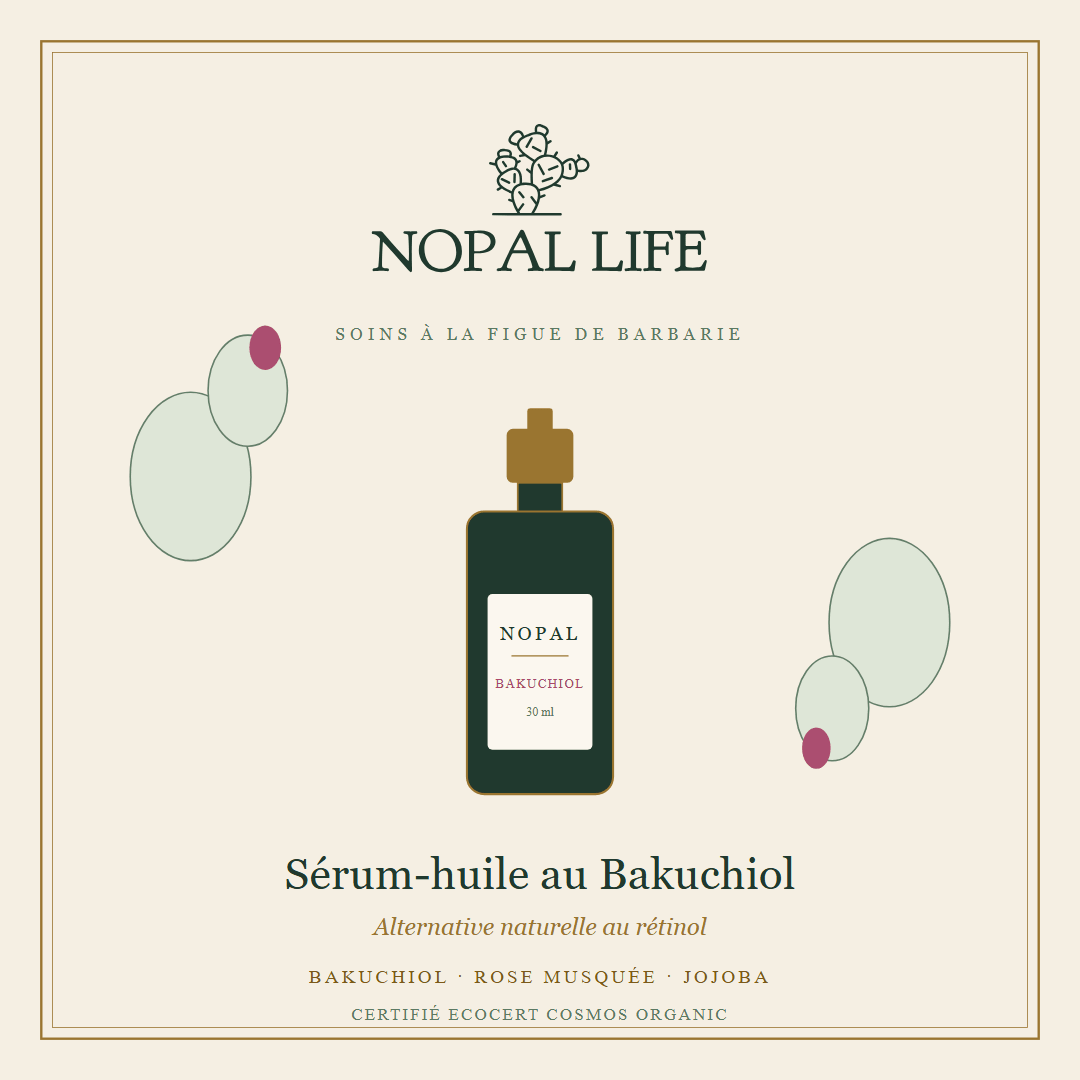
Many skin types do not tolerate retinol and find rosehip oil too modest for the appearance of wrinkles. Between the two, a bakuchiol serum offers a compromise: the logic of retinoids, without the adaptation period.
Our anti-aging treatments