Dry skin between fingers: causes and useful tips
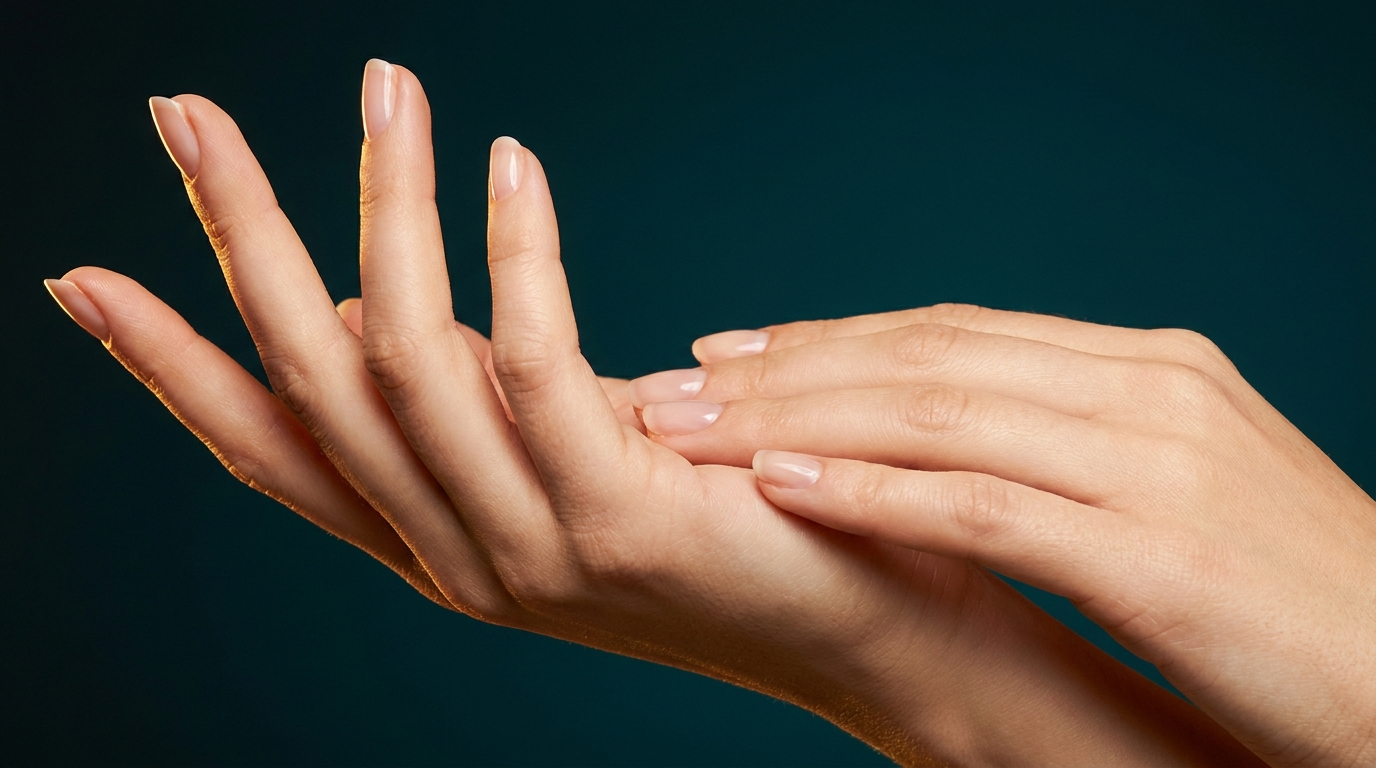
Dry skin between the fingers often results from repeated washing, detergents, hot water, and incomplete drying in the interdigital spaces. This area retains moisture and then experiences friction, which weakens the skin barrier. Applying a rich cream after each wash and using appropriate gloves are the first useful steps.
Why the space between the fingers quickly becomes fragile
The skin on the hands is exposed to water, soaps, household products, and temperature variations. Between the fingers, evaporation is slower and friction is more frequent. The alternation of humidity and drying disrupts the lipids in the stratum corneum.
The hands have few sebaceous glands in certain areas and do not quickly replenish their lipid film after washing. Cracks often begin with a feeling of tightness, then scaling appears. Dry skin between the fingers can also become red or painful if exposure continues.
The article on the skin barrier explains the role of intercellular lipids.
Everyday causes to look for first
Count how many times you wash your hands in a day. More than ten contacts with soap, hand sanitizer, or dish soap can be enough to maintain dryness. Scented products, solvents, cement, powders, and prolonged wearing of occlusive gloves also increase discomfort.
Outdoor cold reduces lipid flexibility, while indoor heating dries out the air. A tight ring retains water and soap between two fingers. Remove jewelry before washing and dry each space meticulously.
- Frequent washing
- Very hot water
- Dish soap without gloves
- Repeated hand sanitizer use
- Wet ring
- Waterproof gloves worn for a long time
Washing routine that limits dryness
Use lukewarm, not hot, water. Take a small amount of unscented cleanser and wash for twenty seconds. Rinse completely, then pat dry with a clean towel, including between each finger.
Immediately apply a pea-sized amount of moisturizing cream. Focus on the interdigital spaces without leaving a thick, wet layer. Repeat after each wash for at least seven days.
The dry skin routine provides the same principles for the rest of the body.
Which cream to choose for very dry hands
Look for glycerin, 5% urea, panthenol, ceramides, squalane, or shea butter. Glycerin attracts water, ceramides support the barrier, and fatty substances reduce evaporation. A balm texture is preferable in the evening.
Initially, avoid fragrances, essential oils, and high concentrations of acids. A cream that stings on a crack may contain urea or an irritant preservative for that area. In that case, switch to a simpler, richer formula.
| Time | Texture | Quantity | Action |
| After washing | Cream | 1 pea-sized amount | Massage 20 s |
| Before housework | Light cream | 1/2 pea-sized amount | Allow to absorb |
| At bedtime | Balm | 2 pea-sized amounts | Thin layer |
| Under cotton gloves | Balm | 1 pea-sized amount | 30 to 60 min |
Gloves: protect without trapping moisture
For washing dishes, wear waterproof gloves with a dry lining. If your hands sweat, add cotton glove liners and change them as soon as they become damp. A wet glove worn for a long time can worsen maceration between the fingers.
For cold weather, choose breathable gloves and apply cream fifteen minutes before going out. In a professional context, alternate pairs and allow them to dry completely. Protection should reduce contact with products without creating a constantly humid environment.
The guide on occlusives explains how a protective layer slows down water loss.
Evening protocol for seven days
In the evening, wash gently then dry meticulously. Apply a pea-sized amount of cream to each hand and a small additional amount between the fingers. Wait five minutes, then add a thin layer of balm to cracked areas.
Wear cotton gloves for thirty to sixty minutes, not all night if your hands sweat. In the morning, rinse only if necessary and apply a light cream. Photograph the area on day 1 and day 7 to track the reduction in scaling.
The lipid barrier article helps understand this cosmetic restoration protocol.
Hand eczema: the first cause to rule out
When dryness persists between the fingers despite a correct routine, it is often no longer simple dryness.
Hand eczema is the most common occupational dermatosis, and the interdigital spaces are a typical location. The sign that distinguishes it from simply dry skin is one word: itching. Dry skin feels tight and uncomfortable; eczematous skin itches, sometimes enough to wake you up at night.
Added to this are visual clues: small translucent vesicles, plaques with blurry outlines, weeping, or thickening of the skin after several months. Fissures are deeper and more painful than those of ordinary dryness.
Two mechanisms can be distinguished. Irritant contact eczema is the most common: it results from repeated aggression by water, detergents, and chemicals, without allergy. It is wear and tear, and particularly affects professions where hands are wet several times an hour.
Allergic contact eczema responds to another mechanism: sensitization to a specific substance — nickel, perfumes, preservatives, latex, hair products for hairdressers. It typically appears 24 to 48 hours after contact, making the culprit difficult to identify without tests.
Finally, atopic dermatitis can manifest on the hands in a person with a known atopic predisposition — asthma, rhinitis, eczema in childhood.
What this changes: in these three cases, no skincare cream is sufficient. The treatment involves a prescribed topical corticosteroid to quell inflammation, followed by emollients for maintenance. Reversing this order — multiplying creams in hopes of avoiding a consultation — wastes months and allows the skin to thicken.
A simple guideline for deciding: dryness that does not resolve after three weeks of a well-maintained routine, or that frankly itches, requires medical advice.
When consultation becomes necessary
Consult if the area oozes, bleeds regularly, becomes very painful, or spreads despite a week of protection. Significant nocturnal itching, small vesicles, or persistent symmetrical involvement also require professional advice.
A reaction to a professional product, gloves, or metal may require a search for the cause. Do not apply several active ingredients successively to mask the signs. Note exposures from the previous forty-eight hours to facilitate evaluation.
The page on sensitive skin describes discomfort signals that go beyond simple dryness.
Dry skin between the fingers improves especially when repeated contact with water decreases.
Monitoring dry skin between the fingers should include the number of washes and the time spent in damp gloves.
Hand sanitizer can be less aggressive than repeated washing when enriched with glycerin and used on clean hands. Allow it to dry completely, then apply a cream. Alternating intelligently reduces prolonged contact with water.
What cream alone cannot correct
Dry skin between the fingers will not improve permanently if aggressive washing, incomplete drying, and household products remain unchanged. The cream compensates for some losses but does not neutralize repeated exposure.
A very rich balm is not always better: if it keeps the area moist all day, it can be uncomfortable. The goal is fine, repeated protection, combined with avoidance measures and professional advice when symptoms persist.
Thin rather than greasy, on this area
A thick balm between the fingers retains moisture instead of protecting, and quickly becomes uncomfortable. A prickly pear seed oil with a dry finish better meets the requirement of fine and repeated protection, without macerating in the folds.
Our anti-aging treatments