Sensitive mature skin ERα menopause: triple vulnerability, inflammatory, and minimalist glow protocol
Sensitive Mature Skin: Understanding the Triple Vulnerability that Changes Everything
When skin combines maturity, dryness, and reactivity, it isn't facing three distinct problems. It's experiencing what skin aging specialists describe as a true "perfect storm" – a situation where each vulnerability amplifies the other two. Understanding this phenomenon long-term is the first condition for not worsening the situation with unsuitable care.
Sensitive mature skin relies on three pillars that evolve simultaneously: epidermal thinning, increased sensitivity, and the post-menopause drop in estrogen with its influence on cutaneous ERα receptors. These three dynamics are not independent – they feed into each other in a loop that accelerates visible changes and the sensation of skin discomfort.
This article offers an accessible explanation of these phenomena, followed by a thoughtful minimalist protocol for dry, sensitive mature skin seeking radiance and comfort without risking skin reactions.
Epidermal Thinning and Skin Barrier: The First Weakened Pillar
The epidermis of 50-year-old skin is no longer the same thickness as at 30. There is a progressive reduction in epidermal thickness over the decades after 40. This is not just an aesthetic data point: it is a major functional one.
A thinner epidermis means a less dense stratum corneum, decreased ceramide presence, and reduced water retention capacity. Dry mature skin often presents an impoverished lipid ratio in its skin barrier. Ceramides, free fatty acids, and cholesterol that make up the intercellular "cement" are present in insufficient quantities. The result: water escapes (increased transepidermal water loss), the skin feels tight, flakes, and becomes mechanically reactive to active ingredients that would pose no problem on young skin.
This is why skincare formulated for normal or young combination skin—even natural ones—can cause discomfort on dry, sensitive mature skin. The barrier no longer plays its filtering role: everything penetrates more easily, including irritants.
To learn more about the specificities of this profile, consult our complete guide to dry mature skin.
Increased Sensitivity: Skin Comfort at the Heart of Reactive Aging
The second pillar is less known to the general public but just as crucial. We sometimes speak of inflammaging — a contraction of inflammation and aging — to describe the state of chronic low-grade sensitivity that characterizes aging skin. This notion has profoundly influenced the understanding of anti-aging care.
In sensitive mature skin, the skin's balance changes, and it tolerates stress less well. This context has direct visible consequences: dull complexion, diffuse redness, frequent sensations of heat or tingling, and especially an hypersensitivity to cosmetic active ingredients that other profiles tolerate well.
This increased sensitivity also explains why sensitive mature skin reacts poorly to aggressive exfoliating acids, denatured alcohols, synthetic fragrances, or occlusive silicones that disrupt the skin's appearance. Every additional aggression—even minor—is amplified by this background of reactivity.
Meanwhile, the skin's natural renewal slows down: the keratinocyte cycle goes from about 28 days to over 40-50 days. Dead cells accumulate on the surface, the complexion lacks uniformity, and natural radiance gradually fades. Discover our tips for restoring this luminosity in our radiance and uniformity section.
Decrease in Estrogens and ERα Receptors: The Often Overlooked Third Pillar
Menopause is accompanied by hormonal changes whose cutaneous effects are often underestimated in skincare protocols. The decrease in circulating estrogens in the first few years post-menopause alters the usual skin balance.
The skin is not just a passive target for hormones: it expresses its own estrogen receptors, notably ERα (Estrogen Receptor alpha), present in different skin cells. These receptors, when activated by estrogens, contribute to the skin's firm and plump appearance, its comfort, its hydration, and the uniformity of its complexion.
When estrogen levels drop, cutaneous ERα receptors are less stimulated. The skin appears less firm, becomes drier, and the complexion loses uniformity, promoting the appearance of uneven spots. All of this creates a skin profile that is dull, irregular, dry, and reactive — the famous "perfect storm."
Active ingredients such as stabilized vitamin C, mild phytoestrogens (like prickly pear polyphenols), and certain peptides can support these changes to enhance the appearance of radiance. Our natural radiance serum guide details these long-lasting active ingredients.
The Minimalist Protocol for Dry, Sensitive Mature Skin: Less is More
Faced with this triple vulnerability, the temptation is to accumulate products. This is precisely the mistake to avoid. Mature, sensitive, dry skin cannot tolerate rituals laden with successive layers. It needs a targeted, gentle, disturbance-free protocol.
The guiding principle is clean formulation: zero denatured alcohol, zero synthetic fragrance, zero occlusive silicone. These three disruptive ingredients are the number one enemies of dry, sensitive mature skin. Denatured alcohol weakens an already compromised lipid barrier. Synthetic fragrance is one of the primary contact allergens in cosmetics. Heavy silicones create an occlusive film that disrupts skin exchanges on skin that needs to breathe.
A good vitamin C serum for this profile should contain stabilized vitamin C (ascorbyl glucoside or 3-O-ethyl ascorbate rather than pure L-ascorbic acid, which oxidizes quickly), combined with hydrating active ingredients (hyaluronic acid, beta-glucan) and ingredients that support the barrier without obstructing it.
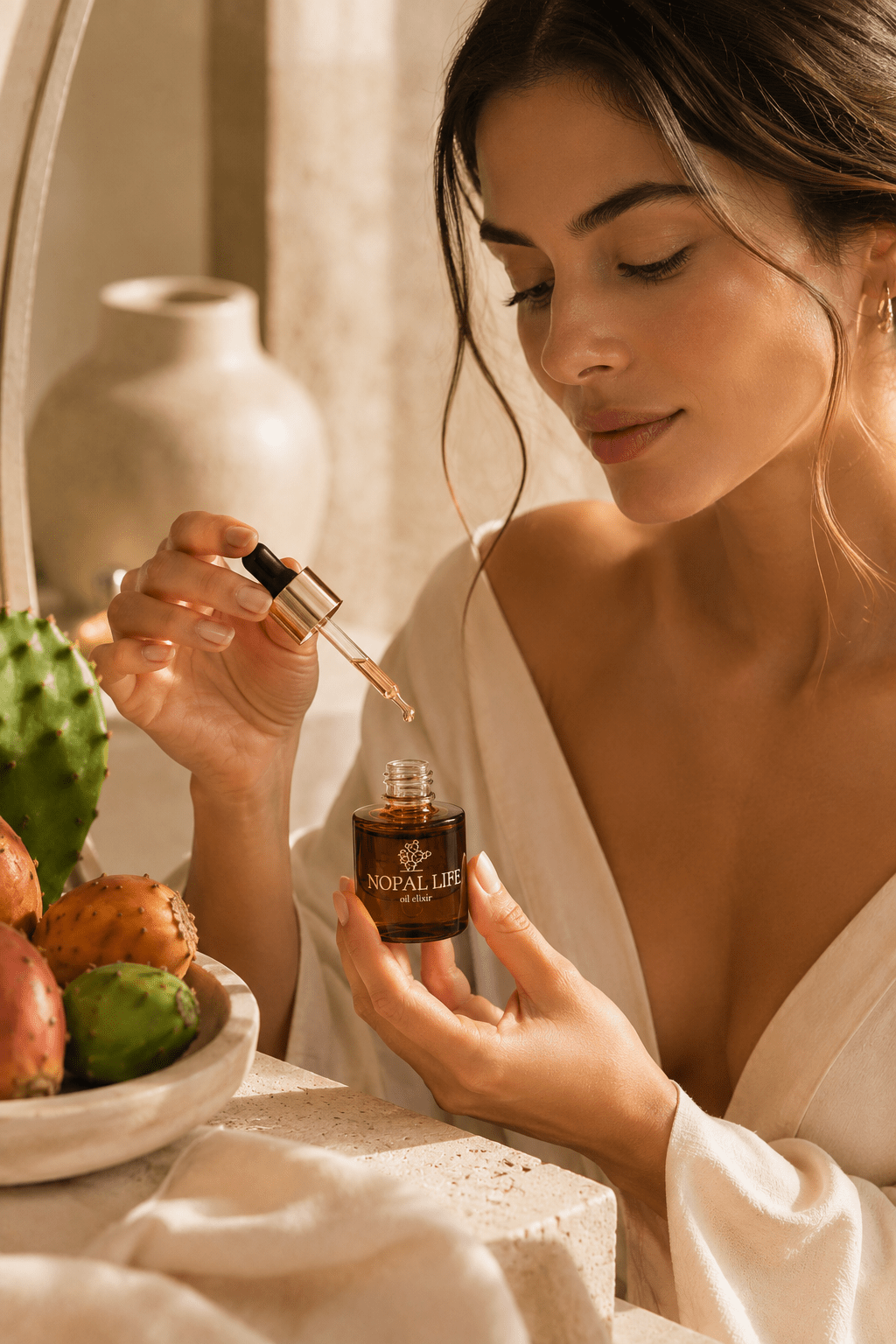
Prickly pear seed oil deserves a special mention in this protocol. Rich in linoleic acid (omega-6) and natural vitamin E, it helps to fortify the impoverished intercellular lipid film of dry mature skin. It also provides plant sterols (notably β-sitosterol) with soothing properties, precious for the comfort of sensitive skin. One to two drops mixed with the serum or applied as the last step in the evening can transform the skin tolerance of a ritual.
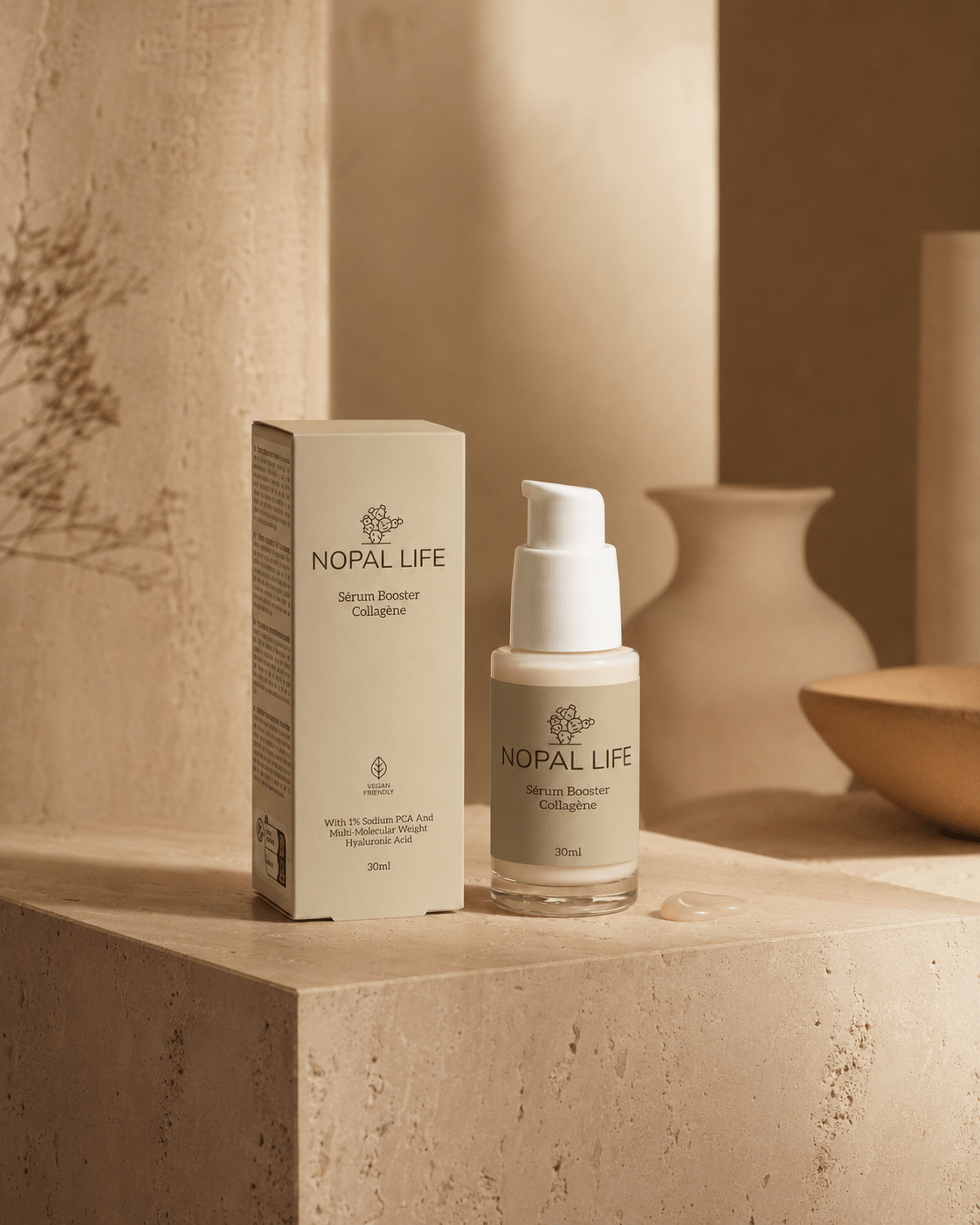
Our radiance vitamin C serum has been specifically formulated without alcohol, fragrance, or silicone to meet this profile's needs. It incorporates stabilized vitamin C, hyaluronic acid, and plant active ingredients compatible with sensitive mature skin. Also, discover our skincare products to preserve youthful skin.
Mistakes to Absolutely Avoid for Sensitive Mature Skin
The field of anti-aging skincare is saturated with promises and formulas ill-suited to this specific profile. Here are the most common pitfalls:
- Aggressive exfoliants at high concentrations. AHAs (glycolic acid, lactic acid) at concentrations above 5-8% are too aggressive for sensitive mature skin. They accelerate desquamation but further weaken an already compromised barrier. Opt for papaya or bromelain enzymes at neutral pH if you wish to exfoliate.
- Retinol as a first-line treatment. Retinol is appreciated long-term, but its initial effect can be uncomfortable. For dry, sensitive mature skin, always start with bakuchiol (a comparable plant-based alternative, without purging effect), or use encapsulated retinol at very low concentrations (0.025%) after strengthening the barrier for at least 4 to 6 weeks.
- Layering several powerful active ingredients simultaneously. Vitamin C in the morning, retinol in the evening, niacinamide and AHAs during the day – this accumulation is problematic. For sensitive mature skin, introduce one active ingredient at a time and wait two weeks before adding another.
- Neglecting daily sun protection. UV rays increase sensitivity, accelerate the appearance of aging, and promote the appearance of spots on an already weakened complexion. A mineral SPF 30 (zinc oxide) applied every morning is non-negotiable, even in winter.
- Choosing a cleanser that is too harsh. Foaming cleansers based on sulfates (SLS, SLES) weaken the residual hydrolipidic film. Opt for cleansing oils, milks, or cleansers based on gentle fatty acids (coco-glucoside, decyl glucoside).
- Ignoring internal hydration. Insufficient water intake (less than 1.5 L of water per day) exacerbates skin dryness. Dietary omega-3 and omega-6 (fatty fish, nuts, flax seeds) directly contribute to the quality of the skin's lipid barrier.
To go further and precisely identify your skin profile, take our personalized skin diagnosis — it takes 3 minutes and guides you towards the protocol adapted to your skin.
Building Your Radiance and Comfort Routine Step by Step
A routine adapted for dry, sensitive mature skin is built with a maximum of 4 steps in the morning and 5 steps in the evening. Each step has a precise role, and none should be redundant.
- Gentle cleansing with water or a sulfate-free cleansing milk
- Alcohol-free toner (rose floral water or soothing thermal water)
- Stabilized vitamin C serum (apply to slightly damp skin to promote penetration)
- Barrier moisturizing cream (ceramides, plant squalane) + mineral SPF 30
Evening:
- Double cleansing: cleansing oil followed by a gentle cleanser
- Soothing toner
- Hydrating serum (hyaluronic acid, beta-glucan)
- Prickly pear seed oil (1 to 2 drops, warmed between palms before application)
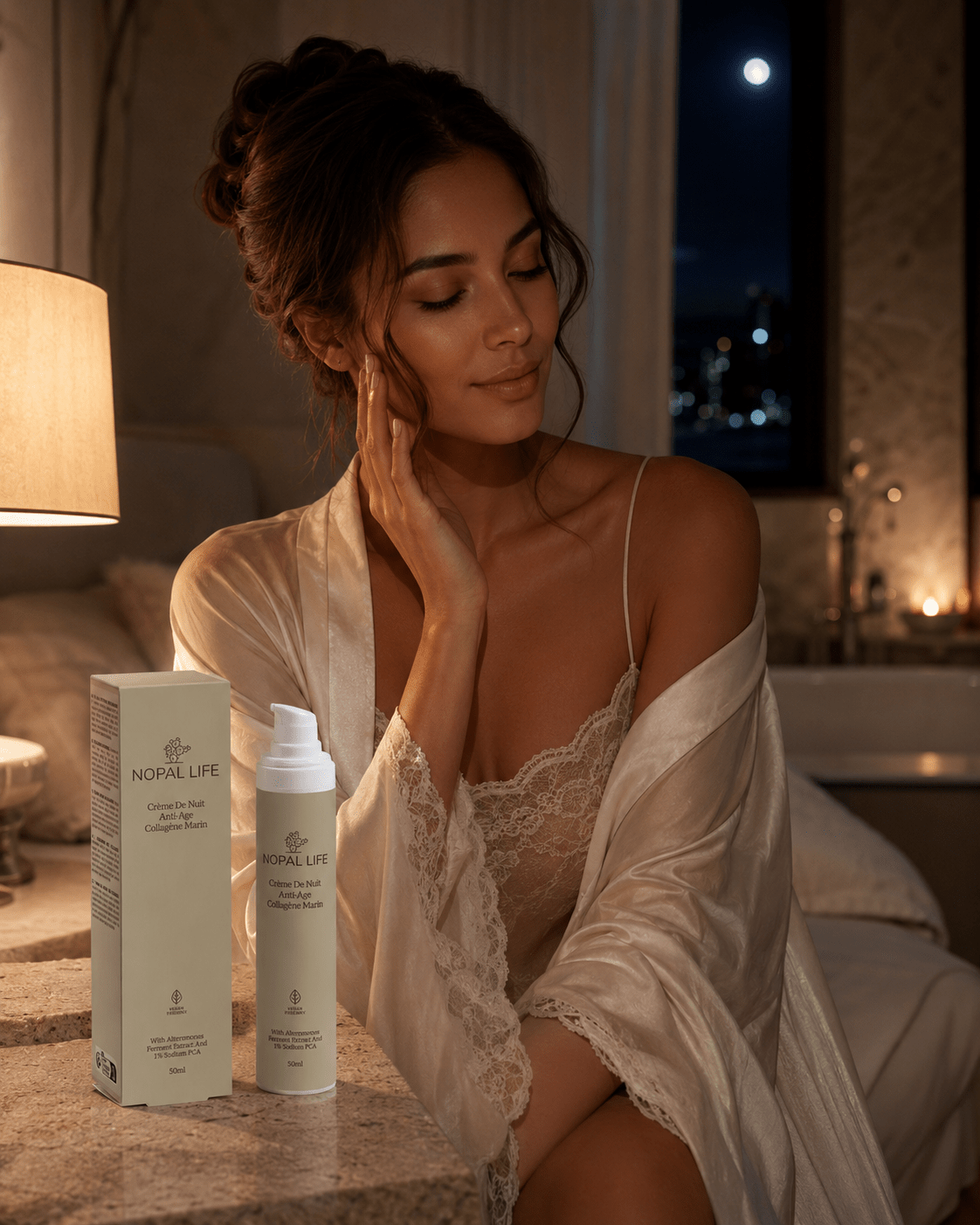
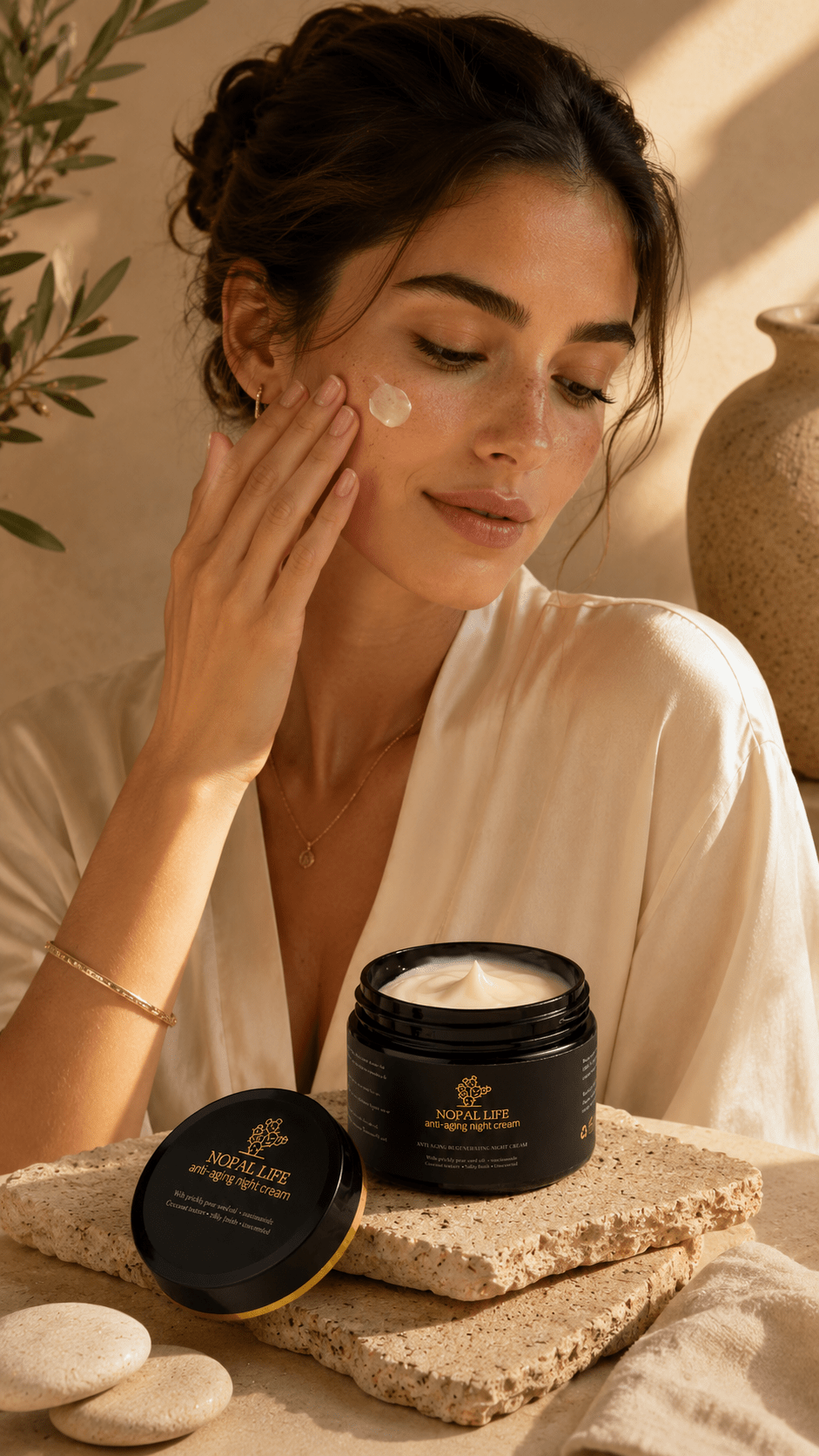
- Rich night balm or cream with ceramides and essential fatty acids
This ritual may seem simple. That's precisely its strength. For sensitive mature skin, simplicity is not a lack of ambition — it's the most effective strategy for achieving lasting radiance without reaction.
Also explore our selection of articles on radiance and comfort for mature skin to delve deeper into each step of this protocol.
FAQ — Sensitive Mature Skin: Your Most Frequent Questions
Q: At what age does skin become "sensitive mature"?
There's no universal age. The threshold is generally around 45-50 for women with the approach of perimenopause, but some skins show signs of premature aging as early as 35-38, depending on their genetics, cumulative sun exposure, and past skincare habits. What matters is the simultaneous presence of the three signals: persistent dryness, increased reactivity, and loss of firmness/radiance.
Q: Is vitamin C really suitable for sensitive mature skin, or is it too irritating?
It depends on the form of vitamin C used. Pure L-ascorbic acid at a low pH (3.5) is indeed irritating for sensitive skin. However, stabilized forms like ascorbyl glucoside (neutral pH), 3-O-ethyl ascorbate, or ascorbyl palmitate are well tolerated even on reactive skin. These forms are more stable against oxidation and gradually penetrate the epidermis to release active ascorbic acid. Our serum uses stabilized vitamin C precisely for this reason.
Q: Can vitamin C serum be used morning and evening on sensitive mature skin?
Morning application is recommended because vitamin C is an antioxidant that helps protect against external aggressions generated by UV during the day—this is its main role complementing SPF. In the evening, if your skin is very dry, prefer active ingredients that promote natural renewal (bakuchiol, prickly pear seed oil, peptides). Twice-daily application is possible with stable forms but is not necessary to observe results.
Q: Can prickly pear seed oil replace a moisturizer?
Not exactly. Prickly pear seed oil is a pure lipid – it contains no water and is therefore not hydrating in the strict sense (it does not provide water molecules to the skin). Its role is to occlude the barrier and limit water loss. In practice, the ideal is to first apply a humectant active (hyaluronic acid, glycerin) to slightly damp skin, then seal with the oil. For very dry mature skin, this combination is more effective than each product used in isolation.
Q: How long does it take to see results with a vitamin C serum on mature skin?
The first effects of radiance and complexion uniformity are generally visible within 4 to 6 weeks of regular daily use. Action on the appearance of spots takes longer: 8 to 12 weeks minimum. Regularity takes precedence over intensity. Daily application of a gentle formula is always more effective than occasional application of an irritating concentrated formula.
Q: How do I know if my product contains denatured alcohol or hidden fragrance?
On the INCI list (the mandatory ingredient list on all cosmetics), look for "Alcohol Denat." (denatured alcohol) or simply "Alcohol" high up in the list. Fragrance can appear as "Parfum," "Fragrance," or via isolated scent substances listed among the 26 regulated allergens (Linalool, Limonene, Citronellol, etc.). A "fragrance-free" product, a marketing claim, may still contain scented molecules—only reading the complete INCI list ensures this.
Q: Should vitamin C serum be used before or after toner?
Vitamin C serum is applied after toner (which prepares and balances the skin's pH) and before moisturizer (which sets the serum and strengthens the barrier). On skin that is still slightly damp after toning, the penetration of active ingredients is slightly improved. Wait 30 to 60 seconds after toner before applying the serum to allow the product to absorb partially.
Q: Can sensitive mature skin use masks? If so, which ones?
Yes, provided you choose non-rinse masks like "sleeping masks" or sheet masks based on aloe vera, centella asiatica, or hyaluronic acid. Avoid clay masks (too drying for this profile) and peel-off masks (mechanically aggressive). A hydrating mask 1 to 2 times a week can effectively complement a minimalist daily ritual, especially in winter or during periods of increased skin stress.
Ready to care for your sensitive mature skin?
Our radiance vitamin C serum, formulated without alcohol, fragrance, or silicone, is specifically designed for dry, sensitive mature skin seeking lasting radiance and comfort.
Conclusion
During menopause, sensitive mature skin experiences both dryness and reactivity. A minimalist, soothing, and nourishing routine helps to restore comfort and radiance without overloading it. Gentleness is key at every step. With the right care, skin regains serenity, suppleness, and luminosity.
Why choose Nopal Life to support mature skin
Supporting mature skin relies on carefully selected active ingredients. Nopal Life prickly pear oil, rich in essential omega-6 and omega-9 fatty acids, vitamin E, and plant sterols, contributes to the suppleness and comfort of the skin's film. It helps maintain the skin's firm and plump appearance, reduces the look of dehydration fine lines, and supports the epidermal barrier for a visible smoothing effect from the very first weeks.
Pair it with our anti-aging night cream and our radiance serum for a complete synergy, day and night. Your skin regains its firm appearance, radiance, and lasting comfort. Discover the Nopal Life formulation designed for your skin profile with our free Skin Intelligence diagnostic.
RECOMMENDED TREATMENT
Natural radiance serum
Natural formula · Origin Algeria
DISCOVER THIS TREATMENT →PERSONALIZED ROUTINE
Nopal Life Skin Intelligence™
Free diagnostic · 2 minutes
DISCOVER MY ROUTINE →This information is provided for educational purposes and does not replace the advice of a healthcare professional.
Information provided for cosmetic and educational purposes; it does not constitute medical advice.
Our anti-aging treatments