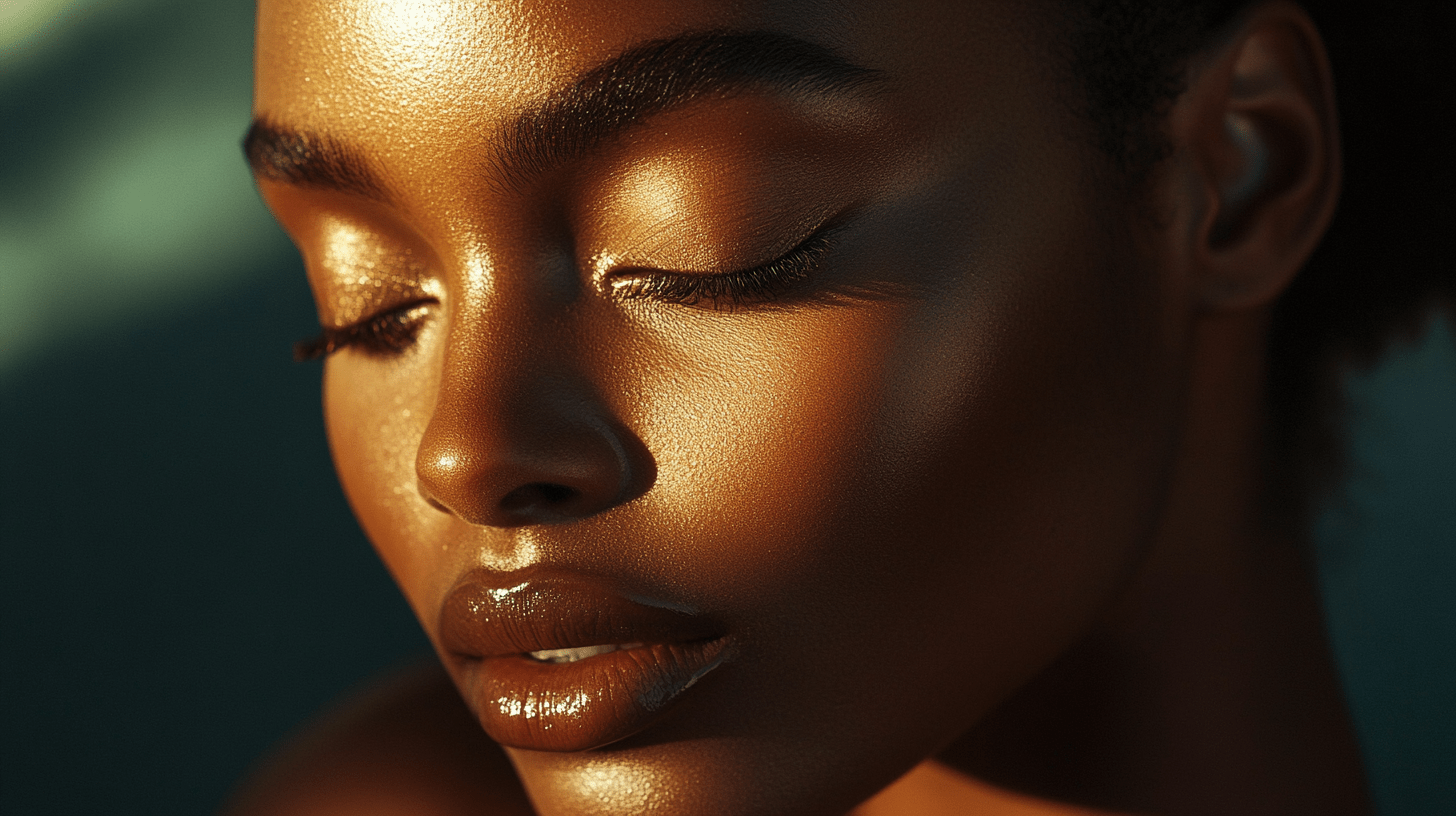
Plant Phytoestrogens: firmness for mature skin
Phytoestrogens are plant-derived active ingredients whose structure resembles that of the body's own estrogens, making them of particular interest for mature skin, whose apparent firmness diminishes with age. Found in soy, flax, red clover, and hops, they help support the skin's dense and comfortable appearance, without ever replacing any treatment. Here's a clear overview of this large plant family.
When skin loses its bounce and the facial oval appears less defined, we often refer to a change in "apparent density." During menopause, this evolution accelerates, and many women seek natural active ingredients capable of supporting this period. Phytoestrogens regularly come up in cosmetic conversations. But behind this somewhat intimidating word lies a whole family of plant molecules, with varied profiles, which should be understood as a whole before focusing on a specific ingredient.
What exactly is a phytoestrogen?
The term refers to compounds naturally present in certain plants, whose molecular shape resembles that of human estrogens. This structural similarity allows them to interact, gently and partially, with the same cellular "locks" (receptors). We therefore speak of plant-derived active ingredients related to estrogens: the wording is deliberately cautious, because a phytoestrogen is not a hormone and does not act like a hormonal treatment.
Researchers generally classify this family into three main groups:
— isoflavones, the most studied, found mainly in soy and red clover (genistein, daidzein, and their derivative equol); ;
— lignans, abundant in flaxseeds and certain whole grains; ;
— coumestans, found in alfalfa and sprouted shoots. .
In addition to these three pillars, other plant sources often cited in cosmetics include hops (rich in 8-prenylnaringenin) and licorice. This diversity explains why it is more accurate to speak of a family rather than a single active ingredient.
Why mature skin is interested
With age, and particularly around menopause, skin tends to lose firmness and comfort. Visually, this change translates into skin that appears thinner, sometimes drier, with a less toned texture. It is precisely this aspect that phytoestrogens attract attention to.
The idea is not to "repair" anything, but to support the appearance of density and radiance of changing skin. Several of these molecules also exhibit antioxidant properties, which helps protect the skin from environmental oxidative stress. This dual dimension — gentle estrogenic resemblance and antioxidant action — makes phytoestrogens interesting candidates for supporting mature skin, in addition to an adapted routine.
This is also why it is useful to start with your own needs. A NOPAL skin diagnosis helps to determine your level of apparent firmness and hydration before choosing active ingredients, rather than following a trend.
Major plant sources at a glance
Each group has its emblematic source:
— Soy concentrates the most documented isoflavones. It is the most studied example of the family, to the point that it deserves its own dedicated article — we will return to it in detail elsewhere. ;
— Flax is the main source of lignans, transformed by intestinal flora into active compounds. ;
— Red clover also provides isoflavones, and is featured in several studies on skin comfort during menopause. ;
— Hops provide a phytoestrogen reputed to be among the most powerful in its category, often mentioned in skincare. .
None of these plants are "better" in absolute terms: their profiles differ, and each one's response also depends on the skin that receives them.
Soy remains the most documented source, due to its isoflavones. Then come red clover, flax with its lignans, hops and licorice. In cosmetics, it is extracts of these plants that are used, not the whole plant.
The route of administration is as important as the source. Topical application and dietary consumption are not the same subject, and what is observed on the skin from an applied extract cannot be deduced from what is known orally.
What studies show
The level of evidence varies depending on the sources and should be interpreted with caution: these studies shed light on mechanisms without constituting a therapeutic promise.
A review published in the Journal of Cosmetic Dermatology (2025) recalls the general framework: phytoestrogens are divided into isoflavones, coumestans, and lignans, and several of them (genistein, daidzein, equol) have been associated, in the literature, with improved appearance of aging skin — photoprotection, appearance of wrinkles, elasticity, and hydration.
Clinically, a randomized double-blind trial published in Nutrients (2023) followed 44 menopausal women for 24 weeks. The group receiving isoflavone-enriched soy protein (50 mg/day) showed a significant reduction in the apparent severity of wrinkles (−6.5% at week 24 compared to the control group) and a clear improvement in skin hydration. This was an oral study with a small sample size: an encouraging signal, not a generality.
Finally, a crossover trial published in Obstetrics and Gynecology International (2011), involving 109 menopausal women, reported a subjective improvement in skin and scalp condition after taking red clover extract. This measurement was based on the participants' feelings, which calls for caution in interpretation but illustrates the interest in sources other than soy.
How to benefit from phytoestrogens
In terms of skincare, the wisest approach remains gradual integration and regularity. Some benchmarks:
— Prioritize routine consistency rather than accumulating active ingredients: a well-chosen product, used daily, is better than a disorganized superposition. ;
— Combine firmness and comfort: mature skin appreciates nourishing textures that support the skin barrier and limit dryness discomfort. ;
— Supplement with antioxidants: polyphenols and carotenoids extend the protective logic of phytoestrogens. ;
— Consider the pleasure ritual: a massage during application promotes immediate radiance and adherence. .
In this spirit, a prickly pear seed oil rich in vitamin E and fatty acids naturally fits into a routine designed for the comfort and plump appearance of mature skin, complementing estrogen-related active ingredients provided elsewhere.
Above all, remember the usual precautions: pregnant or breastfeeding women, particular medical history, ongoing treatments... these are all situations where the advice of a healthcare professional takes precedence over any cosmetic initiative.
To go further:
- Resveratrol: preventing the signs of aging
- Prickly pear polyphenols: antioxidants and radiance
- The skin barrier
- The Skin Intelligence skin diagnosis
Frequently asked questions
Do phytoestrogens act like hormones on the skin?
No. They are plant-derived active ingredients whose structure resembles that of estrogens, but they do not have the potency or role of a hormone. In cosmetics, we talk about supporting the appearance and comfort of the skin, never a hormonal effect or a substitute for treatment.
Soy, flax, red clover: which one to choose for apparent firmness?
None is universally superior. Soy remains the most studied, but profiles differ and the response depends on your skin. The essential thing is the regularity of a routine adapted to your real needs, which a diagnosis can help to identify.
At what age should you be interested?
There is no imposed age. Interest often grows around menopause, a period when the skin loses apparent firmness, but an earlier preventive approach, focused on comfort and radiance, is perfectly coherent.
Are there any precautions to take?
Yes. In case of pregnancy, breastfeeding, particular medical history, or ongoing treatment, the advice of a healthcare professional must precede any use, orally or in skincare.
Information provided for cosmetic and educational purposes; it does not constitute medical advice.
The "Emerging Active Ingredients" series
Three lesser-known plant active ingredients, documented here without excessive promises.
Our anti-aging treatments