Pure prickly pear seed oil: recognizing quality
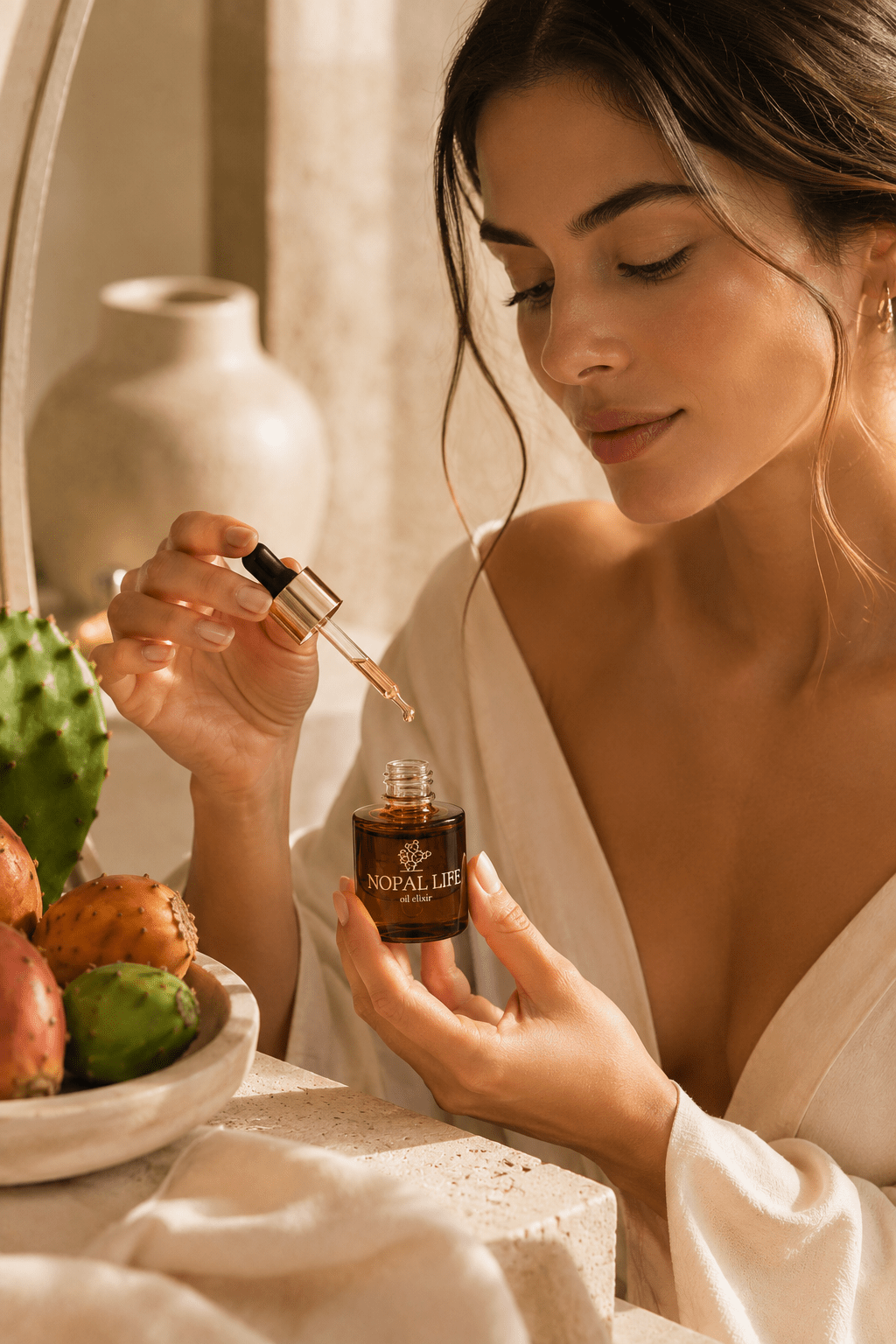
Pure prickly pear seed oil is first recognized by its raw material: the seeds, not the pulp, must be cold-pressed without added fragrance or carrier oil. Its rarity comes from the very low yield of the seeds, which explains its higher price compared to many vegetable oils. Two to three drops are enough for the face and neck in the evening.
Seeds and Fruit: What's Really in the Bottle
The sought-after cosmetic oil comes from the seeds of Opuntia ficus-indica. The seeds represent a small fraction of the fruit and contain a limited amount of lipids, hence the need for a significant amount of fruit to obtain one liter of oil. Oil derived from flower or pulp maceration does not have the same composition or production cost.
On the label, the expected INCI is Opuntia Ficus-Indica Seed Oil. A list with several oils can be interesting, but it no longer corresponds to a pure prickly pear seed oil. The "100%" claim must refer to the ingredient itself, not just a so-called natural origin.
The article on the benefits of prickly pear clearly distinguishes between fruit, extract, and seed oil.
Cold Pressing, Refining, and Sensory Quality
Cold pressing limits the heating of the raw material and better preserves tocopherols and unsaponifiable compounds. However, it does not guarantee a good harvest or correct storage. An old oil can be cold-pressed and already oxidized.
Unrefined oil generally has a yellow to golden green color and a light, vegetal scent. A very strong, rancid, or paint-like smell indicates advanced oxidation. A completely odorless oil may have been deodorized, which is not necessarily negative but should be disclosed.
| Criterion | Useful Indicator | Warning Sign |
| INCI | Opuntia Ficus-Indica Seed Oil | Undeclared blend |
| Extraction | Cold pressing | Process absent |
| Bottle | Dark glass, small capacity | Clear bottle in sunlight |
| Scent | Vegetal, discreet | Rancid or heavily fragranced |
Why Essential Fatty Acids Matter for Skin
The oil mainly contains linoleic acid, an omega-6, as well as oleic acid. These fatty acids contribute to the surface lipid film and improve the perceived suppleness. They do not penetrate as deeply as injectable active ingredients; their cosmetic action primarily concerns the stratum corneum.
Natural vitamin E, in the form of tocopherols, helps slow down oil oxidation and contributes to the formula's antioxidant defense. The actual quantity depends on the terroir, variety, extraction, and storage. A precise promise therefore requires lot analysis, not an average found online.
The page on lipid composition details omegas and their cosmetic role.
Recognizing 100% Pure Oil
The word "pure" has no regulatory definition: it is up to the label to demonstrate it.
The first indicator is the INCI list. Authentic prickly pear seed oil contains only one ingredient: Opuntia Ficus-Indica Seed Oil. Any other mention—sunflower oil, jojoba, sweet almond—indicates dilution, which is not illegitimate but completely changes the real price per milliliter.
Beware of two similar but very different formulations. Opuntia Ficus-Indica Seed Oil refers to the oil extracted from prickly pear seeds. Opuntia Ficus-Indica Extract or Fruit Extract refer to an extract of pulp or cladode, obtained differently, with an unrelated composition and a negligible production cost.
The second indicator is the organic certification with its certifying body. It does not guarantee extraction quality, but it mandates traceability of the raw material.
The third is sensory, and it is unmistakable: quality seed oil is straw yellow to amber, fluid, with a discreet and slightly nutty vegetal scent. An odorless oil has probably been refined; an oil that smells rancid is oxidized and should be discarded.
A final clue is the packaging. This precious oil is fragile: a transparent or large-capacity bottle indicates a seller who does not know their product, or who expects it to be used too quickly for oxidation to be noticeable.
How to Use It, and What to Expect
Three drops in the evening are enough for the entire face. Apply it last, on clean and slightly damp skin, pressing the palms against the skin rather than massaging.
What it provides comes from its composition: a high content of linoleic acid, which contributes to the lipid cement of the skin barrier, and vitamin E, which protects lipids from oxidation. Skin feels nourished and looks smoother from the first few days.
For dehydration fine lines—those that deepen when the stratum corneum lacks water and lipids—the improvement is real and visible within two to three weeks. For established wrinkles, however, there is nothing to expect: no oil can alter the relief of the dermis.
Truly "regenerated" skin does not exist either. What the oil does is provide the missing lipids so that natural renewal can occur under good conditions.
For oily skin, prickly pear seed oil can still be used: its richness in linoleic acid classifies it among oils with low comedogenic potential. One drop is enough, applied only to dry areas.
Price per Milliliter: Comparing Without Being Fooled
The price depends on seed yield, manual harvesting, sorting, and quality control. Always compare the cost per milliliter: a 15 ml bottle at 30 euros costs 2 euros per milliliter, while a 30 ml bottle at 45 euros costs 1.50 euros.
A very low price may correspond to a macerate, dilution, or undocumented origin. Conversely, a high price does not automatically prove quality. Ask for the origin, extraction method, lot number, and period after opening.
The guide recognizing quality oil provides a more comprehensive purchasing framework.
Evening Protocol in Three Drops
Cleanse your face, then apply a mist or aqueous serum. Place two drops of oil in your palm, warm them for three seconds between your hands, and press onto your cheeks, forehead, and chin. Add a third drop for your neck if your skin still feels comfortable.
For dry skin, apply a moisturizer first, then the oil as the final layer. For combination skin, use just one drop on the cheeks and avoid the T-zone for the first few days. For mature skin, three drops in the evening are usually sufficient; more mostly leaves a greasy film.
- 2 drops for the face
- 1 additional drop for the neck
- Apply to slightly damp skin or after cream
- Frequency: every evening or every other evening
- Local patch test for 24 hours before regular use
Storage: Light, Heat, and Oxygen
Oils rich in linoleic acid oxidize faster than oils very rich in oleic acid. Store the bottle closed, away from light, and ideally below 25 °C. A 15 to 30 ml format limits exposure time after opening.
Avoid warm bathrooms and windowsills. Note the opening date on the label and respect the PAO symbol, often six or twelve months. If the smell changes significantly or the texture becomes sticky, replace the product.
The article on oil extraction explains how the process influences its stability.
Dry, Oily, or Sensitive Skin: Adjusting the Quantity
Dry skin often tolerates two to three drops over a cream. Oily skin may prefer one drop mixed with cream or applied only to uncomfortable areas. Sensitive skin should start every third evening to distinguish between tolerance and occlusive effect.
The feeling of richness depends as much on the dosage as on the composition. A light oil used in excess will still feel greasy; a richer oil used in a microdose can be very comfortable. The right criterion is the condition of the skin upon waking, not the shiny effect immediately after application.
The prickly pear seed oil face routine offers variations depending on skin profile.
Pure prickly pear seed oil should also remain identifiable by its natural scent, without added fragrance.
The choice of a pure prickly pear seed oil therefore relies on lot traceability rather than spectacular color.
What This Oil Does Not Do
Pure prickly pear seed oil does not replace sunscreen, erase deep wrinkles, or permanently alter firmness. It primarily improves suppleness, comfort, and surface appearance when properly dosed.
The anti-aging claim should be understood as cosmetic support for the lipid film and antioxidant defense. It does not guarantee identical results for all skin types or rapid transformation. The quality of the entire routine remains crucial.
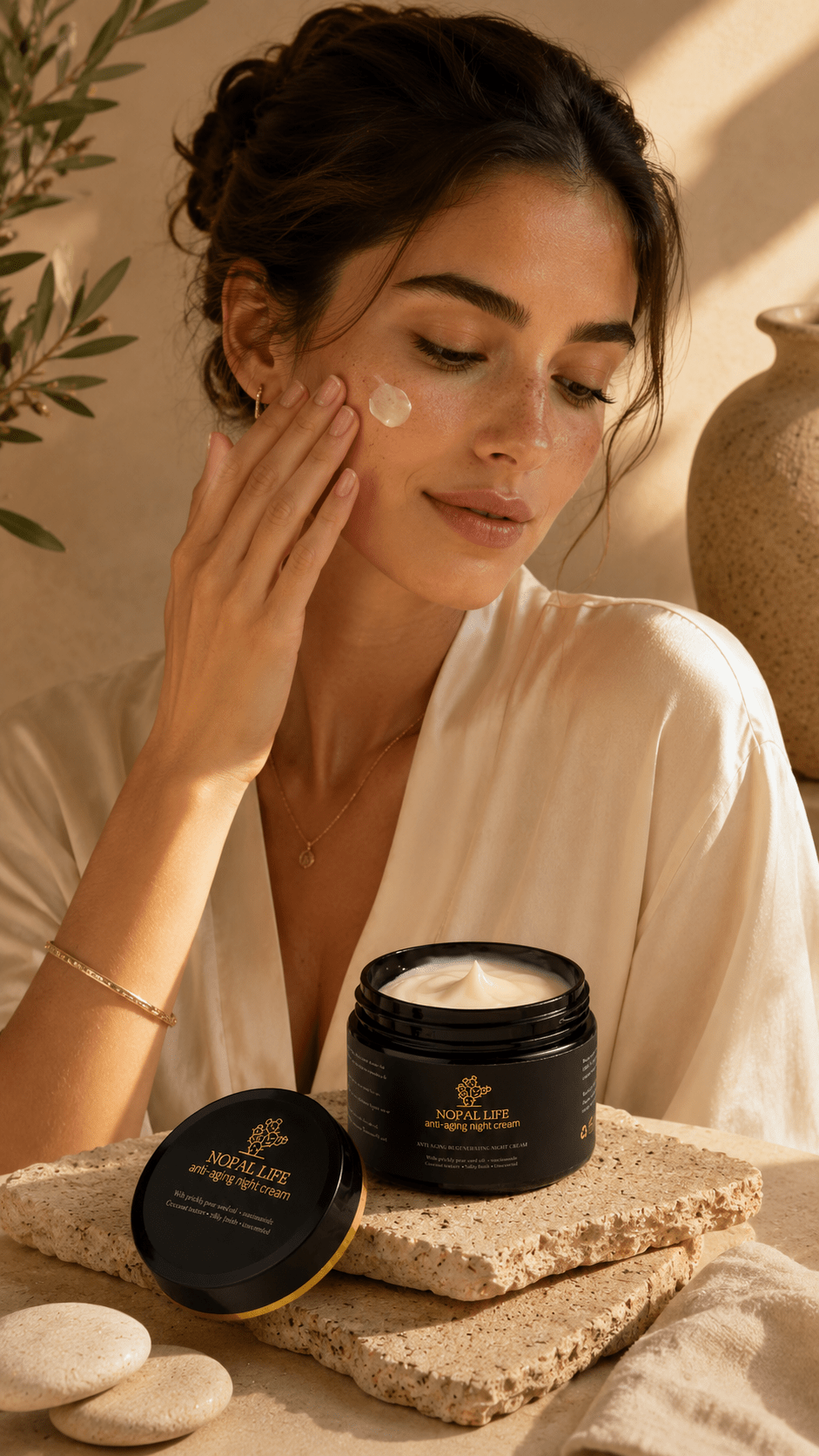
Our anti-aging treatments