Argan Oil: Natural Skincare Benefits and Routine P1
Argan Oil and Dull Skin: Understanding This Ingredient Better
Argan oil, extracted from the fruits of Argania spinosa, is much more than a trending ingredient. Its composition of unsaturated fatty acids — primarily oleic acid (Ω9) and linoleic acid (Ω6) — gives it a natural affinity with the skin's hydrolipidic film. In practical terms, this means the oil spreads pleasantly on the skin and helps maintain the epidermis's comfort and suppleness. For dull or combination skin, this initial quality is valuable. Even a slight lack of hydration is often associated with a dull complexion. By helping to preserve the hydration and comfort of the skin barrier, argan oil contributes to reviving the skin's radiant appearance without leaving an excessive greasy film. Its relative lightness compared to other vegetable oils (comedogenicity index estimated at 0) makes it a suitable choice for combination areas of the face.
Other components of argan oil include tocopherols (vitamin E), plant sterols (β-sitosterol, schottenol), and polyphenols. These molecules are naturally present in the oil and contribute to its richness: vitamin E is recognized for its antioxidant role, while sterols and polyphenols contribute to the overall quality of the oil and skin comfort. It is this combination that makes argan oil a prized skincare product for supporting texture, radiance, and comfort — three central needs for skin with a combination imbalance. You can explore our entire approach to dull and combination skin in our specialized guide.
Argan Oil in Cosmetics: What You Need to Know
Argan oil is traditionally used in cosmetics for its nourishing qualities and comfortable application. Rich in fatty acids and vitamin E, it is valued for helping to preserve surface hydration and skin suppleness. These qualities are particularly beneficial for combination skin prone to dullness, where a feeling of tightness in certain areas can coexist with shinier areas.
The phenolic fraction of argan oil provides natural antioxidant properties, useful for helping the skin cope with daily aggressions such as urban pollution or light exposure. For skin that is challenged day after day, this comfort and surface protection represent a valuable asset. The plant sterols in argan, in turn, contribute to skin comfort, which contributes to the smoother and more supple appearance observed after regular use. Find our content on radiance, texture, and comfort-focused skincare to delve deeper into the subject.
Exfoliation Protocol: How to Integrate Argan Oil into Your Routine
Exfoliation is the key step that determines the effectiveness of argan oil on dull skin. Without prior preparation of the skin surface, the oil is applied to a layer of dead cells and oxidized sebum that can impair comfort and appearance. The optimal sequence for a radiant and even routine involves three steps.
Step 1 — Gentle cleansing. Start with a cleanser free of harsh sulfates to prepare the surface without disrupting the hydrolipidic film. A micellar gel or cleansing water is suitable for combination skin.
Step 2 — Gentle chemical exfoliation (1 to 2 times a week). An exfoliant based on lactic acid (mild AHA, 5%) or niacinamide will facilitate the removal of dead surface cells without irritating sensitive areas. Avoid overly abrasive mechanical scrubs on combination skin: they risk weakening the T-zone and accentuating shininess. Leave on for 5 minutes, then rinse thoroughly.
Step 3 — Application of argan oil. On slightly damp skin (the presence of water facilitates the spread of lipids), place 3 to 4 drops of argan oil in the palm of your hand. Warm between your palms for 5 seconds, then apply by light pressure (palming) over the entire face, focusing on the cheeks and forehead — areas where the sensation of tightness is generally more pronounced. Avoid the eye contour if your skin is very sensitive in this area. In the evening, the oil can be applied alone or mixed with your usual serum for a comforting effect that supports skin recovery overnight.
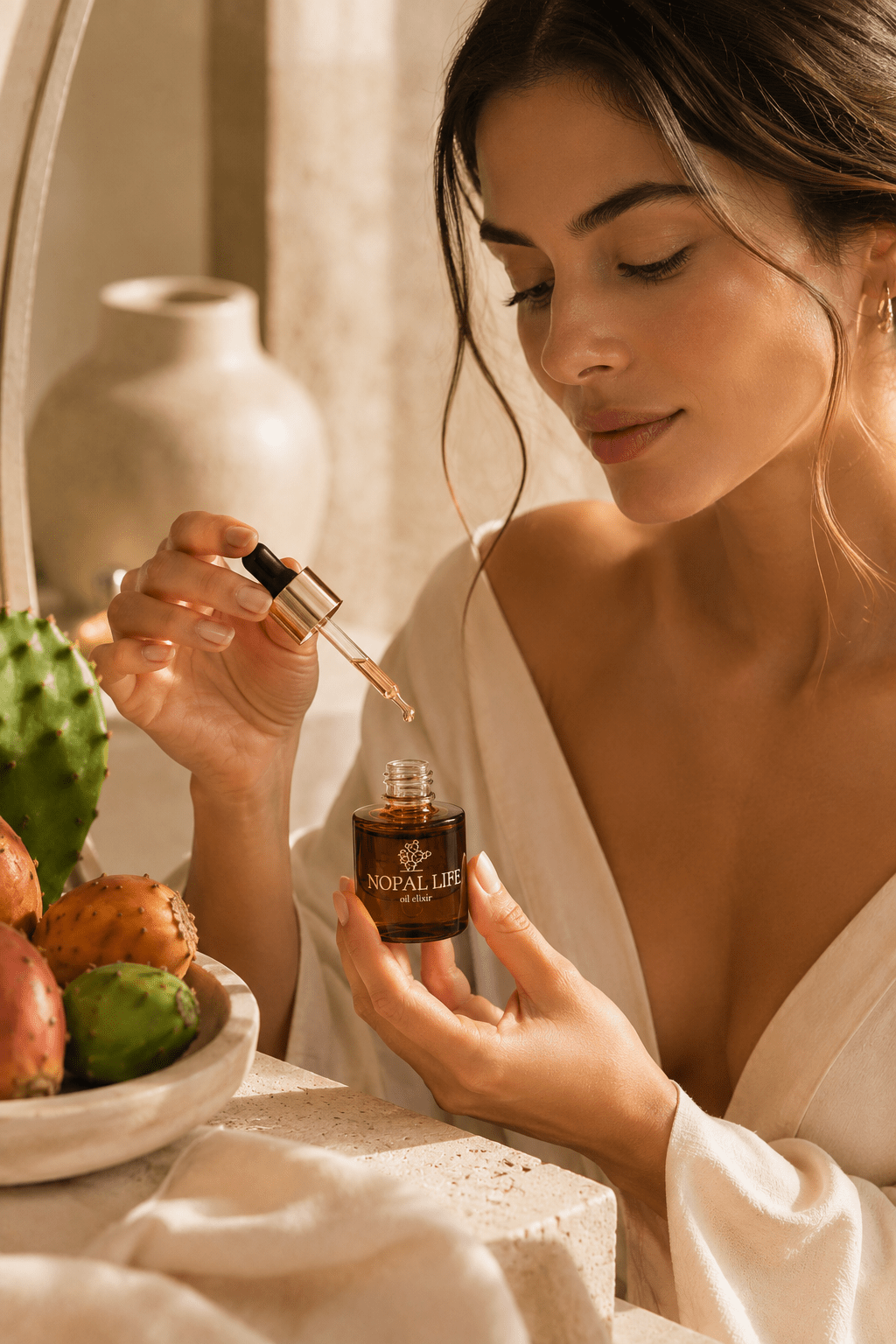
This protocol, combined with our Nopal Life Nopal Argan Glow & Comfort Face Oil, allows for a visible improvement in radiance after 3 to 4 weeks of regular use.
Mistakes to Avoid with Argan Oil on Combination Skin
Argan oil is one of the best-tolerated vegetable oils, but some recurring mistakes detract from its effectiveness — or even cause discomfort on combination skin.
Mistake 1: Using too much product. The optimal amount is 3 to 5 drops maximum for the entire face. Excess oil does not absorb better; it remains on the surface, leaves an uncomfortable shiny film, and can promote the appearance of enlarged pores in already shiny areas. Less is often more.
Mistake 2: Applying to dry skin. Unlike creams, oils spread better on slightly damp skin. After cleansing, do not completely dry your face before applying the oil.
Mistake 3: Neglecting product quality. Cosmetic argan oil should be virgin, cold-pressed, and from a traceable source. Refined oil loses some of its sterols and tocopherols. Check that the only ingredient listed is Argania Spinosa Kernel Oil (INCI) — with no additives or fragrance.
Mistake 4: Combining with incompatible active ingredients. Argan oil is compatible with most cosmetic active ingredients. However, avoid mixing it directly with unformulated pure retinol, which can destabilize the formula. With AHAs or niacinamide, the combination is, on the contrary, harmonious.
Mistake 5: Expecting immediate results. Argan oil works on the comfort and appearance of the skin barrier, which takes a little time. Results on radiance and texture generally appear after 3 to 6 weeks of regular application. Consistency takes precedence over intensity. Discover our complete range in the natural skincare collection.
Argan Oil, a Specific Ally for Combination and Dull Skin
Combination skin presents a common paradox: a shiny T-zone coexisting with dry or uncomfortable cheeks. This imbalance complicates the choice of skincare — too rich, they accentuate the shiny appearance; too light, they don't provide enough comfort to dry areas. Argan oil holds a unique position in this context due to its balanced lipid ratio.
Its high content of linoleic acid (Ω6 — approximately 35% of its composition) is particularly relevant for combination skin. Linoleic acid is a fatty acid valued in skincare for oily or shiny-prone skin because it contributes to comfort without leaving a heavy finish. Topical application helps the skin regain a more balanced sensation — an important nuance to avoid the discomfort observed with overly drying treatments.
Specifically for dull complexions, argan's polyphenols and tocopherols offer complementary qualities: they help to even out the complexion's appearance and preserve the skin's natural radiance over the weeks. The cumulative effect over several weeks of regular use is skin whose appearance is more even, brighter, and whose texture appears visibly refined. Complement your approach with our Nopal Life Skin Intelligence™ skin diagnostic tool for a personalized recommendation.
FAQ — Argan Oil Skincare: Your Most Frequent Questions
Is argan oil suitable for sensitive skin?
Yes. Argan oil is one of the best-tolerated vegetable oils, including for sensitive or reactive skin. Its richness in plant sterols even contributes to the comfort of skin prone to slight redness. A tolerance test on the inside of the wrist for 48 hours is still recommended before intensive use on the face.
Can argan oil be used morning and evening?
Yes, twice-daily application is effective and well-tolerated. In the morning, a reduced amount (2-3 drops) is sufficient to protect and prepare the skin before SPF application. In the evening, the quantity can be slightly increased to support skin comfort overnight.
How long before seeing results?
The first sensations of comfort and surface hydration can be felt after 1 to 2 weeks. Radiance and a more even complexion become visible between 3 and 6 weeks of regular use. The comfort of the skin barrier, however, is appreciated over 4 to 8 weeks.
Is argan oil comedogenic?
No. Its comedogenicity index is estimated at 0, making it one of the few oils suitable for skin with enlarged pores or prone to blackheads. This is partly due to its richness in linoleic acid, which provides a light and comfortable finish.
Can I replace my day cream with argan oil?
For normal to combination skin living in a temperate climate, argan oil alone may be sufficient as a daily comfort care in the summer. In winter or for very dry skin, it is preferable to combine it with a light moisturizing cream. In both cases, SPF remains essential in the morning.
How to store argan oil?
In a tinted glass bottle, away from light and heat (ideally between 15 and 20 °C). Quality argan oil keeps for 12 to 18 months after opening. A change in odor (rancid smell) indicates oxidation: the product should no longer be used on the face.
Is argan oil suitable during pregnancy?
Topical argan oil is generally considered safe during pregnancy. However, as with any skincare, it is recommended to consult your doctor or midwife, especially if you are using the oil in large quantities or in combination with other active ingredients.
What is the difference between cosmetic and culinary argan oil?
Culinary argan oil is roasted (the kernels are toasted before pressing); it has a pronounced nutty smell and is rich in antioxidants. Cosmetic oil is cold-pressed without roasting: it is lighter, odorless or slightly neutral, and has a lipid composition better suited for skin application. Do not use culinary oil as a facial treatment.
Conclusion
Liquid gold from Morocco, argan oil nourishes, softens, and provides comfort to dry skin. Rich in vitamin E and fatty acids, it helps maintain comfort and provides radiance. Its versatility is suitable for both face and hair. A few drops are enough for supple, nourished, and radiant skin.
Why build your facial routine with Nopal Life
An effective skincare routine is not just a stack of products: it's a sequence of complementary active ingredients applied in the right order, on clean skin, for visible and lasting results. Nopal Life has designed each product to work both alone and in synergy with the other products in the range. Prickly pear oil is the common thread: present in several formulas, it ensures consistency and tolerance for all skin types.
Start with our free Skin Intelligence diagnosis. In 3 minutes, it identifies your skin type, your priority concerns, and suggests a personalized routine from our 6 skincare rituals.
This content is informative and educational; it does not replace medical advice, diagnosis, or a dermatological consultation. In case of doubt or persistent skin problems, consult a qualified health professional.
Our anti-aging treatments