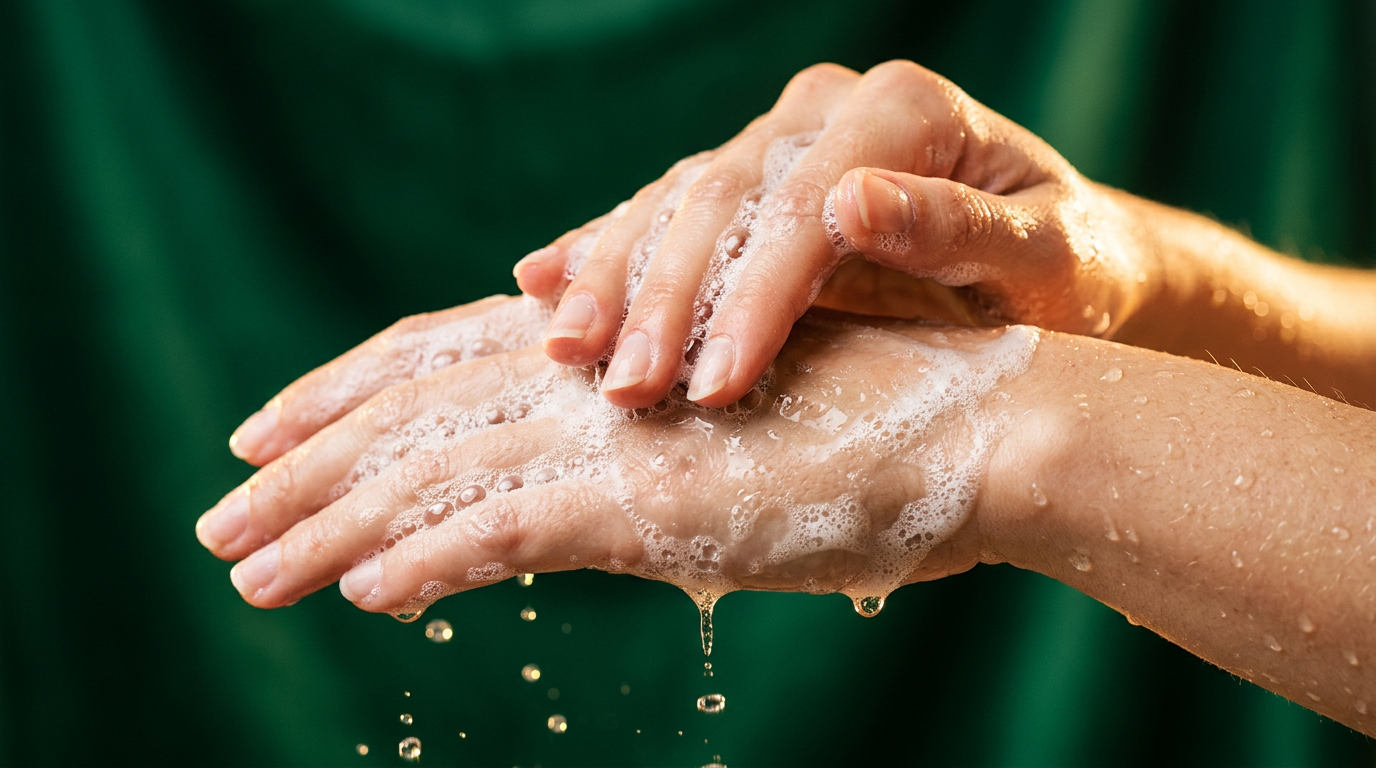
Cleansing gel for oily skin: cleanses without stripping
Oily skin doesn't need to be stripped: it needs effective enough cleansing to remove excess sebum without causing a tight or squeaky-clean feeling. Shininess depends on the sebaceous glands, while the gel mainly acts on what is already on the surface. A well-chosen cleanser leaves the face clean but still supple five minutes after rinsing.
Sebum is not dirt to be completely removed
Sebaceous glands produce lipids that contribute to the hydrolipidic film. On some skin types, this production is more abundant, especially on the forehead, nose, and chin. Cleansing removes part of this film but does not deactivate the glands.
A very matte face immediately after washing can therefore become shiny again a few hours later. Using a more aggressive product does not guarantee a lasting reduction in this production. The realistic goal is to remove excess oil, sweat, particles, and sunscreens without causing discomfort.
Why abundant lather is not a quality criterion
Lather depends on the formulation and the nature of the surfactants, not directly on the useful cleansing power. A very foamy gel can be gentle, but it can also contain a detergent system that leaves the skin feeling rough. Conversely, a more discreet foam can perfectly remove the oily film from the surface.
The best indicator is the sensation after rinsing. If the skin feels tight, if the nose peels, or if the cheeks become uncomfortable, the formula or frequency is too aggressive. Oily skin can also be sensitive or dehydrated.
Salicylic acid in a cleanser: useful but not mandatory
Salicylic acid is lipophilic and integrates well into routines for pores and blemishes. In a rinse-off product, its contact time remains short, which can improve tolerance but also limits its intensity compared to a leave-on treatment. Cleansers containing up to 2% are available depending on markets and formulations.
If the routine already includes a salicylic serum, it is not essential to also have it in the gel. Stacking several exfoliating products can increase dryness. A simple cleanser in the morning and a targeted treatment in the evening often make for a clearer routine.
Gel, oil, or cleansing cream: choose according to makeup
| Situation | First choice | Possible second step | Why |
| No makeup | Gentle gel | None | One step is enough |
| Resistant SPF | Oil or balm | Gentle gel | Dissolve then rinse |
| Long-lasting makeup | Cleansing oil | Gel | More complete removal |
| Sensitive oily skin | Low-foaming gel | None | Limit surfactants |
A cleansing oil does not automatically make the skin oilier. Its role is to dissolve makeup and filters, then emulsify with water. The important point is rinsing and tolerance, not the simplistic opposition between oil and oily skin.
The right morning and evening protocol
In the morning, wet your face with lukewarm water, then massage a pea-sized amount of gel for fifteen to twenty seconds. Gently focus around the nose and chin, without a brush or abrasive mitt. Rinse completely and then apply light hydration if necessary.
In the evening, increase the massage time to thirty seconds if you have worn a non-resistant sunscreen or minimal makeup. For a very stubborn formula, first use an oil cleanser, then a small amount of gel. Two consecutive aggressive cleansings offer no benefit.
- Morning: 15 to 20 seconds
- Evening: 20 to 30 seconds
- Lukewarm water
- A pea-sized amount of gel
- No rubbing with a rough towel
Oily and dehydrated skin: the common trap
Skin can produce a lot of sebum while lacking water in its stratum corneum. It then appears shiny but feels tight after washing. In this case, choosing the most degreasing product reinforces the disconnect between the lipid surface and comfort.
After cleansing, a gel-cream containing glycerin, hyaluronic acid, or panthenol may suffice. Light hydration does not necessarily weigh down the skin and can improve daily comfort. The total absence of cream is not an obligation for oily skin.
Blackheads and pores: what washing can change
Gel removes surface lipids and particles, which can make pores less visible immediately after rinsing. It does not permanently remove a sebaceous filament or an established blackhead. For these, a well-tolerated exfoliating routine is more relevant than prolonged massage.
Avoid squeezing your nose right after showering. Heat and pressure can cause redness and marks. A regular approach over several weeks generally yields a cleaner result than repeated extraction.
When to reduce frequency despite shiny skin
If your cheeks are flaking, if your nose becomes sensitive, or if your skin stings when it comes into contact with water, reduce the number of foaming washes. A single cleanse in the evening for a few days may be enough, with water in the morning. Then resume according to comfort.
The level of shininess at midday is not the only indicator. Also observe tightness, the presence of flakes, and the tolerance of subsequently applied treatments. A routine that mattifies but makes all other products uncomfortable is not balanced.
People who exercise can rinse their face after physical activity without necessarily using a gel every time. If a lot of sweat and sunscreen are present, a small amount of cleanser is sufficient. Multiplying foaming washes can make the skin more uncomfortable throughout the day.
A towel reserved for the face should be clean and used by patting. Repeated rubbing does not improve sebum removal after rinsing. However, it can accentuate redness around the nose and on already sensitized areas.
The choice of format also contributes to consistency. A pump allows for a stable dose, while a tube squeezed too generously can lead to using two or three times the necessary amount. A pea-sized amount is usually enough for the entire face.
In summer, the sensation of shine often increases with heat and perspiration. This does not mean that you should double the frequency of washing. Instead, adjust the cream's texture and use blotting papers if necessary between washes.
The choice of towel also contributes to the result. Use a clean towel reserved for the face and pat instead of rubbing, especially around the nose. Repeated friction can create redness, giving the impression that cleansing is working more, when it is simply irritating the surface.
After a very hot day, shine comes partly from sweat mixed with sebum. A rinse with water then a single cleanse in the evening is often sufficient. Adding a third foaming wash in the afternoon can increase the sensation of dryness without changing the function of the sebaceous glands.
If you use a mattifying sunscreen, make sure it removes correctly in the evening. Water-resistant formulas may require an initial oil-based step before the gel. Double cleansing should remain targeted for these days and not become a mandatory rule when a single product is enough.
To monitor your skin's reaction, observe it for two weeks before changing the formula again. Note the shine at midday, the presence of flakes near the nose, and the sensation immediately after rinsing. These three benchmarks are more useful than a fleeting impression of freshness.
When oily skin is also sensitive
The two characteristics coexist more often than we think, and they lead to opposing products. The "oily skin" logic pushes towards degreasing formulas; the "sensitive skin" logic demands a gentle cleanser. It is the latter that must prevail, because a weakened barrier causes discomfort without reducing sebum.
Specifically: a cleansing base without aggressive sulfates, without strong fragrance, without alcohol at the top of the list, and rinsing with lukewarm water. If the skin reddens or tingles during rinsing, the product is not suitable, regardless of its marketing positioning.
The same reasoning applies to areas: skin can be oily in the T-zone and sensitive on the cheeks. Nothing obliges you to apply the cleanser everywhere with the same intensity.
Once or twice a day?
In the evening, cleansing is almost always justified: it removes sun filters, makeup, and particles accumulated during the day. In the morning, the question is open and depends on the skin type.
Frankly oily skin upon waking generally benefits from a second cleanse. Skin that feels comfortable may be content with a water rinse. Systematically doubling the gesture simply because the skin is shiny at the end of the day often perpetuates the problem.
Finally, cleansing does not significantly eliminate dead cells: this is the role of an exfoliant, used separately and rarely. Confusing the two leads to rubbing a cleanser longer, with no benefit and a risk of irritation.
What an oily skin gel cleanser does not do
An oily skin cleansing gel does not permanently modify the sebaceous glands or shrink pores. It removes what is on the surface at the time of washing. Its value comes from regularity and tolerance, not from a stripped feeling.
It also does not replace a targeted treatment for blemishes or blackheads. The best formula is often the one you can use every day without redness, flaking, or the urgent need to apply a thick cream immediately afterwards. Effective cleansing remains gentle.


Go further than this article
Get our skincare guides by email — and start with your free skin diagnostic: 2 minutes, advice tailored to your skin. We ship to the US, UK, Canada, Australia and 27 European countries; somewhere else? Sign up and you will be the first to know when we deliver to your country.
By signing up, you agree to our privacy policy. Unsubscribe in one click.