Bakuchiol: review, efficacy, tolerability, and limitations
My opinion on bakuchiol is favorable yet measured: it's an interesting active ingredient for those seeking an anti-aging option better tolerated than many retinoids, but its evidence level remains more limited than that of retinol. The compound, derived notably from Psoralea corylifolia, has shown effects on the appearance of wrinkles, photoaging, and pigmentation in several studies. It deserves neither the status of a mere passing trend nor that of a perfectly equivalent plant-based retinol.
Why it's so often compared to retinol
Bakuchiol does not belong to the chemical family of retinoids. It does not convert to retinoic acid, and its molecular structure is different. The comparison comes rather from studies showing changes in the expression of certain genes similar to those observed with retinol and cosmetic results concerning wrinkles and pigmentation.
This functional proximity has fueled the "retinol alternative" expression. It is useful for defining the objective, but it becomes misleading if it suggests that the two molecules have the same mechanism or the same amount of data. Retinol benefits from decades of research; bakuchiol has a more recent and more restricted clinical corpus.
What the most cited comparative trial shows
A randomized, double-blind trial published in the British Journal of Dermatology compared 0.5% bakuchiol applied twice daily to 0.5% retinol used once daily for twelve weeks. Both groups showed improvement in wrinkles and photographic hyperpigmentation. Participants using retinol reported more peeling and stinging.
This trial is interesting because it directly compares two active ingredients, but it is not enough to demonstrate general equivalence. Application frequencies were different, the sample size remained limited, and only one concentration was evaluated. The result justifies the interest in bakuchiol, not a conclusion that it would always replace retinol.
Available literature: promising but still heterogeneous
A systematic review published in 2022 identified thirty articles corresponding to research on bakuchiol and skin, including sixteen preclinical studies and seven clinical studies. This distribution immediately highlights the limitation: a large part of the mechanistic arguments does not come from robust human trials. Clinical formulations also sometimes combined several ingredients.
The most consistent results concern the appearance of photoaging, certain spots, and wrinkles. For a consumer, this means that the active ingredient is worth considering, but one must be wary of very precise promises extrapolated from cellular studies. A finished formula must be judged on its own data when available.
Tolerance: its most convincing advantage
The main practical advantage is tolerance. Retinol can cause dryness, redness, peeling, and discomfort during introduction, especially when the frequency increases too quickly. Bakuchiol generally appears to be better accepted in published trials, which facilitates regular use.
Better tolerated does not mean impossible to irritate. A formula may contain fragrance, alcohol, essential oils, or other active ingredients likely to cause a reaction. Sensitive skin should therefore test the product gradually, even if the label highlights an ingredient known to be gentle.
What concentration to choose in a serum
The 0.5% concentration is frequently cited because it has been used in several studies. Some commercial formulas go down to around 0.25% or up to 1%. In the absence of solid comparative data between these dosages, more concentrated does not automatically mean more effective.
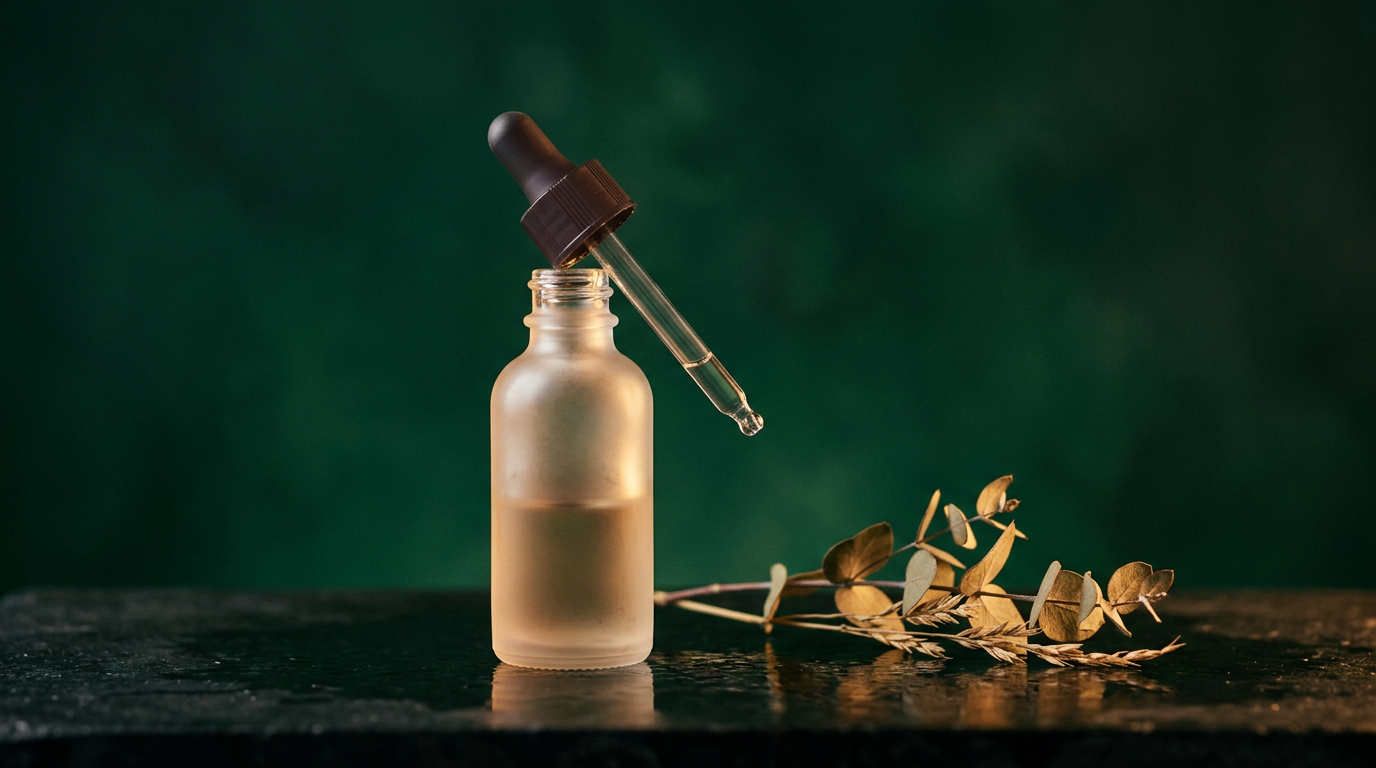
For first-time use, a 0.5% serum in a simple base is a reasonable benchmark. Apply two to three drops in the evening for one week, then switch to daily use if the skin remains comfortable. A higher concentration is only beneficial if the entire formula is well tolerated.
Morning, evening, or twice a day.
Unlike retinoids, bakuchiol is not known to require the same caution regarding light exposure. It can therefore be integrated in the morning or evening depending on the product's texture. Nevertheless, sun protection remains essential in any routine aimed at preserving skin tone uniformity and the appearance of signs of aging.
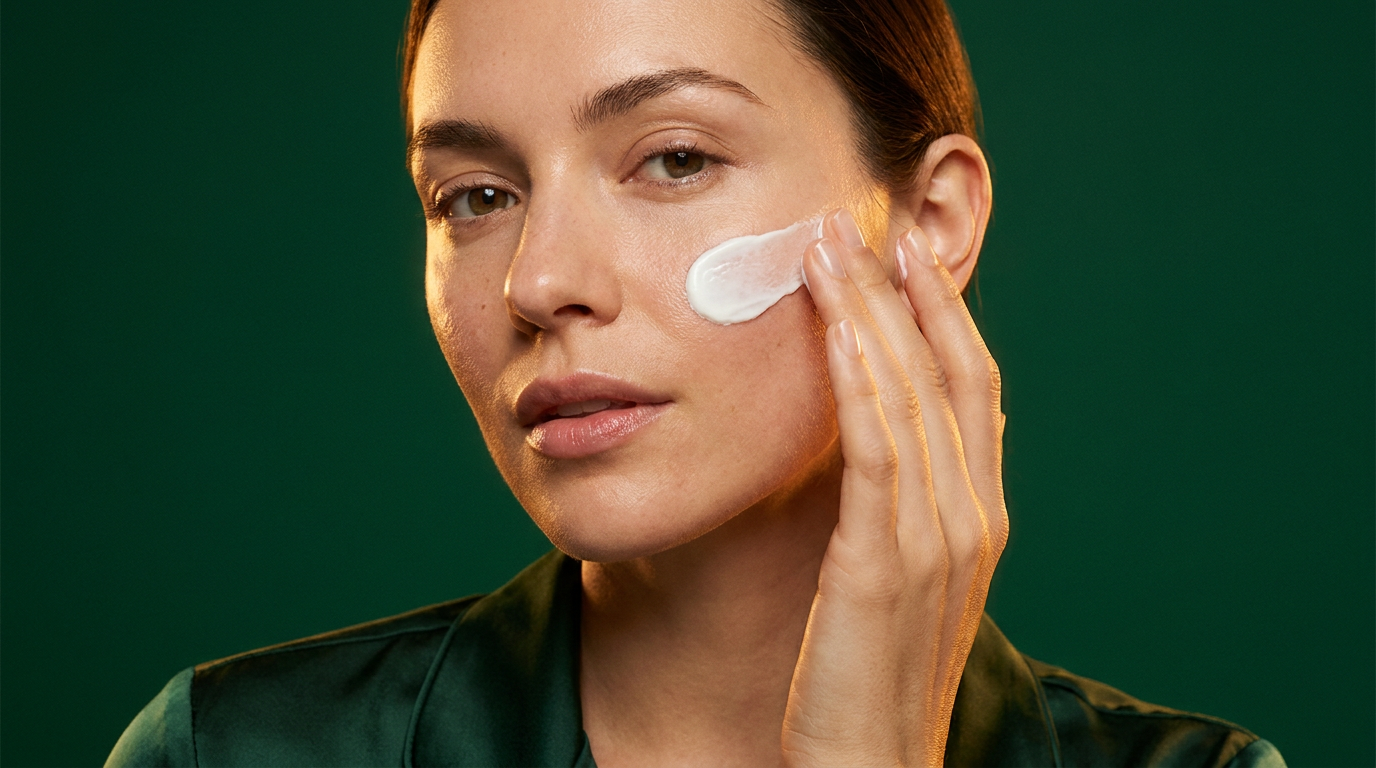
A simple routine can place the serum in the morning under a cream and SPF, or in the evening before a moisturizer. Starting once a day makes it easy to assess tolerance. Switching to two daily applications is only useful if the product allows for it and if the skin remains comfortable.
With hyaluronic acid, niacinamide, and vitamin C.
Hyaluronic acid and glycerin complement a bakuchiol serum well by providing hydration. Niacinamide can be integrated into the same routine or at another time of day. A stable vitamin C can also coexist, but sensitive skin benefits from not introducing three new active ingredients at the same time.
If you already use an AHA or BHA exfoliant, alternate days during the first few weeks. This caution is not due to a demonstrated chemical incompatibility, but to the overall load of the routine. The best active ingredient becomes useless if the skin can no longer tolerate the whole regimen.
Pregnancy: avoid shortcuts
One of the reasons for its popularity is that it is often presented as an alternative during pregnancy. This claim goes further than the available data: the absence of retinoid in the molecule does not in itself constitute proof of specific safety for pregnant women. Controlled cosmetic trials in this population are very limited.
In this context, it is safer to seek medical advice before introducing a new concentrated active ingredient. Topical retinoids are usually not recommended during pregnancy; bakuchiol should not, therefore, be automatically considered a guarantee. The nuance is important.
How long to judge if it's worth it
An improvement in suppleness related to the hydrating base can be felt in a few days, but anti-aging criteria are judged over several weeks. Twelve weeks is a consistent timeframe with the best-known comparative trial. Photograph the face at the start, then at four, eight, and twelve weeks under the same lighting.
Evaluate three things: tolerance, regularity of use, and visible change. If a serum is comfortable but shows no improvement after three months, it may be reasonable to review the formula or the active ingredient. A good sensory experience is not enough to demonstrate efficacy.
- Week 1: one application per day
- Weeks 2 to 4: same dose if well tolerated
- Photos at D0, week 4, 8, and 12
- SPF every morning
- Do not change several active ingredients simultaneously
Who I would recommend it to primarily
It seems particularly interesting for sensitive skin to retinoids, for a beginner looking for a simple anti-aging routine, or for someone who prefers a comfortable daily texture. It can also make sense when a retinol has been abandoned due to repeated peeling despite gradual introduction.
For someone who tolerates a retinoid very well and is looking for the active ingredient with the longest scientific history, a change is not necessarily needed. Bakuchiol is not automatically superior because it is plant-derived. The choice depends on the balance between evidence, comfort, and consistency.
What can disappoint after purchase
The first disappointment often comes from the expectation of a result as quick as a professional procedure. The change is gradual and can be subtle. The second comes from formulas where the name of the active ingredient is highlighted without an announced concentration, making evaluation difficult.
Another limitation is the price: some brands charge heavily for the bakuchiol trend while the formula remains simple. Compare the concentration, volume, presence of humectants, and packaging quality. An opaque pump and a legible formula are more useful criteria than spectacular vocabulary.
One must also distinguish the raw material from the whole plant. Bakuchiol is an isolated and purified compound; it is not equivalent to applying an artisanal extract of Psoralea seeds. Standardization of the raw material makes it possible to know the concentration actually incorporated into the serum.
Packaging matters because a serum is not evaluated only on the day of its manufacture. A pump limits repeated contact with fingers and simplifies daily dosing. However, actual stability depends on the entire formula, not just the bottle.
Some formulas combine bakuchiol, peptides, hyaluronic acid, and antioxidants. These can be pleasant, but they make it more difficult to attribute the result to a single active ingredient. To test bakuchiol itself, a relatively simple composition is more informative.
Oily skin types can choose a fluid or gel-cream base to avoid a too-rich sensation. Dry skin may prefer an emulsion with squalane or ceramides. The vehicle is not secondary: it often determines whether the product will be used regularly enough to be evaluated.
A highly fragranced serum is no more effective than a neutral formula. For skin that has already reacted poorly to retinol, limiting unnecessary variables is consistent. A simple formulation facilitates comparison between comfort and visible results.
The packaging also deserves attention. A pump delivers a more consistent dose than a randomly used dropper and limits contact with fingers. Stability mainly depends on the complete formula, but a well-designed bottle facilitates consistent use for twelve weeks.
Skin texture and imperfections: the other often-cited area
User feedback frequently mentions a more regular skin texture even before talking about wrinkles. This is consistent with what is expected from a renewal active, but published data primarily focus on signs of aging, and much less on imperfections.
Some studies have focused on acne-prone skin, with limited sample sizes. They do not allow affirming that it is an answer to acne, which requires medical management when it is established. The honest formulation is narrower: some people observe smoother skin and less visible post-inflammatory marks, without this result being guaranteed.
Regarding collagen production, in vitro studies show stimulation of mechanisms similar to those described for retinoids. The leap from test tube to face remains a jump, and this is precisely what distinguishes interesting data from a commercial promise.
And the sun, unlike retinol?
Bakuchiol is not described as photosensitizing, which makes it simpler to use in the morning than retinol. This is a common commercial argument, and it is founded.
It doesn't change the essential: a routine targeting wrinkles and spots without daily photoprotection works against itself. Exposure remains the primary factor in visible aging, regardless of the active ingredient used throughout the day.
In practice, this simply means you can apply it morning and evening if tolerance allows, with sunscreen over it in the morning. This flexibility of use is a real advantage over retinol, more so than a gain in efficacy.
What bakuchiol does not do
Bakuchiol is not a chemical equivalent of retinol and does not guarantee the same results for every skin. It does not erase deep wrinkles, redefine the facial contour, or replace sun protection. Its level of clinical evidence remains lower than that of retinoids.
Nevertheless, it remains a credible active ingredient when the priority is to combine an anti-aging approach with good tolerance. My verdict is therefore positive with a clear reservation: yes, it can be worth it, especially for skin that tolerates retinol poorly, provided that an identifiable concentration is chosen and the result is judged over approximately three months.


Go further than this article
Get our skincare guides by email — and start with your free skin diagnostic: 2 minutes, advice tailored to your skin. We ship to the US, UK, Canada, Australia and 27 European countries; somewhere else? Sign up and you will be the first to know when we deliver to your country.
By signing up, you agree to our privacy policy. Unsubscribe in one click.