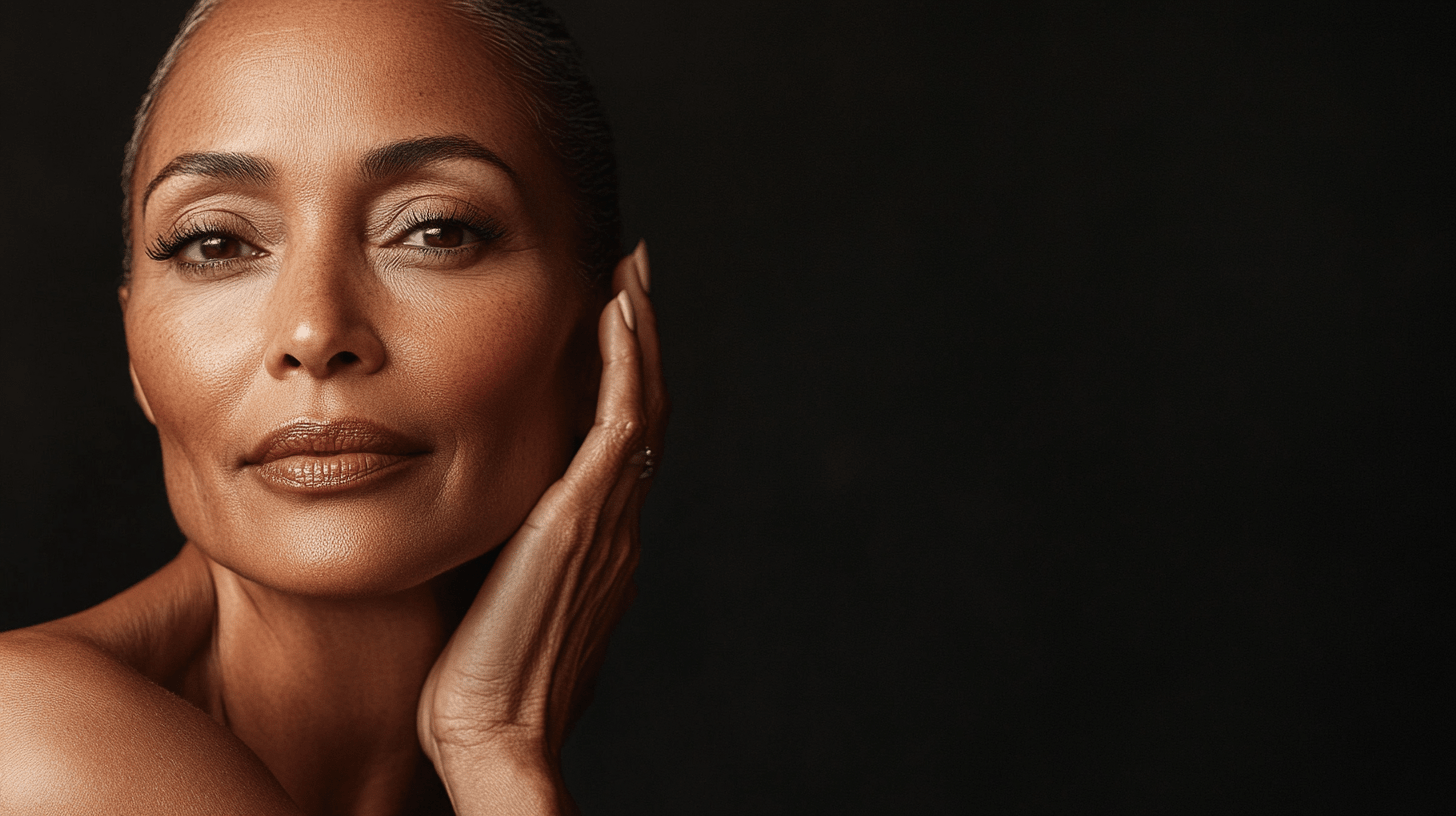
Firmness of dull mature skin: cutometry R2-R7, elasticity and anti-aging prevention protocol
Skin Firmness: What Dermatologists Really Look For
When a dermatologist talks about firmness, they don't rely solely on a subjective impression. They might use a cutometer, a device that suctions the skin under controlled vacuum and observes how it responds to this mechanical stress. The results are expressed as parameters R2, R5, and R7—three values that describe your skin's elasticity.
The R2 parameter (Ua/Uf ratio) is an overall elasticity index: it compares the total skin deformation to its ability to return to its original state. An R2 close to 1 corresponds to supple, youthful-looking skin. With age, this number tends to decrease. The R5 parameter (net elasticity) reflects the soft deformation—this is what best translates the appearance of collagen and elastin fibers. Finally, R7 describes skin fatigue: does it recover its appearance well after repeated deformation, or does it retain visible residual fatigue?
These three benchmarks paint a picture that goes beyond simple mirror observation. It is commonly observed that after 40, skin suppleness gradually changes, with a more pronounced shift during menopause. The appearance of a 60-year-old woman's skin statistically differs from that of a 40-year-old woman—given comparable sun exposure.
Understanding these benchmarks is the first step to daily skin care. Let's discover what characterizes the dermis, and how well-chosen active ingredients can support this journey.
Dermal Aging: Collagen, Elastin, and Skin Matrix
Skin firmness relies on a network of structural proteins present in the dermis. Collagen represents a large part of dermal proteins: its triple helix fibers form the framework that gives skin its tautness. Elastin, more flexible, is associated with elastic recoil after stretching—it's what we link to the skin's ability to "bounce back." Between these fibers, glycosaminoglycans (including hyaluronic acid) are known for their affinity for water and maintaining dermal space.
Chronological aging and photoaging alter the appearance of these three components through distinct but converging pathways. Dermal fibroblasts become less active with age. Simultaneously, under the effect of UV, oxidative stress, and time, the collagen network gradually thins, elastin fibers fragment, and the apparent dermal density decreases. This is a natural process that we seek to support.
Intrinsic aging follows a predictable kinetic, largely genetically determined. Photoaging, however, is largely preventable: UV-A rays reach the dermis and generate free radicals that alter the appearance of fibroblasts. This is why photoprotection remains, by far, the most useful visible radiance and firmness gesture—well before any cosmetic active ingredient.
To learn more about mature skin, explore our dedicated tag: mature and dull skin—all our resources.
Recognized Active Ingredients for Visible Firmness Support
Three families of active ingredients are frequently cited in cosmetics to support an objective of apparent firmness.
1. Retinol and its derivatives. Retinol—a cosmetic form of vitamin A—is one of the best-known active ingredients for visible radiance and firmness in cosmetics. It is used to support the firm and plump appearance of the skin and help reduce the visible appearance of fine lines. Regarding tolerance: start with 2 applications per week in the evening, gradually increase, always combine with strict sun protection the next day.
2. Vitamin C. Ascorbic acid is an active ingredient often associated with radiance and the appearance of collagen. Topically, the L-ascorbic form at 10-20% in an anhydrous vehicle or at pH < 3.5 is appreciated for its ease of use on the epidermis. It is valued for its antioxidant properties, which help protect the appearance of the skin against external aggressions and UV. Stable forms (ascorbyl glucoside, sodium ascorbyl phosphate) show better stability in formulation, for a comparable apparent result at equivalent concentration.
3. Peptides, including GHK-Cu. The glycyl-L-histidyl-L-lysine (GHK) tripeptide complexed with copper is a peptide fragment naturally present in the body, whose presence decreases with age. In cosmetics, it is appreciated for helping to preserve the firm and plump appearance of the skin. Peptides of this type are used as active skincare ingredients to support the smooth and toned appearance of the skin. Among the best known: Palmitoyl Pentapeptide-4 (Matrixyl®), renowned in formulation for helping to reduce the visible appearance of fine lines.
Also consult our complete guide on anti-aging and firmness active ingredients to delve deeper into these topics.
Prickly Pear Seed Oil: A Concentrate of Natural Firming Actives
Among vegetable oils, prickly pear seed oil (Opuntia ficus-indica seed oil) holds a special place in firmness routines. Extracted by cold pressing from the seeds of the nopal cactus, it is extraordinarily rich in linoleic acid (omega-6, 60-65%), oleic acid (omega-9, 18-20%), and especially tocopherols—natural vitamin E at one of the highest concentrations in the plant kingdom (900 to 1200 mg/kg according to analytical sources).
This composition gives the oil a triple benefit relevant for apparent firmness:
- Antioxidant benefit: tocopherols help protect the skin from free radicals generated by UV and environmental stress, contributing to the preservation of fibroblast appearance.
- Skin barrier support: linoleic acid is an essential fatty acid valued for the comfort of the lipid barrier. A preserved barrier helps limit the sensation of tightness and maintain dermal comfort—a condition for visibly beautiful suppleness.
- Soothing properties: the oil is known to help soothe the appearance of reactive skin and provide a lasting, comfortable sensation, pleasant on skin prone to daily discomforts.
Our fragrance-free soothing moisturizer incorporates this oil into a formula specifically designed for mature and sensitive skin—no synthetic fragrance, no denatured alcohol, respectful of compromised barriers.
Practical Protocol: Hydration, Soothing, and Firmness Prevention
A pleasant firmness routine relies on a precise sequencing logic. The order of application aids the comfort of the active ingredients and the integrity of the final barrier.
Morning (protection + antioxidants):
- Gentle cleansing with lukewarm water—never hot (heat can cause a sensation of discomfort and weaken the barrier).
- Vitamin C serum (L-ascorbic 10-15% or stable form) on slightly damp skin—optimal comfort at acidic pH.
- Soothing moisturizing cream with prickly pear seed oil—light finish, lipid comfort.
- SPF 30 minimum as the final layer—a non-negotiable step in any serious visible radiance and firmness routine.
Evening (care + comfort):
- Double cleansing if wearing mineral SPF (oil cleanser then gentle gel).
- Retinol (2x/week for the first 4 weeks, then gradually increase)—apply to dry skin 20 minutes after cleansing.
- Peptide serum (on non-retinol nights)—peptides and GHK-Cu are used alternately.
- Nourishing cream with prickly pear seed oil in a generous layer—provides comfort and prepares the skin for the night.
This complete routine is part of a global soothing and barrier routine. For a personalized analysis of your specific needs, our intelligent skin diagnostic guides you to the most suitable active ingredients for your skin profile.
Mistakes to Avoid to Preserve Skin Firmness
Even with the best active ingredients, certain behaviors limit the expected benefits—or worse, accentuate the visible loss of firmness.
Mistake 1: Layering retinol and exfoliating acids on the same night. Combining retinol + AHA/BHA in the same application creates a real risk of skin discomfort. The weakened barrier loses its suppleness and can cause a sensation of irritation that alters the appearance of the skin. Alternate strictly: retinol one night, exfoliant another night, with at least 2 "rest" nights weekly.
Mistake 2: Neglecting sun protection on retinol days. Retinol can make the skin more sensitive to the sun—it increases the skin's sensitivity to UV-A and UV-B. Going out without SPF after a night of retinol is exposing the skin exactly where you are trying to preserve its firm appearance.
Mistake 3: Using water that is too hard or too hot for cleansing. Very hard water raises skin pH and can disturb barrier comfort. Hot water dissolves surface lipids and can cause a sensation of tightness after washing. Use lukewarm water and rinse briefly.
Mistake 4: Waiting for the first signs to act. Firmness prevention starts early, well before changes are visible. Dermal comfort is preserved in the 35-45 decade: this is where active ingredients offer the best pleasure/appearance benefit ratio, because the skin is still very receptive.
Mistake 5: Choosing fragranced formulas for mature skin. Synthetic fragrances can be a source of contact sensitization and discomfort. On skin whose barrier is already weakened by age, repeated reactions can alter the appearance of the skin. Systematically opt for formulas without added fragrance.
Mistake 6: Confusing volume and firmness. A very occlusive treatment can temporarily "plump" the skin through surface hydration, giving the illusion of better firmness. But without active ingredients (retinol, peptides, vitamin C), the effect remains superficial. Check the INCI list: structural active ingredients must appear in the first 10 to 15 ingredients.
For an overview of firmness and anti-aging prevention, find all our articles grouped by theme.
Long-Term Prevention: When to Start and How to Track Progress
The question of when to start comes up often. The answer is clear: firmness prevention begins before the first visible signs. We observe that apparent dermal density gradually changes from the age of thirty, but remains discreet to the naked eye until 40-45 years old. The 30-40 age range is therefore a good window to adopt good habits.
To objectively track progress, several complementary approaches exist:
- Cutometry: initial R2/R5/R7 benchmark then control at 6 months—available in equipped aesthetic dermatology practices.
- High-frequency ultrasound (20-25 MHz): observation of dermal thickness and appearance, reflecting apparent density.
- Standardized photographic self-assessment: same angle, same grazing light, same time of morning (skin appears firmer in the morning). Photograph at D0, D90, D180.
From a nutritional perspective, the appearance of collagen is often associated with a good intake of vitamin C and glycine (an amino acid abundant in collagen). Sufficient protein intake (1.2 to 1.6 g/kg/day) and vitamin C (75-90 mg/day) provide a favorable environment for skin comfort, in addition to topical care.
Discover our complete selection in the preserving skin youth collection—formulas designed to support each stage of this preventive strategy.
Collagen production slows down from the age of twenty-five, long before the signs of aging become visible. Starting an adapted skincare routine early takes less effort than trying to catch up later.
Tracking progress is done with photos, not by feeling: same light, same angle, every two months. Skin elasticity and the appearance of wrinkles and fine lines evolve too slowly for us to judge from memory, and the eye contour is the area where change is seen first.
FAQ — Skin Firmness: Your Questions, Our Answers
At what age does the loss of skin firmness truly begin?
Changes in appearance begin subtly around the age of thirty, but remain discreet until 40-45 years old. The evolution of cutometric benchmarks R2 and R5 becomes observable around age 35. This is why prevention (low-dose retinol, topical vitamin C) is appreciated well before the appearance of the first visible signs.
What is cutometric R2 and how is it interpreted?
R2 is the ratio between the maximum deformation of the skin under suction and its return. An R2 = 1 corresponds to perfectly elastic appearance (complete return). In young adults (20-30 years old), R2 is generally between 0.80 and 0.95. It gradually decreases: to around 0.65-0.75 at 50, 0.55-0.65 at 60 depending on cumulative sun exposure and phototype.
Does retinol work on the appearance of mature skin?
Retinol is appreciated for helping to preserve the firm and plump appearance of the skin and reducing the visible appearance of fine lines. At 0.3-0.5% used over several months, it is one of the most documented active ingredients for visible radiance and firmness in cosmetics. It is a treatment that supports the appearance of the skin over time, to be used with rigorous sun protection.
Is prickly pear seed oil suitable for oily skin?
Yes. Its richness in linoleic acid (60-65%) paradoxically makes it an oil appreciated by oily-prone skin. Oily skin often has a richer oleic acid profile—prickly pear seed oil provides a complementary linoleic acid that helps mattify the appearance of shiny areas, without a greasy effect, provided it is applied in a thin layer on clean skin.
Can peptides and retinol be combined in the same routine?
Yes, but not in the same application. Retinol at an alkaline pH may not combine as well with certain peptides. The preferred strategy: retinol 2 to 3 evenings a week, peptides (Matrixyl, GHK-Cu) on other evenings. This alternation avoids interference and allows you to benefit from both types of treatment—vitamin A active and peptide actives—to support the firm and smooth appearance of the skin.
How long does it take to see results with a firmness protocol?
The first noticeable effects (improved apparent bounce, more even complexion) generally appear in 6 to 8 weeks. More pronounced changes in appearance often require 12 to 24 weeks of a regular routine. The golden rule: evaluate at 3 months then at 6 months, not before—the appearance of the skin is appreciated over time.
Are "collagen" food supplements useful in conjunction with a topical treatment?
Oral collagen peptides (marine or bovine collagen, 5-10 g/day) are increasingly popular. Many users appreciate their complementarity with a topical routine: they support the appearance of the skin from within, where topical active ingredients act from without. The approach is complementary—and not substitutable—to topical treatment.
How to choose your SPF to optimize anti-aging and firmness prevention?
A broad-spectrum SPF 30 to 50 (UV-A + UV-B), applied in sufficient quantity (2 mg/cm²) every morning, is the most appreciated preventive measure to preserve the skin's appearance. For mature skin, mineral filters (zinc oxide, titanium dioxide) are often better tolerated. It should be applied as the final layer of your morning skincare routine, after serum and moisturizer.
Conclusion
Skin firmness is judged by its suppleness and ability to rebound. Supporting it with targeted active ingredients, hydration, and sun protection helps preserve the appearance of mature and dull skin. Acting early makes a difference. Firm-looking skin remains smooth, toned, and visibly younger.
Why choose Nopal Life to support the appearance of mature skin
Taking care of the appearance of skin as we age involves active ingredients appreciated in skincare cosmetics. Nopal Life prickly pear oil, rich in essential omega-6 and omega-9 fatty acids, vitamin E, and plant sterols, contributes to the suppleness and comfort of the skin's film. It helps preserve the firm and plump appearance of the skin, reduces the look of dehydration lines, and supports the comfort of the epidermal barrier for a visible smoothing effect from the first few weeks.
Combine it with our night cream and serum for a complete, day and night synergy. Your skin regains a firm appearance, radiance, and lasting comfort. Discover the Nopal Life formulation designed for your skin profile with our free Skin Intelligence diagnosis.
RECOMMENDED TREATMENT
Soothing & Barrier Routine
Natural formula · Origin Algeria
DISCOVER THIS TREATMENT →This content is informative and educational; it does not replace medical advice, diagnosis, or dermatological consultation. In case of doubt or persistent skin problems, consult a qualified healthcare professional.


Go further than this article
Get our skincare guides by email — and start with your free skin diagnostic: 2 minutes, advice tailored to your skin. We ship to the US, UK, Canada, Australia and 27 European countries; somewhere else? Sign up and you will be the first to know when we deliver to your country.
By signing up, you agree to our privacy policy. Unsubscribe in one click.