Dull skin: the firming and anti-aging prevention routine
Firmness that evolves, radiance that becomes discreet: mature skin has its own needs, and they must be respected. This guide on Dull Skin provides you with the keys to an effective routine, in the spirit of NOPAL LIFE — natural, sensory, demanding.
Dull skin in mature women: understanding how the complexion dulls
Dull skin in mature women is one of the most frequently expressed cosmetic concerns after the age of 45. This dullness is not a simple surface defect — it accompanies natural changes in the skin that affect its appearance, luminosity, complexion uniformity, and the comfort of the skin barrier.
The first and most visible factor is the slower rate of natural skin renewal with age. On the surface, cells in the stratum corneum accumulate and renew less quickly, which can result in a thicker and more irregular skin texture, and a complexion that appears grayer and more opaque, reflecting light less effectively.
The appearance of the complexion also evolves with age. The rosy coloration and vibrant appearance characteristic of young skin tend to fade, giving way to a complexion that may appear duller and grayish, lacking the luminous radiance of younger skin.
Complexion uniformity also contributes to the impression of radiance. Sun exposure accumulated over decades can lead to areas where the complexion appears more pronounced coexisting with duller areas. This uneven complexion, with visible localized spots alternating with less luminous areas, is a visual signature of skin exposed to the sun over the years.
Ingredients renowned for helping to revive radiance in mature skin
Helping to revive radiance in mature skin involves ingredients that act on the skin's appearance at several levels: supporting natural skin renewal, helping to maintain a firm and plump appearance, providing antioxidant protection, and helping to unify the appearance of the complexion.
Dullness in mature skin is primarily a matter of the natural skin renewal rate, rather than an intrinsic skin quality issue. Ingredients that support this renewal help to revive radiance by promoting the appearance of fresher, better-structured skin on the surface.
Retinol remains the benchmark active ingredient for supporting the natural renewal of mature skin. It is known for helping to maintain a firm and plump appearance, as well as reducing the visible appearance of fine lines. Its effects on dull complexion are among the most well-known in cosmetology.
Vitamin C (ascorbic and derivatives) is the second major active ingredient when seeking to revive radiance. It is known for helping to reduce the visible appearance of spots, maintain the skin's firm and plump appearance (by improving texture and firmness), and for its antioxidant role which helps preserve skin radiance. Its combination with retinol (morning vitamin C + evening retinol) is one of the most popular routines in cosmetology.
Daily SPF 30 sun protection is an essential step: by limiting the visible effects of the sun over time, it helps preserve the skin's radiance and appearance. This is not only a preventive measure but also a true ally for the complexion, as by limiting daily aggressions, it allows the skin's natural radiance to express itself.
Practical protocol to revive radiance in mature skin
An anti-dullness routine for mature skin is built around three pillars: strict UV protection, support for natural skin renewal, and generous nutrition to help maintain skin suppleness and comfort.
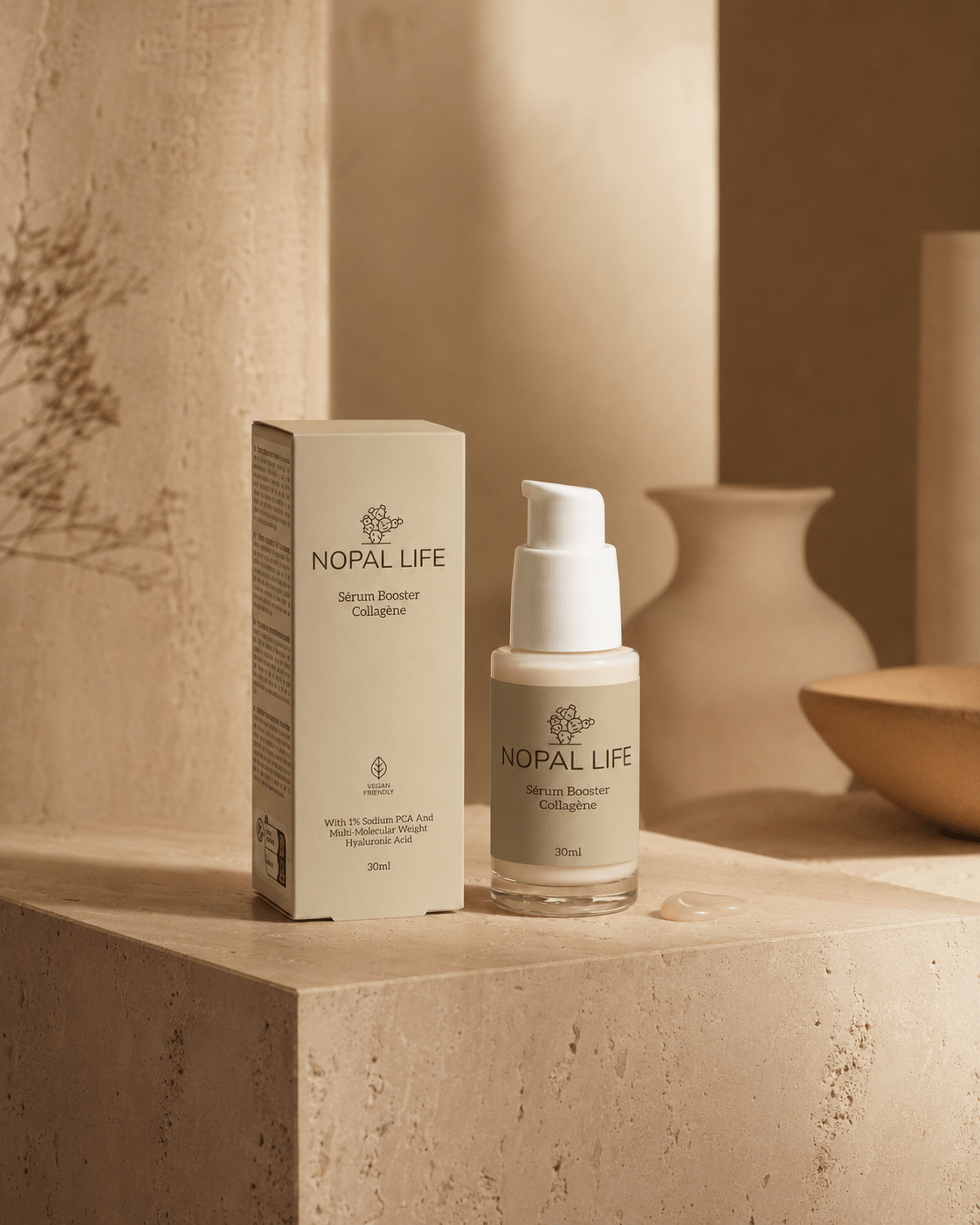
Morning: Gentle cleansing with an acidic pH. Stabilized vitamin C serum (ascorbyl glucoside 5-10% or ascorbic acid 10-15% for tolerant skin) for radiance, antioxidation, and a firm, plump appearance. Moisturizer with hyaluronic acid and peptides. SPF 30-50+ — the most important step in the entire routine. For dull mature skin, tinted illuminators in sunscreen (pearl pigments, zinc, mica) can amplify the immediate glow effect.
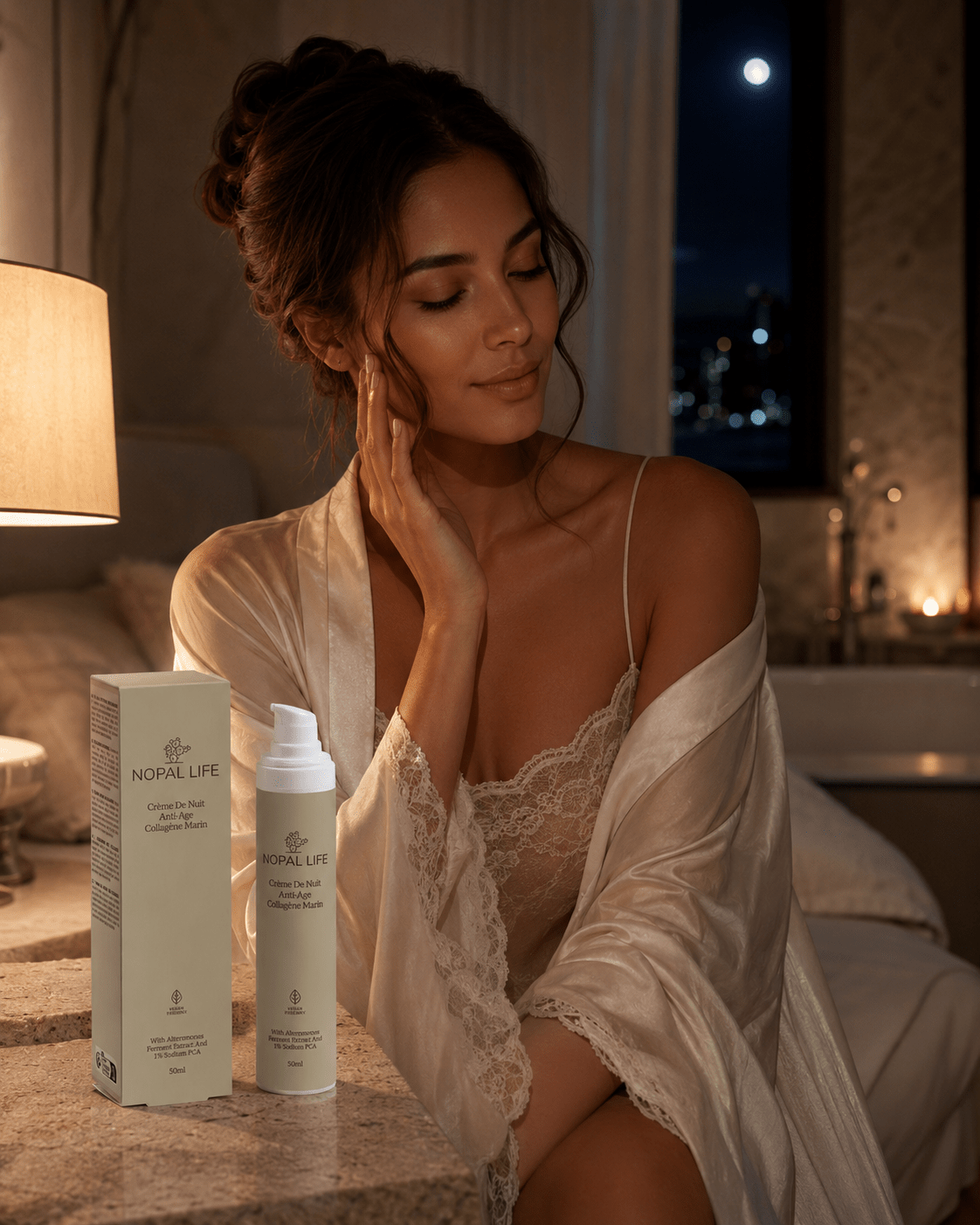
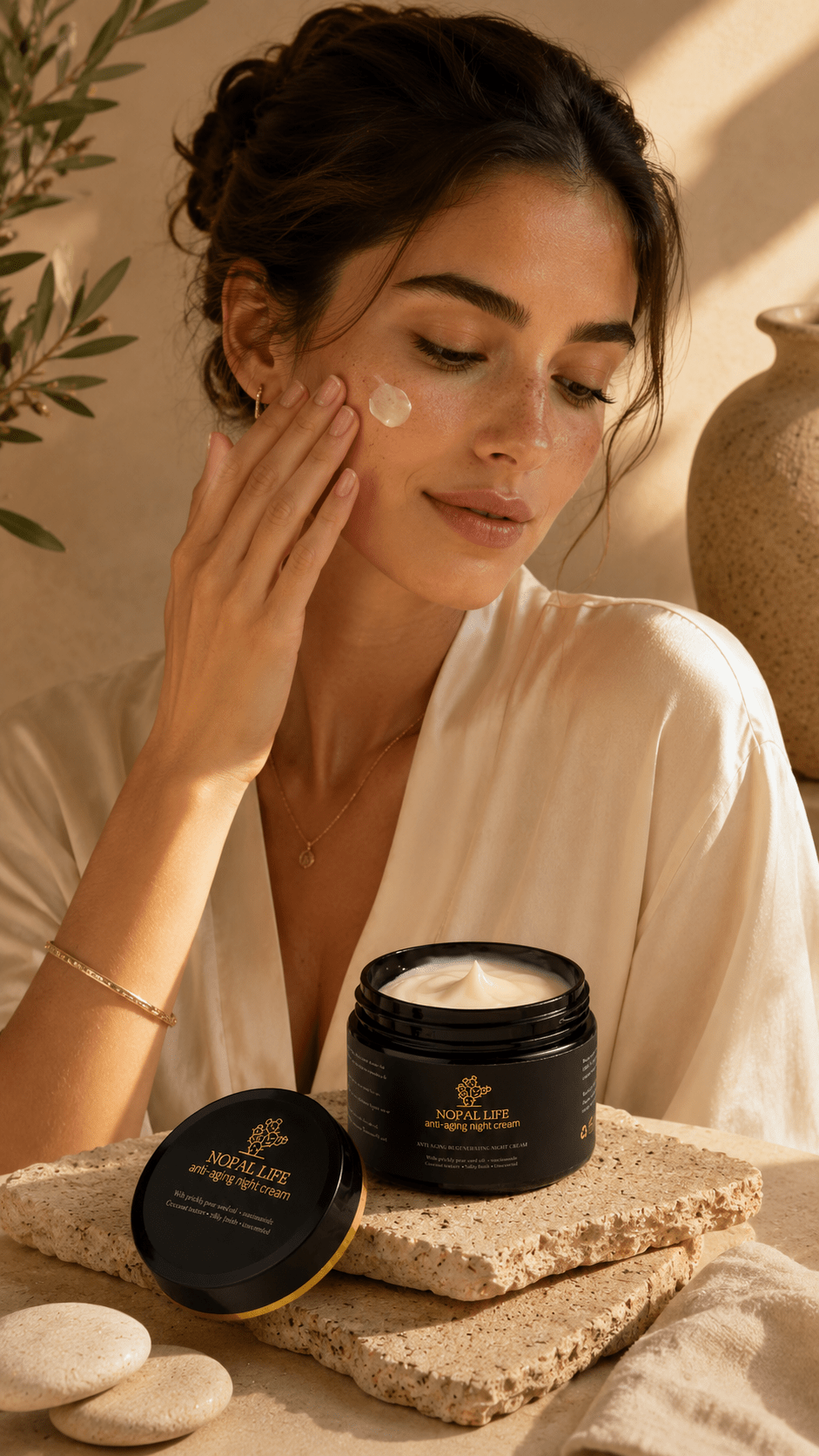
Evening: Thorough double cleansing. 3 times a week: chemical AHA exfoliant (glycolic acid 8-10% for tolerant skin, lactic acid 5-8% for more sensitive skin). Other evenings: retinol or retinaldehyde (start at 0.025%, gradually increase over 3-6 months). Night cream enriched with peptides and ceramides. Prickly pear seed oil as a final treatment.
Weekly treatment: Radiance mask with vitamin C, turmeric, or glycolic acid once a week for an extra boost of radiance and a luminous impression. The next morning, the complexion appears visibly improved.
Internal supplements: Lysine, proline, glycine, and vitamin C support skin comfort and appearance. Oral hydrolyzed collagen peptides (2.5-10 g/day) are beneficial as a complement to a cosmetic routine for mature skin to support skin suppleness and comfort.
Mistakes to avoid with dull mature skin
Dull mature skin is often subjected to skincare mistakes that, instead of reviving radiance, dull the skin's appearance or cause lasting discomfort.
Using aggressive physical exfoliants: Scrubs with sugar, salt, or crushed kernel grains can irritate mature skin, whose barrier is more fragile and renewal is slower. This aggression can lead to discomfort and dull the skin's appearance. Always replace with gentle chemical exfoliants.
Skipping the sun protection step: This is the most damaging mistake for the appearance of dull mature skin. Without daily SPF, all active ingredients in the routine — retinol, vitamin C, AHAs — lose much of their effectiveness, as the visible effects of the sun on radiance and complexion uniformity continue to accumulate at the same rate.
Using formulas that are too light for fear of weighing down the skin: For mature skin, light gel or water textures do not provide enough nourishment. Switching to richer formulas (emulsions, oil-serums, nourishing creams) does not make the skin thicker — it provides the lipids it needs to remain supple and comfortable.
Giving up too soon: The natural renewal of mature skin takes time. A new active ingredient routine cannot show its full benefit in less than 8 to 12 weeks. Changing products every month is counterproductive — you need to give the skin time to appreciate the visible result.
Ignoring the neck and décolleté: These areas reveal age as much as the face, sometimes more so. Systematically including them in the routine (exfoliation, retinol, SPF) is as important as facial care itself.
The first mistake is to over-exfoliate to remove dead cells. For mature skin, once a week is enough; beyond that, you weaken a surface that already regenerates more slowly.
The second is to ignore lifestyle. Lack of sleep shows on the complexion and around the eyes before it shows elsewhere, and no cream can compensate for three short nights. Fatigue is the primary factor for a dull complexion in women over fifty.
Radiance and visible firmness approach according to mature skin profile
After 45-50 years of age, mature skin exhibits varied profiles that require adaptation of active ingredients and textures for optimal results.
Dry and dull mature skin: Prioritize rich textures (nourishing cream, vegetable oils), barrier-enhancing actives (ceramides, squalane), and emollients. Exfoliation should remain gentle (lactic acid preferred) to avoid accentuating the feeling of tightness. Retinaldehyde or retinol esters are preferable to pure retinol for very dry skin.
Combination and dull mature skin: Adopt a two-zone routine: T-zone with lighter textures, actives that help mattify the appearance of shiny areas, and more regular exfoliation; side areas with nourishing textures and barrier actives. Prickly pear seed oil is particularly well-suited to this profile due to its richness in non-comedogenic linoleic acid.
Sensitive and dull mature skin: Avoid high-concentration AHAs and unencapsulated retinoids. Use gentle derivatives: lactic acid 5%, bakuchiol (a gentle plant alternative to retinol), stabilized vitamin C derivatives. Niacinamide 4-5% is the essential base active ingredient for this profile.
Daily SPF 30 sun protection is, for dull mature skin, a true ally of radiance: by limiting the visible effects of the sun over time, it helps the skin maintain its luminous and even appearance, without being constantly thwarted by external aggressions.
Nopal Life's answer for dull mature skin
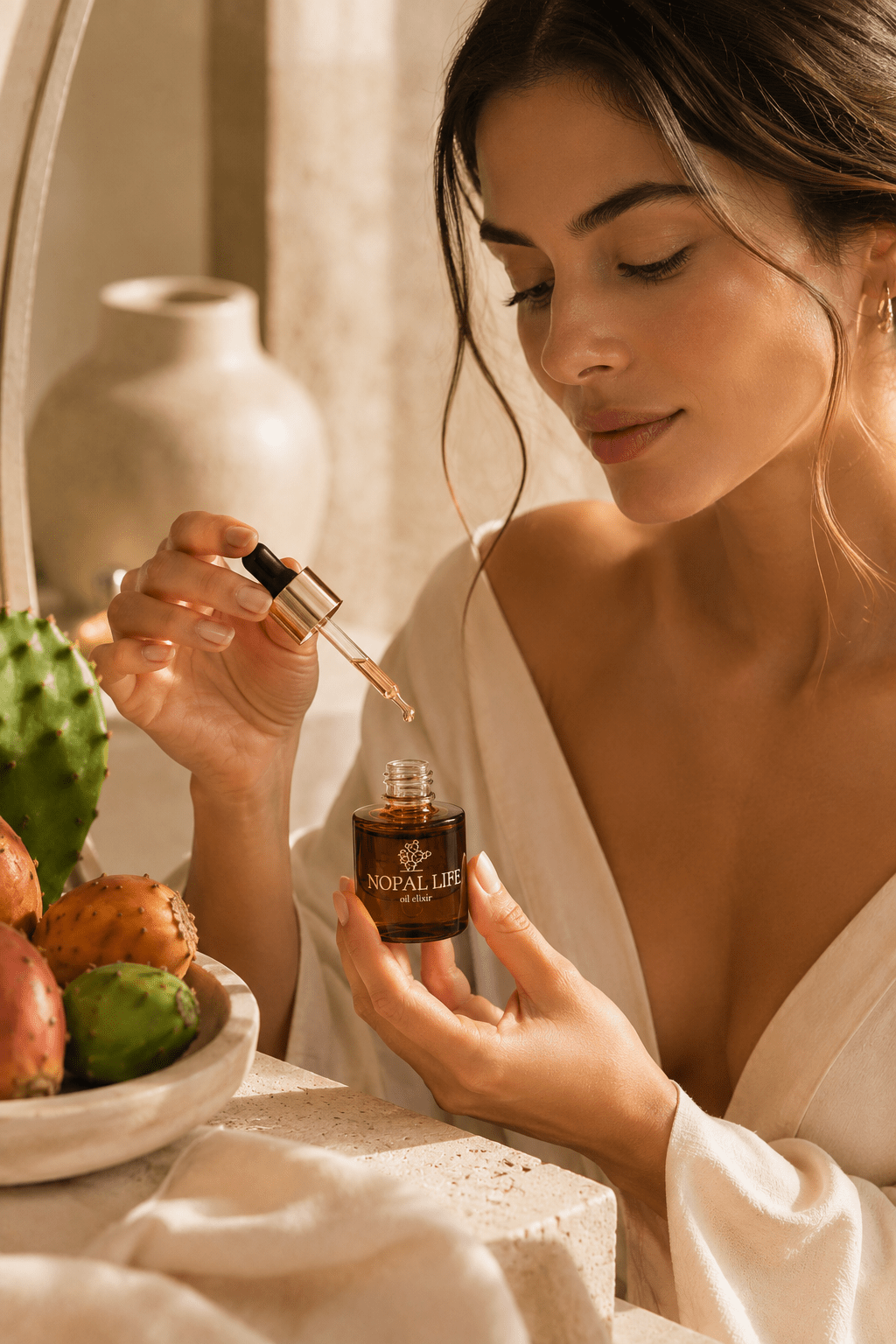
Nopal Life's Pure Prickly Pear Seed Oil is the benchmark Nopal Life treatment to support dull mature skin in its quest for renewed luminosity. Its pure formulation and exceptional biochemical profile make it an essential basic active ingredient in any anti-dullness routine for mature skin.
Its unparalleled richness in natural vitamin E (alpha, beta, gamma, delta tocopherols and tocotrienols) gives it one of the highest antioxidant powers among vegetable oils used in cosmetology. This antioxidant protection is directly relevant for dull mature skin: it helps preserve the skin's radiance and appearance against daily aggressions (sun, pollution), factors that can dull the skin's ability to reflect light evenly.
Its lipid profile, rich in linoleic acid (60-65%), helps maintain skin comfort and surface hydration — hydration that directly determines its translucent and luminous appearance. Well-hydrated skin reflects light differently from dry skin: the difference is directly visible in the radiance of the complexion.
As a night treatment, Nopal Life's prickly pear seed oil supports renewing active ingredients (retinol, AHA) by providing the lipids that help preserve barrier comfort during the exfoliation phase. It thus supports the natural renewal of the skin during the night — a gesture that helps sustainably revive radiance in mature skin.
Frequently Asked Questions
Q: Why is my skin duller in winter than in summer?
A: In winter, the cold, indoor heating that dries the air and dehydrates the skin, and the lack of sunlight contribute to a duller complexion. All of this converges to give the skin a less luminous appearance and a slower natural renewal.
Q: At what age does the complexion really become visibly dull?
A: The change is gradual from 25-30 years but becomes clearly visible around 40-45 years. It is at this age that slower natural renewal visually translates into a perceptible accumulation of cells on the surface and a noticeable dulling of the complexion.
Q: Can topical vitamin C really provide radiance in a few days?
A: Vitamin C has a partial immediate radiance effect linked to its antioxidant role on the surface and helps reduce the visible appearance of superficial spots. A visible effect on the general complexion is noticeable within 2-4 weeks of regular use. The effect on a firm and plump appearance appears within 8-12 weeks.
Q: Is it too late to revive the radiance of dull skin after 60?
A: No. Skin remains receptive to cosmetic care at any age. Retinol, vitamin C, and AHAs are appreciated for helping to improve the appearance of texture and radiance, including on mature skin. Regularity and consistency of the routine are the primary factors for success, regardless of age.
Q: Can nutrition support the radiance of mature skin?
A: Significantly. Dietary antioxidants (polyphenols, carotenoids, vitamins C and E) support skin comfort against daily stress. Omega-3s help maintain skin suppleness and comfort. Zinc supports the appearance of clear skin. A Mediterranean diet rich in vegetables, fruits, fatty fish, and olive oil is a great daily ally for mature skin.
Q: How do I know if my dull skin is due to aging or another factor?
A: Dull skin associated with aging develops gradually over years and is accompanied by other signs of maturation (fine lines, visible loss of firmness).
RECOMMENDED TREATMENT
Pure Prickly Pear Seed Oil
Natural formula · Origin Algeria
DISCOVER THIS TREATMENT →PERSONALIZED ROUTINE
Nopal Life Skin Intelligence™
Free diagnostic · 2 minutes
DISCOVER MY ROUTINE →Read more
Information provided for cosmetic and educational purposes; it does not constitute medical advice.
Our anti-aging treatments