Green tea extract: Nopal Life complete guide
Green tea extract is one of the most popular active ingredients in natural cosmetics. Rich in catechins, polyphenols, and vitamin E, it now holds a prominent place in high-end antioxidant skincare — and this is no coincidence. Cosmetic formulators have been interested in it for over two decades, highlighting its ability to help maintain skin radiance against external aggressors and support the skin's firm and plump appearance over time.
At Nopal Life, the approach is clear: highlight the most popular natural active ingredients and combine them with the star of our formulation, prickly pear seed oil (Opuntia ficus-indica) — exceptionally rich in linoleic acid (48.4% in our 2026 batch) and tocopherols. This combination creates a rare antioxidant synergy, capable of supporting the skin's daily needs: radiance, comfort, vitality.
In this comprehensive guide, you will discover what is known about green tea extract applied to the skin, how to adapt it to your skin type, which routine to incorporate into your daily life, which natural active ingredients ideally accompany it, and the mistakes to avoid. At the end of the article, a personal diagnostic tool will allow you to refine your protocol according to your exact skin profile.
Understanding green tea extract and its benefits for the skin
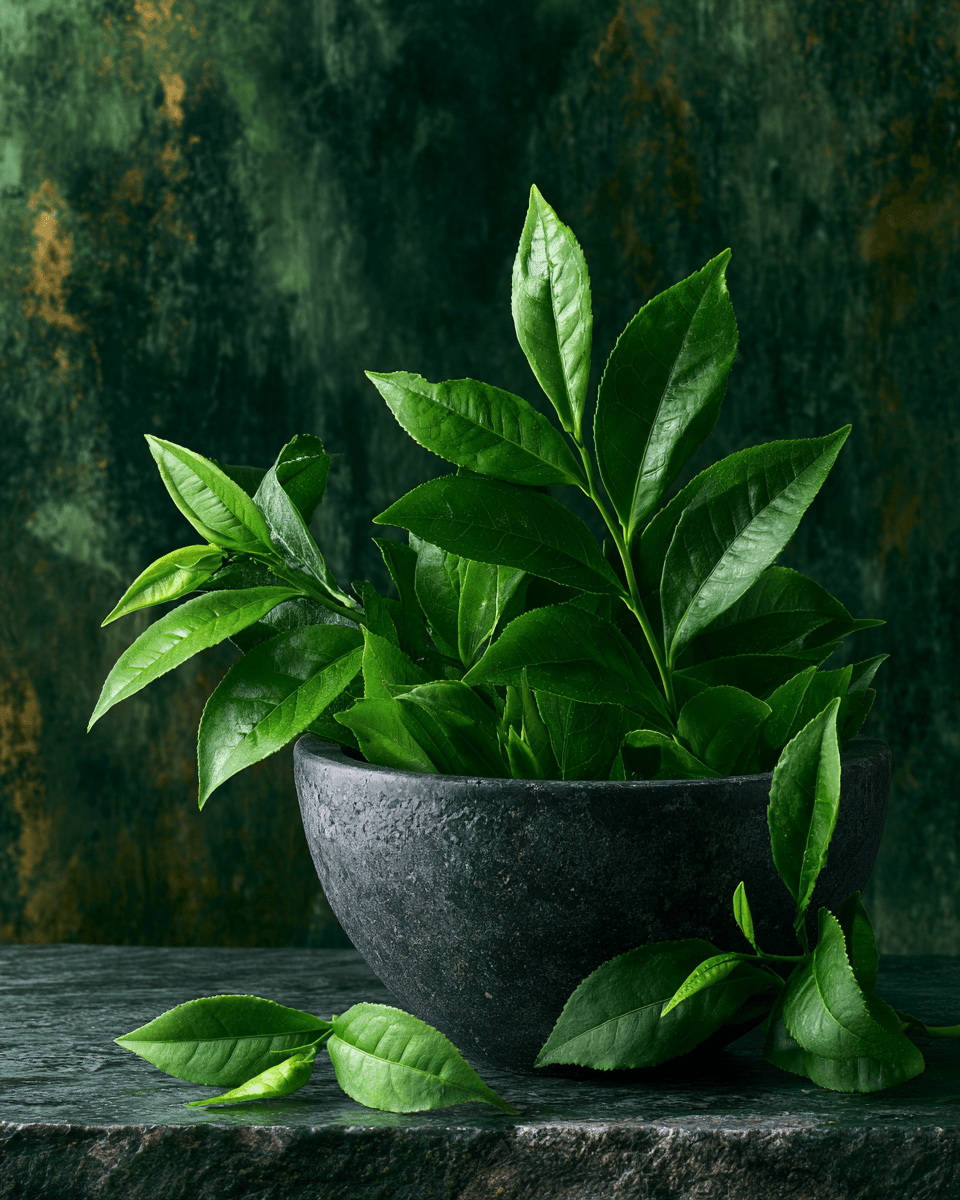
Green tea is derived from the botanical plant Camellia sinensis, whose leaves are harvested and dried without fermentation to preserve their richness in active compounds. Its concentrated extract, used in cosmetics, mainly contains catechins — including epigallocatechin-3-gallate (EGCG), often referred to as the most studied molecule in this field.
Catechins belong to the polyphenol family, molecules recognized for their antioxidant properties. Free radicals are naturally produced by the body, but their excess — linked to UV exposure, pollution, stress, or natural aging — can accentuate visible signs of skin fatigue.
The topical application of green tea extracts is valued for helping to protect the skin against the impact of daily external aggressions. EGCG, in particular, is one of the most valued polyphenols in antioxidant skincare aimed at supporting the skin's firm and plump appearance.
Green tea extract also contains caffeine, known for its toning effect when applied topically, as well as vitamin B2 (riboflavin) and minerals (zinc, manganese) often associated with skin comfort. Its tannin content gives it mild astringent properties, useful for combination or oily skin types.
Green tea polyphenols are often included in routines designed to help the skin cope better with daily sun exposure and pollution. This use falls within the realm of preventive cosmetology: green tea extract is by no means a substitute for sunscreen, but it can be a valuable addition to a daily protective routine.
What makes this active ingredient particularly interesting for a brand like Nopal Life is its compatibility with noble vegetable oils. Combined with prickly pear oil — whose essential fatty acid composition (omega 6 and 9) is recognized for its affinity with the skin's lipid film — it contributes to a holistic approach to antioxidant care: antioxidant radiance and lasting comfort.
Green tea leaves vary in quality depending on the harvest time. The first shoots of spring, being more tender, have a different composition than those harvested at the end of the season, and this difference is reflected in the extract obtained. Serious research therefore specifies the origin and period.
The assigned function of these compounds in formulation is twofold: a specific action, and a preservative role that protects other ingredients from oxidation. The latter is often the most critical for product shelf life, yet it is never highlighted on the packaging.
It is important to separate the domains. Studies on the beverage, its consumption, and its indications fall under nutrition and medical advice; this page exclusively deals with what is applied to the skin.
Green tea extract according to your skin type
Not all skin types react the same way to an active ingredient, even a natural one. Before integrating green tea extract into your routine, it's essential to understand how it adapts to your skin profile.
Dry and mature skin
This profile benefits most from formulations enriched with green tea extract combined with nourishing active ingredients. Dry, mature skin often lacks lipids and gradually sees its appearance relax. Green tea extract, combined with prickly pear oil and vitamin C, can help maintain radiance and support the visible vitality of the complexion. Our dedicated articles guide you step-by-step: discover the complete routine for dry and mature skin and deepen each step with our MOFU dry skin and green tea guide.
Combination skin with oily tendency
The natural tannins in green tea extract give it a light astringent action, which can help mattify the appearance of shiny areas in the T-zone without drying out dry areas. It is well suited for light treatments, such as serum or gel, applied before a light cream. Its antioxidant benefits remain appreciable regardless of skin type.
Sensitive or reactive skin
In reasonable concentrations and in a well-balanced formulation, green tea extract is generally well tolerated by sensitive skin. Its soothing properties linked to polyphenols make it an interesting ally — provided that the product does not contain other potentially irritating components. A preliminary patch test is still recommended.
Normal or combination skin
All the benefits of green tea extract are accessible for this profile: radiance, antioxidant comfort, lightness. This is often the profile for which progression to a complete antioxidant routine is the most fluid. Our guide for normal skin and green tea details the most popular active ingredient combinations.
Refine your diagnosis
Every skin is unique. The categories above are benchmarks, not absolutes. For a truly personalized recommendation — skin type, sensitivities, skincare goals — our Skin Intelligence™ diagnostic tool analyzes your complete skin profile in minutes. It will tell you precisely what concentration, texture, and combination of active ingredients are suitable for your skin.
The titration changes everything and rarely appears on the packaging. A standardized extract indicates a percentage — 50%, 90% of total polyphenols — and it is this figure, not the name of the plant, that allows two products to be compared. Without it, the mention says nothing about the amount actually present.
Stability poses the second difficulty. These molecules oxidize in light and in an alkaline environment; a poorly protected formula browns in a few weeks, and this color change signals precisely the loss of what was purchased. Hence the frequent use of an opaque bottle and a slightly acidic pH.
Available studies almost all focus on high concentrations applied under controlled conditions. Their transposition to a commercial product requires caution, and drinking an infusion obviously does not produce the same local effect as an application. These are two distinct subjects, often conflated in marketing arguments.
Recommended routine: the Nopal Life protocol with green tea extract
Integrating green tea extract into your daily routine is simpler than it seems. The key is to respect the order of application of active ingredients to maximize their synergy and avoid any competition between molecules.
Morning: protection and radiance
In the morning, the priority is twofold: to protect the skin from external aggressions (UV, pollution) and to brighten the complexion. The recommended protocol begins with gentle cleansing with lukewarm water, followed by a toning lotion to prepare the skin to receive the active ingredients.
Then comes the key step: the application of the Vitamin C Serum — Radiance & Skin Spots. This serum combines stabilized vitamin C — known to help even out the complexion — with complementary antioxidant active ingredients. Applied in 2 to 3 pumps to the face and neck, it is gently patted with fingertips to ensure good distribution. Allow 60 seconds before the next step.
Secondly, if your skin is dry or mature, enrich the treatment with one to two drops of prickly pear oil, pure or integrated into your day cream. Finish with your SPF sunscreen — non-negotiable, in all seasons.
Evening: comfort and antioxidant support
In the evening, the skin benefits from its resting time. This is the ideal moment for more nourishing, long-acting active ingredients. After makeup removal and cleansing, apply the Ginkgo Gel Booster — Antioxidant & Radiance. This gel booster, formulated around Ginkgo biloba and antioxidant active ingredients, can help the skin maintain its radiance against the cumulative effects of external aggressions accumulated during the day.
Its gel texture allows for light application, ideal as a first layer on normal to combination skin. For dry or mature skin, layer an oil or a rich cream after complete absorption (about 3 minutes).
Frequency and precautions
- Morning and evening, 7 days a week for a regular antioxidant protocol
- Consistency takes precedence over intensity: a light daily treatment outperforms an intensive weekly treatment
- For sensitive skin, start with evening application only for 2 weeks
- Store your skincare products away from light and heat to preserve the integrity of the polyphenols
To delve deeper into application subtleties and advanced active ingredient combinations, consult our MOFU guide dedicated to the complete antioxidant routine.
Essential natural active ingredients to combine with green tea extract
Green tea extract never works alone in a successful natural formulation. Its benefits are amplified when combined with complementary active ingredients, chosen for their synergy and tolerance profile.
Prickly pear (Opuntia ficus-indica) — the Nopal Life star
Prickly pear seed oil is Nopal Life's signature. Its composition is remarkable: up to 60% linoleic acid (omega 6), one of the highest tocopherol (vitamin E) contents among vegetable oils, and a richness in phytosterols valued for skin comfort. It brings a nourishing and protective dimension to the skincare that green tea extract alone cannot cover. The synergy of the two active ingredients offers a dual approach: antioxidant radiance and lipid comfort.
Stabilized Vitamin C
Vitamin C — in its stable forms such as ascorbyl glucoside or 3-O-ethyl ascorbic acid — is the ideal complement to green tea. It can help reduce the visible appearance of spots, help maintain skin radiance, and pleasantly support surrounding antioxidants. Combined with EGCG, it forms an antioxidant duo with two complementary roles.
Ginkgo biloba
This millennial botanical extract, from the maidenhair tree, contains flavonoids and terpenes known for their antioxidant properties when applied topically. It can help improve the appearance of the complexion and give it a fresher, more rested look.
Coenzyme Q10 (Ubiquinone)
Q10 is a molecule naturally present in the skin, whose presence decreases with age. In cosmetics, it is valued for its antioxidant benefits. Its combination with the catechins in green tea is particularly valued in functional cosmetology.
Niacinamide (vitamin B3)
Niacinamide is a versatile active ingredient that can help even out skin tone, tighten the appearance of pores, and improve skin comfort. It is compatible with most natural active ingredients, including green tea extract, and well tolerated by the most reactive skin types. Its pH neutrality makes it an easy active to integrate into any antioxidant formulation.
To explore each association in detail and discover the most suitable protocols for your profile, our specialized article on synergistic antioxidant active ingredients will guide you step-by-step.
Common mistakes to avoid with green tea extract
Even with the best natural active ingredients, certain usage errors can limit results or weaken the skin. Here are the five most common, and how to correct them.
1. Applying serum to improperly cleansed skin
Residues of pollution, sebum, and sunscreen create a film that prevents active ingredients from spreading properly. Effective double cleansing (oil followed by a gentle gel or foam) is essential, especially in the evening, before any application of concentrated active ingredients.
2. Layering incompatible active ingredients
Green tea is a consensual active ingredient, but certain combinations should still be avoided: combining it with chemical exfoliants with a very low pH (high concentration AHAs) can unbalance the formulation and irritate sensitive skin. On exfoliation nights, simplify your routine and reserve antioxidants for the morning.
3. Neglecting sun protection in the morning
Green tea extract can contribute to antioxidant comfort, but it is not a sunscreen. Any morning antioxidant routine must end with the application of an appropriate SPF, without exception. This is the condition for the active ingredients invested in your routine to fully express their benefits.
4. Expecting immediate results
Antioxidant active ingredients are appreciated over the long term. Visible benefits usually appear after several weeks of regular use. Patience is an essential component of any serious natural skincare approach.
5. Storing products in unsuitable conditions
Polyphenols are sensitive to heat, light, and air. A green tea extract product stored in a warm, bright bathroom can lose some of its qualities even before the bottle is empty. Prioritize storage away from light, at room temperature, and carefully close containers after use.
Under the same name, very different materials are hidden. "Green tea extract" can refer to a powder standardized at 90% polyphenols, or a simple concentrated infusion whose content has never been measured. Nothing in the name allows them to be distinguished, and the difference in efficacy in a formula is considerable.
The question of caffeine often comes up. The leaf contains it, the extract also depending on the process, and some manufacturers remove it — which also modifies the profile of the other compounds in the process. A "decaffeinated" label therefore indicates additional processing, not just an absence.
There remains an important reasoning error: transposing to local application what has been observed elsewhere. Research on consumption, its indications, and its effect on the body forms a distinct body of work, which says nothing about what happens on the stratum corneum. Mixing the two is the source of most excessive promises.
Frequently asked questions about green tea extract
What is EGCG in green tea?
Epigallocatechin gallate, its star catechin: one of the most studied antioxidants. It is what gives green tea its appreciated benefit in helping to preserve skin radiance against daily aggressions.
Does green tea help combination skin?
Yes, doubly so: its tannins tighten the appearance of pores and mattify the appearance of shiny areas, while its antioxidants support radiance. It's a balancing active ingredient as well as a pleasant one.
Is drinking green tea enough for the skin?
Internal intake matters, but local application delivers the active ingredients where they are desired: a green tea serum provides the skin with much more EGCG than a cup.
What active ingredients should it be combined with?
Vitamin C and pomegranate for the antioxidant squad, niacinamide for combination skin balance, prickly pear for protective nourishment.
Is green tea suitable for the eye contour area?
Very well: the natural caffeine it contains helps give the eyes a fresher and more rested appearance — it is also a classic in eye care.
When should it be applied for maximum effectiveness?
In the morning, as a serum under SPF: its antioxidant benefits then support the skin all day long against pollution and residual UV.
RECOMMENDED TREATMENT
Pure prickly pear oil
Natural formula · Origin Algeria
DISCOVER THIS TREATMENT →Read more
Information provided for cosmetic and educational purposes; it does not constitute medical advice.


Go further than this article
Get our skincare guides by email — and start with your free skin diagnostic: 2 minutes, advice tailored to your skin. We ship to the US, UK, Canada, Australia and 27 European countries; somewhere else? Sign up and you will be the first to know when we deliver to your country.
By signing up, you agree to our privacy policy. Unsubscribe in one click.