Licorice: The Complete Nopal Life Guide
Taking care of your skin starts with understanding what it's going through. This guide provides clear benchmarks and concrete actions, with NOPAL LIFE's guiding principle: the demanding nature, from prickly pear to your routine.
Glycyrrhiza glabra: Licorice and its botanical components
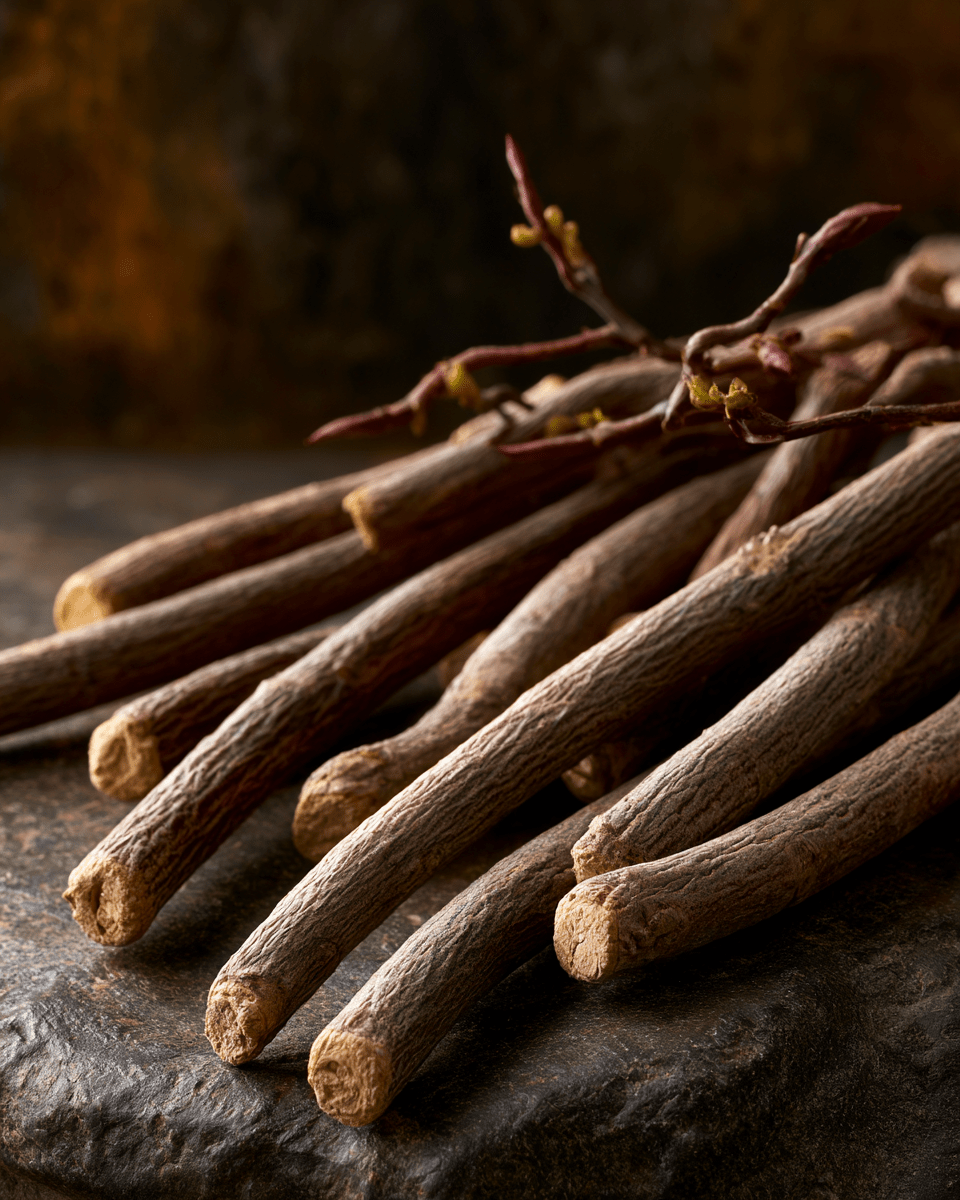
Licorice (Glycyrrhiza glabra) is a traditional plant from the Fabaceae family whose roots contain a remarkable diversity of botanical compounds. In cosmetics, it is glabridin that attracts the most attention from formulators. This flavonoid represents a significant portion of the isoflavonoids in licorice extract and is traditionally valued for helping to enhance the appearance of skin radiance and uniformity, as well as for its soothing comfort and antioxidant action. Licorice also contains glycyrrhizic acid, a botanical compound known for its soothing action on sensitive skin. This botanical richness explains licorice's place among the active ingredients of choice in routines dedicated to skin radiance and uniformity.
Licorice and the appearance of spots
Appearance spots — linked to sun exposure, hormonal variations, or marks left by previous imperfections — correspond to areas where the complexion appears darker and uneven. Licorice glabridin is traditionally valued for helping to reduce the visible appearance of these spots and promote a more even-looking complexion. It is especially prized for helping to improve the appearance of localized areas, without altering the skin's natural tone. To support this appearance-enhancing effect, combining it with gentle exfoliating active ingredients like AHAs (glycolic acid, mandelic acid) helps to reveal smoother and brighter-looking skin. Licorice is thus part of a global cosmetic approach to radiance and uniformity, an essential complement to good photoprotection.
Licorice and comfort: a leading botanical soother
Beyond its benefits for skin radiance, licorice is a highly valued botanical skin soother. Glycyrrhetinic acid, one of its molecules, is traditionally recognized for helping to soothe the appearance of redness and sensations of discomfort. For marks left by previous imperfections, often accentuated by repeated discomfort, licorice is valued for helping both skin comfort and the appearance of complexion uniformity. This dual dimension makes it a particularly interesting active ingredient for skin that easily shows marks.
Mistakes to avoid when using cosmetic licorice
Licorice is a highly valuable active ingredient, but certain mistakes can limit its benefits. The first mistake is expecting results in a few days: the appearance of the complexion evolves gradually, and visible effects on spots are generally noticeable after 4 to 8 weeks of daily use. Any premature interruption compromises the appearance outcome. Second mistake: neglecting sun protection. Without SPF, UV rays continuously affect the skin and negate the appearance benefits of licorice. A minimum SPF 30 applied every morning is essential. Third pitfall: using overly high concentrations, thinking that the more concentrated it is, the more effective it is. Beyond 2% glabridin, the risk of discomfort increases without a proportional gain; formulations at 0.5-1% are the most well-documented. Fourth mistake: applying licorice products to severely damaged skin or wounds. Fifth point: do not confuse cosmetic licorice with edible licorice — when applied externally at cosmetic concentrations, the effects of oral use are not a concern.
Formulations and combinations for an even-looking complexion
To get the most out of licorice in cosmetics, formulation and active ingredient combinations play a crucial role. Glabridin is a fat-soluble active ingredient: it must be integrated into the oil phase of the formulation or in a suitable solubilizing system to ensure its stability and dispersion. Light emulsion serums are the ideal vehicle for combining it with complementary active ingredients. Niacinamide (vitamin B3) is licorice's partner of choice: it helps to unify the appearance of the complexion, provides a soothing action, and improves the appearance of skin texture. Azelaic acid is also a good complement for promoting a clear complexion. For stubborn appearance spots, combining it with a retinoid (retinol or retinal) at night helps to reveal fresher-looking skin. Nopal Life pure prickly pear seed oil, rich in vitamin E and beta-carotene, can be applied as a complement to provide comfort and antioxidant protection. Consult the Nopal Life skin guide for complete spot care protocols.
Nopal Life Routine for an Even and Radiant Complexion
A radiance and uniformity routine incorporating licorice revolves around a consistent morning and evening approach and essential SPF. In the morning, after gentle cleansing, apply a serum containing glabridin and niacinamide to clean skin. Allow it to penetrate for 2 to 3 minutes before applying a light moisturizer, then a minimum SPF 30 — without UV protection, all the appearance benefits of licorice are lost. In the evening, after thorough makeup removal, apply a gentle exfoliating serum (mandelic or glycolic acid at a low concentration) two to three times a week to help reveal radiance. On other evenings, a nourishing treatment like pure prickly pear seed oil as a final step restores skin comfort and provides beneficial nighttime nourishment. Once or twice a week, a licorice and pink clay mask helps to unify the appearance of the complexion without aggression. This protocol, followed regularly for 8 to 12 weeks, helps to reveal a more even and radiant-looking complexion. For a fully personalized approach based on your type of spots and skin sensitivity, take our Nopal Life Skin Intelligence diagnostic. Also discover our entire range in the facial care collection.
Frequently Asked Questions
Q: Is licorice suitable for all phototypes?
A: Yes, licorice glabridin is particularly appreciated by phototypes III to VI (mixed to very dark skin), which easily show marks. However, it is beneficial for all phototypes.
Q: Can licorice be used at the same time as kojic acid?
A: Yes, these two active ingredients support the appearance of the complexion through complementary approaches and can be combined. Introduce them gradually to monitor skin tolerance.
Q: How long does it take to see results on spots?
A: The first improvements in the radiance and uniformity of the complexion's appearance are visible in 4 to 6 weeks. For a clear appearance effect on established spots, allow 8 to 12 weeks of daily use with SPF.
Q: Can licorice lighten the entire skin?
A: No, glabridin is valued for targeting the appearance of localized spots. It does not alter the skin's natural tone.
Q: Is licorice beneficial for hormonal spots?
A: Glabridin is one of the most appreciated natural active ingredients for helping with the appearance of spots linked to hormonal variations. Its combination with niacinamide and rigorous SPF constitutes a natural protocol for this appearance concern.
Q: How can I distinguish a good licorice extract in INCI lists?
A: Look for "Glycyrrhiza Glabra Root Extract" or "Glycyrrhizinic Acid" in the INCI list. The presence of these names among the first ingredients indicates a significant concentration.
RECOMMENDED TREATMENT
Pure Prickly Pear Seed Oil
Natural Formula · Origin Algeria
DISCOVER THIS TREATMENT →PERSONALIZED ROUTINE
Nopal Life Skin Intelligence™
Free Diagnostic · 2 minutes
DISCOVER MY ROUTINE →Read More
- Prickly Pear: The Green Gold of the Desert with Exceptional Anti-Aging Virtues
- How to Adopt the Right Anti-Aging Habits Daily
- At what age should you start a natural anti-aging routine?
This content is for informational and educational purposes only; it does not replace medical advice, diagnosis, or dermatological consultation. In case of doubt or persistent skin problems, consult a qualified healthcare professional.


Go further than this article
Get our skincare guides by email — and start with your free skin diagnostic: 2 minutes, advice tailored to your skin. We ship to the US, UK, Canada, Australia and 27 European countries; somewhere else? Sign up and you will be the first to know when we deliver to your country.
By signing up, you agree to our privacy policy. Unsubscribe in one click.