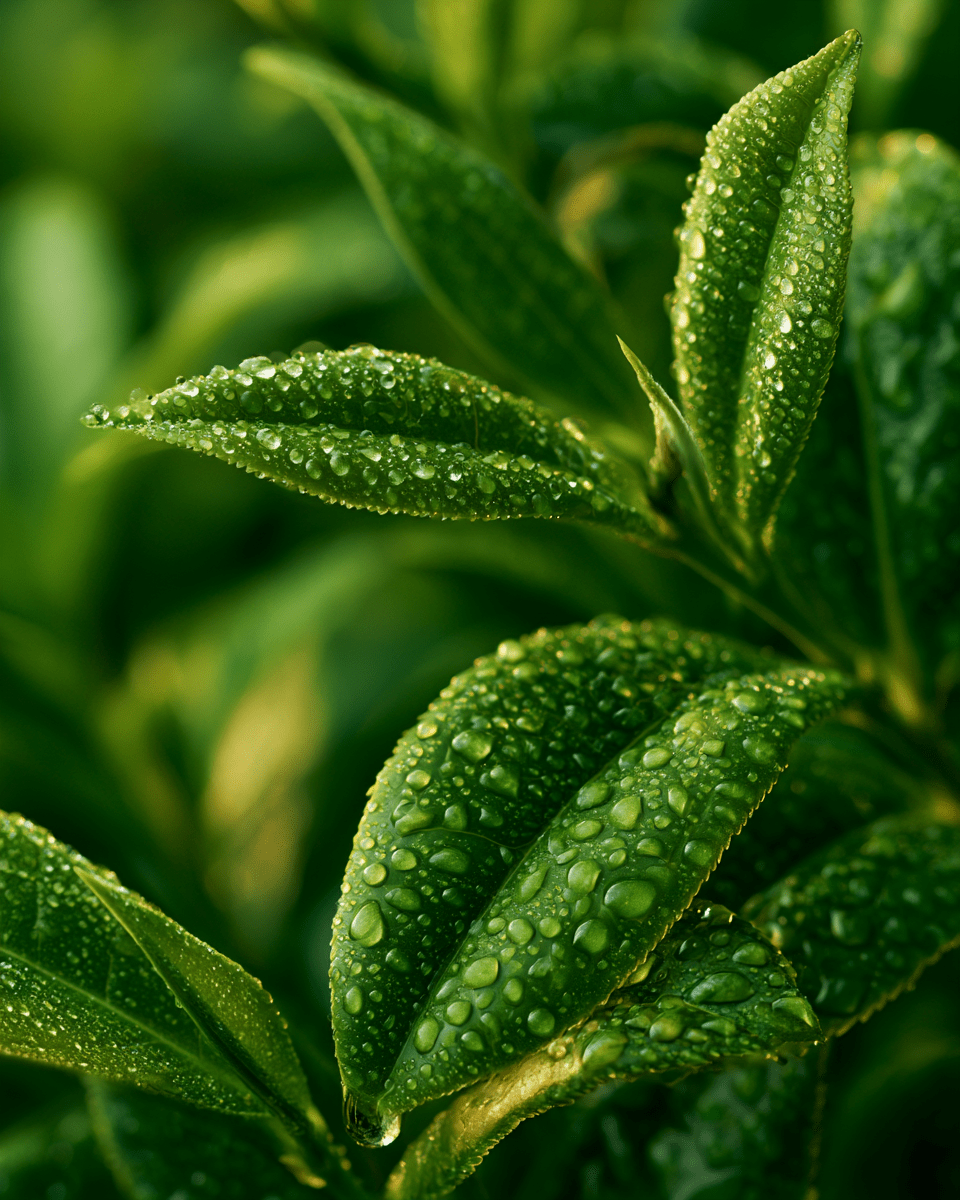
Green Tea Extract: Natural Skincare Benefits and P1 Routine
Skin beauty is all about daily details. With green tea extract, this Beauty Lab guide supports you methodically — and always with the touch of botanical nourishment dear to NOPAL LIFE.
Green Tea Extract and its EGCG Polyphenols: Discovery and Composition
Green tea (Camellia sinensis) is one of the most studied plant sources in phytochemistry. Its polyphenolic composition distinguishes it from other teas: the absence of fermentation during its production (unlike black tea and oolong tea) preserves its catechins, a group of flavonoids representing a significant portion of the dry weight of dried leaves. Among these catechins, epigallocatechin gallate (EGCG) is the most abundant molecule: it concentrates most of green tea's polyphenols. EGCG is primarily known for its antioxidant properties, frequently cited as among the most potent in the plant world. In addition to catechins, green tea extract contains caffeine (known for its decongestant properties), polysaccharides, saponins (mild surfactant properties), and B vitamins. In topical cosmetics, standardized green tea extracts show variable EGCG content depending on the extraction method and standardization level. UV rays are among the main oxidative stress factors for the skin, and green tea extract is one of the most popular botanical active ingredients for helping to preserve the appearance of skin subjected to this stress.
It all starts with the same plant, Camellia sinensis: green tea, black tea, and oolong tea only differ in the treatment of the leaves after picking. Green tea leaves are heated within hours of harvesting, which blocks enzymatic oxidation and preserves the original composition.
This is what makes all the difference. Black tea, left to oxidize, sees its compounds transform into larger molecules; the fraction of interest to cosmetics only partially survives. Research conducted on one therefore cannot be transposed to the other, even if both are called tea.
An extract is not a concentrated infusion either. The solvent used, water alone or a hydroalcoholic mixture, selects different fractions — and published data almost always specify which one was used, because the result depends on it.
Green Tea EGCG: A Multifaceted Antioxidant
The antioxidant benefit of green tea extract lies in the diversity of its polyphenols, which explains its superior reputation compared to simpler antioxidants. EGCG is valued for its ability to help skin cope with free radicals, molecules associated with daily oxidative stress. Its structure also gives it an affinity for certain minerals. Green tea extract is also often associated with supporting the skin's natural antioxidant defenses, as well as preserving the appearance of skin structures exposed to UV rays. These different facets make green tea extract an active ingredient of a richness that simple synthetic antioxidants (BHT, BHA) rarely achieve. In topical formulation, EGCG must be stabilized (it is sensitive to oxidation under certain pH and light conditions); formulations in hermetic capsules or with secondary antioxidants (vitamin C, tocopherol) better preserve its activity.
EGCG alone accounts for more than half of the catechins in the leaf, which explains why it concentrates most research. Available data mainly concern cellular models, where the molecule is applied directly to cultures at high concentrations.
This experimental framework describes a function; it does not measure a result on a face. The distance between the two is rarely mentioned, yet it is considerable: an effective molecule in a Petri dish must still cross the stratum corneum, arrive intact, and remain long enough to act.
This is also why studies on tea consumption are not transposed here. They belong to another field, with other absorption pathways, and they fall outside the scope of this page.
Green Tea Extract's Radiance and Visible Firmness Properties: Focus on Skin Youth
The benefit of green tea extract for visibly youthful skin is primarily expressed in two ways: support against UV rays and support for a firm and plump appearance. Regarding UV rays, green tea extract is traditionally appreciated, in addition to sun protection, for helping the skin better tolerate exposure and maintain its comfort. However, it does not replace a complete SPF and remains a complementary action. Regarding firmness, green tea extract is valued for helping to preserve the skin's firm and plump appearance over time, especially on sun-exposed skin. Over several weeks, routines that daily combine standardized formulas with concentrated green tea extract are appreciated by users for the comfort and apparent suppleness of their skin.
What can be expected is measured by appearance, not by structure. Available data describe an improvement in comfort and texture regularity after several weeks, by promoting the maintenance of what is already in place rather than rebuilding anything.
Cell renewal follows its own rhythm, about twenty-eight days in a young person and more thereafter. No active ingredient applied to the surface significantly shortens this cycle: this is also why a product is judged after three months and not during the first week.
Mistakes to Avoid with Green Tea Extract in Your Skincare Routine
Despite its excellent general tolerance profile, several usage errors limit benefits or cause unexpected results. The first mistake is using homemade steeped green tea as a skin care product: the EGCG content of a standard infusion is much lower than the concentrations used in cosmetics (a cup versus a concentrated standardized extract). Furthermore, unpreserved infusion degrades quickly and can contaminate the skin. The second mistake is ignoring EGCG's instability: this molecule oxidizes quickly in light and air, losing its antioxidant benefit. Formulas in clear, wide-mouthed bottles or unprotected DIYs lose their effectiveness after a few days of exposure. Thirdly, believing that green tea replaces SPF: despite its appreciated qualities against UV rays, green tea extract does not offer complete UV protection. It is an antioxidant complement to sun protection, not a substitute. Fourthly, applying highly concentrated caffeine formulas (a component of green tea) under the eyes without prior testing: high concentrations of caffeine can be uncomfortable on sensitive periocular skin. Fifthly, not adapting the frequency according to skin type: oily skin appreciates morning and evening application, dry skin can settle for a light serum application in the morning.
Green Tea Extract in a Daily Radiance and Antioxidant Routine
Green tea extract is integrated into a radiance routine primarily as a serum or light cream applied in the morning, in synergy with other antioxidants. The classic combination of green tea + vitamin C + vitamin E is one of the most popular antioxidant combinations in cosmetics: these active ingredients complement each other nicely, creating an overall effect often considered more satisfying than each active ingredient taken in isolation. As the skin's natural antioxidant capacity tends to decrease with age, this morning antioxidant combination is appreciated for supporting the skin daily. For blemish-prone skin, green tea extract offers an additional benefit: it helps mattify the appearance of shiny areas and maintain a clear-looking complexion. A typical routine for normal to oily skin: gentle cleanser, green tea + vitamin C serum, light cream, SPF 50. In the evening: cleanser, comfort serum (niacinamide, ceramides), prickly pear oil finisher for dry or mature skin.
The Nopal Life Approach: Green Tea and Natural Antioxidants in Synergy
Nopal Life integrates polyphenolic active ingredients like green tea extract into a vision of preventative care where antioxidant protection is as important as radiant care. EGCG-standardized green tea extract naturally combines with prickly pear seed oil (Opuntia ficus-indica), whose richness in tocopherols (vitamin E) and unsaturated fatty acids (omega-6) creates a complete lipophilic-hydrophilic antioxidant synergy. Where green tea extract acts primarily in the aqueous phase, vitamin E from prickly pear seed oil is appreciated for helping to preserve the appearance of the skin's lipid structures. This duality corresponds to the skin's heterogeneous environment, which is both aqueous and lipidic. For skin exposed to high urban pollution or pro-oxidant environments, the Nopal Life antioxidant routine — green tea in the morning, prickly pear seed oil in the evening — provides a daily protective and caring action based on valued natural active ingredients. Our Skin Intelligence diagnostic identifies your oxidative stress profile to guide you toward the personalized antioxidant routine best suited to your lifestyle.
Frequently Asked Questions
Q: Does drinking green tea have the same effects on the skin as topical extract?
A: The two approaches are complementary but distinct. Consuming green tea (3-4 cups/day) provides polyphenols to the entire body. Topical application concentrates the active ingredients directly on the superficial layers of the skin at much higher concentrations. The two approaches advantageously complement each other.
Q: Can green tea extract cause sensitivities?
A: Reactions to topical green tea are rare but can occur. Individuals reactive to plants of the Theaceae family should perform a tolerance test before use. Caffeine sensitivity can be a factor to consider.
The caffeine contained in topical green tea is present in very small quantities and its cutaneous absorption is negligible.
Q: Is green tea extract compatible with retinol?
A: Yes, they are complementary. Green tea extract can be used in the morning (as a daytime antioxidant) and retinol in the evening (as an evening active ingredient). Avoid mixing them in the same application because the acidic pH of green tea can slightly destabilize retinol.
Q: Is green tea extract useful for dark circles?
A: The caffeine in green tea is appreciated for its decongestant aspect, which can help temporarily reduce the appearance of vascular dark circles (blue-purple). Structural dark circles (hollow periocular areas) do not respond to caffeine.
Q: How can I identify a truly concentrated green tea extract formula?
A: Look for "Camellia Sinensis Leaf Extract" in the first 5-10 ingredients of the INCI list. A mention of the standardized EGCG content (in %) in the product description is an additional guarantee of quality. Formulas with opaque and airtight packaging better preserve the extract's activity.
Q: Does green tea extract help with sun spots?
A: It can contribute indirectly. By helping the skin better tolerate UV exposure and maintain its comfort after sun exposure, green tea extract contributes to a more even-looking complexion. To help reduce the visible appearance of existing spots, it is often combined with other brightening active ingredients (niacinamide, licorice, vitamin C).
Q: Is green tea extract suitable for oily and blemish-prone skin?
A: Yes, it is even one of the active ingredients best suited for oily skin. Its ability to help mattify the appearance of shiny areas, maintain a clear-looking complexion, its soothing qualities, and its lightness make it a prime active ingredient in routines for oily and blemish-prone skin.
Our star oil
Nopal Life pure prickly pear seed oil: rich in omega-6 and vitamin E for soothed and luminous skin.
Discover the oilFree diagnosis
Find the personalized routine adapted to your skin type in less than 3 minutes.
Take the diagnosisRead more
Information provided for cosmetic and educational purposes; it does not constitute medical advice.


Go further than this article
Get our skincare guides by email — and start with your free skin diagnostic: 2 minutes, advice tailored to your skin. We ship to the US, UK, Canada, Australia and 27 European countries; somewhere else? Sign up and you will be the first to know when we deliver to your country.
By signing up, you agree to our privacy policy. Unsubscribe in one click.