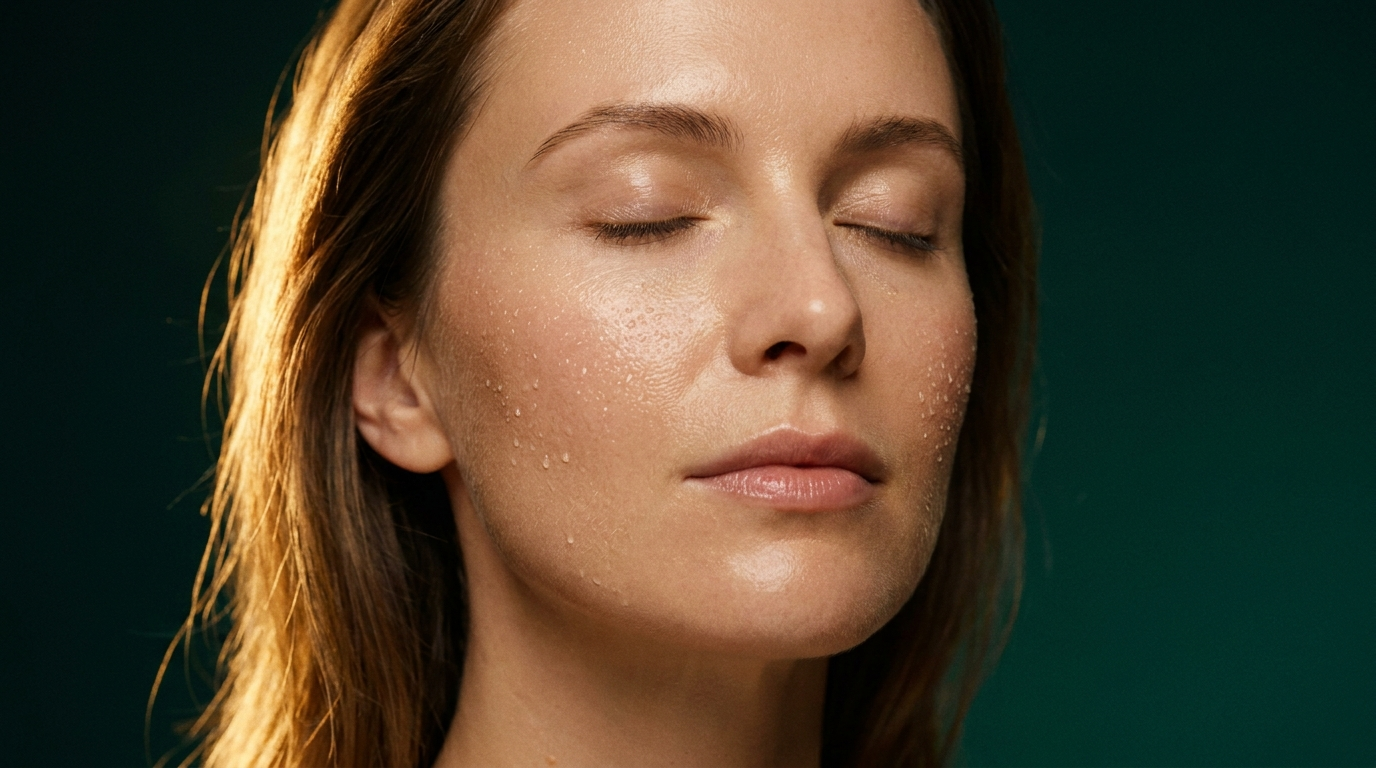
Hydrating face mist: hydrate without evaporating
A hydrating face mist only provides long-lasting hydration if its formula contains humectants and if the sprayed water is subsequently retained by a cream or protective film. A simple thermal water refreshes, but can evaporate quickly in dry air. Spray three to five pumps from twenty centimeters away, then press the skin with your hands.
Water, Hydrosol, or True Hydrating Formula
Thermal water mainly provides water and minerals. A hydrosol contains traces of aromatic compounds from distillation. A complete hydrating mist combines water, glycerin, betaine, sodium PCA, panthenol, or hyaluronic acid.
The difference is visible in the INCI list. If water is followed only by a fragrance or a hydrosol, the effect remains primarily sensory. If humectants then appear, the formula can retain more water in the stratum corneum.
The module on humectants explains the role of glycerin and sodium PCA.
Why Water Alone Can Leave a Tight Sensation
When sprayed water evaporates, it absorbs heat and provides a refreshing effect. In very dry air, this evaporation can also temporarily intensify the sensation of tightness. This phenomenon is more noticeable on a compromised skin barrier.
To avoid this, press the mist into the skin, then apply a cream within a minute if you are at home. Over makeup, choose a fine formula containing humectants and avoid saturating the face. Three sprays are often sufficient.
The page on skin hydration details water movements in the stratum corneum.
The Ingredients That Truly Make a Difference
Glycerin attracts water and remains effective in a wide range of formulas. Betaine acts as an osmoprotector and improves comfort. Sodium PCA is part of the natural moisturizing factor. Panthenol and beta-glucan complement the soothing effect.
Hyaluronic acid increases viscosity and forms a light film, but it is not essential. Too high a concentration can make the mist sticky. Essential oils and fragrance provide scent, not better hydration, and can bother sensitive skin.
| Ingredient | Function | INCI Position | Skin Type |
| Glycerin | Humectant | High or middle | All |
| Betaine | Osmotic comfort | Middle | Sensitive |
| Sodium PCA | Moisturizing factor | Middle or end | Dehydrated |
| Panthenol | Comfort | Middle or end | Sensitive |
| Fragrance | Sensory | End | Avoid if reactive |
Choosing the Fineness of the Spray and Packaging
A good pump forms a regular cloud and not large droplets. Hold the bottle twenty centimeters away and spray in a cross pattern. A nozzle that splatters wets makeup too much and concentrates the product on a few areas.
An opaque bottle protects light-sensitive extracts. An aqueous formula must contain a preservative system; a preservative-free product is not automatically safer. Avoid transferring to an uncleaned bottle.
The guide how to read an INCI list helps identify humectants and fragrance.
Morning Protocol Before Cream
After cleansing, spray three times on the face and once on the neck. Press with palms for ten seconds. Then apply two or three drops of serum followed by a pea-sized amount of cream.
Finish with sunscreen. The mist prepares the skin but does not replace cream or SPF. Wait thirty seconds between layers to limit pilling.
- 3 sprays face
- 1 spray neck
- Distance: 20 cm
- Press for 10 seconds
- Cream within a minute
Use During the Day and Over Makeup
In the office, a mist can provide comfort when the air conditioning is dry. Spray twice, let the cloud settle on the face, and press gently without rubbing. If the skin feels tighter after ten minutes, the formula is too aqueous or usage is too frequent.
Over makeup, film-forming polymers or a small amount of glycerin can improve powder fusion. A very rich mist risks creating streaks. Test from thirty centimeters on half of your cheek before an important day.
Hydration in the routine indicates where to place the mist relative to other skincare products.
After Sport, Sun, or Travel
After exercise, first rinse off sweat and salt. A mist applied to dirty skin does not replace cleansing. After sun exposure, use a fragrance-free formula and add a gentle cream.
On an airplane, very dry air increases evaporation. Spray sparingly, then apply a light cream. Repeating every twenty minutes without a protective layer can exacerbate tightness instead of improving it.
The file on sun-exposed skin specifies evening care.
Oily, Dry, or Sensitive Skin: Three Uses
Oily skin can use a betaine mist before a gel-cream. Dry skin chooses glycerin, panthenol, and applies a rich cream afterward. Sensitive skin avoids alcohol, fragrance, and essential oils.
Blemish-prone skin should watch out for multiple extracts and sticky films. The mist does not need to be purifying. Its primary role is to provide water and comfort without disrupting other steps.
The page skin type or skin condition helps distinguish dryness from dehydration.
Preparing a Homemade Mist: Why Preserved Water Is the Real Problem
A recipe for water and aloe vera seems simple, but it quickly becomes vulnerable to contamination. Refrigeration slows microbial growth without blocking it. A commercial mist must be preserved and tested.
For home use, prepare at most a single day's dose with cooled boiled water and a clean container, then discard the rest. Do not add essential oil. A stable formula requires a compatible preservative and pH control.
The sheet on aloe vera explains why an aqueous gel must be properly preserved.
A hydrating face mist is distinguished from a scented water by the presence of identifiable humectants.
In dry air, a hydrating face mist must be followed by a cream to limit evaporation.
A hydrating face mist used over makeup requires a very fine spray and sufficient distance.
Droplet size influences sensation. A very fine aerosol uniformly covers the face, while a classic pump produces larger drops. Regular coverage allows for less product to be used.
Rose, orange blossom, or chamomile extracts can contribute to sensory pleasure. Their presence does not replace glycerin or betaine. For reactive skin, a scented floral water may be less well tolerated than a neutral formula.
A mist can prepare the skin before a powder mask. Spray twice, then apply the paste immediately. This moisture reduces friction but should not make the mask liquid.
To set powdered makeup, spray from thirty centimeters and then let it air dry. Forced air accelerates evaporation and can dislodge pigments. A single light layer is sufficient.
In a car or near a window, mist provides no sun protection. Use an SPF in the morning and reapply as needed for exposure. Hydrating and sun protection formulas serve two different functions.
The pH of a face mist is often around 4.5 to 6. Extreme acidity is not necessary to prepare the skin. Comfort and compatibility with other layers are more important.
A formula containing prebiotics or ferments must always be properly preserved. These terms do not mean the product can remain open for a long time. Respect the period after opening and regularly clean the nozzle.
If the spray is shared, avoid touching the nozzle with your skin. Wipe the tip with a clean tissue weekly. This precaution reduces makeup and sebum deposits.
The face and body can use the same mist if the formula is fragrance-free and economical enough. On the body, spray in sections then apply a lotion. Mist alone evaporates too quickly on large areas.
The best mists do not necessarily rely on a long list of extracts. A short formula with water, glycerin, betaine, and panthenol can be more predictable. Simplicity also makes it easier to identify an intolerance.
The time of day changes the usage. In the morning, the mist prepares the skin before cream; at midday, it refreshes; in the evening, it humidifies before a serum. The quantity should remain small with each application.
A mineral-enriched mist can leave traces on very dry skin if it evaporates completely. Press the product with your hands then add an emollient layer. The gesture matters as much as the composition.
For sensitive skin, spray first onto your hands rather than directly onto your face. Then press your palms onto your cheeks. This method reduces sensory shock and avoids eye contact.
So-called anti-pollution mists sometimes contain film-forming polymers or antioxidants. Their effectiveness depends on the quantity applied and the finished product. They do not replace evening cleansing or sun protection.
A 100 ml bottle delivering approximately 0.15 ml per spray provides nearly 660 sprays. At four sprays twice a day, it lasts about eighty days. This calculation helps compare the actual cost of use.
The nozzle can become clogged when the formula contains salts or extracts. Rinse the tip with warm water without immersing the bottle. Dry it before replacing the cap.
A mist used before an oil facilitates spreading two drops over the entire face. Spray three times, press for ten seconds, then apply the oil. This sequence avoids unnecessarily increasing the amount of fatty substance.
To compare two products, observe comfort fifteen minutes later, then four hours later. Note stickiness, tightness, and makeup hold. An immediate fresh sensation is not enough to judge hydration.
A mist carried in a bag heats up quickly in summer. Do not leave it for several hours in a car in the sun. High temperatures can alter extracts, fragrance, and the preservative system.
What Mist Does Not Do
A hydrating face mist does not replace a cream and does not create a lasting protective barrier when it contains only water. It also does not protect against UVA or UVB if no sun filter is present.
Its best use is as a short step: to humidify, provide humectants, prepare the skin, or refresh. The result then depends on the layer that retains water and the condition of the skin barrier.


Go further than this article
Get our skincare guides by email — and start with your free skin diagnostic: 2 minutes, advice tailored to your skin. We ship to the US, UK, Canada, Australia and 27 European countries; somewhere else? Sign up and you will be the first to know when we deliver to your country.
By signing up, you agree to our privacy policy. Unsubscribe in one click.