Natural Betaine: natural skincare benefits and routine P1
What is natural betaine and why does skin need it?
Natural betaine, chemically known as trimethylglycine (TMG), is an amino acid derived from sugar beet. Naturally present in many plants and in the human body, it participates in maintaining the water balance of tissues. In cosmetics, its interest is twofold: it acts both as a powerful humectant and as an osmoprotectant, two functions appreciated for dry and mature skin that struggles to retain its water.
Osmoprotection is a principle by which a molecule helps preserve cell comfort against osmotic stress—that is, against sudden variations in water concentration due to dehydration, pollution, or temperature changes. Betaine accumulates in skin cells without disrupting their function, contributing to a true water reserve within the cell itself. Osmoprotective molecules like betaine are observed to help preserve skin comfort against water stress.
For dry and mature skin, this property is particularly valuable. With age, the skin's ability to retain its own natural moisturizing factors (NMF) decreases, making the skin barrier more permeable and less comfortable. Integrating betaine into a skincare routine helps compensate for this deficit gently and durably, without the occlusive or comedogenic effects of some petroleum-derived moisturizing agents.
The benefits of natural betaine for radiance and comfort
One of the first visible effects of a betaine-enriched formula is improved skin comfort. Skin that feels tight, is sensitive to climatic variations, or is weakened by excessive cleansing quickly regains a sensation of suppleness and fullness. Betaine works by attracting and retaining water molecules in the upper layers of the epidermis, much like hyaluronic acid, but with remarkable tolerance—it is used as a softening agent even in formulas for the most reactive skin.
In terms of radiance, betaine indirectly contributes to an even skin tone appearance. Well-hydrated skin reflects light better, micro-sagging on the surface due to dehydration diminishes, and uneven skin tone appears less pronounced. Combined with active ingredients like vitamin C, betaine helps unify the appearance of skin tone by maintaining optimal pH and hydration levels for the comfort of the active ingredients.
Cosmetic research suggests that topical application of betaine helps improve skin hydration over weeks in skin with mild to moderate dryness. This makes betaine a choice ingredient for formulations intended for dry and mature skin.
Natural betaine vs. synthetic betaine: what's the difference for your skin?
In the cosmetic market, two sources coexist: natural betaine (extracted from sugar beet by fermentation) and synthetic betaine (produced chemically). Although the molecule is identically identified under the INCI name Betaine, several differences deserve attention.
Natural betaine is obtained by a fermentation or extraction process from Beta vulgaris (sugar beet), a renewable and biodegradable raw material. It is part of a green cosmetic approach and meets the requirements of organic and natural labels (Cosmos, Ecocert). In contrast, synthetic betaine is derived from chloroacetic acid, a compound from petrochemicals. For a brand committed to natural and transparent cosmetics, the choice of natural betaine is obvious.
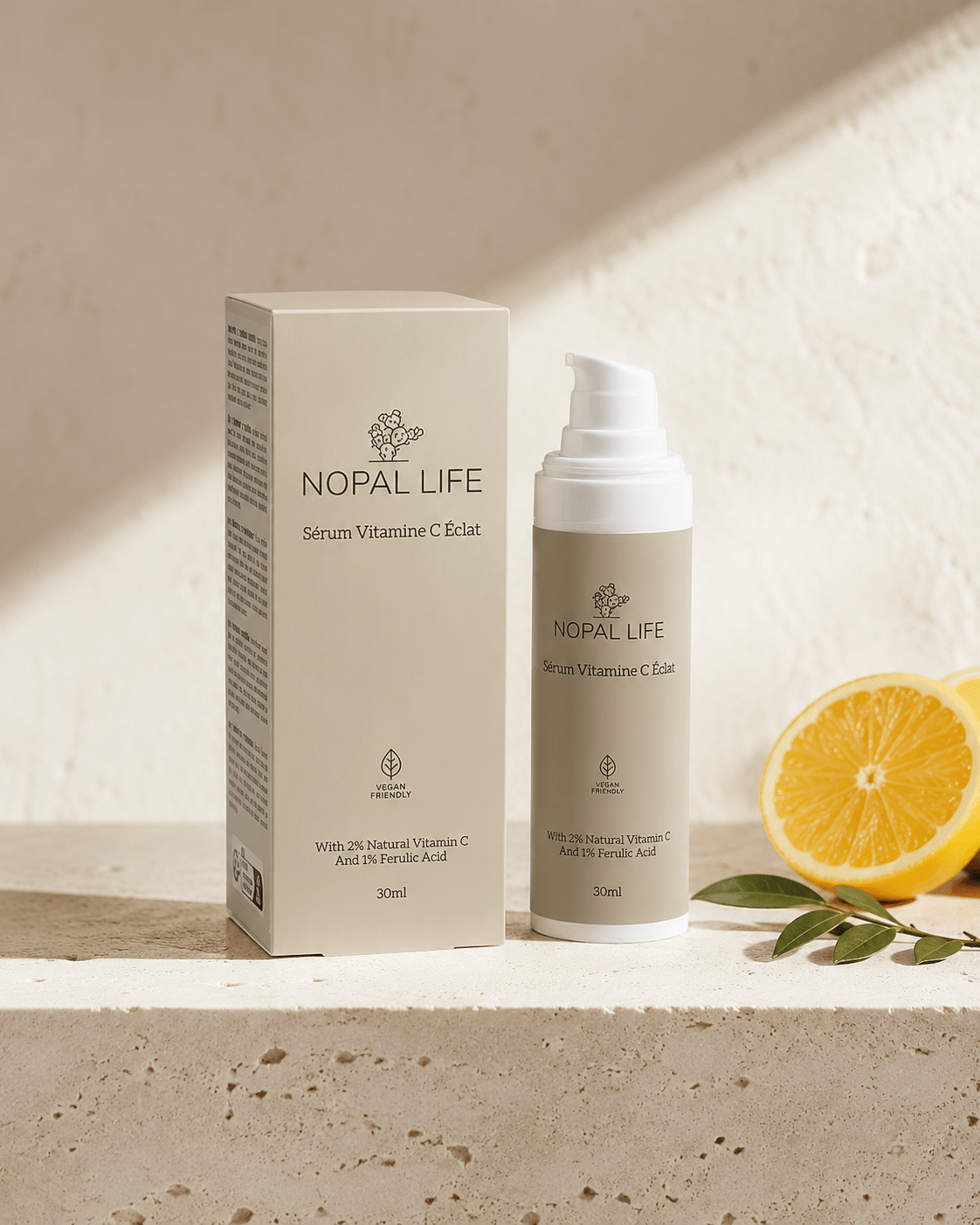
In terms of skin efficacy, both forms are comparable in terms of hydration. But for sensitive or reactive skin, natural betaine often shows better tolerance because it is free of synthetic residues that can bother the most fragile skin. That's why we find it at the heart of specialized formulations like Nopal Life Vitamin C Radiance Serum, designed to combine effectiveness and respect for the skin barrier.
How to incorporate betaine into a double cleansing routine for dry and mature skin
Double cleansing is a method from Korea that involves cleansing the face in two steps: first with an oil-based makeup remover (oil or balm) to dissolve fat-soluble impurities like makeup and pollution, then with a gentle water-based cleanser to purify without stripping. This approach is particularly suitable for dry and mature skin, provided that formulas that respect the hydrolipidic film are chosen.
Betaine finds its place at each step of this routine:
- First step (oil-based cleanser): choose a jojoba or prickly pear oil enriched with betaine to gently remove makeup without a "film" effect. Prickly pear oil is particularly complementary due to its linoleic acid content which helps comfort the skin barrier.
- Second step (water-based cleanser): opt for a foaming gel or micellar water containing betaine as a gentle surfactant. Unlike SLS or SLES, betaine does not unbalance the skin's pH and preserves the microbiome.
- After cleansing: immediately apply a serum based on betaine and vitamin C to seal in hydration and initiate the appearance of radiance on still slightly damp skin.
For mature skin, it is advisable to complete this routine with an eye contour treatment rich in betaine, an area particularly sensitive to dehydration. Consult our guide on routines adapted to mature skin for a global and coherent approach.
Mistakes to avoid with natural betaine in skincare
Despite its excellent tolerance profile, betaine may not deliver all its benefits if used incorrectly. Here are the most common mistakes to correct:
- Applying to overly dry skin: Betaine is a humectant; it draws water from the environment or underlying skin layers. On completely dry skin and in very dry air, it can paradoxically intensify the sensation of tightness. Always spray a floral mist or apply to slightly damp skin.
- Not sealing with an emollient: Betaine retains water, but it does not trap it durably on its own. Without an emollient layer over it (oil, cream), water can evaporate. For dry skin, always combine betaine + light occlusion.
- Confusing betaine with betaine HCl: Betaine HCl (betaine hydrochloride) is a dietary supplement—it does not have the same cosmetic properties and should not be applied to the skin.
- Underdosing: Below 1% in a formula, betaine has few noticeable effects. Effective formulas contain between 2% and 5% betaine. Check the order of ingredients in the INCI list—the earlier it appears, the higher its concentration.
- Neglecting interaction with other active ingredients: Betaine is not a solitary active ingredient. It performs best in synergy with niacinamide (for radiance), hyaluronic acid (for plumping effect), and vitamin C (for even skin tone appearance). Discover how Vitamin C Radiance Serum combines these active ingredients in a single formula.
- Ignoring the product's pH: Betaine is stable over a wide pH range (3 to 9), but the active ingredients it accompanies may be sensitive. Always respect the application order of care from most acidic to most neutral.
Conclusion
Natural betaine is a moisturizing and soothing active ingredient, ideal for sensitive skin. It attracts water, comforts the barrier, and alleviates sensations of discomfort. Its high tolerance makes it valuable. Integrated into a routine, betaine leaves skin supple, soothed, and comfortably hydrated.
Natural Betaine in Nopal Life's Radiance & Uniformity Routine
At Nopal Life, the Radiance & Uniformity Routine has been designed for dry and mature skin seeking to regain an even and luminous complexion without aggressiveness. Natural betaine is the guiding ingredient of this routine, present at several levels of care to ensure cumulative and lasting hydration.
At the heart of this routine, the Vitamin C 2% Radiance & Spot Serum combines natural betaine with stabilized vitamin C and niacinamide for a triple action: osmoprotective hydration, appearance of radiance, and more even skin texture. Applied morning and evening after cleansing and toning, it is the key step in the radiance routine.
To personalize your routine according to your exact skin type and specific concerns, we invite you to complete the free Nopal Life Skin Intelligence™ diagnosis. In less than 3 minutes, our AI analysis tool identifies your skin profile and recommends the best active ingredient combinations—including natural betaine if your skin shows signs of persistent dehydration.
The Radiance & Uniformity Routine aligns with our global philosophy: formulas inspired by the richness of nopal and prickly pear, highly tolerant ingredients, and total transparency in formulations. Natural betaine perfectly embodies these values: effective, gentle, plant-derived, and recognized by formulators.
FAQ — Natural Betaine in Skincare
Is natural betaine suitable for sensitive and reactive skin?
Yes, this is one of its major assets. Betaine has an excellent tolerance profile and is used in many formulas dedicated to sensitive and reactive skin. It soothes the tingling sensation associated with stronger active ingredients like vitamin C or AHAs.
Can betaine be used with hyaluronic acid?
Absolutely. These two humectants are highly complementary. Hyaluronic acid acts on the surface with an immediate film-forming action, while betaine works for long-lasting hydration. Together, they offer dual-level hydration.
Is natural betaine suitable for oily or combination skin?
Yes. Betaine is non-comedogenic and very light in texture. For oily skin, it provides hydration without overloading the appearance of the surface film, which can even help mattify the appearance by signaling to the skin that it is sufficiently hydrated.
How long does it take to see the effects of betaine on the skin?
Hydration and comfort effects are often felt from the first application. For benefits on the appearance of radiance and evenness of complexion (in synergy with vitamin C), allow 3 to 4 weeks of regular use morning and evening.
Is natural betaine suitable during pregnancy?
Topical betaine is generally well tolerated. However, always seek advice from your doctor or dermatologist before introducing new active ingredients into your routine during pregnancy or breastfeeding.
What is the difference between betaine and niacinamide?
Betaine is primarily a humectant and osmoprotectant. Niacinamide (vitamin B3) acts on the appearance of radiance, pore appearance, and the comfort of the skin barrier. Both are complementary: combine them in your routine for a moisturizing action and a more even-looking complexion.
Is natural betaine Cosmos/Ecocert certifiable?
Yes, provided it is of plant origin and obtained by an authorized processing method (fermentation, physical extraction). Always check that the brand mentions the plant origin (Beta vulgaris root extract or Betaine (sugar beet)) in its transparency documents.
How to combine betaine and vitamin C to maximize radiance?
The ideal order: hydrating toner → betaine + vitamin C serum → emollient care → SPF (in the morning). Do not mix betaine and pure ascorbic vitamin C directly in your hand at very low pH—apply them in successive layers to preserve the stability of each active ingredient. The Vitamin C 2% Radiance Serum already formulates these two active ingredients at an optimized pH for their co-stability.
This information is provided for educational purposes and does not replace the advice of a healthcare professional.
PERSONALIZED ROUTINE
Nopal Life Skin Intelligence™
Free diagnostic · 2 minutes
DISCOVER MY ROUTINE →Information provided for cosmetic and educational purposes; it does not constitute medical advice.
Our anti-aging treatments