



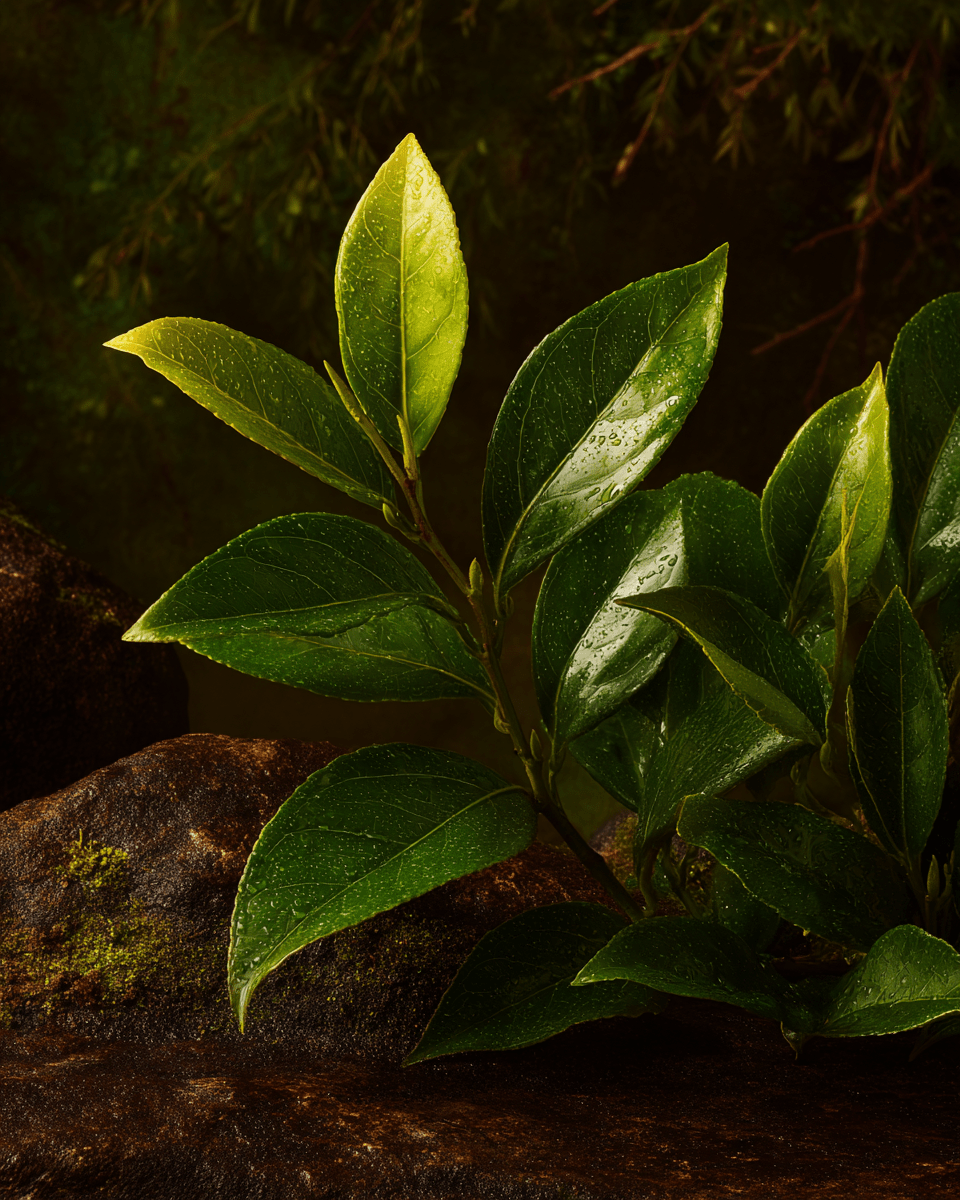
Tea tree: Natural skincare benefits and P1 routine
Dull, combination skin is one of the most common skincare concerns: it combines shiny areas, visible pores, uneven texture, and a lack of radiance. This delicate balance calls for active ingredients that can simultaneously address the appearance of shiny areas, gentle exfoliation, and clear-looking skin. Tea tree — or Melaleuca alternifolia — is precisely this versatile active ingredient, appreciated for decades in cosmetics for its exceptional profile. An essential oil extracted from the leaves of a tree native to Australia, it concentrates over a hundred compounds, including terpinen-4-ol, recognized as its key molecule. In this article, you will discover how to incorporate tea tree into a Radiance and Evenness routine, understand how it supports the exfoliation process, and learn how to use it safely and measuredly to help reveal skin that looks clearer, brighter, and more balanced.
Exfoliation and Combination Skin: Why This Step Is Essential
Exfoliation is the foundational step of any protocol targeting radiance and skin texture. Skin naturally renews itself approximately every 28 days — a rhythm that slows down with age, stress, or fatigue. When dead cells accumulate on the surface, the complexion appears dull, pores seem more visible, and the skin's appearance becomes uneven. Exfoliation helps lift this veil and revive surface radiance.
There are two main types of exfoliation: mechanical, based on particles, and chemical, based on acids or enzymes that help detach dead cells from the surface. For combination skin, gentle chemical exfoliation — particularly via active ingredients like tea tree combined with fruit acids — is generally preferred, as it works gently without damaging the skin barrier. Well-executed exfoliation reveals a brighter complexion, smooths the appearance of the surface, and helps subsequent skincare products absorb better.
The optimal frequency for combination skin is once to twice a week. Too frequent exfoliation can alter the hydrolipidic film, accentuate oiliness, and weaken the skin barrier. This is why the choice of exfoliating active ingredient is as important as the frequency: it must combine efficacy and tolerance. Tea tree, thanks to its purifying action, is an interesting complement to a gentle enzymatic or acid exfoliation.
Tea Tree: A Benchmark Botanical Active Ingredient
Tea tree is one of the most studied and used botanical active ingredients in cosmetics. Its most well-known component, terpinen-4-ol, is traditionally renowned for supporting the clear appearance of skin and the comfort of blemish-prone skin. It is this reputation, built on long-standing cosmetic use, that explains its prominent place in routines dedicated to complexion radiance and evenness.
Tea tree is particularly appreciated by combination skin, where T-zones (forehead, nose, chin) often appear shinier than the cheeks. When incorporated into an adapted formula, it helps maintain the mattified appearance of these areas while contributing to skin comfort, without drying it out when properly dosed.
The tolerance profile of tea tree in cosmetic use is well-documented: at moderate concentrations (below 5%), it is generally well-tolerated. The galenic form — light emulsion or gel — greatly influences its application comfort and gentleness. A well-designed formulation always prioritizes the tolerance of sensitive skin while preserving the cosmetic efficacy of the active ingredient.