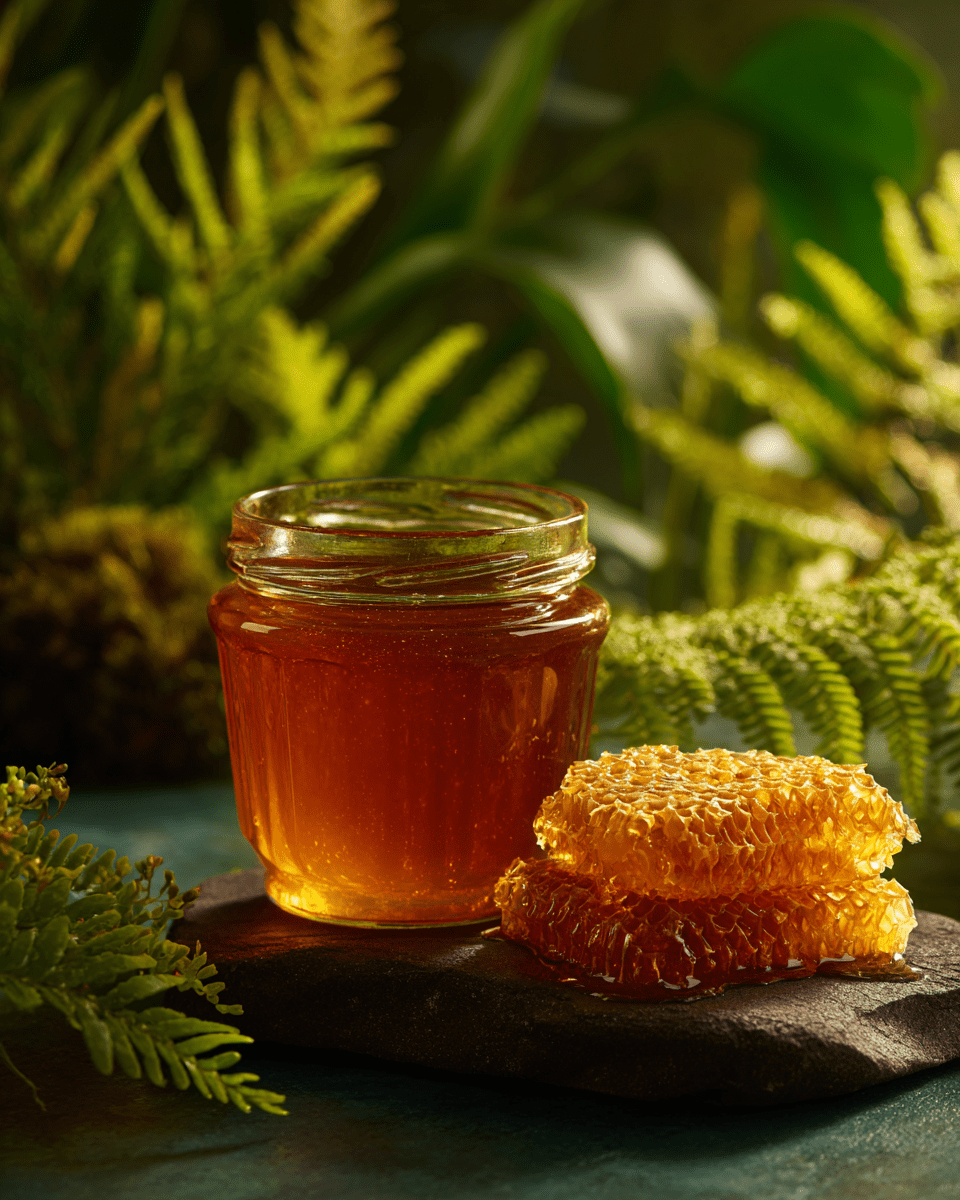
Cosmetic Honey: Natural Skincare Benefits and Routine P1
Mature and dehydrated skin has specific needs: a skin texture that changes over time, a sometimes less plump appearance of the facial contours, and a persistent feeling of tightness. Faced with these visible signs of aging, cosmetic honey has established itself for several decades as a benchmark active ingredient in high-end skincare formulations, appreciated by formulators. Rich in hygroscopic sugars and phenolic compounds with antioxidant properties, it offers valuable action in terms of hydration, comfort, and protection. This article guides you through the composition of cosmetic honey, what we know about it, and a practical protocol adapted for mature and dehydrated skin for a truly pleasant, visibly radiant and firming routine.
Cosmetic Honey: Composition and Benefits for Skin Appearance
Cosmetic honey fundamentally differs from food-grade honey in its level of purification and standardization. Raw materials used in cosmetology are subjected to rigorous controls (pesticide residues, microbial load, hydrogen peroxide content) to guarantee their safety on reactive skin. The composition of honey is remarkably rich: it contains numerous compounds, including organic acids, flavonoids, trace amounts of hydrogen peroxide, sugars like fructose and glucose, as well as a characteristic sugar fraction.
It is precisely this sugar fraction that gives honey its primary cosmetic asset: hygroscopicity. Honey sugars capture water molecules from the environment and retain them in the superficial layers, acting as a natural humectant. This mechanism is particularly valued for dehydrated skin, which experiences reduced comfort. By helping to preserve the hydration of the skin's superficial layers, honey helps to reduce the appearance of dehydration fine lines.
Furthermore, the sugar fraction of honey is accompanied by gluconic acid, a low-concentration acid appreciated for its gentle exfoliating effect on dead surface cells, which supports the skin's natural renewal and helps reveal a brighter-looking complexion, with a more even skin texture. This gentleness is generally well-tolerated by mature skin, often sensitized by overly intense routines.
What We Know About Honey in Skincare
Cosmetic honey is traditionally valued in formulations for dry to mature skin for its moisturizing properties and the comfort it provides. Its humectant sugar fraction helps preserve the hydration of the superficial layers, which helps to reduce the appearance of dehydration fine lines and gives the skin a more supple and smoother appearance. These qualities position cosmetic honey as a relevant active ingredient in routines targeting radiance and visible firmness.
Honey's polyphenolic compounds, particularly quercetin, kaempferol, and caffeic acid, are known for their antioxidant properties, valued for helping to preserve the firm and plump appearance of the skin against external aggressions. This antioxidant richness contributes to the skin's comfort and healthy appearance, placing honey among the active ingredients valued for their versatility, beyond just hydration.
Honey is also appreciated for its soothing properties, which are beneficial for mature skin prone to feelings of discomfort. For mature skin, whose skin comfort can be weakened, this gentleness is a primary benefit, contributing to a soothed and rested appearance daily.
Practical Protocol: Applying Cosmetic Honey in a Visibly Radiant and Firming Routine
The integration of cosmetic honey into a visibly radiant and firming routine is based on a layering logic: the order of texture application directly affects the comfort and benefits of the active ingredients. The fundamental rule is to apply formulations from the lightest to the most nourishing, i.e., serum first, then cream, and oil as the final occlusive seal. This serum-cream-oil sequence helps the hydrophilic active ingredients of honey to deposit on the surface while preserving the integrity of the lipid barrier.
In practice, in the morning: start with a gentle cleansing to remove overnight impurities without disturbing the hydrolipidic film. Then apply a watery serum enriched with cosmetic honey (ideally concentrated at 5–15%), gently patting from the center outwards for even distribution. Follow with a moisturizing cream based on honey and active ingredients with a visible tightening effect (peptides, niacinamide). Finish with an SPF 50+: honey provides no sun protection, and its sugars can potentially promote glycation reactions in the presence of unfiltered UV radiation.
In the evening, the protocol is slightly different and even more suitable for mature, dehydrated skin: after makeup removal, apply a thin layer of pure honey mask (100% premium cosmetic-grade honey) for 15 to 20 minutes, then remove with lukewarm water. This weekly intensive treatment provides an intense supply of humectant sugars and soothing compounds. Follow with your usual serum, night cream, and, as a final occlusion, a few drops of a vegetable oil from the humectants and moisturizers range to seal everything in.
Common Mistakes and Points of Vigilance in Using Cosmetic Honey
The first mistake is confusing food-grade honey with cosmetic-grade honey. Culinary honey, which is not standardized, can contain bacterial spores, residues from beekeeping treatments, or varying levels of enzymatic activity. Its application to sensitive or blemish-prone skin can cause unpredictable reactions. Only certified cosmetic honey, filtered and controlled for topical use, guarantees reproducible effects and dermatological safety.
The second mistake is applying too thick a layer, often motivated by the idea that "the richer, the better." An excess of honey on the skin's surface creates a sticky film that hinders the skin's gas exchange, promotes the adhesion of environmental impurities, and can, in some individuals, lead to blemishes. For mature skin with fine lines and apparent loss of firmness, pleasantness is measured by regularity of application, not by the thickness of the layers.
Third point of vigilance: individuals allergic to pollen or bees should perform a patch test before any use, even with certified cosmetic honey. Although allergenic proteins are largely denatured during industrial filtration, cases of localized skin reactions have been reported in highly sensitized individuals. A patch test on the inner wrist for 24 hours remains the minimum essential precaution. For a personalized skin diagnosis, the Nopal Life Skin Intelligence™ tool can guide you towards the most suitable formulations for your profile.
Cosmetic Honey: The Natural Ally for Radiance and Visible Firmness
Among the natural humectants available in cosmetology, honey holds a unique position: it combines in a single active ingredient the hygroscopic properties of sugars, the antioxidant properties of polyphenols, and a gentle exfoliating effect appreciated for supporting the skin's natural renewal. This multifunctionality makes it a choice active ingredient in formulations dedicated to mature skin, where the diversity of needs (hydration, protection, comfort) precisely requires this versatility.
Cosmetic experience shows that the pleasantness of cosmetic honey on the skin's appearance depends on the dose and formulation. Honey integrated into an appropriate emulsifying vehicle (oil-in-water emulsion with low surface tension) distributes more harmoniously on the superficial layers than raw honey. This is why professional cosmetic formulations offer superior comfort to homemade applications for the appearance of fine lines and the plumpness of the skin. The products referenced in the natural care range illustrate this reasoned formulation approach.
In terms of practical use, regularity takes precedence over intensity. Experience shows that daily application for a minimum of 8 weeks is generally necessary to appreciate an improvement in the appearance of the skin (suppleness, plumpness) on mature skin. To optimize the visible result, associate cosmetic honey with synergistic active ingredients such as collagen peptides, ceramides, or low molecular weight hyaluronic acids—a valued complementarity in current skincare routines.
Conclusion
Cosmetic honey is a treasure of hydration and gentleness, rich in humectant sugars and soothing compounds. Integrated into a skincare routine, it nourishes, softens, and brightens the appearance of the skin, even mature skin. Opting for cosmetic-grade honey guarantees its benefits. A natural and versatile ally, honey brings comfort and radiance to the skin daily.
Frequently Asked Questions
Q: What is the difference between a honey serum and a honey cream in a visibly radiant and firming routine?
A: Honey serum is a light, aqueous formulation with a high concentration of soluble active ingredients (sugars, organic acids, small molecules with antioxidant properties); it absorbs quickly and delivers its active ingredients to the superficial layers of the skin. Honey cream is a richer emulsion, which also provides structural lipids and film-forming agents that help preserve the comfort of the skin barrier. In the recommended serum-cream-oil sequence for mature skin, the two formulations are complementary and do not substitute for each other.
Q: Is cosmetic honey suitable for all mature skin types?
A: Cosmetic honey is generally well tolerated by mature skin, whether dry, combination, or normal. However, mature skin prone to blemishes or with enlarged pores should prefer formulations containing honey at a low concentration (5–10%) in non-comedogenic vehicles. For very sensitive skin, a preliminary 24-hour patch test is recommended before widespread application.
Q: Can cosmetic honey be used daily without risk?
A: Yes, cosmetic honey is designed for daily use in calibrated formulations. Long-term skin tolerance is generally excellent, with no loss of pleasantness with repeated use or problematic skin accumulation. Regularity is also key: the visible benefits of cosmetic honey on the skin's appearance are fully appreciated after 6 to 8 weeks of continuous application.
Q: Can cosmetic honey replace hyaluronic acid in a visibly radiant and firming routine?
A: No, cosmetic honey and hyaluronic acid provide different and complementary benefits. Hyaluronic acid is a plumping polysaccharide appreciated for its plumping effect that attracts and retains water, while honey is a surface humectant that helps preserve the hydration of the superficial layers through hygroscopicity. Combining the two active ingredients in a routine for mature skin is a more interesting strategy than choosing one or the other.
Q: How to incorporate a honey mask into a weekly routine for mature skin?
A: A pure cosmetic honey mask can be applied 1 to 2 times a week, as an intensive evening treatment. Apply a thin, even layer to clean, dry skin, leave on for 15 to 20 minutes, then rinse with lukewarm water, gently making circular motions to benefit from the mild exfoliating effect. Follow immediately with your usual serum and cream: the skin is then particularly receptive to active ingredients, which optimizes their absorption.
Q: Which active ingredients should not be combined with cosmetic honey?
A: Cosmetic honey is generally well compatible with most skincare active ingredients. However, caution is advised with high-concentration retinoids (retinol > 0.5%) for simultaneous use: the combination can cause over-exfoliation in sensitized mature skin. Similarly, powerful exfoliating acids (AHA at > 10%, BHA) should be used alternately rather than layered with honey formulations, to avoid a feeling of discomfort. Aside from these cases, cosmetic honey combines well with peptides, niacinamide, vitamins C and E.
Q: How to recognize quality cosmetic honey?
A: Quality cosmetic honey is characterized by several criteria: a cosmetic or pharmaceutical grade mention on the INCI (sometimes listed as Mel or Honey/Miel), standardized enzymatic activity (especially glucose-oxidase), proven filtration to less than 0.2 micron for spore elimination, and ideally a traceable origin certification (Manuka UMF honey, Hellenic thyme honey, etc.). Avoid formulations that simply state "honey extract" without specifying grade or concentration.
Q: From what age is it relevant to incorporate cosmetic honey into your routine?
A: Cosmetic honey is relevant as soon as the first signs of chronic dehydration appear, generally from 35–40 years old for skin prone to dryness. For mature skin from 50 years old, it becomes an essential basic active ingredient, especially during menopause when hormonal changes are accompanied by a feeling of less comfortable skin. Its humectant action and antioxidant properties contribute to maintaining a satisfactory level of skin comfort.
Why Build Your Face Routine with Nopal Life
An effective skincare routine is not just a simple accumulation of products: it is a sequence of complementary active ingredients applied in the correct order, on clean skin, for visible and lasting results. Nopal Life has designed each product to work both alone and in synergy with the other products in the range. Prickly pear oil is the common thread: present in several formulas, it ensures consistency and tolerance for all skin types.
Start with our free Skin Intelligence diagnosis. In 3 minutes, it identifies your skin type, your priority concerns, and suggests a personalized routine from our 6 skincare rituals.
This content is informative and educational; it does not replace medical advice, diagnosis, or dermatological consultation. In case of doubt or persistent skin problems, consult a qualified health professional.


Go further than this article
Get our skincare guides by email — and start with your free skin diagnostic: 2 minutes, advice tailored to your skin. We ship to the US, UK, Canada, Australia and 27 European countries; somewhere else? Sign up and you will be the first to know when we deliver to your country.
By signing up, you agree to our privacy policy. Unsubscribe in one click.