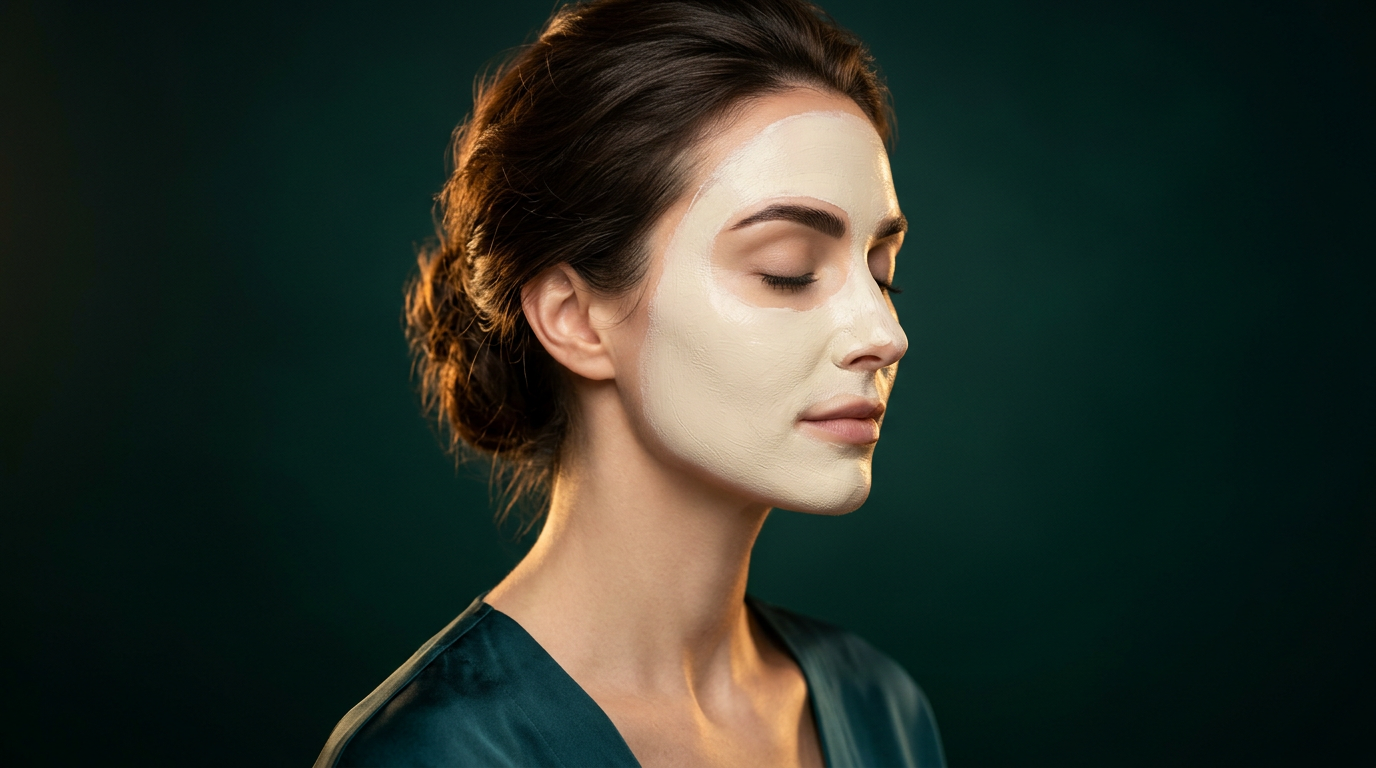
Facial redness: how to soothe and reduce its frequency
Facial redness is not a single problem: there are several different situations that look similar in the mirror. Redness that comes and goes after a hot meal has nothing to do with redness that has been on the cheeks for months. Distinguishing between the two determines both the appropriate care and when to consult a professional.
Why Skin Blushes
Redness comes from blood vessels located just beneath the skin's surface. When they dilate, blood rushes in, and the skin takes on a pink to red hue. This is a normal regulatory mechanism: it dissipates heat and accompanies exertion, emotion, or digestion.
Two parameters cause the same dilation to be visible in one person and not in another. First, skin thickness: on thin skin, especially fair skin, vessels are closer to the surface, and the network is more visible. Second, vascular reactivity, which varies greatly from person to person.
What distinguishes redness-prone skin from other skin types is therefore not the existence of the phenomenon, but its frequency, duration, and the speed at which the skin returns to its initial state.
The mechanism is vascular: the vessels located beneath the surface dilate, blood flows in, and the skin of the face takes on a more intense shade. This dilation of the vessels is reversible in most people; it becomes less so over time and with repeated episodes.
A sensation of warmth almost always accompanies the phenomenon, helping to distinguish it from red patches of other origins. Red spots on the face that itch, persist for several days, or spread are in a different category—allergies are one such example—and require medical advice rather than a change of cream.
Temporary Redness, Persistent Redness
This distinction governs everything else.
Temporary redness appears in response to an identifiable trigger—heat, cold, exertion, spicy food, alcohol, emotion, poorly tolerated product—and fades within minutes to a few hours. The skin returns to an even tone. This is common and requires no treatment, only identifying what triggers it.
Persistent redness remains. It occupies a stable area, often the cheeks, nose, chin, or forehead, and never completely disappears between episodes. The vascular network can become visible as fine lines. This form does not fall solely under cosmetics.
A simple guideline: if the affected area has been the same for more than three months and never completely fades, it warrants a dermatologist's opinion. Soothing care provides comfort but does not replace a diagnosis.
Everyday Triggers for Redness
Keeping a list of episodes and what preceded them for a few weeks teaches more than any product. The most frequent triggers fall into four categories.
Temperature fluctuations. Moving from outdoor cold to a heated room, a very hot shower, a hairdryer directed at the face, exposure to wind. These are the most common and easiest to correct.
Diet. Spicy foods, very hot drinks, alcohol. The effect is vascular and immediate, unrelated to intolerance.
Overly vigorous skincare actions. Hot water, abrasive scrubbing, cleansing brushes, rubbing with a towel, overly harsh products. This category is by far the most underestimated: much redness is maintained by routines meant to treat it.
Poorly tolerated ingredients. Denatured alcohol at the top of the list, fragrance, essential oils, menthol, certain preservatives. On reactive skin, they are enough to trigger an episode with each application.
Sun deserves a separate mention: it acts both as an immediate trigger and a long-term aggravating factor, weakening vascular walls.
Soothing Actives That Work
No cosmetic ingredient can make persistent redness disappear. What one can expect from good skincare is twofold: reducing the frequency of episodes and strengthening the skin barrier so that the skin reacts less.
Niacinamide is the best-documented active in this area. It supports barrier function and improves overall tolerance. At moderate concentrations, around 4 to 5%, it suits most reactive skin types; beyond that, it can itself cause tingling.
Ceramides rebuild the lipid cement between surface cells. An intact barrier allows fewer irritants to penetrate and loses less water: this is the foundation upon which everything else rests.
Colloidal oatmeal soothes sensations of heat and tightness. Its use is ancient, its tolerance excellent, and it suits even the most reactive skin types.
Aloe vera provides an immediate cooling effect and surface hydration. The effect is real but short-lived: it needs to be sealed in by a richer treatment.
Bisabolol, allantoin, and panthenol usefully complement a soothing formula, with a good tolerance profile.
A word about the green pigments present in some corrective treatments: they optically neutralize redness and improve immediate appearance. This is corrective makeup, not a treatment—useful, provided you know what you're buying.
What to Avoid on Redness-Prone Skin
The list of ingredients to avoid is as important as the list of actives to look for, and it is shorter.
Denatured alcohol — alcohol denat. on the INCI list — especially if it appears at the top of the list. It provides a feeling of freshness but then dries and weakens the barrier.
Fragrance and essential oils. These are the primary causes of intolerance on reactive skin. A fragrance-free formula is no less effective; it is simply less pleasant in smell.
Menthol, camphor, and eucalyptus, which produce a cooling effect by irritating nerve endings.
Abrasive mechanical exfoliants with angular grains and rotating cleansing brushes. On this skin type, they maintain the inflammation one seeks to calm.
Acids at high concentrations used frequently. They are not forbidden but require spaced application and very gradual introduction.
A Facial Routine Adapted for Redness
The guiding principle is simple: do less, but do it well. A short, consistent routine is better than piling on soothing products.
Morning. Rinse with lukewarm water, or use a gentle cleanser for sensitive skin if skin is oily. Pat dry, never rub. Apply a soothing serum with niacinamide, a cream rich in ceramides, then sun protection.
Evening. Gentle makeup removal if necessary, lukewarm water cleansing, soothing care. That's all. Renewing actives are introduced later, once the skin has stabilized.
Sun protection is non-negotiable. For redness-prone skin, a mineral formula based on zinc oxide is generally better tolerated than organic filters. See our facial sunscreen guide.
Water temperature matters as much as products. Lukewarm, never hot, for both washing face and showering.
Which Texture to Choose Based on Skin Type
Redness affects all skin types, and this makes product selection tricky.
Dry and reactive skin. A rich, occlusive cream, rich in ceramides and fatty substances. This is the simplest case: nourishing strengthens the barrier and mechanically reduces reactivity.
Combination to oily and reactive skin. The most delicate case. It's necessary to soothe without suffocating: a water-based gel-cream, with niacinamide and ceramides, without occlusive oils. An overly rich product creates imperfections which, by inflaming, add to redness.
Dehydrated skin. Surface dehydration significantly accentuates the sensation of discomfort and the visibility of redness. A layer of humectant—hyaluronic acid—under the cream often improves things in a few days.
Mature skin. Dermal thinning makes the vascular network more visible. Soothing care is combined here with a firming active, introduced slowly and never at the same time.
Cream, Serum, Targeted Care: What to Choose
Soothing ranges offer the same actives in various formats, and the price difference does not always reflect an efficacy difference.
Cream is the foundation and, in most cases, it is sufficient. It provides the fatty substances and ceramides that rebuild the barrier, and the barrier controls reactivity. A good soothing cream used morning and evening does more than an expensive serum applied to poorly protected skin.
Serum provides a higher concentration of actives in a small volume. It is justified when cream alone is no longer enough, or to introduce niacinamide at an effective dose. It never replaces cream: applied alone, it leaves the skin unprotected.
Targeted care—stick, roll-on, corrector—treats a specific area. Useful for systematically red nasal alae, but not for general use.
Thermal water mist soothes instantly. Its effect lasts as long as it evaporates, and skincare should be applied immediately afterwards: letting the water dry alone on the face accentuates surface dehydration.
A budget guideline: between two products, a correctly formulated cream and quality sunscreen are better than a five-product routine, none of which are used daily.
Redness by Age: Adolescents, Adults, Mature Skin
The same word covers very different situations depending on the stage of life, and the products concerned are not the same.
In adolescents, redness most often accompanies imperfections. The skin is oily, reactive, and there is a strong temptation to use drying products that worsen redness. The useful rule is to separate actions: a gentle cleanser, a light soothing treatment, and the anti-blemish active applied only to spots.
In adults, redness more often becomes reactive: stress, temperature fluctuations, poorly tolerated products accumulated over the years. This is the population for whom simplifying the routine yields the fastest results—often by removing rather than adding.
In pregnant women, hormonal variations increase vascular reactivity, and the skin blushes more easily. Caution applies to actives: retinoids are not recommended, and any introduction should be discussed with a healthcare professional. Classic soothing actives—niacinamide, ceramides, colloidal oatmeal, panthenol—do not pose any particular difficulty.
On mature skin, dermal thinning and decreased estrogen make the vascular network more visible. Redness is not necessarily more intense; it is simply less masked. See our mature skin routine.
Redness and Seasons
Episodes are not evenly distributed throughout the year, and anticipating them avoids the most pronounced flare-ups.
Winter is the most difficult season: cold constricts vessels, heating dilates them, and repeated alternation stresses the network. Dry indoor air increases water loss. A richer cream during these months, and facial protection outdoors, significantly change things.
Summer brings heat and sun exposure, two direct triggers. Mineral sun protection, a refreshing mist, and avoiding the hottest hours are the main defenses.
Inter-seasons are often the best windows to introduce a new active: the skin is less stressed, and any intolerance is more easily identified.
How Long Before Noticing a Change
The timelines are shorter than for spots or wrinkles, but they require consistency.
| Timeline | What Changes |
|---|---|
| a few days | comfort, less tightness and burning sensation |
| 3 to 4 weeks | less frequent episodes, faster return to normal |
| 2 to 3 months | strengthened barrier, higher triggering threshold |
What does not change: long-standing redness with a visible vascular network does not disappear cosmetically. Skincare reduces discomfort and the intensity of flare-ups; the underlying redness requires medical management.
A practical and often decisive point: if the skin does not improve after one month of a simplified routine, the cause is more often a product still present in the routine than a lack of soothing active. Remove before adding.
Redness and Imperfections at the Same Time
This is a common situation poorly served by product lines, which treat one or the other.
Anti-blemish treatments are often drying and exfoliating, thus irritating for reactive skin. Soothing treatments are often rich, thus poorly tolerated by blemish-prone skin. The result is a back-and-forth between two routines, neither of which is suitable.
The solution involves three choices. Prioritize actives that serve both objectives: niacinamide first and foremost, which regulates the appearance of oily skin while supporting the barrier. Use anti-blemish actives for localized application rather than on the entire face. And space them out significantly, alternating evenings. See our article on imperfections and natural solutions.
When to Consult
Cosmetics have limitations that are best known in advance.
Medical advice is necessary for redness that persists in the same spot for more than three months, for the appearance of small visible blood vessels, for red bumps accompanied by burning sensations, or for redness that gradually spreads.
It is also necessary if the eyes are affected—sandy sensation, associated ocular redness—or if the appearance of the face has changed permanently.
A dermatologist provides a diagnosis that neither an article nor a salesperson can, and some situations have effective treatments that are not cosmetic. Continuing alone for years with soothing care is wasting time on a path that was not the right one.
Remove Before Adding
On redness-prone skin, discomfort more often comes from an overly complex routine than from a missing active: the first useful step is to reduce the number of products. A Soothing and Barrier routine is built on this principle—a gentle cleanser, a simple emollient, hydration, and nothing else until calm is restored.


Go further than this article
Get our skincare guides by email — and start with your free skin diagnostic: 2 minutes, advice tailored to your skin. We ship to the US, UK, Canada, Australia and 27 European countries; somewhere else? Sign up and you will be the first to know when we deliver to your country.
By signing up, you agree to our privacy policy. Unsubscribe in one click.