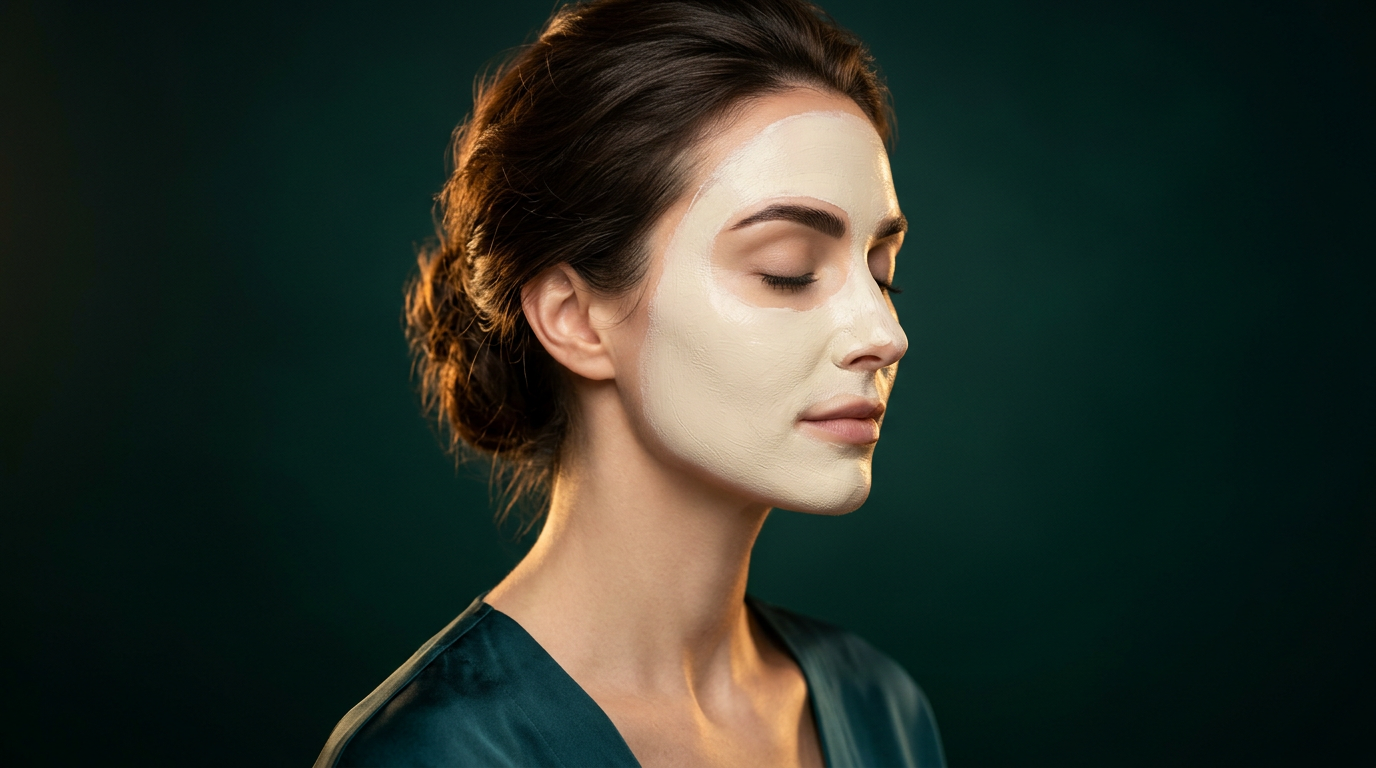
Homemade face mask: safe recipes and right gestures
A homemade face mask is not a discounted treatment: it's a very short-lived, preservative-free treatment whose effectiveness depends on freshness. It's also the format where you find the most dangerous recipes circulating. Knowing which ones to discard is as important as knowing which ones to prepare.
What a homemade mask can and cannot do
A homemade face mask works essentially on the surface during the ten to twenty minutes it's left on. It provides water to the stratum corneum, deposits a film of moisturizing ingredients, softens dead cells, and immediately improves the complexion's appearance.
What it doesn't do: permanently alter the skin's structure. The active ingredients in industrial formulas — retinoids, pH-controlled acids, peptides — have no equivalent in a kitchen. A homemade mask is a gesture of comfort and radiance, not a treatment.
Two real advantages remain. The ingredients are fresh, preservative-free, and fragrance-free, which limits intolerances on reactive skin. And the cost is negligible compared to a commercial mask.
One principle governs all the rest: prepare only enough for a single application, and discard the rest. Without a preservative system, a mixture containing water becomes a culture medium in just a few hours.
Ingredients that actually work
Five basic ingredients are enough to cover almost all needs.
Honey is the most interesting ingredient in the pantry. A humectant, it attracts and retains water; its consistency makes it a non-drip base. Manuka honey is often highlighted, but any quality honey does the same cosmetic job.
Plain yogurt provides lactic acid in a low concentration: a very gentle exfoliation, suitable for sensitive skin, with a noticeable radiance effect from the first application.
Clays — green, white, pink — absorb sebum and impurities. Green clay is the most absorbent, reserved for oily skin; white clay, the gentlest, is suitable for dry and sensitive skin.
Aloe vera gel soothes and moisturizes. It is the most versatile base, usable alone after sun exposure or an irritating gesture.
Vegetable oils — jojoba, sweet almond, avocado — nourish dry skin. Jojoba, similar to human sebum, is best tolerated on combination skin.
Useful additions include colloidal oatmeal, which is soothing, mashed banana, rich in fatty substances, and blended cucumber, which is refreshing.
Recipes never to prepare
This chapter is the most important part of the article because these recipes circulate widely and cause real damage.
Lemon. Its pH is around 2, far from that of the skin. It chemically burns the stratum corneum and is photosensitizing: applied before sun exposure, it causes lasting dark spots. It is the most dangerous ingredient in the lot, and the most recommended online.
Baking soda. Its pH of 9 destroys the hydrolipidic film and permanently unbalances the skin barrier. It doesn't "deep clean"; it strips.
Vinegar, even diluted. Same problem of uncontrolled acidity as lemon, without the benefit.
Toothpaste on pimples. It contains surfactants and whitening agents that irritate and leave post-inflammatory marks that last longer than the pimple itself.
Cinnamon and chili pepper. Presented as circulation activators, they cause sometimes severe inflammatory reactions.
Pure essential oils. Never on the skin without dilution, and never in a homemade face mask without precise knowledge of dosages. Tea tree essential oil, very popular for imperfections, is used at less than 1% and for localized application.
Five safe recipes, according to need
Proportions are given for a single application. Work until you get a homogeneous paste, spread it, avoiding the eye contour, leave it on, then rinse with lukewarm water.
Hydrating mask, normal to dry skin. One tablespoon of honey, one teaspoon of sweet almond oil. Leave on for fifteen minutes, then rinse with lukewarm water.
Radiance mask, dull complexion. Two tablespoons of plain yogurt, one teaspoon of honey. Mix, leave on for ten minutes, rinse. The lactic acid in the yogurt gently exfoliates.
Purifying mask, oily skin and blackheads. One tablespoon of green clay, a little floral water until a soft paste is obtained. Cover the T-zone for five to ten minutes, then rinse before complete drying — clay that dries completely pulls on the skin and dehydrates it.
Soothing mask, reactive skin. Two tablespoons of aloe vera gel, one teaspoon of finely ground oatmeal. Leave on for fifteen minutes before rinsing.
Nourishing mask, very dry skin. Half a ripe avocado mashed, one teaspoon of honey, one teaspoon of jojoba oil. Leave on for twenty minutes before rinsing.
Six more recipes, by concern
The proportions are still given for a single application. Work until you get a homogeneous paste, spread it, leave it on for the indicated time, then rinse with lukewarm water.
Anti-blackhead mask. One tablespoon of green clay, one teaspoon of honey, a little witch hazel floral water. Mix, cover the nose, forehead, and chin, leave for ten minutes, then rinse before complete drying. Once a week.
Radiance mask before a party. One tablespoon of honey, one tablespoon of plain yogurt, one teaspoon of aloe vera gel. Apply for ten minutes, rinse. The illuminating effect is immediate and lasts all evening.
After-sun mask. Two tablespoons of aloe vera gel, one teaspoon of honey. Spread generously, leave for fifteen minutes, then rinse with cool water. On overheated skin, cold brings as much benefit as the ingredients.
Gentle anti-aging mask. Half a ripe banana mashed, one teaspoon of honey, one teaspoon of avocado oil. Work into a homogeneous paste, leave on for twenty minutes, rinse. Rich in fatty substances, it is suitable for mature and dry skin.
Gentle exfoliating mask with yogurt. Two tablespoons of plain yogurt, one tablespoon of finely ground oatmeal. Spread, massaging very lightly with fingertips, leave for ten minutes, then rinse. Lactic acid and oatmeal work together without aggression.
Express hydrating mask with cucumber. Half a cucumber blended and strained, one teaspoon of aloe vera gel. Apply for ten minutes before rinsing. This is the lightest of all, suitable for oily skin that feels tight.
Choosing your ingredients
The quality of the raw material changes the result, and a few simple guidelines are enough.
Honey. Prefer unpasteurized honey, whose humectant properties are intact. Thyme honey and lavender honey are renowned in cosmetics, but a good quality all-flower honey from a local producer works just as well. Crystallized honey softens in a warm bain-marie, never in the microwave.
Clays. Buy them in superfine powder, in organic stores or pharmacies. Store them dry, in their original packaging. Never use metal utensils to prepare clay: prolonged contact alters its properties. A glass or ceramic bowl and a wooden spatula are suitable.
Vegetable oils. Virgin, cold-pressed, stored away from light. An oil that develops a rancid smell has undergone oxidation: it should no longer be applied to the face.
Yogurt. Plain, whole, without sugar or flavor. Whole milk yogurt provides more fat than 0% fat.
Aloe vera gel. Check that aloe is at the top of the INCI list, as juice rather than reconstituted powder. See our aloe vera gel guide.
The most frequent preparation errors
They have nothing to do with ingredient choice, yet they ruin the result.
Preparing too much. A face mask fits in two tablespoons. The excess ends up being thrown away, or worse, stored.
Too liquid a texture. It runs down the neck and into the eyes, and the application time becomes impossible to maintain. Add the liquid phase gradually, not all at once.
Letting clay dry. This is the most common mistake. Clay that cracks on the face draws water from the skin instead of absorbing sebum. Mist if necessary during application to keep it pliable, and rinse before it hardens.
Rinsing with hot water. It dissolves the hydrolipidic film and cancels the mask's benefits. Always lukewarm.
Using a mask and scrub on the same evening. Two combined exfoliating actions weaken the skin barrier. Space them out by at least three days.
Not applying a follow-up treatment. The mask paves the way, the cream seals. Without it, the water provided evaporates in one to two hours.
Adapt according to the season
Skin needs vary throughout the year, and the recipe benefits from following suit.
In winter, cold and heating dry out the skin. Rich masks — honey, avocado, vegetable oils — take precedence, twice a week on tight-feeling skin. Clay takes a backseat, even on combination skin.
In spring, the skin readjusts, and the complexion is often dull after winter. Yogurt masks and gentle exfoliating recipes regain their relevance.
In summer, heat increases sebum production and perspiration. Light textures are essential: cucumber, aloe vera, clay on the T-zone. The after-sun mask becomes the most useful of all.
In autumn, it's time to repair what summer has left behind: hydrating and soothing masks, avoiding fruit acids on skin still marked by sun exposure.
The application protocol
The gesture is as important as the recipe, and a few precautions prevent most unpleasant surprises.
- Always test on the inside of your elbow twenty-four hours before the first application of a new recipe, especially if it contains honey, fruit, or essential oil.
- Apply to clean skin, after evening cleansing. Slightly damp skin improves the penetration of humectants.
- Avoid the eye contour and lips, where the skin is thinner and more reactive.
- Respect the application time. Extending it doesn't improve anything: clay that dries out irritates, fruit acid left on for too long burns.
- Rinse thoroughly with lukewarm water, never hot, then apply a moisturizing treatment without delay — this seals the mask's benefits.
- One to two times a week is sufficient. Beyond that, the skin barrier is weakened.
Choose your recipe according to your skin type
| Skin type | Preferred base | To avoid |
|---|---|---|
| Oily skin | green clay, yogurt | rich oils, avocado |
| Dry skin | honey, avocado, vegetable oils | green clay, fruit acids |
| Combination skin | clay on the T-zone, honey on the cheeks | uniform facial treatment |
| Sensitive skin | aloe vera, oatmeal, white clay | citrus, essential oils, spices |
| Blemish-prone skin | green clay, honey | toothpaste, baking soda, lemon |
On combination skin, a zone-specific approach yields much better results than a single mask: clay on the forehead, nose, and chin, a hydrating base on the cheeks. This is the main advantage of homemade over a commercial product.
Homemade or industrial: what each offers
The two are not opposed; they simply serve different purposes.
The homemade mask wins on freshness, absence of preservatives and fragrance, cost, and the ability to adjust the recipe to your skin's needs of the day. It loses on stability, concentration of active ingredients, and reproducibility: no two preparations are ever identical.
The commercial mask wins on formulation — pH controlled, dosed active ingredients, tolerance tests — and practicality. It loses on cost and necessarily contains preservatives.
A reasonable organization consists of reserving the homemade mask for hydration and radiance, two needs where pantry ingredients work very well, and using an industrial formula when targeting a specific action: pH-controlled exfoliation, anti-aging active ingredients, treatment of imperfections. See our mask and exfoliant comparison.
Preservation: the non-negotiable rule
This is the point on which most recipe articles remain silent, and it is the most important.
A homemade face mask containing water, fruit, dairy, or aloe vera gel must be prepared and used immediately. No storage, not even in the refrigerator, not even for twenty-four hours. Without preservatives, microbial flora develops very quickly, and a contaminated preparation applied to the face causes reactions.
Only strictly anhydrous preparations — a mixture of vegetable oils, a dry, unhydrated clay powder — can be stored, away from light and heat, in a clean container.
Two complementary actions: use a clean, dry bowl and spatula, and never dip your fingers back into a mixture after contact with the skin.
Results: what to expect
The effect of a homemade face mask is immediate and short-lived, and that's normal.
Within the hour, the skin appears smoother, brighter, and more comfortable. This result is due to the water supply to the stratum corneum and the removal of dead surface cells. It lasts one to two days.
Over several weeks, with one to two applications weekly, a more even complexion and refined skin texture are observed — provided the rest of the routine follows. A weekly mask on poorly cleansed or never sun-protected skin does not compensate for anything.
What will not change: established wrinkles, old spots, deeply dehydrated skin. These three needs require formulated active ingredients and a daily routine, not a weekly gesture.


Go further than this article
Get our skincare guides by email — and start with your free skin diagnostic: 2 minutes, advice tailored to your skin. We ship to the US, UK, Canada, Australia and 27 European countries; somewhere else? Sign up and you will be the first to know when we deliver to your country.
By signing up, you agree to our privacy policy. Unsubscribe in one click.