Rosehip Oil or Ceramides: which to choose?
Both address the skin barrier, through two different approaches. Ceramides are structural lipids: they directly supplement the cement that binds surface cells. Rosehip oil provides the essential fatty acids that the skin uses to produce this cement.
The finished product and the raw material
This is the best way to understand the difference. A ceramide cream delivers the assembled material, with a measurable effect in two to four weeks. Rosehip oil delivers the raw material, through a slower mechanism that does not depend on the next application.
Neither approach is superior. They simply don't operate on the same time scale.
What rosehip oil contains
Extracted from the seeds of Rosa rubiginosa — and not the petals — it is dominated by two essential fatty acids: linoleic acid and alpha-linolenic acid, the latter being a rare omega-3 among cosmetic oils.
Linoleic acid is precisely one of the precursors to skin ceramides. Rosehip oil therefore does not provide the finished product, but one of its raw materials — a different and perfectly complementary logic.
It also contains carotenoids, which give it its amber color, and its richness in polyunsaturated fatty acids makes it fragile: refrigeration is essential.
What ceramides are
Lipids naturally present in the stratum corneum, where they represent almost half of the intercellular cement, alongside cholesterol and free fatty acids.
A barrier that lacks it loses water and allows irritants to enter. This is the most common cause of tightness and underlying redness — much more so than isolated lack of water.
Which one to choose
Reactive skin, that reddens or tingles: ceramides, which directly target the deficiency.
Dry skin, uneven texture: rosehip oil, for its contribution and its action on the surface.
Very damaged barrier after winter or poorly dosed active ingredients: both, and in that order.
Using them together
This is the most complete option and it poses no difficulty. Ceramide cream first, on slightly damp skin, then two to three drops of oil as the last layer.
The cream provides structural lipids; the oil seals and provides the raw material for the future. On a weakened barrier, this combination yields faster results than either alone.
On what timelines to judge
Comfort returns in a few days. Suppleness and evenness of texture require three to four weeks, the time of a surface renewal cycle.
Reactivity takes longer to decrease: allow a full month before concluding, and only change one parameter at a time during this period.
Seasonal use
In winter, ceramide cream bears the brunt of the work: this is when the barrier suffers the most. In summer, oil alone is often sufficient, in reduced quantities.
The composition of the routine does not change, only the generosity of each layer evolves. This continuity allows for judging long-term effectiveness without parasitic variables.
How to recognize good products
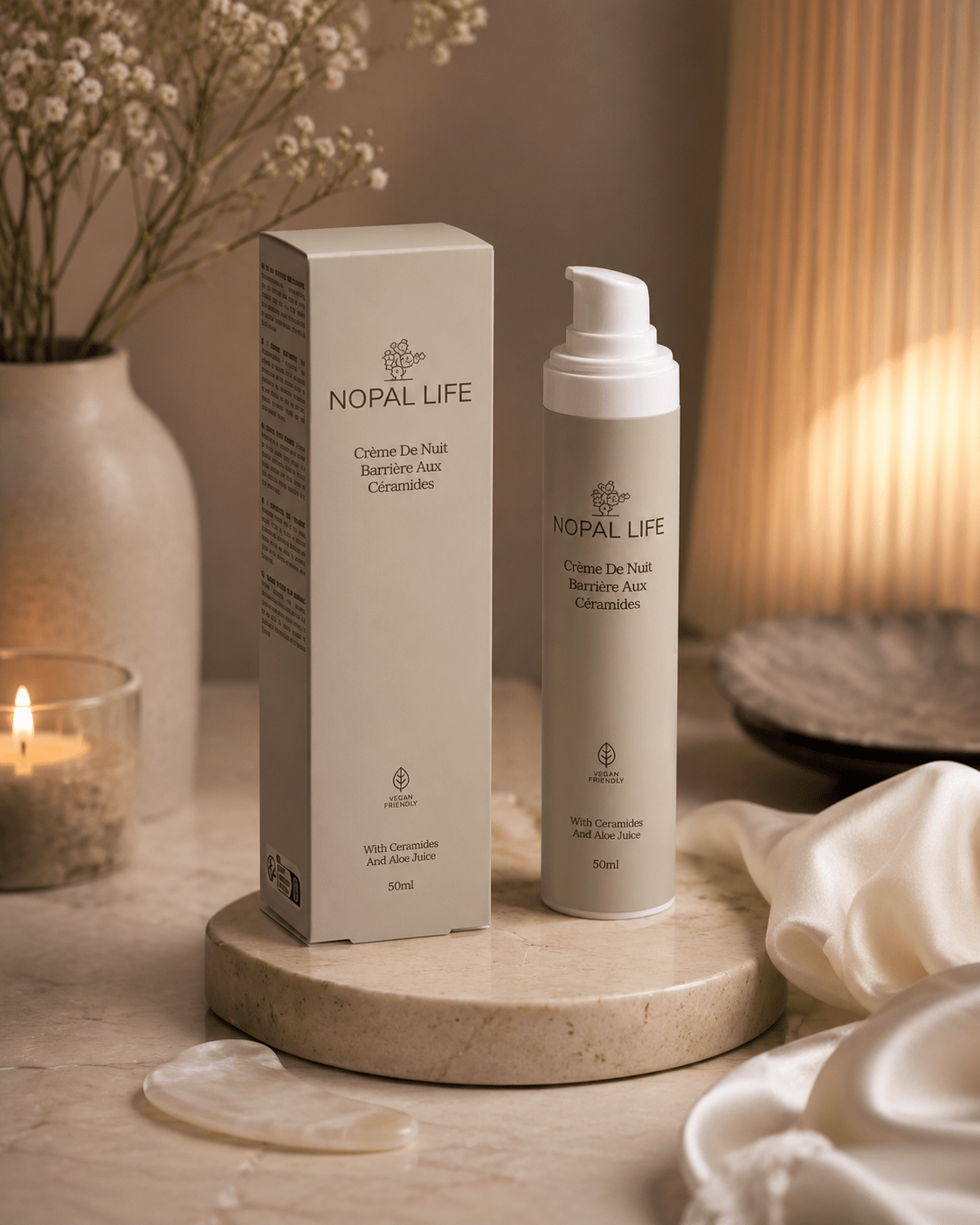
For the cream: several types of ceramides combined with cholesterol and a fatty substance. This trio is better documented than ceramides alone, and its position in the ingredient list matters more than the mention on the packaging.
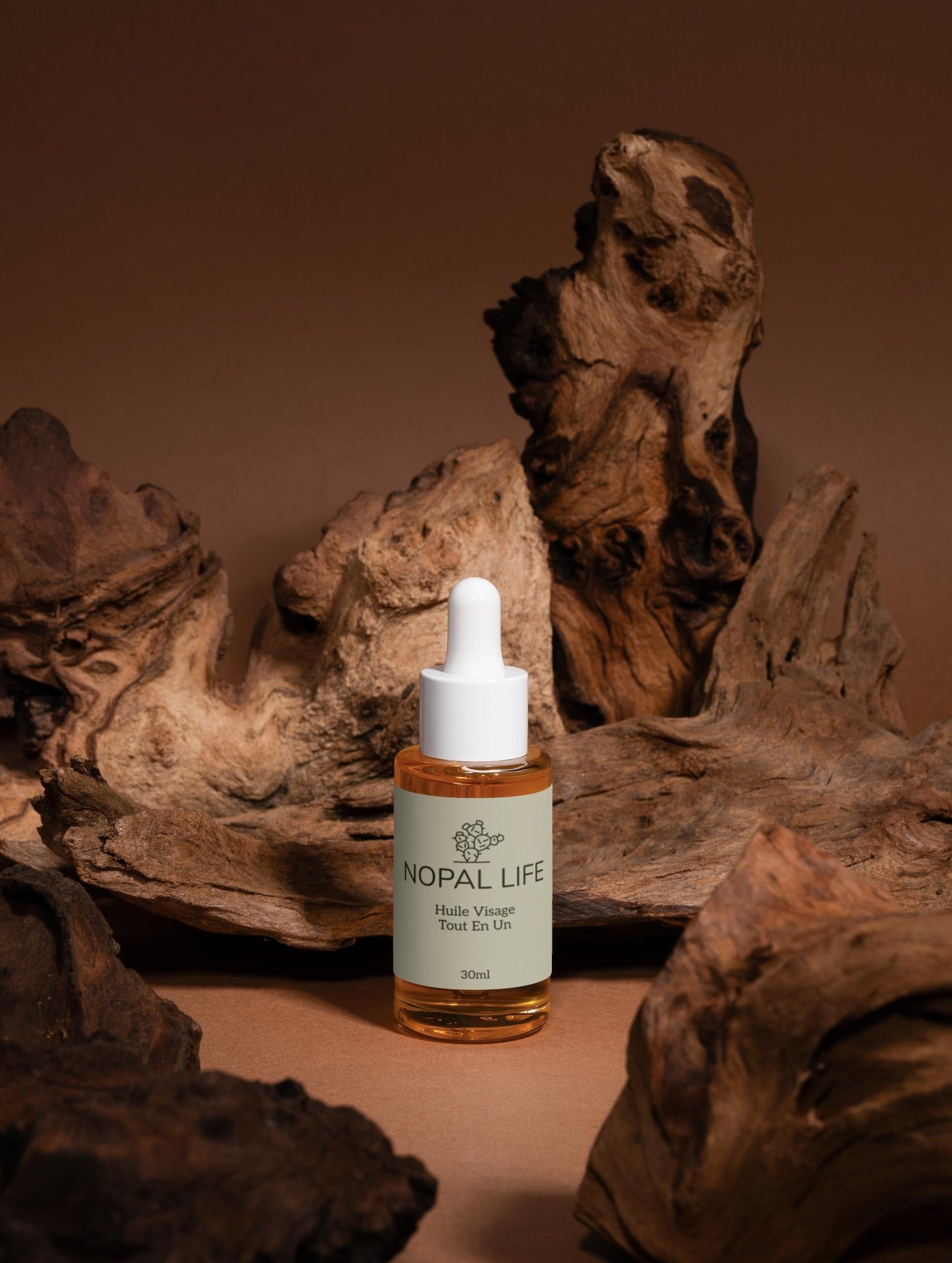
For the oil: first cold pressing, tinted glass, a clear amber color. A pale rosehip oil has probably been refined, and a rancid smell indicates that it has gone bad.
What rosehip oil brings to the face
A plant-based oil rich in essential fatty acids, applied regularly, improves the suppleness and uniformity of the surface. Rosehip oil is particularly recommended for mature skin, whose natural lipid production decreases.
Its antioxidant action exists, carried by its carotenoids, but it remains modest compared to a dedicated active ingredient. Its fatty acid profile is what makes it valuable.
On marks and stretch marks
This is the most common reputation of rosehip oil, and it needs to be clarified. Applied early and regularly to stretching areas, it maintains skin suppleness — which is useful.
On established white stretch marks, no cosmetic treatment produces a noticeable change. Stating this clearly is part of honest advice, even if it disappoints.
On spots and complexion uniformity
Rosehip oil improves the apparent uniformity of the surface, which is sometimes mistaken for an action on spots. It does not act on pigmentation itself.
If spots are your goal, a vitamin C serum in the morning and daily sun protection will do much more. The oil will complement, never replace.
Sensitive skin requires patience
For sensitive skin, introduce only one product at a time and allow fifteen days. Start with ceramide cream, which is more predictable, before adding the plant-based oil.
Apply preferably in the evening: the amber color of rosehip oil can slightly tint fair skin, and its fragility does not cope well with radiation.
Quality, and how to recognize it
Quality rosehip oil is obtained by first cold pressing, sold in tinted glass, and has a clear amber color. A pale oil has probably been refined, and refining removes some of what justified the purchase.
The small size is a criterion here, not a disadvantage: 30 ml finished in two months is better than a large bottle oxidized after six.
What you need to know
These treatments are cosmetic: they improve skin comfort, suppleness, and apparent resistance, without curative intent. Skin that is persistently flaking or itching requires dermatological advice.
Our anti-aging treatments