Combining Rosehip Oil and Ceramides: The Method
Ceramides deliver the assembled material, rosehip oil delivers the raw material. A ceramide cream directly supplements the skin's lipid barrier; rosehip oil provides the linoleic acid the skin uses to produce ceramides. Two different timescales, one common goal.
Key Takeaways
- Order: ceramide cream first, then rosehip oil.
- Quantities: a pea-sized amount of cream, 2 to 3 drops of oil.
- Time: preferably in the evening.
- Timeline: comfort in a few days, skin texture in 3 to 4 weeks.
- Compatibility: complete, no interactions.
Why This Order
A vegetable oil forms the most occlusive layer in a routine. Applied under cream, it would prevent the cream from absorbing; applied over cream, it seals everything in.
The general rule therefore applies without exception: from the most fluid to the richest, rosehip oil always goes last.
What Rosehip Oil Provides
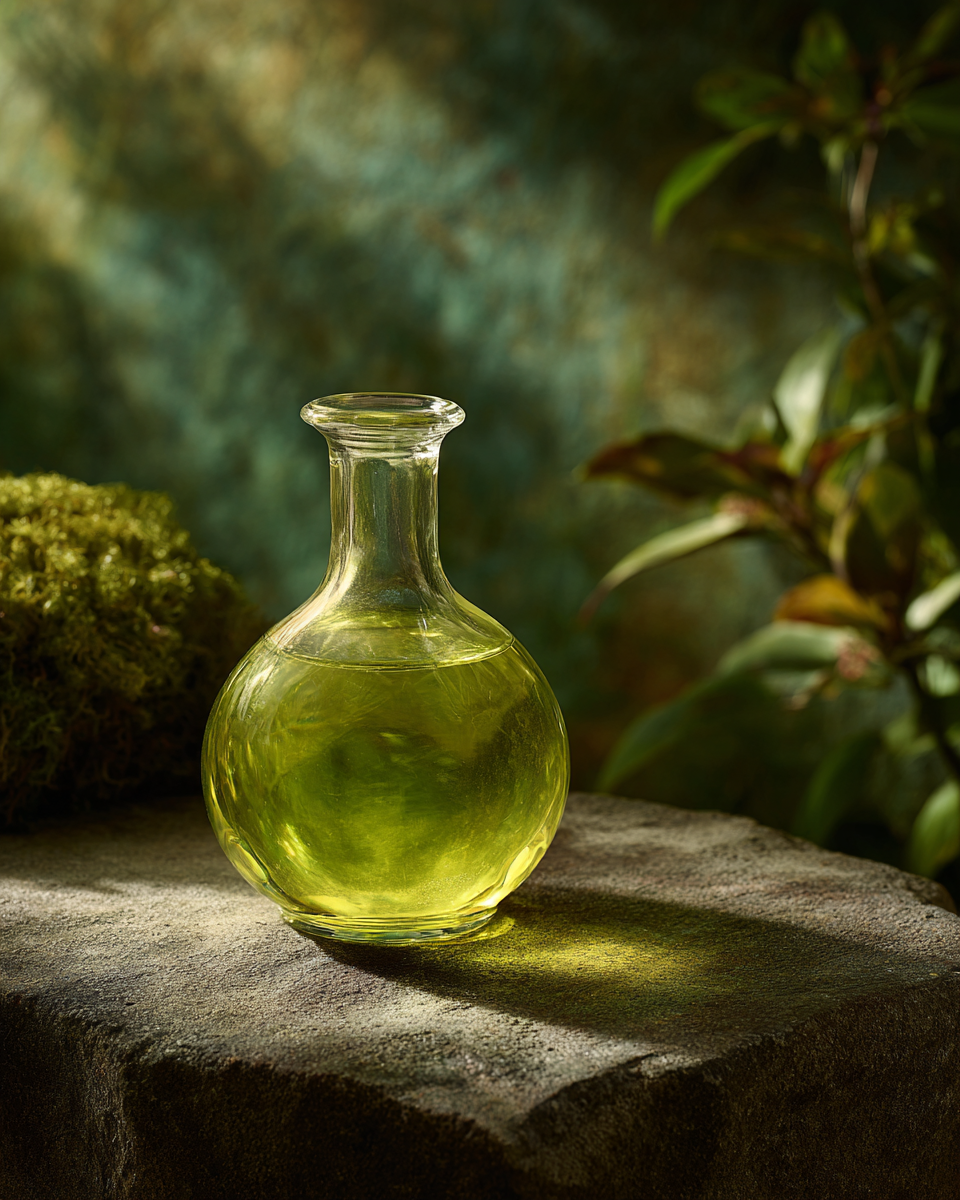
Extracted from the seeds of Rosa rubiginosa—not the petals—it is rich in essential fatty acids, with an omega-3 content rare among cosmetic oils.
The linoleic acid it contains is a precursor to skin ceramides. Rosehip oil therefore does not provide the finished product, but the raw material from which it is made: an indirect, slower, and perfectly complementary logic.
Its richness in polyunsaturated fatty acids also makes it fragile. Poorly stored rosehip oil oxidizes and irritates instead of nourishing.
Its richness in polyunsaturated fatty acids makes it a late-routine oil, to be applied after ceramides and not before. This order allows both to play their role: ceramides fill, oil seals.
The benefits of rosehip oil on skin texture are seen over several weeks, never in a few days. For sensitive skin, start every other night: it is a rich oil, and tolerance builds up.
What Ceramides Provide
They represent nearly half of the "cement" that binds surface cells, alongside cholesterol and free fatty acids. A compromised skin barrier loses water and lets irritants in.
When applied, they fill this deficit where it occurs. The effect is measured by skin that reacts less, over two to four weeks.
The Protocol
After gentle cleansing, pat dry without rubbing. Apply ceramide cream to still-damp skin, then wait one minute. Finish with two to three drops of rosehip oil, warmed between your palms.
In the morning, reduce the oil to one drop and finish with sunscreen. The amber color of rosehip oil may slightly tint fair skin.
When This Combination Is Particularly Beneficial
After winter, when dry air and heating have left skin rough and reactive.
After excessive active ingredient use—exfoliants too close together, retinoids poorly introduced—where the barrier needs to be rebuilt before resuming.
Mature skin, where natural lipid production decreases and external input becomes essential.
For Sensitive Skin
Start with ceramide cream alone for two weeks. This way, you'll know what it provides without any confounding variables.
Then introduce rosehip oil, in the evening only. It's the oil, not the cream, that might cause issues—especially if the bottle has been open for a long time.
The Benefits of Rosehip Oil on Skin Texture
Expected benefits include improved suppleness and surface uniformity. With three to four weeks of regular use, skin texture becomes more even and reflects light better.
Rosehip oil does not erase established marks and does not act on pigmentation. What it improves is surface quality, which is real and more modest than common promises.
Strengthening the Skin Barrier Over Time
The logic of this routine is reinforcement, not correction. Ceramides fill in today, rosehip oil fuels tomorrow's production.
This is why regularity matters more than quantity. Two drops every evening are better than ten drops once a week, and the difference is significant.
Choosing Your Two Products
For the cream: several types of ceramides combined with cholesterol and a fatty substance, in a short and clear ingredient list.
For rosehip oil: first cold press, tinted glass, small format, distinct amber color. A pale oil has likely been refined, and refining removes some of what justified the purchase.
Using Rosehip Oil According to Skin Type
Dry skin: rosehip oil morning and evening, two to three drops, with ceramide cream underneath.
Combination skin: rosehip oil in the evening only, one drop, on areas that feel tight.
Mature skin: this is where rosehip oil offers the most benefits, as natural lipid production decreases with age.
Reactive skin: test rosehip oil for two days on a small area. Older oil irritates more than fresh oil.
Anti-Aging: What Rosehip Oil Can and Cannot Do
For anti-aging, rosehip oil acts on surface quality: suppleness, evenness of texture, reduction of fine lines related to dehydration. These effects appear in three to four weeks.
It does not act on elasticity in terms of dermal fibers, nor on established wrinkles. No vegetable oil does, and the most well-established anti-aging action remains protection against radiation.
On Spots and Marks
Rosehip oil improves the apparent uniformity of the surface, which is sometimes mistaken for an action on spots. It does not act on pigmentation itself.
For old and established scars or marks, no cosmetic product produces noticeable change. However, applied early and regularly, rosehip oil maintains the suppleness of the area.
Antioxidants in This Routine
Rosehip oil contains carotenoids and tocopherols, but in moderate quantities—which also explains its fragility. Its main benefit is not here.
If you are looking for real antioxidant protection, add a vitamin C serum in the morning. Rosehip oil will remain the evening treatment, and ceramide cream will be the base for both.
Surface Regeneration, Not Reconstruction
Surface cell renewal takes about twenty-eight days. Neither rosehip oil nor ceramides significantly accelerate it.
What they do allow is for this renewal to occur on a well-supplied barrier rather than on a depleted surface. This is a real result, provided it is named correctly.
What You Should Know
These treatments are cosmetic: they improve comfort, suppleness, and the apparent resilience of the skin, without curative intent. Skin that is persistently flaking or itching requires dermatological advice.
Oil Does Not Replace Ceramides
Rosehip provides fatty acids, but not the structural lipids that make up the skin barrier: this is the difference between nourishing and consolidating. A ceramide cream fulfills this second role, and the oil is applied on top, as a final layer, only on the areas that need it.


Go further than this article
Get our skincare guides by email — and start with your free skin diagnostic: 2 minutes, advice tailored to your skin. We ship to the US, UK, Canada, Australia and 27 European countries; somewhere else? Sign up and you will be the first to know when we deliver to your country.
By signing up, you agree to our privacy policy. Unsubscribe in one click.