



Licorice glabridin licochalcone A: tyrosinase inhibition, depigmentation, and dull mature skin
Licorice and skin: a plant-based active ingredient at the heart of brightening skincare
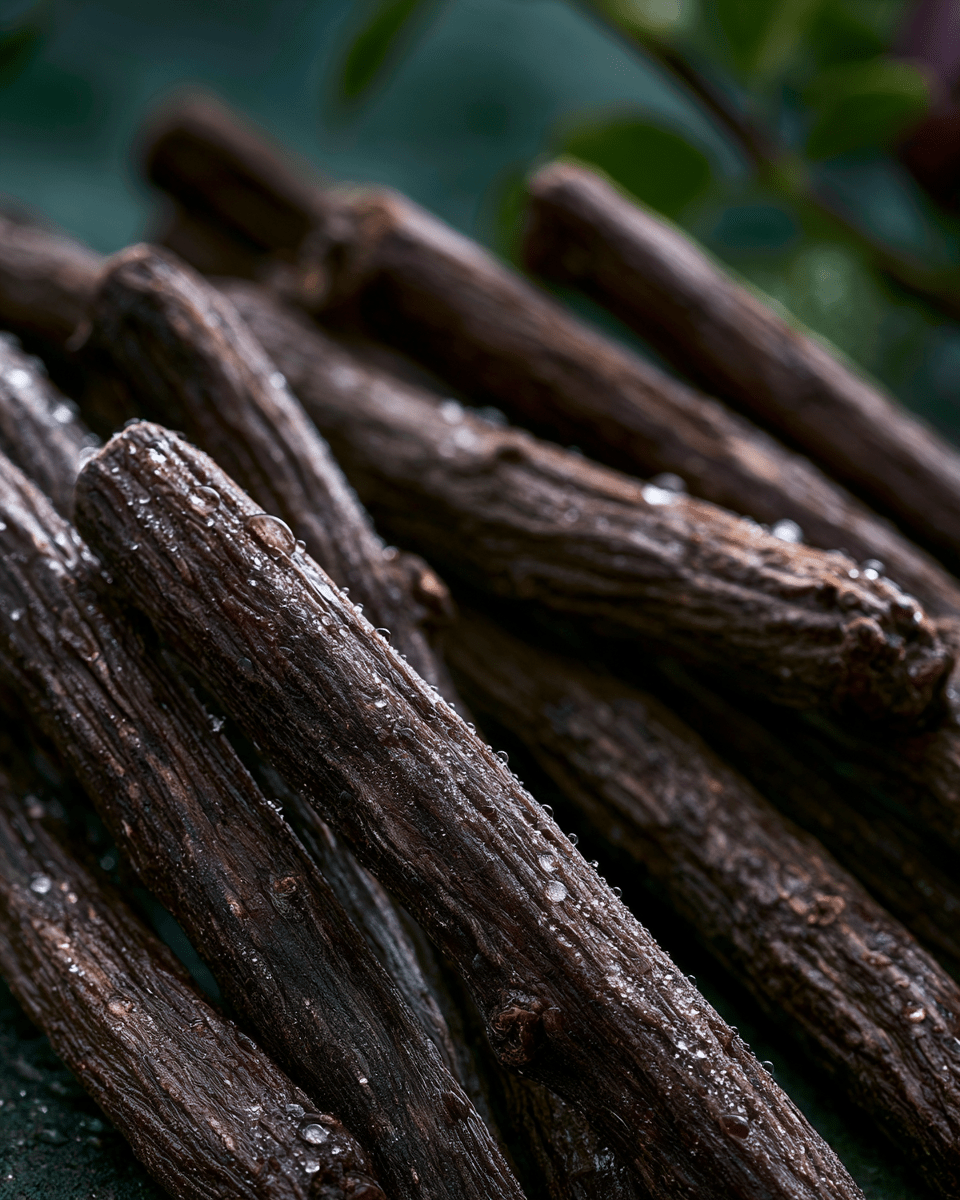
In the world of natural cosmetics, few active ingredients generate as much interest as licorice extract (Glycyrrhiza glabra). Present in Asian and Mediterranean beauty traditions for over two millennia, licorice root contains a family of polyphenols valued in skin care. Three molecules concentrate most of this interest: glabridin (isoflavonoid, 0.1–0.3% of dry extract), liquiritin, and licochalcone A. Together, they are associated with two aspects valued in cosmetics: even skin tone and skin comfort. Understanding these benefits means understanding why licorice plays a central role in skincare routines for mature and dull skin.
This article is for people who observe uneven skin tone—spots related to sun, hormonal changes, or aging—and who are looking for a plant-based, non-irritating alternative to support the appearance of their complexion. The information shared reflects traditional cosmetic uses and the attention given to this botanical ingredient.
Glabridin: an ingredient valued for even skin tone
Glabridin is one of the most iconic compounds of licorice. In cosmetics, it is valued for helping to unify the appearance of skin tone and visibly reduce the appearance of spots. Its gentleness makes it a choice ingredient when seeking a progressive, skin-friendly approach, designed to enhance radiance without aggression.
Glabridin is traditionally valued for its targeted action on appearance: it helps to visibly reduce the appearance of more pronounced areas while respecting the skin's natural balance. This gentle profile is precisely what those who prefer a non-irritating, long-term radiance routine are looking for.
Liquiritin complements this ingredient in a complementary way: it is valued for helping to harmonize the appearance of skin tone and supporting a clearer look. Used in topical application at 1% for 4 weeks, it is traditionally associated with an improvement in the visible appearance of spots. The combination of glabridin + liquiritin therefore offers a comprehensive approach, focused on radiance and visible skin tone uniformity.
Licochalcone A: a soothing active ingredient valued for skin comfort
Beyond radiance, licorice is a top-tier cosmetic soothing agent. Licochalcone A, a chalcone isolated from Glycyrrhiza inflata (a related species), is the most valued molecule for this comforting effect. It is valued for helping to maintain a feeling of softness and soothing.
Licochalcone A is traditionally valued for helping to soothe the appearance of skin exposed to the sun or daily discomfort factors. It is often sought after in skincare products designed for skin that needs gentleness, where it contributes to a feeling of comfort.
Licochalcone A is also valued for helping to maintain the soothed and even appearance of reactive skin. It is frequently sought to support the comfort of skin prone to visible redness and discomfort after sun exposure—situations frequently associated with dull mature skin.
For sensitive skin combining uneven skin tone and apparent reactivity, licorice thus represents a doubly relevant active ingredient: it supports both an even skin tone and skin comfort.
Dull mature skin protocol: integrating licorice into your P1 routine
Dull mature skin generally exhibits three concomitant characteristics: presence of sun-related spots (lentigines), apparent loss of luminosity, and increased sensitivity to daily discomforts. Licorice supports the appearance of the first two and promotes skin comfort. Here's how to effectively integrate it into a routine focused on radiance and visible firmness.
Morning: After gentle cleansing and an alcohol-free toner, apply your serum or treatment containing licorice (check that glabridin or Glycyrrhiza glabra extract is among the first 5 INCI ingredients). Immediately follow with a soothing, fragrance-free moisturizer for sensitive skin that seals in the active ingredient and supports the comfort of the skin barrier. This sequencing is important: glabridin being lipophilic, it diffuses better in a slightly occluded environment. Finish with an SPF50+—without sun protection, the desired appearance of any brightening treatment is significantly less preserved.
Evening: This is the time to combine licorice with other complementary treatments. Prickly pear seed oil (Opuntia ficus-indica), rich in essential fatty acids (linoleic at 60–70%) and vitamin E, is a choice partner: it nourishes the skin, supports natural nocturnal renewal, and complements the antioxidant properties of licorice. Apply a few drops of prickly pear seed oil as the last step, after your moisturizer, to support the supple and plump appearance of the skin.
Frequency and duration: With glabridin and liquiritin, skin tone appearance generally begins to improve after 4 to 8 weeks of regular daily application. Patience is an essential variable here: skin tone is worked on gently, and regularity offers more harmonious results than aggressive active ingredients.
To precisely identify your skin type and the priority active ingredients for you, the Nopal Life skin diagnostic will guide you to the most suitable protocol for your skin profile.
Mistakes to avoid with natural brightening active ingredients
Mistake #1 — Neglecting sun protection. This is the most frequent and costly mistake. The appearance of spots is closely linked to UV exposure; without SPF, each exposure restarts what licorice aims to address. The active ingredient cannot compensate for unprotected exposure.
Mistake #2 — Combining licorice with incompatible active ingredients. Glabridin is sensitive to oxidation. Formulations very rich in vitamin C (pure ascorbic acid >15%) can destabilize the extract and reduce its effectiveness. Prefer stable formulations or use them at different times (vitamin C in the morning, licorice in the evening).
Mistake #3 — Expecting results in less than 2 weeks. Plant-based brightening active ingredients work with the skin's natural renewal cycles (28 days on average, longer after 40 years). Giving up before 6 weeks means not giving the treatment a chance.
Mistake #4 — Applying to irritated or damaged skin. Even though licorice is soothing, applying it to damaged skin (marked discomfort, severe sunburn) without dermatological advice is not recommended. The priority is first to restore the comfort of the skin barrier.
Mistake #5 — Confusing concentration and effectiveness. A 0.1% glabridin concentration that is well formulated (stabilized, appropriate pH, penetrating vehicle) will be more effective than a poorly formulated 5% crude licorice extract. Read the INCI and favor brands that communicate about their formulation technology.
Mistake #6 — Ignoring skin tags that guide the choice of active ingredients. Licorice is particularly indicated for mature and dull skin profiles and skin prone to visible spots. It is less of a priority for young skin without uneven tone, where other active ingredients (niacinamide, centella) offer a better benefit-to-investment ratio.
Choosing the right products: what INCI tells you about licorice
On a cosmetic label, licorice can appear under several INCI names depending on the part of the plant used and the extraction process: Glycyrrhiza Glabra Root Extract (root extract, most common), Glycyrrhiza Inflata Root Extract (main source of licochalcone A), Glabridin (isolated glabridin, rarer and more expensive), or Glycyrrhizic Acid (glycyrrhizic acid, valued for soothing but not for even skin tone). These names are not equivalent: to support skin tone, aim for the first two; for pure soothing, the fourth is sufficient.
Its position in the INCI list is also informative. Beyond the 10th position (after preservatives and fragrances), the effective concentration is generally less than 0.05%, which may be insufficient for a visible effect on established spots. Serious formulations place the active extract in the 3rd or 4th position. Nopal Life's radiance and even skin tone collection selects active ingredients based on these INCI positioning criteria.
For the basic moisturizing treatments around which your protocol is structured, the Nopal Life fragrance-free soothing moisturizer is the ideal neutral base: without olfactory disruptors, it will not interfere with your targeted active ingredients and maintains a skin surface pH favorable to their diffusion.
FAQ — Licorice and skin care
Is licorice a popular cosmetic alternative?
For light to moderate visible spots and daily use, licorice is a gentle and popular plant-based alternative for the long term, without the regulatory constraints of some ingredients reserved for medical use. For pronounced cases, medical advice is still recommended.
How long before visible results?
The first improvements in brightness and skin tone are generally noticeable after 3–4 weeks. Visible reduction of existing spots can take 6 to 12 weeks depending on their age. Daily sun protection strongly influences this timeline.