Moroccan facial oil: argan and terroir
Argan oil has fascinated people for centuries—but behind its aura as a miracle cure lies a demanding geographical, human, and chemical reality. Understanding where this oil comes from, who produces it, how it's measured, and how it ages means understanding why not all argan oils are created equal, and why choosing a traceable oil radically changes the results on your skin. This article guides you through the Moroccan argan forest terroir to the analytical criteria that distinguish an exceptional oil from an ordinary one, with a concrete routine for dull and combination skin.
The Moroccan PGI and the Protected Geographical Area of the Argan Forest
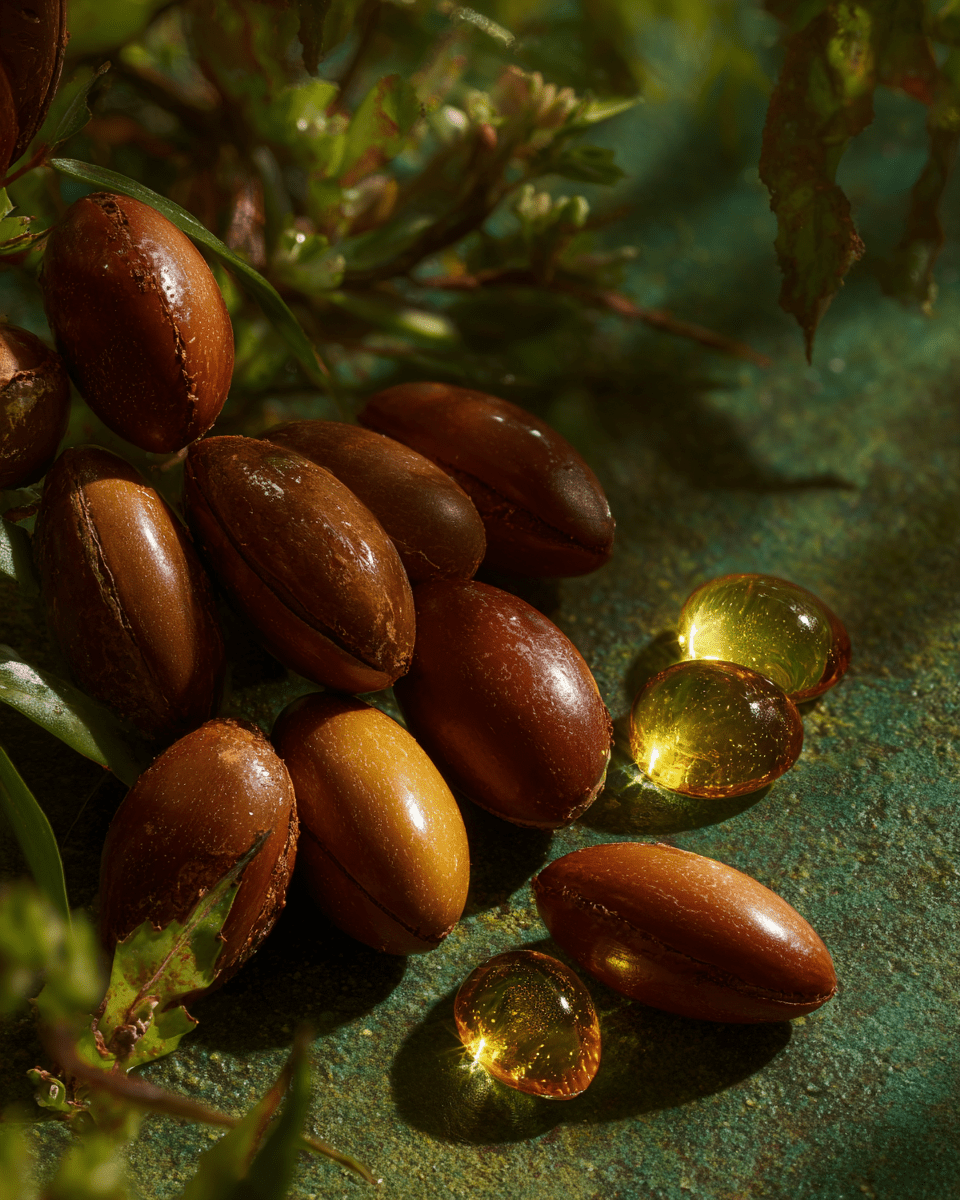
Argan oil benefits from a Protected Geographical Indication (PGI) recognized by Morocco and progressively defended internationally. The argan forest, classified as a UNESCO Biosphere Reserve since 1998, covers approximately 800,000 hectares in the Souss-Massa region, between Agadir, Essaouira, and Tiznit. This semi-arid zone, where the argan tree (Argania spinosa) has grown naturally for millennia, is the only ecosystem in the world where this endemic tree thrives on a large scale.
The PGI mention on a bottle of argan oil is not just a marketing label: it guarantees that the fruits were harvested and pressed in this delimited area, subject to specific soil and climatic conditions (calcareous and clay soil, dry heat, altitude 200-1,200 m). Outside this area, the argan tree does not produce the same fatty acid profiles or the same concentration of bioactive compounds—a fact confirmed by several comparative phytochemical studies published in Industrial Crops and Products and Food Chemistry. Checking the Souss-Massa PGI origin is therefore the first step toward an informed purchase.
Women's Argane Cooperatives: Human and Social Traceability
In the villages of the argan forest, the traditional production of argan oil has historically been carried out by Amazigh women. Since the 1990s, this ancestral expertise has been organized into certified cooperatives, grouped in particular under the Réseau des Associations des Coopératives de l'Arganeraie (RACA) network and supported by organizations such as the UNDP and the European Union.
These cooperatives guarantee several essential dimensions of traceability. First, social traceability: each woman receives a fair wage, incomes are pooled, and a portion is reinvested in children's schooling. Second, qualitative traceability: the kernels are shelled by hand—a crucial step that avoids contamination by shells and mechanical overheating. Finally, environmental traceability: cooperatives commit not to overexploiting trees, to replanting, and to maintaining the ecological balance of the Biosphere Reserve.
When a cosmetic manufacturer can name the source cooperative—and not just "Morocco" or "North Africa"—it is a strong signal of real traceability. At Nopal Life, this demand for transparency guides our sourcing choices for each active ingredient, including our range of vegetable oils and noble lipids.
Analytical Quality Criteria: What Formulators Read
Three analytical parameters are authoritative in the cosmetic industry for evaluating the quality of argan oil. These values appear on the supplier's data sheet (Certificate of Analysis, CoA) for any serious oil.
The peroxide value (PV): < 5 meq O2/kg. It measures the primary oxidation of lipids, i.e., the formation of hydroperoxides on unsaturated fatty acids (mainly linoleic 36-38% and oleic 43-48%). A high PV indicates an oil already oxidized before it even reaches you—ineffective and potentially irritating. A fresh oil, well cold-extracted and packaged under nitrogen, often has a PV lower than 3.
Free acidity (% oleic acid): ≤ 2%. Expressed as a percentage of free oleic acid, this value reflects the enzymatic or microbial hydrolysis of triglycerides. High acidity indicates bruised fruits, extraction too late after harvest, or contamination. Below 1%, the oil is considered premium extra-virgin.
The UV extinction coefficient at 270 nm (K270): ≤ 1. This parameter detects secondary oxidation (carbonyl compounds, aldehydes) which are not measured by the peroxide value. A high K270 reveals a refined, deodorized, or aged oil. At 270 nm, a quality virgin argan oil shows values around 0.3-0.6—well below the threshold of 1.
These three criteria are complementary: an oil can have a good PV but a high K270 if it has been partially refined. Demanding the full CoA for each batch is the norm in responsible natural cosmetics.
Cosmetic Oil vs. Food Oil: Precise Technical Differences
Argan oil exists in two versions, cosmetic and food, which are not interchangeable. The fundamental difference lies in the roasting of the kernels. For food (culinary) oil, the kernels are lightly roasted before pressing, which develops the characteristic nutty flavors but degrades some of the tocopherols (vitamin E) and modifies the sterol profile.
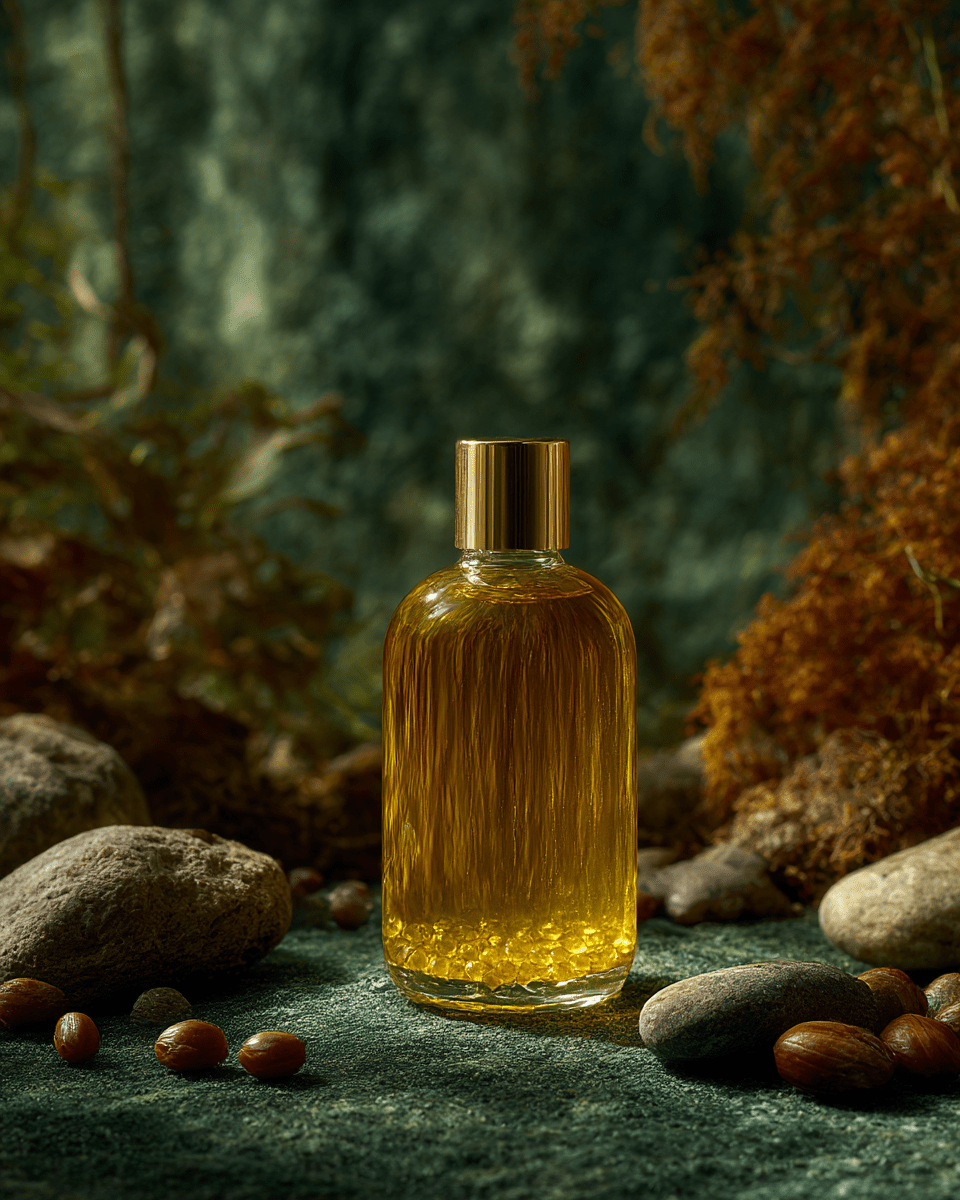
For cosmetic oil, the kernels are cold-pressed raw (< 40°C). This process fully preserves the skin's active ingredients: tocopherols (800-900 mg/kg), specific sterols (spinasterol, schottenol, β-sitosterol), polyphenols, squalene, and essential fatty acids in their native proportions. The color is lighter, the smell more discreet, and the dermal bioavailability is maximal.
Using roasted food oil on the skin is not dangerous, but it is suboptimal: the lipid-rebuilding active ingredients of the hydrolipidic film are partially altered, and the persistent smell can be uncomfortable. For regular cosmetic use in a dull combination skin routine, cold-pressed cosmetic oil is imperative.
Preservation, Linoleic Oxidation, and DLUO: What You Need to Know
Argan oil contains 36-38% linoleic acid (omega-6), a polyunsaturated fatty acid particularly vulnerable to auto-oxidation. Unlike oleic acid (monounsaturated), linoleic has two double bonds that react quickly in the presence of oxygen, UV light, and heat to form lipid free radicals—pro-inflammatory agents that irritate the skin and destroy other beneficial compounds.
The Optimal Use-By Date (DLUO) for an unopened cosmetic argan oil is 18 to 24 months, packaged under nitrogen in an opaque bottle. Once opened, the effective DLUO drops to 6-12 months depending on storage conditions. The golden rules:
- Store in a cool place (15-18°C) away from direct light
- Close tightly after each use
- Prefer small packaging (30-50 ml) for quick stock rotation
- Smell the oil before use: a waxy crayon or old greasy smell = advanced oxidation, do not apply
- Never store in the bathroom (humidity + heat accelerate degradation)
The tocopherols naturally present in argan oil act as endogenous antioxidants and slow down this oxidation, but they do not prevent it indefinitely. Some formulators add vitamin E (synthetic tocopherol) or rosemary extract to extend stability—a legitimate practice if declared on the INCI.
Dull Combination Skin Routine: Mistakes to Avoid
Dull combination skin is one of the most poorly served skin types by standardized routines. The T-zone (forehead, nose, chin) exhibits excessive sebum, while the cheeks and temples are often dehydrated and dull—a duality that traps many people in a vicious cycle: they dry out the oily area and neglect the dry area, or vice versa.
Here are the most common mistakes with argan oil on this skin type, and how to correct them:
Mistake 1 — Applying pure oil to dry skin. Oil does not penetrate the stratum corneum without an aqueous vehicle. Always apply to slightly damp skin (after serum or mist) so that the oil "seals" hydration in place rather than remaining on the surface.
Mistake 2 — Using too much product. 3-4 drops are enough for the entire face. An excess creates a greasy occlusive film on the T-zone, causes blackheads, and leaves an uncomfortable shiny residue.
Mistake 3 — Mixing with incompatible active ingredients. Argan oil mixes with most vegetable oils and butters, but should not be applied directly with retinols (mutual destabilization) or strong acids (unsuitable pH). Alternate treatments on different days.
Mistake 4 — Using oxidized oil. Rancid oil does not restore the lipid film—it damages it. Systematically check the opening date and the smell. This is even more critical for skin seeking radiance and texture renewal.
Mistake 5 — Ignoring prickly pear oil in synergy. Argan oil and prickly pear oil form an exceptional complementary duo for dull combination skin: the first provides omega-6 and reparative sterols, the second concentrates the highest natural vitamin E in the plant kingdom and β-sitosterol with a soothing action. Used together (1-2 drops of each), they cover all the needs of the lipid film with a dry, non-comedogenic texture.
For personalized guidance on your ideal oil combination, our Skin Intelligence skin diagnosis directs you to the routine precisely adapted to your skin profile.
The recommended routine for dull combination skin is organized as follows: in the morning, gentle cleansing + vitamin C serum + 2-3 drops of argan oil on damp skin + SPF. In the evening, double cleansing + floral water + 2 drops of argan oil + 1 drop of prickly pear oil. Once a week, gentle enzymatic exfoliation before the oily treatment to maximize penetration and even skin tone. Find all our treatments for this profile in the vegetable oils and noble lipids collection.
FAQ — Argan Oil: Terroir, Quality, and Use
What is the PGI of argan oil and why is it important?
The PGI (Protected Geographical Indication) guarantees that the oil comes from the Moroccan Souss-Massa argan forest, the only ecosystem in the world where the endemic argan tree produces fruits with optimal phytochemical profiles. An oil without a precise origin mention may come from experimental crops outside the zone, whose active qualities are not equivalent.
How to read the Certificate of Analysis (CoA) of argan oil?
Three values are decisive: peroxide value (< 5 meq O2/kg, ideally < 3), free acidity (≤ 2%, ideally < 1%) and K270 (≤ 1, ideally < 0.6). If a supplier does not provide a CoA per batch, change supplier. This data is measured by spectrophotometry and normalized titration (ISO 660, ISO 3960, ISO 3961).
Can food-grade argan oil be used instead of cosmetic oil?
Technically yes, but it is not optimal. Food oil is roasted, which degrades tocopherols and modifies sterols. It smells stronger and its skin active profile is less effective. For daily cosmetic use, cold-pressed cosmetic oil is always preferable.
How long does an opened argan oil remain effective?
Between 6 and 12 months after opening, stored in a cool place away from light. Beyond that, linoleic oxidation produces lipid peroxides that can irritate the skin. The olfactory test (smell of waxy crayon or rancid) is the most reliable sign of an oil to discard.
Is argan oil comedogenic for combination skin?
Its comedogenic index is rated between 0 and 1 on a scale of 5—very low. Its richness in linoleic acid (36-38%), a fatty acid deficient in oily and combination skin, makes it precisely a rebalancing rather than comedogenic treatment. The mistake is to apply too much product or to dry skin (without prior moisture), which can create a residual film.
How to differentiate a real women's cooperative from a superficial label?
A legitimate cooperative is registered with the ODCO (Moroccan Office for the Development of Cooperation), has an approval number, and can produce social compliance certificates (Fair Trade, UEBT, or RACA's own certification). Direct visit or traceable partnership in a supply chain transparency report is the strongest level of proof.
What synergy between argan oil and prickly pear oil?
Argan oil provides oleic acid (lipid film), linoleic acid (skin barrier), and spinasterol/schottenol (inflammatory regulation). Prickly pear oil adds the highest natural concentration of plant tocopherols (up to 1,000 mg/kg) and a high level of β-sitosterol with a soothing action. Together, they restore the hydrolipidic film more effectively than each alone, ideal for dull combination skin lacking radiance.
Is argan oil suitable for sensitive reactive skin?
Yes, provided it is of premium quality and fresh. The plant sterols (spinasterol, schottenol) in argan have documented soothing properties in vitro. However, an oxidized or poor quality oil can cause irritation. Start with an application on the wrist for 48 hours before integrating it into a complete routine. Consult your argan oil guide for protocols adapted to each sensitive skin type.
Conclusion
Moroccan argan oil, often sourced from women's cooperatives, combines quality and expertise. Choosing a pure, well-preserved oil guarantees its nourishing benefits. Its origin and freshness make all the difference. A few drops of quality argan are enough for nourished, supple, and radiant skin.
Why Choose Nopal Life for Your Natural Face Care
Nopal Life has developed a range of facial treatments formulated around premium prickly pear seed oil, an exceptional botanical active ingredient extracted from Algerian plantations in the arid high plateaus, using methods that respect its fragile active components. Each treatment is designed to precisely meet the skin's real needs: hydration, nourishment, radiance, anti-aging, or soothing, without compromising on tolerance or effectiveness.
Our approach combines the richness of botanical active ingredients with the insights of modern dermatology. Discover your personalized routine in less than 3 minutes with our free Skin Intelligence diagnosis.
Information provided for cosmetic and educational purposes; it does not constitute medical advice.


Go further than this article
Get our skincare guides by email — and start with your free skin diagnostic: 2 minutes, advice tailored to your skin. We ship to the US, UK, Canada, Australia and 27 European countries; somewhere else? Sign up and you will be the first to know when we deliver to your country.
By signing up, you agree to our privacy policy. Unsubscribe in one click.