Prickly pear mucilage: an ally for the skin microbiome
Long overshadowed by the famous seed oil, prickly pear mucilage is now establishing itself as a skincare active in its own right. This plant-based gel, rich in polysaccharides, is appealing for its hydrating and soothing properties—and for promising research avenues around the skin microbiome. Let's discover why this nopal treasure deserves a place in sensitive skin routines.
What is prickly pear mucilage?
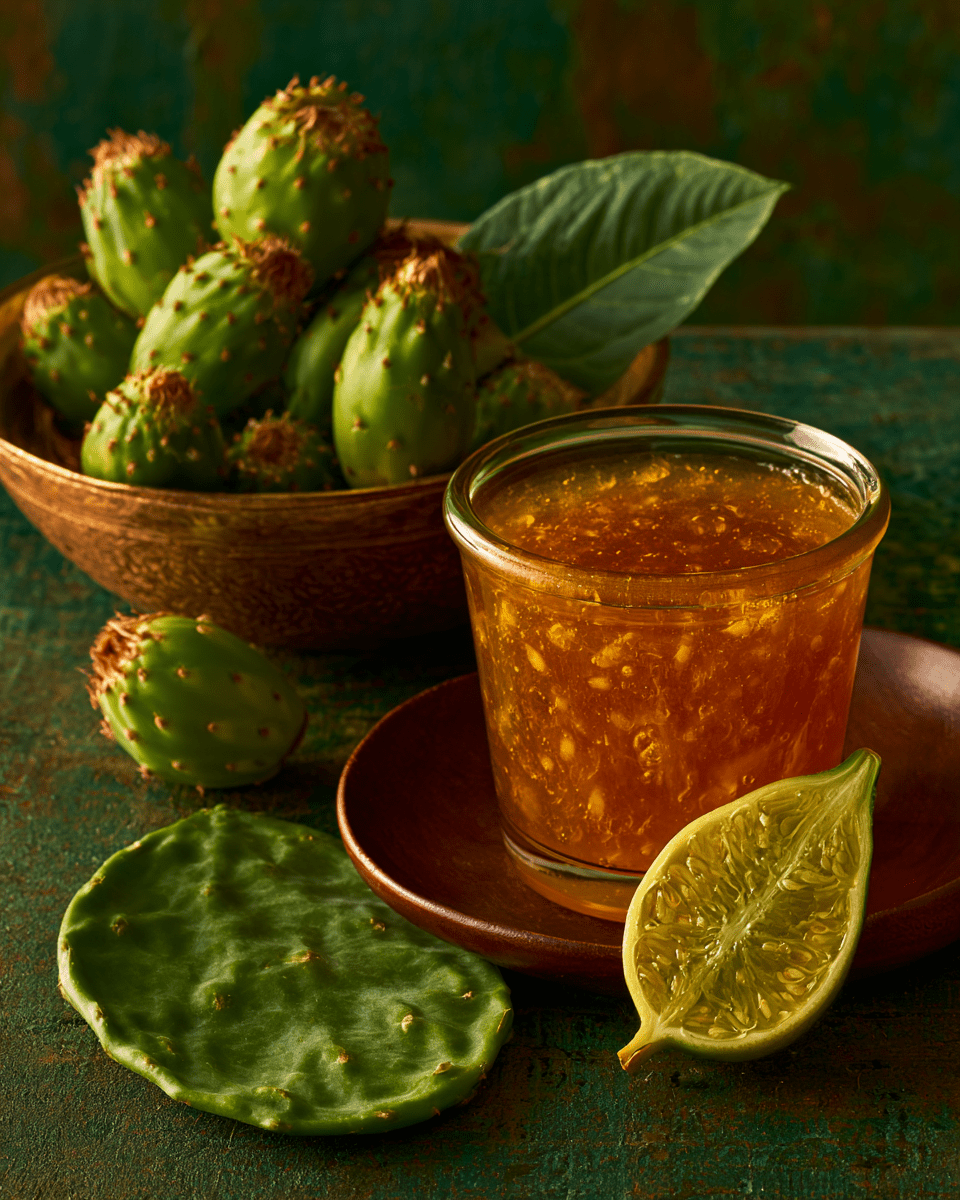
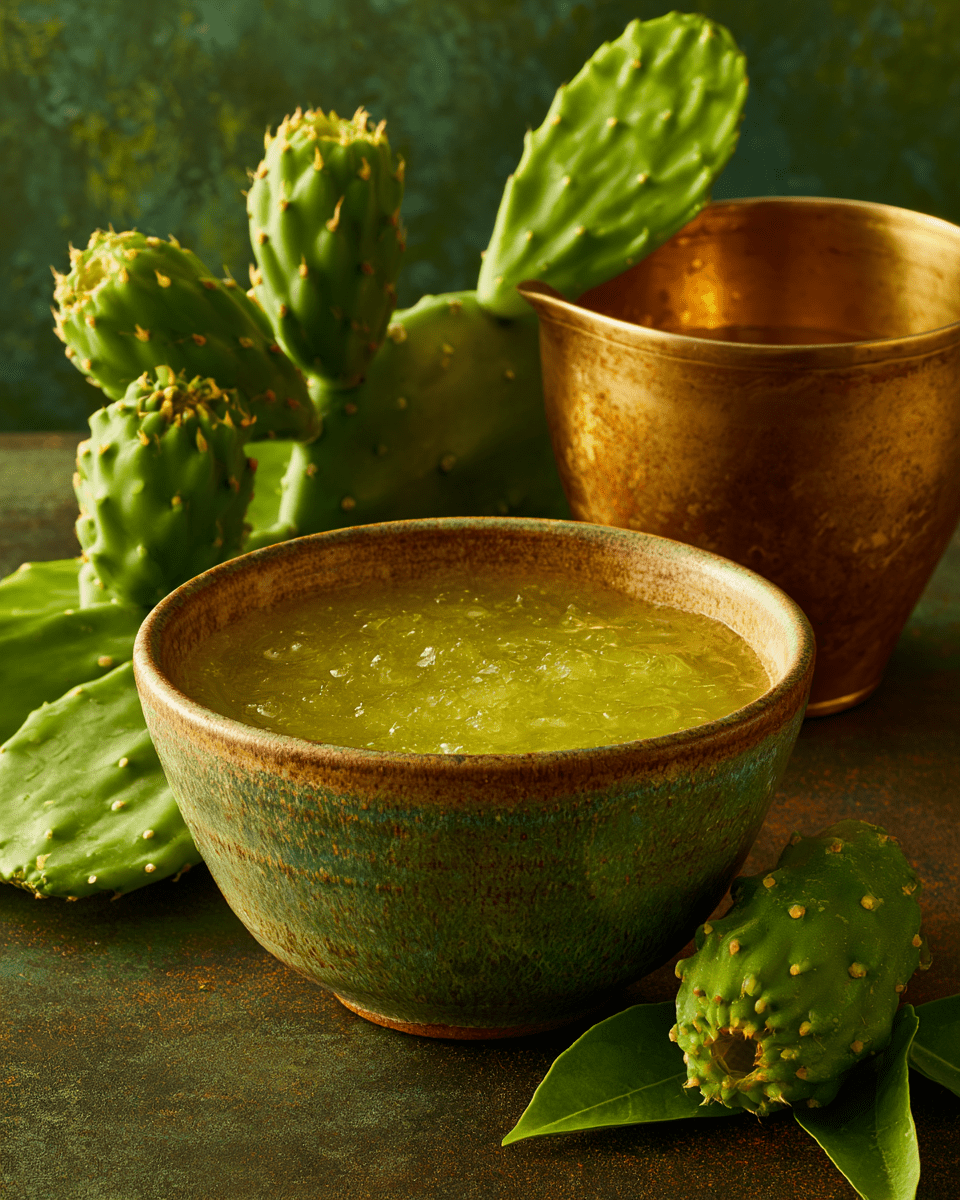
Mucilage is the gelatinous substance contained in the cladodes (paddles) of the prickly pear cactus. Biochemically, it is an assembly of high molecular weight polysaccharides—mainly a linear galactan and a highly branched xyloarabinan, composed of galactose, arabinose, xylose, and rhamnose. This structure gives it a strong water-retention capacity and a film-forming, soft, non-greasy feel. Where prickly pear oil nourishes, mucilage hydrates: the two complement each other.
Chemically, it is a complex polysaccharide: long chains of sugars—arabinose, galactose, rhamnose, galacturonic acid—linked together in a branched manner. This architecture retains water by simple physical constraint, without any reaction being involved.
This is also the basis of the prebiotic hypothesis. These chains form a substrate that some bacteria can degrade and others cannot, and it is precisely this selection that defines a prebiotic. The question is therefore not whether the molecule nourishes something, but which species exactly, and the answer largely remains to be established.
Skin Microbiome: Why it matters
The skin hosts an ecosystem of microorganisms—the skin microbiome—which contributes to comfort and barrier function. An unbalanced microbiome is often associated with more reactive skin, prone to discomfort. The idea of a skincare product that helps preserve this balance, rather than attacking it, is at the heart of modern gentle cosmetics. With its richness in plant sugars and its gentleness, mucilage naturally fits into this "prebiotic" philosophy.
What the research says about prebiotic potential
Several studies have focused on nopal sugars. Work has shown that mucilage and oligosaccharides derived from nopal have prebiotic potential, meaning they can promote, in vitro, an environment conducive to beneficial bacteria (Mendez-Encinas et al.; Guevara-Arauza et al.). In parallel, a structural study highlighted the repairing and moisturizing properties of polysaccharides from Opuntia cladodes in topical application (Deters et al., 2017).
A nuance: most of these results concern in vitro models or the gut flora. In cosmetics, the documented hydrating and soothing effect of mucilage is primarily recognized; the prebiotic action on the skin microbiome remains an encouraging research avenue, presented with caution.
A note on names, because they obscure the reading of publications. The prickly pear Opuntia ficus indica is also found under the names Indian fig, paddle cactus, or prickly pear depending on the language of the article. The same species, four different entries in databases.
This dispersion complicates the synthesis work. A search conducted only on the Barbarie Opuntia ficus form leaves out part of the literature, and reviews compiling this work do not always correct the discrepancy. This is a prosaic, but real, reason why the level of evidence appears thinner than it is.
It remains thin nonetheless. The available work describes a plausible substrate for certain bacterial species; they do not yet measure an effect on living human flora, and it must be stated as such.
Benefits of mucilage for the skin
— Long-lasting hydration: its polysaccharides retain water and help limit surface dehydration.;
— Comfort and soothing: its soft film helps soothe discomfort in sensitive skin.;
— Support for the skin barrier: by maintaining surface hydration, it contributes to more supple and resilient skin against daily aggressions..
For which skin types?
Mucilage is particularly suitable for sensitive, dehydrated, and reactive skin, seeking a gentle and well-tolerated active ingredient. Its light and non-greasy texture also makes it suitable for combination skin, and pleasant to use daily, morning and evening.
Harvesting poses a difficulty that the finished product does not suggest. A cut paddle ferments quickly: the sugars it contains are exactly what airborne microorganisms feed on. It must therefore be stabilized within hours, by drying or heat treatment.
The form chosen at this stage determines everything else. Gentle drying preserves long chains, a more brutal treatment fragments them into pieces that no longer gel in the same way. Two batches from the same field can thus behave very differently in formulation, without the label indicating it in any way.
How to integrate it into your routine?
Mucilage is found in moisturizing creams, mists, and masks. Apply it to clean skin, in a thin layer, morning and/or evening, before a richer product if needed. For a targeted microbiome approach, combine it with products formulated with prebiotics and opt for gentle, non-stripping cleansing that respects the skin's natural film.
Frequently Asked Questions
Is prickly pear mucilage comedogenic?
No, it is an aqueous, light, and non-greasy active ingredient, suitable even for combination skin.
Is mucilage the same as prickly pear oil?
No: mucilage is an aqueous gel rich in polysaccharides (hydration); the oil comes from the seeds and is rich in vitamin E and fatty acids (nutrition, anti-aging). They are complementary.
Is it suitable for sensitive skin?
Yes, it is known to be gentle and soothing, well tolerated by reactive skin.
Which plant are we talking about exactly? Opuntia ficus indica, a cactus native to America and widely established in North Africa. The name Opuntia ficus indica appears on INCI lists, followed by the part used, which distinguishes ingredients derived from the same plant.
Is it the same as prickly pear juice? No. The juice comes from the fruit and is for consumption; the seeds yield something else entirely. Three materials, three sectors, three unrelated prices.
What is the market situation? It remains narrow. Few suppliers offer stabilized quality according to the rules, and the available volumes limit use to niche formulas. This is a supply constraint, not a positioning choice.
In summary
Hydrating, soothing, and with a studied prebiotic potential, prickly pear mucilage is a gentle active ingredient ideal for skin seeking to preserve its balance. It embodies the respectful botanical cosmetics that NOPAL LIFE puts at the heart of its care. Discover NOPAL LIFE's prebiotic skincare and identify the routine adapted to your skin thanks to the NOPAL LIFE Skin Intelligence diagnosis.
To go further:
- Prickly pear: NOPAL LIFE's signature active ingredient
- Aloe vera: hydration and soothing
- Colloidal oatmeal: comfort for sensitive skin
- Beta-glucan: soothing and hydration
- Chamomile: soothing for sensitive skin
- Take my free skin diagnostic (Skin Intelligence™)
Information provided for cosmetic and educational purposes; it does not constitute medical advice.
The product related to this topic


Mature skin · Dry skin

Go further than this article
Get our skincare guides by email — and start with your free skin diagnostic: 2 minutes, advice tailored to your skin. We ship to the US, UK, Canada, Australia and 27 European countries; somewhere else? Sign up and you will be the first to know when we deliver to your country.
By signing up, you agree to our privacy policy. Unsubscribe in one click.