Prickly pear mucilage: comfort for reactive skin
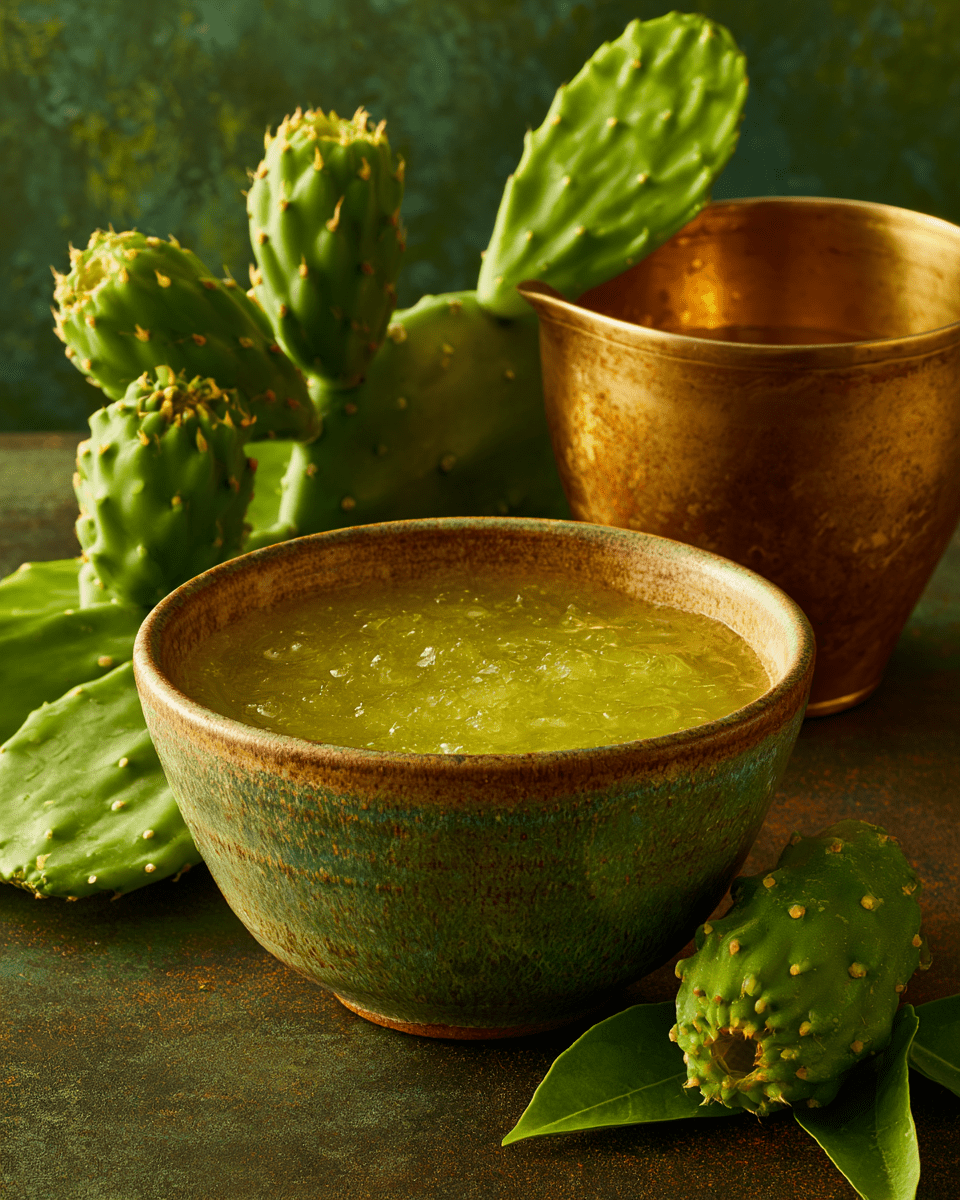
Prickly pear mucilage is a plant-based gel rich in polysaccharides extracted from the cladodes of the Opuntia ficus-indica cactus. Its film-forming texture and high water retention capacity make it an active ingredient of choice for soothing and comforting reactive skin, which is often challenged by daily external aggressions.
What is reactive skin?
Reactive skin responds more intensely to external stimuli – wind, cold, heat, pollution, hard water, friction, or overly rich textures. Its characteristic often lies in a more fragile surface hydrolipidic film: this thin protective layer that retains water and cushions contact then allows discomfort factors to pass through more easily. The result is sensations of tightness, heat, or temporary stinging, especially after cleansing or a change in temperature.
The goal of a cosmetic product is not to "correct" the skin, but to offer it a gentle environment that limits these triggers and helps it better tolerate its daily life, application after application. This is exactly the playground for mucilage.
Reactivity is not an allergy. Allergy involves precise, reproducible immune recognition, triggered by an identifiable substance. Reactivity, on the other hand, refers to a lowered tolerance threshold: what went unnoticed begins to cause an unpleasant sensation, without a single culprit emerging.
The distinction has practical consequences. Searching for the allergen when it comes to lowered tolerance leads to eliminating products one after another without ever stabilizing anything. In this second case, it is the total number of solicitations that matters, more than the nature of each.
Recognizing daily aggressions
Before choosing an active ingredient, it is useful to identify what stimulates reactive skin. The most frequent triggers are mechanical (scarf friction, excessive exfoliation, overly hot water), climatic (wind, dry cold, heat, temperature variations), or environmental (pollution particles, hard water). Taken in isolation, each remains harmless; accumulated throughout the day, they can weaken the surface and maintain discomfort. The cosmetic response is simple: reduce aggressive actions and enhance surface comfort with light and well-tolerated textures.
Prickly pear mucilage, a shield of softness
On a biochemical level, mucilage is an assembly of high molecular weight polysaccharides – primarily a linear galactan and a branched xyloarabinan, composed of galactose, arabinose, xylose, and rhamnose. These long hydrophilic chains have a remarkable ability to bind and retain water. Upon contact with the skin, they form a flexible, moisturizing, and non-occlusive film that retains moisture on the surface and buffers minor mechanical aggressions.
It is this dual quality – water retention and film-forming touch – that explains the full interest of mucilage for reactive skin: immediate comfort and a feeling of a "protective veil," without weighing down or saturating the epidermis. Its aqueous, fresh, and light texture is the antithesis of the rich formulas that these skin types sometimes tolerate poorly.
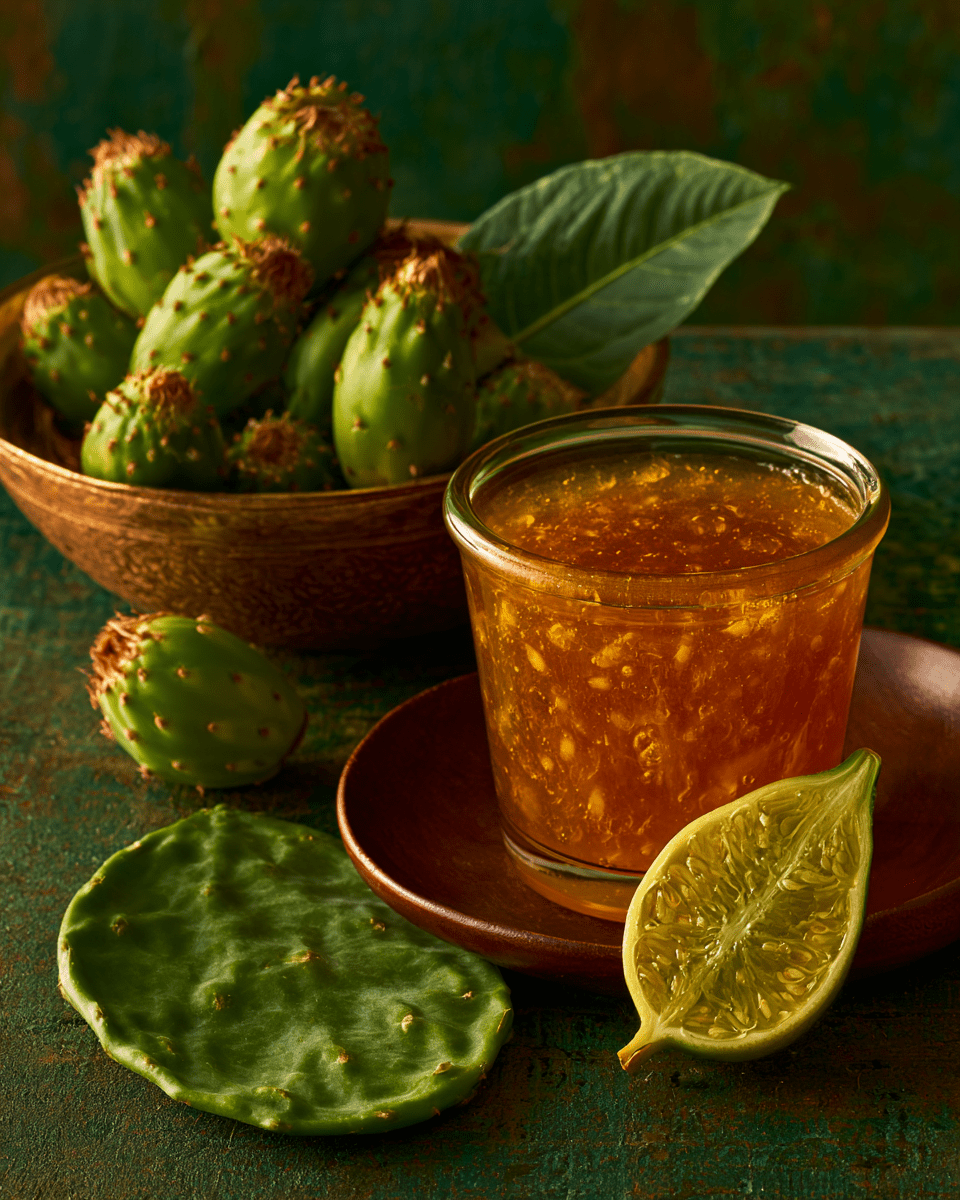
Mucilage comes from the fruit and paddles of the prickly pear, two parts of the plant that cosmetics exploit differently. The fruit also yields seed oil, rich in fatty acids and vitamin E, which has a completely different use on the face.
Not confusing the two is useful for choosing: prickly pear mucilage provides a moisturizing film on the surface, while prickly pear oil provides lipids. Both can actually be used together, mucilage first.
The prickly pear, Opuntia ficus indica Mill. by its full botanical name, comes from Central America and has established itself throughout the Mediterranean basin and North Africa. It now grows wild on land that nothing else occupies.
This ancient establishment has led to numerous and ancient local uses: defensive hedges, livestock fodder in the dry season, fresh fruit consumed in summer diets. Prickly pear juice is still commonly drunk in the Maghreb, where its use predates any cosmetic interest in the plant by far.
It is therefore not a recent discovery that has been unearthed for market needs. It is a domesticated plant for millennia, whose particular function has belatedly found an application in formulation.
What research says
A reference structural study (Deters et al., 2017) characterized the polysaccharides of Opuntia ficus-indica cladodes and demonstrated their moisturizing and surface repair properties in topical application. Other studies (Guevara-Arauza et al.; Mendez-Encinas et al.) have described the prebiotic potential of nopal oligosaccharides – i.e., their ability, observed in vitro, to promote an environment conducive to beneficial microorganisms. This is an encouraging research avenue for supporting the balance of the skin flora, to be considered a promising area of study rather than an established promise.
In cosmetics, therefore, the primary focus is on the documented moisturizing and soothing effect of mucilage, and its prebiotic dimension is presented with the caution required by current data.
Available research focuses mainly on the composition of prickly pear fruit: polysaccharides, amino acids, vitamin C, and natural antioxidants. Mucilage concentrates the water-retaining fraction.
Ascorbic acid and betalains present in the fruit explain some of the cosmetic interest of prickly pear. Their use in topical application is less documented than their dietary use.
The benefits of prickly pear mucilage for reactive skin
— Immediate comfort: its soft film reduces sensations of tightness after cleansing or exposure to cold.;
— Long-lasting hydration: its polysaccharides retain water and help limit surface dehydration, often associated with discomfort.;
— Lightness and tolerance: as an aqueous and non-greasy active ingredient, it suits skin types that do not tolerate rich textures or heavy formulas well.;
— Soothing sensoriality: its freshness provides a noticeable sensation of relief on skin that feels hot or tight.;
— Support for the surface film: by maintaining hydration, it contributes to more supple skin, better able to cope with external aggressions.
For which skin types?
Mucilage is particularly suitable for reactive, sensitive, and combination skin looking for a gentle, oil-free active ingredient. Its lightness makes it pleasant for daily use, alone or as a complement to a soothing routine. It pairs well with a minimalist approach, where few but well-chosen actions are favored – a principle particularly suited to skin that reacts quickly.
On both the face and neck, the application of prickly pear mucilage is suitable for all skin types. Oily skin appreciates it because it leaves no greasy residue; dry skin needs to supplement it with an oil.
For hair, its use is limited to the lengths. Mucilage provides flexibility without weighing it down, making it a useful treatment for fine hair.
Reactive skin rarely follows a simple rule. The same person may tolerate a product easily in winter and poorly in summer, or vice versa. Ambient temperature, air humidity, and fatigue levels change the daily tolerance threshold, making a product evaluation based on a single application unreliable.
Hence the importance of introducing one new product at a time, over a period of at least two weeks, and noting what happens. This approach may seem slow; in reality, it is the fastest, because it avoids months spent successively suspecting each of the five products introduced together.
How to integrate it into your routine
Mucilage is found in mists, aqueous serums, and masks. Apply it to clean skin, in a thin layer, morning and/or evening. In the order of care, it is placed after cleansing and before a richer treatment: its aqueous phase prepares the skin and provides hydration, which a nourishing treatment then seals if necessary.
For a targeted "comfort" approach, combine it with products formulated with prebiotics and adopt the right habits of a sensitive skin routine: lukewarm rather than hot water, no aggressive exfoliation, light textures. Mucilage is the aqueous alter ego of prickly pear oil, which is more nourishing: each has its use depending on the current need.
On the face, apply after cleansing, to still damp skin. Two to three pumps are sufficient, spread without rubbing.
For hair, prickly pear mucilage is used as a leave-in treatment, a few drops on the lengths. Its benefit is the same as on the face: it retains water without being greasy.
You can use it morning and evening. The antioxidants naturally present in the fruit pose no time constraints, unlike a photosensitizing active ingredient.
Frequently Asked Questions
Is mucilage suitable for very reactive skin?
Yes. It is an aqueous, light, and reputedly gentle active ingredient, generally well tolerated by skin that reacts to rich textures or heavy formulas. As with any new product, a patch test in the crook of the elbow remains a good practice.
Mucilage or prickly pear oil for reactive skin?
Mucilage is an aqueous gel (surface comfort and hydration); the oil, extracted from the seeds, is more nourishing. For reactive skin seeking lightness, mucilage is often more indicated, with oil complementing on days when the skin feels more taut.
Can it be used daily?
Yes, morning and evening, in a thin layer on clean skin, according to your skin's needs.
Does mucilage leave a sticky film?
No, at cosmetic dosage its texture remains fresh and light; the film is flexible and non-occlusive, with no greasy effect.
Which part of the plant is used? The cladodes, those flattened stems that are mistaken for leaves. They have nothing to do with the fruit's seeds, from which a completely different ingredient is extracted, nor with the pulp, which yields the juice.
Is it the same product as the one sold as a drink? No. The juice intended for consumption comes from the fruit and follows a distinct production chain. The confusion is frequent because both bear the name of the same plant, but neither the raw material nor the way it is processed are similar.
Is it suitable for digestive problems? This question pertains to nutrition and is outside the scope of this page, which deals with external use. A health professional remains the relevant contact for anything ingested.
In summary
Moisturizing, film-forming, and very gentle, prickly pear mucilage is a comforting ally for reactive skin challenged by daily aggressions. Light, well-tolerated, and with studied prebiotic potential, it ticks all the boxes of a simple and reassuring active ingredient. Discover the NOPAL LIFE prebiotic care and identify the right actions for your skin with the NOPAL LIFE Skin Intelligence diagnosis.
To go further:
- Prickly pear: NOPAL LIFE's signature active ingredient
- Aloe vera: hydration and soothing
- Colloidal oatmeal: comfort for sensitive skin
- Beta-glucan: soothing and hydration
- Chamomile: soothing for sensitive skin
- Take my free skin diagnosis (Skin Intelligence™)
Information provided for cosmetic and educational purposes; it does not constitute medical advice.
Our anti-aging treatments