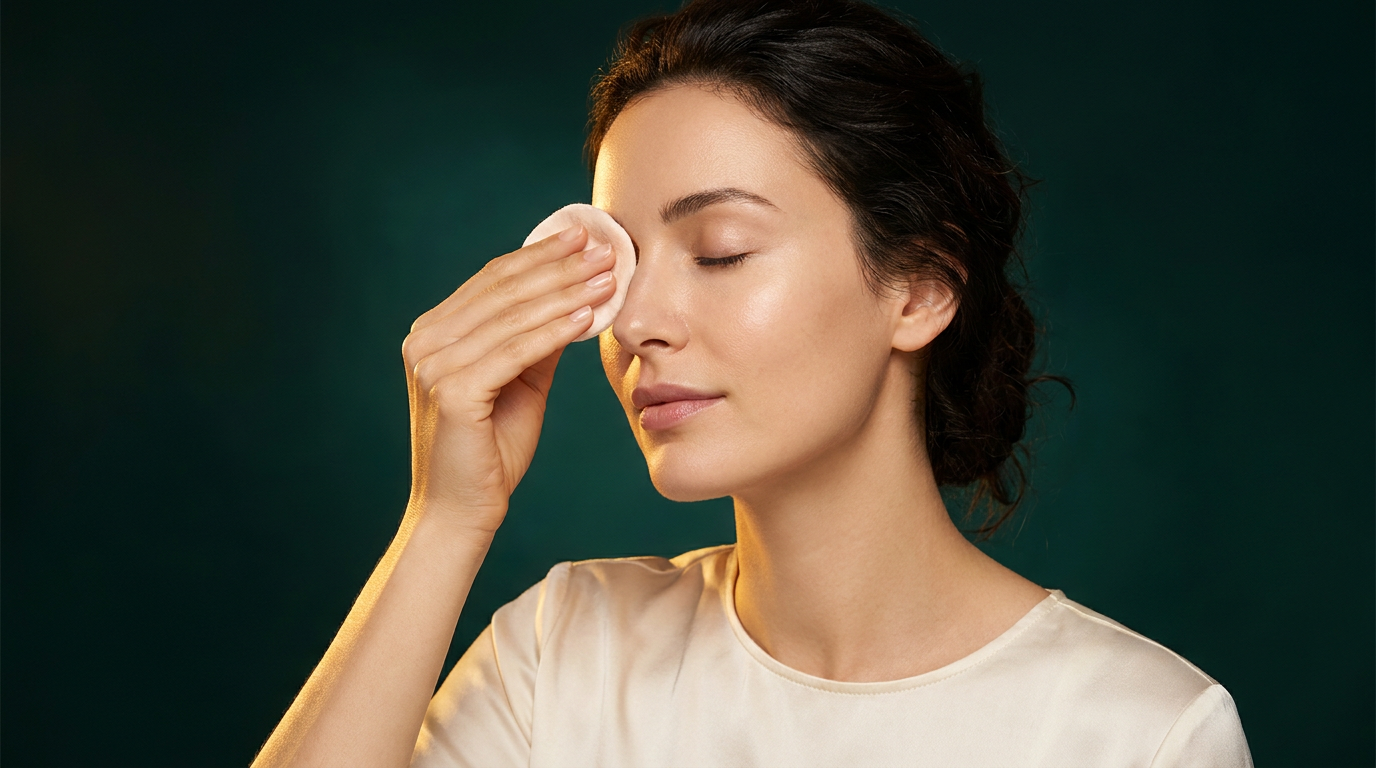
Facial cleansing gel: understanding the cleansing formula
An effective cleansing gel removes excess without leaving the skin feeling "squeaky clean." This sensation often indicates a significant extraction of surface lipids, not superior cleanliness. The choice depends on the surfactants, pH, dosage, and contact time.
The choice of a face cleansing gel is based on observable criteria, reproducible doses, and tolerance monitored over time.
The face accumulates sebum, sunscreens, particles, and makeup products. Washing must disperse them in water, then quickly end to preserve the organization of the stratum corneum.
How a Surfactant Captures Fats
Each molecule has a hydrophilic head and a lipophilic tail. Beyond a given concentration, the molecules assemble into micelles a few nanometers in size. Their core accommodates fats, which allows for rinsing.
These structures can also interact with skin proteins and lipids. Gentleness therefore depends on the size of the aggregates, the mixture of surfactants, the presence of polymers, and the duration of exposure.
The face cleansing page details these parameters without reducing the question to "with or without sulfate."
Anionic, Amphoteric, Non-ionic: Three Profiles
Anionic surfactants foam well and effectively remove fats. Some can be more delipidating. Amphoterics, like cocamidopropyl betaine, are often combined to moderate aggression. Non-ionics are generally gentler but may foam less.
Abundant foam is not a measure of performance. Consumers often associate bubbles with cleanliness, while a low-foaming formula can properly remove a sunscreen film.
The result should be judged after rinsing and fifteen minutes later, when the immediate sensation of water has disappeared.
Surface pH Slowly Returns After Washing
The skin has a slightly acidic pH, often around 4.5 to 5.5 depending on the area and measurement method. Water and alkaline products can temporarily raise it. Returning to the initial state can sometimes take several hours.
A gel formulated around pH 4.5 to 5.5 respects this environment better than a classic alkaline soap. However, the number alone is not enough: a good pH does not correct an overly aggressive surfactant system.
The module on skin pH explains this relationship between enzymes, lipids, and surface microorganisms.
A Pea-sized Amount and Twenty Seconds Are Often Enough
Wet your face with lukewarm water, spread a small pea-sized amount between your fingers, then massage gently for twenty to thirty seconds. Rinse carefully around the nostrils, jawline, and hairline. Pat dry with a clean towel.
Very hot water increases the sensation of dryness. A two-minute massage does not necessarily improve removal and prolongs exposure to surfactants.
- Lukewarm water, never hot.
- A small amount on damp skin.
- Short movements without daily brushing.
- Complete rinsing of border areas.
- Hydration within minutes if needed.
Morning and Evening: Frequency Is Not Automatic
In the evening, cleansing removes filters and the day's impurities. In the morning, a rinse with water or a very small amount may suffice for dry skin. Oily skin or a person using a very occlusive product at night may prefer a full wash.
The right frequency leaves the skin comfortable and the sunscreen stable. Tightness, fine flaking, and redness after each wash indicate that the dose, time, or formula needs to be reviewed.
The evening routine helps avoid unnecessary double steps.
| Signal after washing | Probable interpretation | Adjustment |
| Squeaky skin | High lipid extraction | Reduce dose or change base |
| Slippery film | Incomplete rinsing or re-lipidating agents | Rinse more without rubbing |
| Tightness after 10 minutes | Weakened barrier | Space out or choose a gentler product |
| Remaining makeup | System insufficient for the film | Add targeted oil removal |
Double Cleansing Is Not a Daily Requirement
A first oil phase is useful when makeup or sunscreen is stubborn. The second wash removes residues, but it should be brief. On lightly made-up skin, a single well-chosen product is often sufficient.
Double cleansing becomes excessive when repeated morning and evening with two detergent formulas. The method must address a real film, not a theoretical fear of impurities.
Observe the cotton pad and the rinse rather than multiplying passages on principle.
Preservatives and Fragrance Don't Tell the Whole Story About Gentleness
A water-rich gel must be protected against contamination. Preservatives are therefore necessary for microbiological safety. Their mere presence does not indicate a bad formula.
Fragrance is optional and can bother sensitive skin. Fragrant essential oils are not automatically gentler than a synthetic fragrance. A short list sometimes facilitates the identification of a trigger, but the length of the INCI does not measure quality.
The guide analyzing a formula offers a functional reading.
Surfactants, pH, and Measurable Cleansing Protocol
A face cleansing gel works thanks to micelles formed by surfactants. Anionics clean strongly, amphoterics like cocamidopropyl betaine often soften the mixture, and non-ionics like certain glucosides are frequently used in gentle formulas. an INCI list combining sodium cocoyl glutamate, coco-glucoside, and betaine may be suitable for normal to combination skin. Foam does not measure cleansing power: it mainly depends on the structure of the surfactant system.
Dose the face cleansing gel to a pea-sized amount, approximately 0.5 to 1 ml. Wet your face with lukewarm water, lather the product between your hands, massage for twenty seconds without a brush, then rinse for ten seconds. Pat dry with a clean towel. A two-minute wash does not remove fats better; it mainly increases contact time. On dry or sensitive skin, a single cleansing in the evening may suffice if in the morning there is no excess film or occlusive product.
The pH of a face cleansing gel close to 5 to 6 is often better aligned with the acid mantle than an alkaline soap whose pH can exceed 9. After rinsing, the skin takes time to regain its balance. The sensation of squeaky clean skin is not a goal: it often signals significant removal of surface lipids. Measure tolerance fifteen minutes after washing, before serum or cream, noting tightness, redness, and roughness from 0 to 5.
For oily skin, the face cleansing gel may contain zinc PCA, niacinamide, or salicylic acid, but the contact time of a rinsed product remains short. A rinsed active ingredient does not act like a serum left on for several hours. For mature skin, prioritize glycerin, panthenol, and gentle surfactants. For blemish-prone skin, avoid scrubs and daily brushes; repeated rubbing increases the sensation of heat without deeply cleansing pores.
Evaluate the face cleansing gel for ten days. Keep the same water, frequency, and dose. Count episodes of tightness and observe shine three hours after washing. If your cheeks feel tight but your forehead remains comfortable, reduce the quantity on dry areas. A pump bottle allows for reproducible dosing; an open cap in the shower increases contact with water and should be closed immediately.
Adapt Cleansing to the Film Actually Present on the Skin
In the morning, the skin primarily carries the hydrolipidic film and the remnants of the night cream. In the evening, it may carry sunscreen, pigments, dust, and oils. A single method does not address both situations. On dry skin without makeup, twenty seconds with a small amount are sufficient. After a water-resistant sunscreen, start with an emulsifying oil or balm, then use half the usual dose of gel. The second pass should be brief, as the first has already removed most of the film.
Water temperature affects the sensation. Very hot water increases vasodilation and accelerates the loss of comfort. Use lukewarm water close to body temperature, then finish without aggressive cold rinsing. If the water is very hard, limit contact time and quickly apply a humectant. A thermal water spray does not replace a cream: water alone evaporates. The goal is to remove residues without leaving the stratum corneum rigid or rough.
A pH strip only gives an estimate, but it can distinguish a gel around pH 5.5 from a very alkaline soap. Measure the diluted product according to a constant method, not directly on the skin. Do not try to neutralize a cleanser with vinegar or lemon. If the formula causes repeated tightness, change products or reduce frequency rather than adding imprecise homemade corrections.
Measured cleansing protocol. Wet your face with lukewarm water around 30 to 35 °C. Dispense a pea-sized amount of gel, about 0.5 ml, into your palm. Lather for five seconds, spread over the forehead, nose, cheeks, and chin, massage for twenty seconds, then rinse for fifteen seconds.
Anionic surfactants like sodium laureth sulfate clean strongly. Amphoterics like cocamidopropyl betaine often moderate the system. Non-ionics like alkyl glucosides are frequently used in formulas for sensitive skin. Gentleness depends on the blend, pH, and total concentration.
For oily skin, choose a pH close to 5 to 6 and avoid prolonging the massage beyond thirty seconds. For dry skin, a gel-cream or a rinsed milk containing glycerin and betaine may cause less tightness. On combination skin, insist for ten seconds on the T-zone without doubling the dose.
| Profile | Frequency | Dose | Time |
| Oily skin | 1 to 2 times/day | 0.5 ml | 20 s |
| Dry skin | Once in the evening | 0.3 to 0.5 ml | 15 s |
| Sensitive skin | As needed | 0.3 ml | 10 to 15 s |
After rinsing, wait fifteen minutes without applying any other product. Note tightness, stinging, redness, and rebound shine. Repeat this test for three days. An adapted formula leaves the skin clean without a squeaky sensation or urgent need for cream.
Double cleansing is reserved for days with resistant SPF, foundation, or long-wearing makeup. Spread a teaspoon of cleansing oil on dry skin, massage for thirty seconds, emulsify with water, rinse, then use only half a pea-sized amount of gel.
Do not mix the product with baking soda, lemon, or essential oils. These additions alter the pH and tolerance. Keep the bottle closed, avoid diluting its contents, and replace it if the smell, color, or texture changes.
T-zone control. Spread the foam over the nose and chin for ten seconds, then over the cheeks for five seconds. This difference in time avoids subjecting dry areas to the same level of detergency as oilier areas.
For a product containing salicylic acid, check the concentration and contact time indicated by the manufacturer. An active ingredient rinsed off after twenty seconds does not have the same profile as a serum left on for several hours. Do not multiply exfoliants in the same routine.
In the presence of hard water, rinse with lukewarm water, dry immediately, and apply a simple lotion or cream within three minutes. The goal is to reduce the time during which the skin remains damp and then evaporates without a protective film.
After a makeup-free day. A single pea-sized amount is enough. After a day with long-wearing foundation, start with an emulsifying oil: a teaspoon, thirty seconds of massage, a little water, then rinse. Then use only half a dose of gel if a film remains.
Also cleanse the hairline, nostrils, and jawline, where SPF and makeup accumulate. Do not prolong the massage on the cheeks. Rinse until all foam is gone, then dry with a clean towel.
What a Rinsed Cleanser Cannot Do
The contact time is short. A gel therefore cannot replace a product left on the skin to improve the appearance of a spot, wrinkle, or lack of suppleness. Added active ingredients can contribute to comfort, but their scope remains limited.
It does not durably tighten pores and does not alter deep lipid production. It removes what is on the surface at the time of washing.
Its success is measured by clean, supple, and calm skin, not by a stripped sensation.


Go further than this article
Get our skincare guides by email — and start with your free skin diagnostic: 2 minutes, advice tailored to your skin. We ship to the US, UK, Canada, Australia and 27 European countries; somewhere else? Sign up and you will be the first to know when we deliver to your country.
By signing up, you agree to our privacy policy. Unsubscribe in one click.