Combining prickly pear seed oil and squalane
The combination works well, provided you know what each ingredient brings to the table. Prickly pear seed oil provides essential fatty acids; squalane lightens the texture and seals without weighing down. One nourishes, the other makes the result wearable.
The Essentials
- Compatibility: complete, they are both fatty substances.
- Order: indifferent between them, but always after water-based treatments.
- Quantities: 2 drops of vegetable oil, 2 drops of squalane.
- Time: preferably in the evening, in the morning for a lighter version.
- Frequency: daily, without restriction.
Why combine them
A rich vegetable oil provides what the skin doesn't produce, but its texture isn't suitable for everyone or every time of day. Squalane addresses this specific point: neutral, very light, it dilutes the sensation without diluting the benefits.
In other words, you keep the nutritional benefits and remove the inconvenience. It's a combination for practical use rather than chemical synergy — and that's already a lot.
What prickly pear oil contains
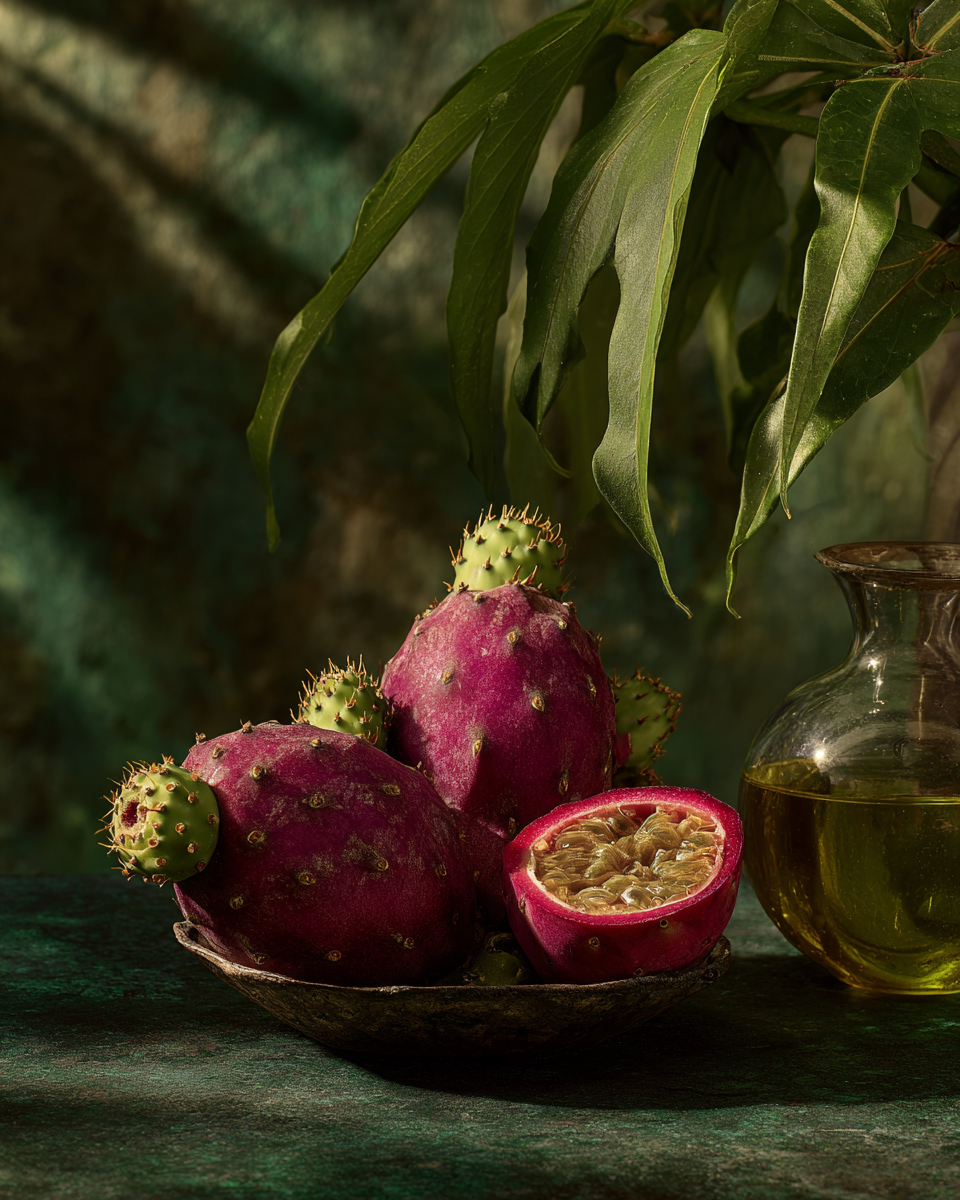
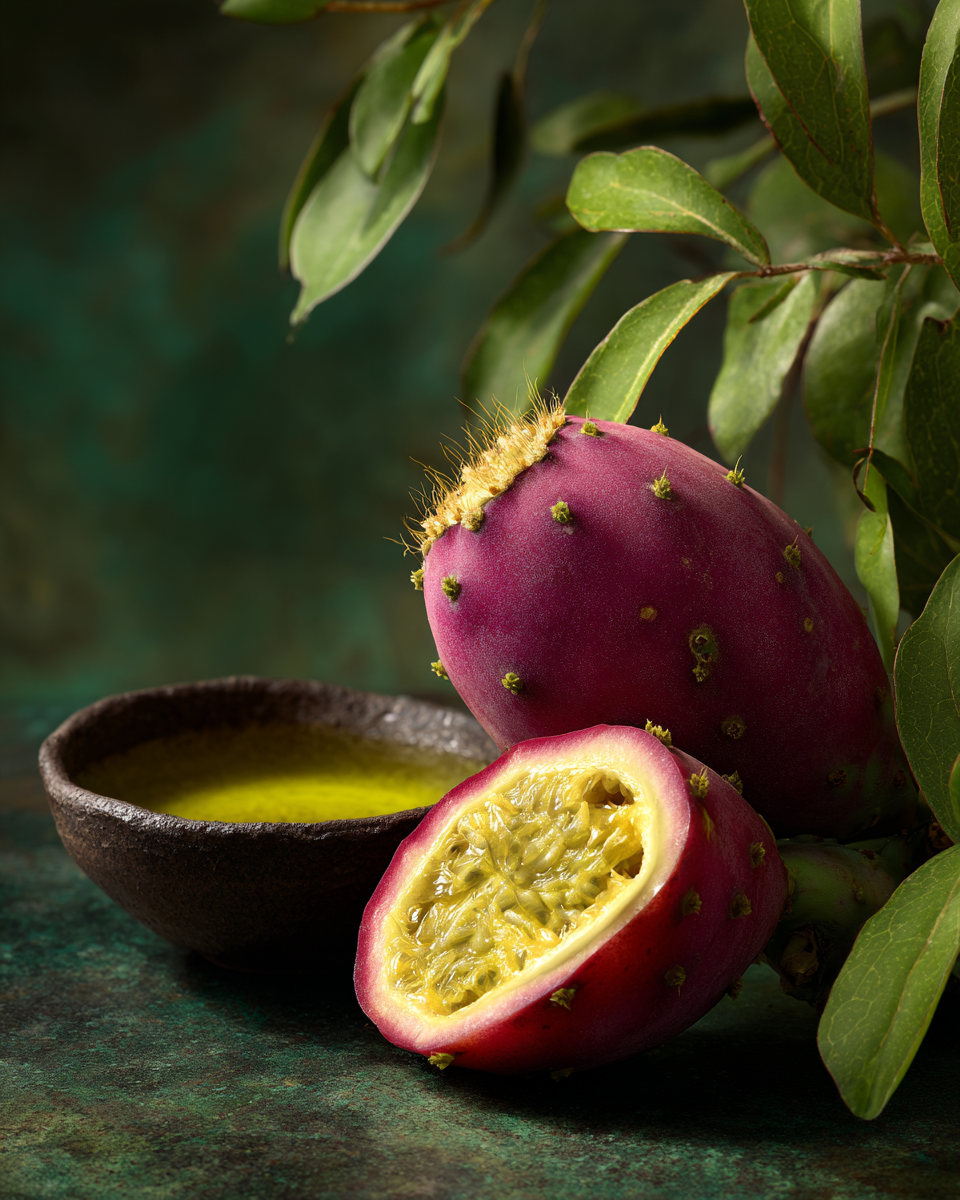
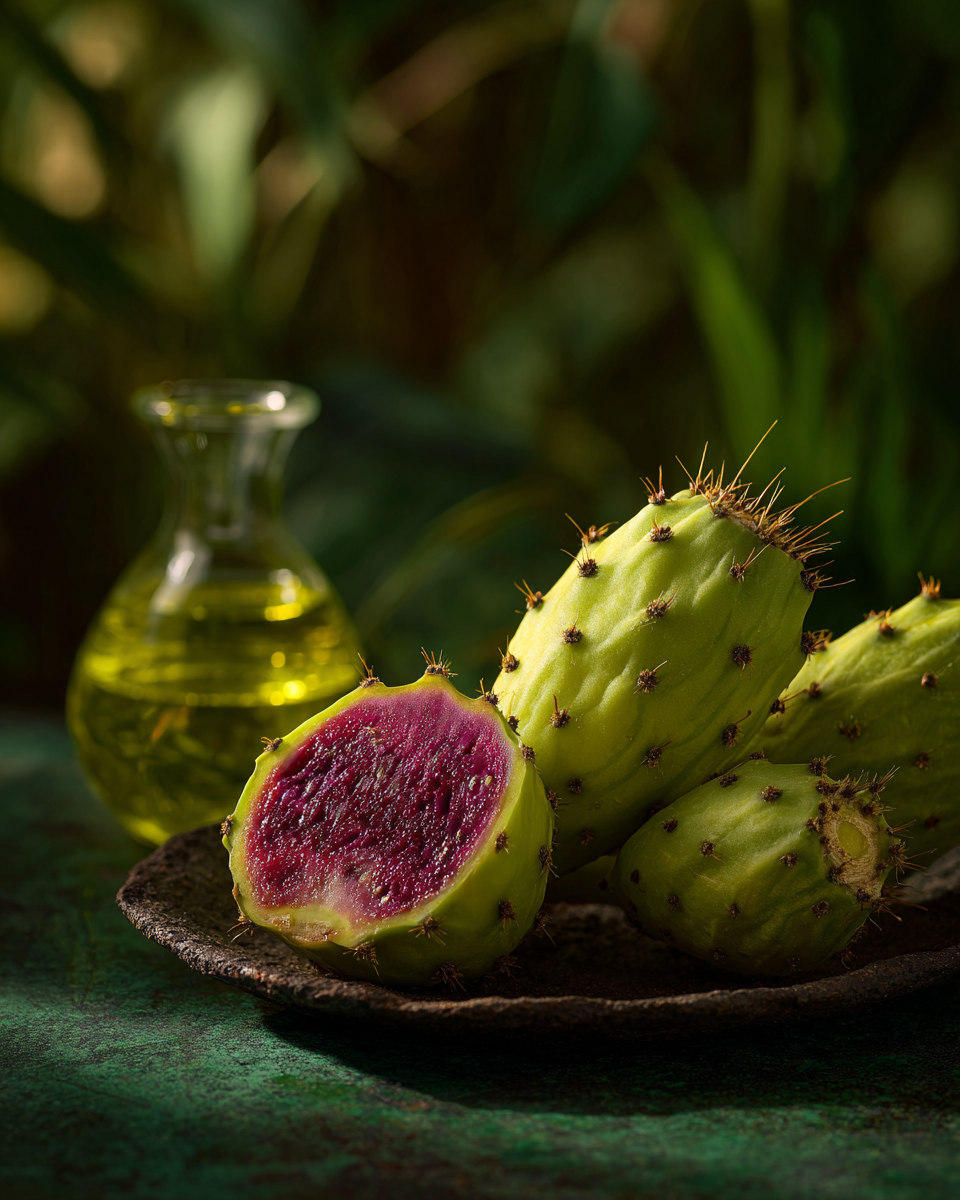
It is pressed from the seeds of the Opuntia ficus indica fruit. Its richness in linoleic acid and tocopherols makes it one of the most sought-after oils in natural cosmetics.
Its rarity is due to its yield: the seeds only make up a tiny part of the fruit, and it takes nearly a ton of figs to obtain one liter of oil. At NOPAL LIFE, it comes from family farms in the arid highlands of eastern Algeria and Kabylie, cold-pressed.
The Protocol
1. After cleansing, do not completely dry your face.
2. Your usual water-based treatments — serum, essence — first.
3. Two drops of vegetable oil and two drops of squalane, mixed in the palm of your hand.
4. Apply by pressing, without rubbing, from the center outwards.
You can also layer them rather than mix them. The result is very similar; mixing is simply faster.
Adjusting the proportions
The ratio is not fixed, and that's the beauty of the process.
Very dry skin, cold season: three drops of oil to one of squalane.
Normal skin: half-and-half.
Combination skin, or in the morning under makeup: one drop of oil to three of squalane.
A simple guide: ten minutes after application, the skin should be supple without shining. If it still shines, reduce the amount of vegetable oil by one drop.
For dry skin, two drops of prickly pear oil to one of squalane; for combination skin, the opposite. This is the only adjustment that matters, and it's made based on how your skin feels after a week.
The active ingredients in prickly pear — vitamin E, sterols — are what justify its place in the anti-aging field. Squalane, on the other hand, does not provide active ingredients: it provides texture. Their combined effectiveness lies in this complementarity, not in an addition of benefits.
On the body and hair
The mixture also works elsewhere than on the face. On elbows, knees, and hands, it is applied to damp skin after showering. On dry hair ends, one drop is enough; beyond that, the result will be heavy.
This is also an economical way to use a rare oil: diluted by squalane, it covers a wider surface without losing its benefits.
What this combination does not do
It does not hydrate, in the strict sense. A fatty substance retains existing water; it does not add any. For dehydrated skin, a humectant is needed underneath, otherwise the action seals empty skin.
It also does not target established wrinkles or dark spots. Its domain is suppleness, comfort, and skin texture quality.
A rare vegetable oil, and why it is
Yield explains everything. The seeds represent a tiny fraction of the fruit; they must be separated from the pulp, dried, then cold-pressed — each step costing time and material. One liter of oil requires nearly a ton of figs.
The organic version adds a cultivation constraint, but the prickly pear grows naturally without irrigation or inputs in arid lands: it is one of the rare cosmetic plants where organic requirements do not significantly complicate agricultural work.
What the oil brings beyond the face
Rich in linoleic acid and tocopherols, it limits the action of free radicals on the fatty phase of the skin. This effect is valid wherever the skin is exposed: hands, décolletage, neck.
On hair, one drop on the ends is enough to tame without weighing down. On nails and cuticles, an evening application gives visible results in about fifteen days.
When to prefer squalane alone
Three cases regularly arise. In the morning under makeup, where the slightest greasy trace is visible. In summer, when the skin produces more. And on skins that have never tolerated any vegetable oil.
In these three cases, keep the vegetable oil for the evening. You retain the benefits without experiencing the texture at the wrong time.
How to judge the result
Three weeks, no less. Comfort is felt immediately, but it proves nothing: any fatty substance provides it.
What matters is the state of the skin upon waking, before any treatment. More supple, less rough, better accepting what is applied next: this is a sign that the input has done its job.
Limitations
These treatments are cosmetic: they improve the appearance and comfort of the skin, without curative action. In case of persistent discomfort, dermatological advice remains the right approach.
The products mentioned in this article


Mature skin · Dry skin

Go further than this article
Get our skincare guides by email — and start with your free skin diagnostic: 2 minutes, advice tailored to your skin. We ship to the US, UK, Canada, Australia and 27 European countries; somewhere else? Sign up and you will be the first to know when we deliver to your country.
By signing up, you agree to our privacy policy. Unsubscribe in one click.